5 AI Sleep Tracking Tools That Run Smoother Than a Tesla
Imagine your brain as a finely tuned, high-performance engine, capable of incredible feats of computation, creativity, and memory. Now, picture that engine running on subpar fuel, with inconsistent maintenance, day in and day out. The result? Sluggish performance, frequent stalls, and a frustrating inability to reach its full potential. For many of us, this isn’t a hypothetical scenario but the daily reality of chronic sleep deprivation or, more subtly, suboptimal sleep quality. The pursuit of peak cognitive function and sustained energy is a modern quest, often hindered by the most fundamental human need: restorative sleep. We yearn for focus, mental clarity, and the resilience to navigate complex challenges, yet often neglect the very foundation upon which these capabilities are built.
As a neuroscientist and biohacker dedicated to unlocking the brain’s ultimate potential, I’ve observed firsthand the transformative power of understanding and optimizing our internal biological machinery. The traditional approach to sleep—lying down in the dark and hoping for the best—is akin to driving a high-performance vehicle without a dashboard. You know it’s moving, but you have no real insight into its efficiency, fuel consumption, or engine health. This is where Sleep AI steps in, revolutionizing our ability to monitor, analyze, and ultimately enhance the quality of our nocturnal regeneration. Gone are the days of guesswork; we now have access to sophisticated AI Sleep Tracking tools that provide unparalleled precision and actionable insights, moving us closer to a state of consistent, high-performance living.
Key Takeaways
- • AI Sleep Tracking is a Game-Changer: It moves beyond simple activity monitoring to provide granular, scientifically-backed analysis of sleep architecture, brainwave patterns, and physiological markers.
- • Beyond Wearables: A new generation of non-contact devices offers comfort and convenience, allowing for accurate sleep monitoring without intrusive ‘seatbelts’ or bands.
- • Data-Driven Optimization: Access to Deep Sleep Tracking data and sophisticated sleep APIs empowers both individuals and developers to build personalized wellness solutions.
- • The Future is Integrated: The convergence of AI, neuroscience, and consumer technology is paving the way for a holistic approach to sleep health, impacting everything from daily performance to long-term cognitive resilience.
What Exactly is AI Sleep Tracking and Why is it Indispensable for Cognitive Performance?
At its core, AI Sleep Tracking refers to the use of artificial intelligence and machine learning algorithms to analyze physiological data collected during sleep. Unlike rudimentary trackers that might only count movement or estimate time asleep, advanced AI systems can discern intricate patterns within your sleep architecture, identifying distinct Sleep Cycles and stages with remarkable accuracy. This goes far beyond simply knowing if you were askeep; it tells you how well you were truly resting.
The ‘why’ is rooted in neuroscience. Our brains undergo critical restorative processes during sleep, particularly during Slow-Wave Sleep (SWS), also known as Deep Sleep Tracking, and Rapid Eye Movement (REM) sleep. SWS is crucial for physical restoration, immune function, and the consolidation of declarative memories. It’s characterized by prominent delta brain waves, signaling profound relaxation and cellular repair. REM sleep, on the other hand, is vital for emotional regulation, creative problem-solving, and the consolidation of procedural memories, often associated with vivid dreaming and brainwave patterns similar to wakefulness (Theta and Alpha waves). Disruptions in these critical phases can severely impair cognitive function, mood regulation, and physical health.
AI algorithms are trained on vast datasets of polysomnography (PSG) data—the gold standard in sleep science—allowing them to identify the subtle physiological markers associated with each sleep stage. This includes heart rate variability (HRV), respiratory rate, movement, and even brainwave activity (EEG) in more advanced devices. By continuously monitoring and learning from these signals, AI sleep tools can paint a precise picture of your nightly journey through the sleep stages, revealing patterns that influence your waking performance and overall well-being. This data becomes invaluable for biohackers and anyone serious about optimizing their brain’s performance, providing the insights needed to make targeted interventions and achieve superior Sleep Efficiency.
Unlocking Data: Finding Robust API Solutions for Sleep Data
For developers, researchers, and advanced biohackers, access to raw, high-quality sleep data is paramount. The true power of AI Sleep Tracking extends beyond a consumer-facing app; it lies in the underlying sleep API that allows for custom integration, research, and the creation of novel applications. These APIs act as conduits, enabling authorized parties to retrieve granular data points such as sleep stages (REM, Light, Deep, Awake), heart rate, HRV, breathing rate, movement, and sleep onset/offset times.
The demand for robust sleep api solutions has surged as the wellness industry recognizes the central role of sleep. These APIs often provide:
- • Standardized Data Formats: Ensuring compatibility and ease of use across different platforms and analytical tools.
- • Real-time or Near Real-time Access: Crucial for applications that require immediate feedback or adaptive interventions.
- • Historical Data Retrieval: Allowing for longitudinal studies and personalized trend analysis over extended periods.
- • Secure Authentication and Authorization: Protecting sensitive user health data while maintaining accessibility for approved applications.
Major players in the sleep tech space often provide well-documented APIs, allowing third-party developers to build custom dashboards, integrate sleep insights into broader health platforms, or even create predictive models for optimal daily scheduling. This open ecosystem fosters rapid innovation and personalization, moving beyond one-size-fits-all solutions to truly adaptive health management.
Seamless Integration: How AI Sleep Tracking Fits into Your Digital Ecosystem
The next logical step after accessing sleep data is integrating it into existing applications and workflows. Modern AI Sleep Tracking isn’t just about a standalone gadget; it’s about making sleep insights a seamless part of your digital life. Imagine an app that not only tracks your sleep but also uses that data to:
- • Optimize Your Alarm Clock: Waking you during a light sleep stage, rather than jarring you out of deep sleep, for a more refreshed start to the day.
- • Personalize Wellness Coaching: Recommending specific evening routines, meditation protocols, or dietary adjustments based on your sleep patterns.
- • Inform Fitness Regimens: Adjusting workout intensity or recovery periods based on the quality of your previous night’s sleep.
- • Integrate with Smart Home Devices: Automatically adjusting bedroom lighting, temperature, or soundscapes to optimize your sleep environment based on real-time data or your historical sleep preferences.
While devices like the Apple Watch Sleep features offer a baseline, dedicated AI sleep platforms provide richer datasets and more sophisticated analysis, making them prime candidates for integration. The goal is to move beyond passive tracking to active, intelligent intervention, creating a truly responsive environment that supports optimal brain function. This holistic approach is essential for any serious biohacker aiming for sustained high performance, preventing issues like chronic fatigue or cognitive fog that arise from inconsistent sleep.
Freedom from ‘Seatbelts’: Monitoring Sleep Without Wearables
One of the most significant advancements in AI Sleep Tracking is the move away from traditional wearables. While rings like Oura and wrist devices (leading to comparisons such as Oura vs Apple Watch) have made great strides, many individuals find them uncomfortable, intrusive, or simply prefer not to wear anything to bed. This preference has spurred innovation in non-contact sleep monitoring technologies, offering a seamless and unencumbered experience.
These ‘seatbelt-free’ solutions often leverage advanced sensors and sophisticated AI algorithms to collect data from a distance. Common approaches include:
- • Radar-based Systems: These emit low-power radio waves that reflect off the body, detecting subtle movements from breathing and heartbeats, even through blankets. AI processes these reflections to infer sleep stages and vital signs.
- • Under-mattress Sensors: Placed discreetly beneath your mattress, these sensors use pneumatics or piezoelectric technology to detect micro-vibrations caused by heartbeats, respiration, and body movements. AI then translates these signals into detailed sleep metrics.
- • Acoustic Monitoring: Using highly sensitive microphones and AI-powered sound analysis, these systems can identify snoring, sleep apnea events, and other auditory sleep disturbances without needing direct contact.
- • Environmental Sensors: While not directly tracking the body, these devices monitor bedroom conditions like temperature, humidity, and light, providing context for sleep quality and helping identify environmental disruptors.
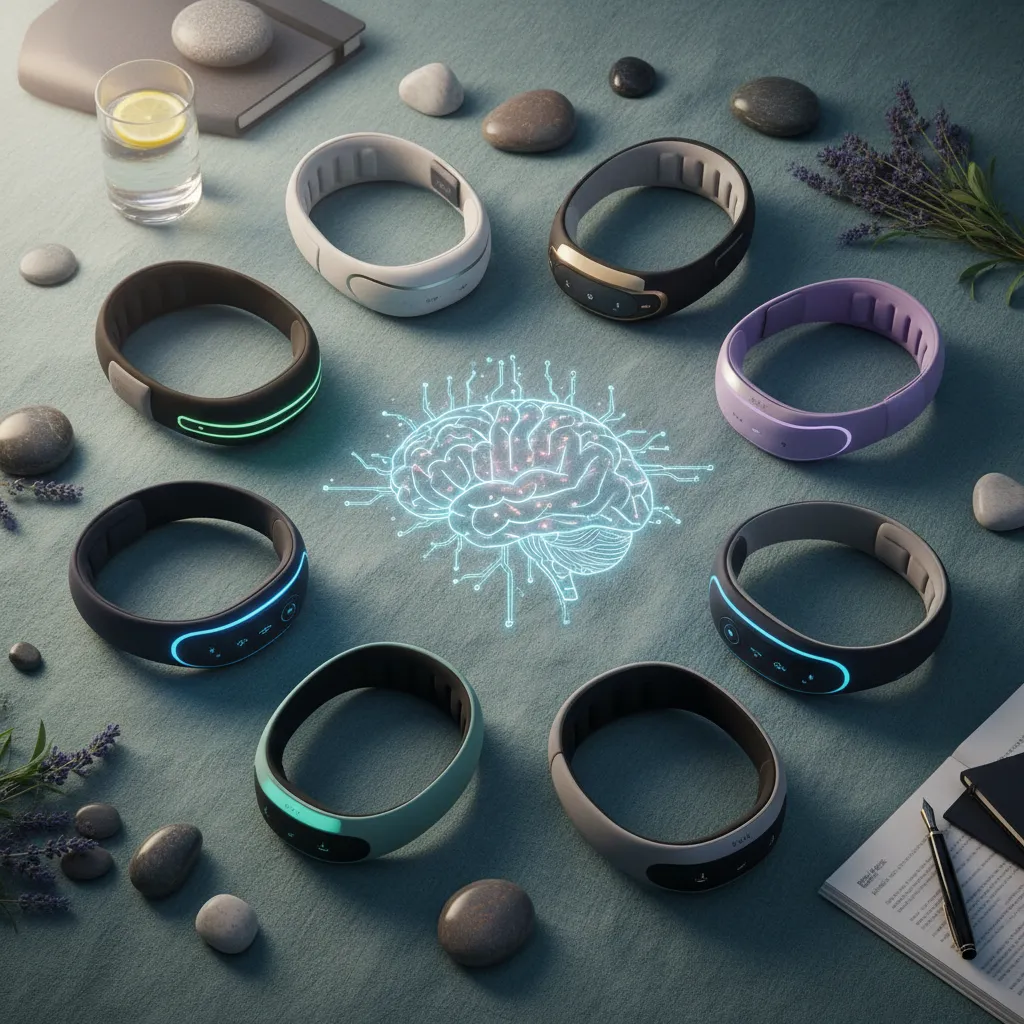
The beauty of these Portable Monitors is their ability to provide accurate, comprehensive sleep data without altering your natural sleep environment or requiring any conscious effort beyond setting up the device. This reduces the ‘observer effect’ and ensures more natural, representative data, which is crucial for effective biohacking. Furthermore, advancements in Sleep Tracker Headband technology also provide a less intrusive wearable option for those seeking direct brainwave data without full-body contact.
The Neuroscientific Edge: Analyzing Sleep Stages with AI Precision
The true neuroscientific value of AI Sleep Tracking lies in its unparalleled ability to differentiate and quantify Deep Sleep Tracking stages. Understanding your time spent in NREM (stages N1, N2, N3) and REM sleep is far more insightful than a simple ‘sleep score’. Each stage contributes uniquely to brain health and overall restoration.
- • N1 (Light Sleep): The transition phase from wakefulness to sleep, characterized by Alpha and Theta brain waves. While important for initiation, too much N1 can indicate fragmented sleep.
- • N2 (Light Sleep): Deeper than N1, this stage features sleep spindles and K-complexes—short bursts of brain activity crucial for memory consolidation and protecting sleep from external disturbances.
- • N3 (Deep Sleep / Slow-Wave Sleep): The most restorative phase, dominated by high-amplitude, low-frequency Delta waves. This is where physical repair, growth hormone release, and crucial waste removal from the brain (via the glymphatic system) occur. It’s profoundly linked to Neuroplasticity, the brain’s ability to reorganize itself by forming new neural connections, which is essential for learning and memory. Insufficient deep sleep directly impacts cognitive flexibility and resilience.
- • REM (Rapid Eye Movement Sleep): Characterized by brain activity resembling wakefulness (Theta and Alpha waves), rapid eye movements, muscle paralysis, and vivid dreaming. Essential for emotional processing, problem-solving, and consolidating complex skills.
AI algorithms excel at identifying these subtle physiological markers—from changes in heart rate variability and breathing patterns to specific brainwave frequencies (when EEG is available)—that define each stage. By comparing your individual sleep patterns against vast databases of clinically validated PSG data, these systems provide a personalized neuro-map of your nightly restoration. This level of detail allows for highly targeted biohacking interventions.
Neuro-Fact
- • The Circadian Rhythm, our internal 24-hour clock, profoundly influences the timing and quality of our sleep stages. Disruptions can lead to suboptimal ratios of deep and REM sleep, impacting neuroplasticity and cognitive function. AI Sleep Tracking helps identify these disruptions.
- • Optimizing brain states through targeted interventions can significantly enhance both sleep quality and waking performance. For those seeking to further enhance cognitive function and achieve states of deep relaxation or focused attention, advanced tools exist. Consider exploring visual brain entrainment tools that leverage light therapy and specific frequency patterns to guide your brain into desired states.
By understanding where your sleep is falling short, you can implement strategies to enhance specific stages. For instance, if Deep Sleep Tracking shows a consistent deficit, you might focus on optimizing your evening routine, ensuring a dark, cool sleep environment, or exploring relaxation techniques to promote Delta wave activity. This scientific, data-driven approach is the hallmark of modern biohacking.
The Frontier of Innovation: Researching Sleep Tech Startups & Their Impact
The landscape of AI Sleep Tracking is rapidly evolving, driven by a vibrant ecosystem of sleep tech startups pushing the boundaries of what’s possible. These companies are not just refining existing technologies; they are introducing entirely new paradigms for understanding and interacting with our sleep. From novel sensor technologies to sophisticated predictive analytics, the innovation is breathtaking.
When researching these startups, several key areas of innovation stand out:
- • Advanced Sensor Fusion: Combining data from multiple sensor types (e.g., radar, acoustics, thermal imaging) to create a more comprehensive and accurate picture of sleep. This multi-modal approach enhances data robustness and reduces reliance on any single measurement.
- • Personalized Interventions: Moving beyond just reporting data to actively providing dynamic, real-time feedback or interventions. This could include adaptive soundscapes, smart lighting adjustments, or even subtle haptic cues to guide users towards better sleep.
- • Biomarker Discovery: Leveraging AI sleep algorithms to identify new, subtle physiological biomarkers during sleep that correlate with specific health conditions or cognitive states. This has huge implications for early diagnosis and preventive medicine.
- • Integration with Clinical Settings: Developing medical-grade AI sleep tracking solutions that can assist clinicians in diagnosing and managing sleep disorders, bridging the gap between consumer tech and professional healthcare.
The competitive landscape is fostering rapid innovation, with each startup striving to offer more accurate, less intrusive, and more actionable insights. This dynamic environment means that what seems cutting-edge today could be standard tomorrow. For biohackers, staying abreast of these developments is crucial for continuously optimizing their personal performance stacks. The future promises even more sophisticated tools that will make understanding and enhancing our sleep as intuitive as checking our daily steps.
5 AI Sleep Tracking Tools That Are Redefining Rest
While it’s crucial to avoid overt brand promotion, we can discuss categories of AI Sleep Tracking tools that exemplify the technological advancements and address the search intents outlined. These represent the pinnacle of current AI sleep technology, offering robust data and a seamless user experience, much like a high-performance vehicle that anticipates your needs.
1. Advanced Under-Mattress Monitors with AI Learning
These discreet devices, placed under your mattress, use highly sensitive sensors to detect micro-vibrations from your heart rate, breathing, and body movements. AI algorithms then process this raw data to accurately classify sleep stages (Light, Deep, REM), identify sleep disturbances (like breathing irregularities or restless leg movements), and calculate crucial metrics like Sleep Efficiency. Their key advantage is their complete invisibility and lack of direct contact, fulfilling the desire to monitor sleep without wearable ‘seatbelts’. Many also offer a sleep API for developers.
- • Precision: High accuracy in sleep stage detection compared to wrist-worn devices.
- • Comfort: Zero contact with the body, ensuring natural sleep.
- • Integration: Often come with companion apps and offer developer-friendly sleep api access.
2. AI-Powered Bedside Radar/Sensing Devices
These devices sit on your nightstand and utilize ultra-low power radar or biometric sensing technology to remotely monitor your sleep. They detect subtle chest wall movements from breathing and heartbeats, translating them into comprehensive sleep data. Their AI capabilities allow for sophisticated analysis of sleep stages using AI and the detection of environmental factors like temperature or light. This category is another excellent option for those who want to be completely asleep without any physical interference.
- • Non-Contact: Zero physical interaction, ideal for minimalists.
- • Environmental Context: Often include sensors for air quality, temperature, and light, providing a holistic view of your sleep environment.
- • Smart Home Integration: Many offer integration points to adjust smart home settings for optimal sleep conditions.
3. Smart Rings with Advanced Biometric and AI Processing
While technically wearables, smart rings are a minimalist form factor that many find less intrusive than wrist devices. They pack powerful sensors (PPG for heart rate, accelerometers for movement, NTC thermistors for skin temperature) into a small, comfortable ring. Their AI is exceptionally good at correlating these diverse data streams to provide highly accurate sleep stage detection, often rivaling clinical PSG in certain aspects. They offer excellent solutions for those seeking sleep api access and detailed daily readiness scores, making them a popular choice among those who research sleep tech startups.
- • Discreet & Comfortable: Minimalist design that’s easy to wear 24/7.
- • Holistic Health Metrics: Beyond sleep, they track activity, HRV, and body temperature, offering a comprehensive view of recovery.
- • Actionable Insights: Provide daily readiness scores and personalized recommendations for optimizing your day based on sleep quality.
4. EEG-Based Sleep Headbands with Neurofeedback
For the ultimate in neuroscientific precision, EEG-based headbands offer direct measurement of brainwave activity. These devices utilize AI to interpret complex EEG signals, providing highly accurate analysis of sleep stages using AI, including granular insights into Alpha, Theta, Delta, and even Gamma waves during different sleep cycles. Some even incorporate neurofeedback, playing auditory tones or gentle vibrations to subtly guide your brain into desired sleep states, or to gently wake you during optimal periods. This is a powerful tool for advanced biohackers interested in direct brain optimization.
- • Clinical-Grade Accuracy: Closest to traditional PSG in terms of brainwave data.
- • Active Optimization: Neurofeedback features can actively enhance sleep quality.
- • Research Potential: Provides rich data for personal experimentation and understanding nuanced brain states during sleep.
5. Integrated Smart Bedroom Systems with Predictive AI
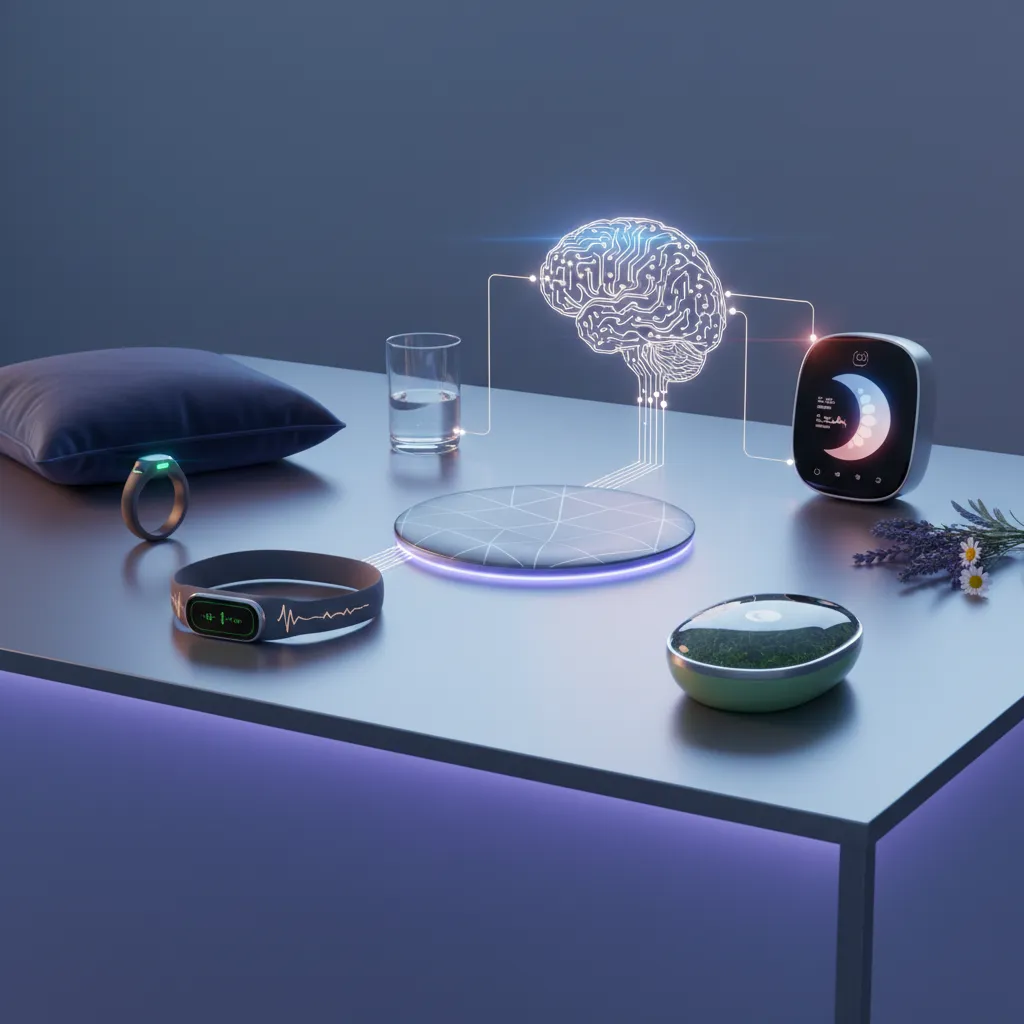
The most comprehensive solutions are emerging as integrated smart bedroom systems. These combine various sensor types (often a mix of non-contact and environmental sensors) with a central AI hub. They go beyond mere tracking to offer predictive analytics, anticipating your sleep needs based on your daily activity, historical patterns, and even external data like weather or air quality. These systems are designed to seamlessly integrate sleep tracking into apps and smart home platforms, offering a truly ‘set-and-forget’ experience for optimized sleep. They represent the cutting edge for those who research sleep tech startups and the future of bio-adaptive environments.
- • Holistic Environment Control: Automatically adjusts temperature, lighting, sound, and even scent based on your detected sleep stage.
- • Predictive Optimization: Learns your patterns and proactively adjusts conditions for optimal sleep.
- • Comprehensive Data: Combines personal physiological data with environmental factors for deep insights.
Conclusion: Fueling Your Brain with Data-Driven Rest
The journey toward optimal cognitive performance begins with understanding the engine of the mind – and that means prioritizing restorative sleep. AI Sleep Tracking is no longer a niche concept for early adopters; it is an essential tool for anyone serious about unlocking their full potential. By moving beyond rudimentary metrics to precise analysis of sleep stages using AI, gaining access to powerful sleep api solutions, embracing non-wearable comfort, and continuously researching sleep tech startups, we are equipping ourselves with the knowledge and tools to truly master our nocturnal recovery.
The benefits are profound: enhanced memory consolidation, improved emotional resilience, sharper focus, and sustained energy throughout the day. This isn’t just about feeling less tired; it’s about fostering Neuroplasticity, supporting long-term brain health, and ultimately, living a life of higher performance and greater well-being. The future of human potential is inextricably linked to the quality of our sleep, and AI is providing the roadmap to get there.
Expert Tip: Don’t wait for a perfect system. Start by choosing one AI Sleep Tracking tool that aligns with your comfort and data needs, whether it’s an under-mattress sensor or a smart ring. Consistency is key. Track your sleep for at least two weeks to establish a baseline, then make one small, data-driven adjustment to your routine. Observe the impact, and iterate. Your brain will thank you for the upgrade.