
6 Facts About Dream Science That Rev Up Your Brain Engine
In the relentless pursuit of peak human performance, we meticulously optimize our diets, refine our exercise routines, and fine-tune our productivity hacks. Yet, one of the most profound and accessible avenues for brain enhancement often remains an enigma, relegated to the realm of passive rest: sleep. Specifically, the intricate, often bizarre, and always fascinating world of dreams. As a neuroscientist and biohacker, I’ve spent decades delving into the complex machinery of the human brain, and I can tell you this much: your brain isn’t merely idling when you close your eyes. It’s undergoing a sophisticated diagnostic, a nightly tune-up that’s critical for optimal cognitive function.
Do you often wake feeling unrefreshed, grappling with brain fog, or struggling to maintain focus throughout your day? These aren’t just minor inconveniences; they are signals that your internal engine might be misfiring. The truth is, how well your brain performs during your waking hours is profoundly influenced by what happens when you’re asleep. Dreams, far from being mere random neural firings, are a critical component of your brain’s operational system, influencing everything from memory consolidation to emotional regulation and creative problem-solving. Understanding the science of dreams isn’t just an academic exercise; it’s a blueprint for unlocking superior mental clarity, enhanced learning capabilities, and a more resilient emotional state.
This deep dive into the science of dreams will equip you with six powerful insights into how your brain leverages its nightly voyages. We’ll explore the ‘why’ behind these nocturnal narratives and the ‘how’ you can harness this knowledge—and emerging neurotechnology—to rev up your own brain engine, ensuring it runs at peak efficiency. Prepare to transform your understanding of sleep, dreams, and ultimately, your waking potential.
Key Takeaways
- • Dreams are your brain’s nightly diagnostic and optimization tool, essential for cognitive and emotional health.
- • Rapid Eye Movement (REM) sleep is the primary, but not exclusive, stage for vivid dreaming, playing crucial roles in memory, learning, and emotional processing.
- • Beyond REM, dreams in Non-REM (NREM) sleep contribute to different aspects of cognitive function, often more conceptual and less narrative.
- • Leveraging neuroscientific insights and targeted biohacking techniques can significantly enhance dream quality and harness sleep for superior waking performance.
1. Unlocking the Nightly Diagnostics: What is the Science of Dreams?
At its core, the science of dreams is the interdisciplinary study of the physiological and psychological processes that occur in the brain during sleep, particularly during the phenomenon of dreaming. It seeks to understand why we dream, what brain mechanisms are involved, and what purpose these nocturnal narratives serve. For centuries, dreams were seen as mystical messages or random mental debris. Modern neuroscience, however, reveals them as a highly organized, albeit often abstract, form of brain activity during sleep, critical for our mental and physical well-being.
Our sleep isn’t a monolithic block of unconsciousness; it’s a dynamic journey through distinct stages, each with its own unique brainwave patterns, physiological markers, and contributions to our overall health. These sleep cycles typically last around 90-110 minutes and repeat several times throughout the night. Understanding these cycles is fundamental to grasping the role of dreams:
- • Non-REM (NREM) Sleep: This comprises about 75% of our total sleep time and is further divided into three stages:
- ▪ N1 (Light Sleep): The transition from wakefulness to sleep, characterized by Alpha waves giving way to Theta waves. Dreams here are often fleeting and fragmented.
- ▪ N2 (Deeper Sleep): Heart rate and body temperature drop. Brain activity shows sleep spindles and K-complexes, crucial for memory processing. Dreams in N2 are less vivid than REM dreams.
- ▪ N3 (Deep Sleep or Slow-Wave Sleep): The most restorative stage, dominated by slow Delta waves. This is when physical repair and growth occur, and memory consolidation is robust. While less common, dreams can occur here, often described as logical or thought-like.
- • REM (Rapid Eye Movement) Sleep: This stage accounts for about 25% of our sleep, increasing in duration towards morning. It’s characterized by rapid eye movements, temporary muscle paralysis (atonia), and brain activity strikingly similar to wakefulness. This is where most vivid, narrative dreams occur.
The brain’s ‘diagnostics’ during dreaming are multifaceted. It’s not just about processing the day’s events; it’s about pruning unnecessary neural connections, strengthening vital ones, simulating social interactions, and even rehearsing motor skills. This nightly maintenance ensures your cognitive engine is finely tuned, ready to tackle the complexities of the waking world.
2. Why Do We Dream, and Primarily in REM Sleep?
The question of why do we dream has puzzled philosophers and scientists for millennia. While no single theory provides a complete answer, modern neuroscience offers compelling insights, particularly into the crucial role of REM sleep. During REM, our brain is incredibly active, showing patterns of brain activity during sleep that mirror wakefulness, yet our bodies are largely paralyzed. This unique state is a prime incubator for the vivid, often bizarre, narratives we call dreams.
One prevailing theory suggests that REM sleep and its associated dreams are vital for emotional regulation. Dreams provide a safe, simulated environment for our brains to process intense emotions and traumatic experiences without the real-world consequences. This “threat simulation” theory posits that by rehearsing reactions to potential dangers in our dreams, we are better equipped to handle similar situations in waking life. The amygdala, our brain’s emotional hub, is highly active during REM sleep, suggesting a deep connection between dreaming and emotional processing.
Another critical function of REM dreams is their role in memory consolidation and learning. While NREM sleep often handles declarative memories (facts and events), REM sleep is particularly important for procedural memories (skills and habits) and integrating new information with existing knowledge. The unique brainwave patterns during REM, including bursts of Theta waves, facilitate this complex neural reorganization. Dreams can also be a wellspring of creativity, allowing disparate ideas and concepts to combine in novel ways, often leading to breakthroughs in problem-solving.
Furthermore, REM sleep helps in the pruning of synaptic connections. Our brains form countless connections throughout the day. Dreams, especially during REM, are thought to help clear out unnecessary or redundant connections, making room for new learning and enhancing cognitive efficiency. This synaptic homeostasis hypothesis suggests that sleep, and REM dreams in particular, recalibrate our neural networks, preventing information overload and ensuring optimal brain function.
Are We Conscious When We Sleep? The Paradox of the Dreaming Mind.
The question, “are we conscious when we sleep?” delves into one of the most intriguing paradoxes of the human mind. While our bodies are largely inactive and our senses are disengaged from the external world, our brains are very much ‘on,’ generating vivid internal experiences. During dreams, especially in REM sleep, we experience a form of consciousness that is distinct from our waking state. It’s often characterized by a lack of critical self-reflection and a reduced ability to differentiate dream content from reality.
However, there are fascinating exceptions, such as Lucid Dreaming. In a lucid dream, the dreamer becomes aware that they are dreaming and can, to varying degrees, control the dream’s narrative or environment. This phenomenon offers a unique window into the brain’s capacity for self-awareness even during sleep. Studies on lucid dreamers show increased activity in the prefrontal cortex, a region associated with higher-order cognitive functions like planning and decision-making, which is typically suppressed during regular REM sleep. This suggests that while baseline consciousness during dreams is altered, the potential for metacognition remains.

The neurology of consciousness during sleep is complex, involving intricate interactions between various brain networks. While the default mode network (DMN), often associated with self-referential thought, remains active during sleep, its connectivity patterns shift. This allows for the subjective experience of dreaming without the full executive control characteristic of waking consciousness. Understanding these altered states is not just academically interesting; it opens doors to potential therapeutic applications, such as using lucid dreaming for overcoming phobias or enhancing creativity.
3. Beyond REM: Do We Dream in Deep Sleep Too?
It’s a common misconception that dreams are exclusively a product of REM sleep. While REM is undeniably the stage associated with the most vivid, narrative, and memorable dreams, the answer to “do we dream in deep sleep?” is a resounding yes, though with distinct characteristics. NREM sleep, particularly the deep sleep stage (N3 or slow-wave sleep), also hosts mental activity that can be classified as dreaming, albeit often different in quality and content.
NREM dreams tend to be less vivid, less bizarre, and more concept-driven than their REM counterparts. They often involve mundane thoughts, problem-solving, or a replay of recent events in a more literal, less fantastical way. If woken from NREM sleep, individuals might report a feeling of “thinking” or “processing” rather than a fully formed narrative dream. This difference in dream phenomenology aligns with the distinct brain activity during sleep across stages.
Deep sleep is characterized by prominent slow Delta waves, indicative of widespread, synchronized neural activity. During this stage, critical processes like physical restoration, hormone release, and declarative memory consolidation occur. Within NREM sleep, specific brainwave patterns like Sleep Spindles—bursts of neural oscillations (12-16 Hz)—are generated by the thalamus and cortex. These spindles are crucial for transferring memories from the hippocampus to the neocortex for long-term storage, a process deeply intertwined with NREM “dreaming” or mental processing.
The distinction highlights the brain’s remarkable capacity to engage in different forms of cognitive activity across various sleep cycles. While REM dreams are often seen as emotional and creative playgrounds, NREM dreams contribute to more logical, organizational, and factual aspects of mental processing. Both are integral to a fully functioning “brain engine.” Ignoring the importance of deep sleep, where these NREM dreams and crucial restorative processes occur, can lead to cognitive deficits, impaired learning, and a generalized feeling of being “run down.”
For those looking to optimize their brain’s performance, ensuring sufficient duration and quality of both REM and NREM sleep is paramount. Tools that help track sleep stages can provide valuable insights into your personal sleep cycles and help you identify areas for improvement.
4. Architecting Tomorrow: How Sleep and Dreams Consolidate Memory and Learning.
One of the most profound contributions of the science of dreams to our understanding of human cognition is its role in memory consolidation during sleep. It’s during our nightly journeys through sleep cycles that the ephemeral experiences and vast amounts of information absorbed during the day are processed, sorted, and etched into our long-term memory. This isn’t a passive process; it’s an active, sophisticated orchestration of neural activity that happens largely unconsciously.
The hippocampus, a seahorse-shaped structure deep within the brain, plays a critical role in forming new memories. During waking hours, it acts like a temporary storage buffer. During NREM sleep, and particularly during the slow-wave oscillations of deep sleep, the hippocampus “replays” recent experiences, transferring this information to the neocortex for more permanent storage. This “dialogue” between the hippocampus and neocortex is facilitated by the precise timing of slow waves, sleep spindles, and sharp-wave ripples. This process is essentially your brain defragmenting and backing up its hard drive.
REM sleep, with its vivid dreams and intense brain activity during sleep, complements NREM in memory processing. While NREM strengthens declarative memories, REM appears to be crucial for integrating new information into existing knowledge structures, strengthening emotional memories, and enhancing procedural learning (skills). It’s during REM dreams that your brain might rehearse new motor skills learned during the day, or find novel solutions to problems encountered. This is why a good night’s sleep before an exam or a presentation is far more effective than an all-nighter.
The Brain’s Nightly Rehearsal: Neuroplasticity and Skill Acquisition.
The concept of Neuroplasticity – the brain’s ability to reorganize itself by forming new neural connections throughout life – is profoundly influenced by sleep and dreams. Every time you learn something new, practice a skill, or have a new experience, your brain undergoes subtle physical changes. Sleep provides the optimal environment for these changes to consolidate and become permanent.
Dreams, particularly those rich in experience and narrative, actively contribute to this remodeling. For instance, musicians who practice a new piece often report dreaming about playing it, and studies show that this “dream practice” can actually improve their performance upon waking. This isn’t just anecdotal; it’s a testament to the brain’s capacity for Sleep Learning, where the brain continues to process and refine skills even when the conscious mind is at rest.
This nightly neurological rehearsal is vital for:
- • Skill Refinement: From playing an instrument to mastering a complex software interface, repeated neural firing during sleep solidifies motor and cognitive skills.
- • Problem Solving: Dreams can present novel perspectives on waking problems, sometimes leading to “aha!” moments upon waking.
- • Creativity Boost: The brain’s less constrained state during dreaming allows for unconventional associations, fostering creative thought.
By understanding how sleep and dreams facilitate Neuroplasticity, we can actively seek to optimize our sleep environment and habits to maximize our learning and skill acquisition potential. This is true biohacking – leveraging your body’s innate processes for enhanced performance.
5. The Neurology of the Dreaming Mind: A Symphony of Brain Activity.
To truly appreciate the science of dreams, we must delve into the intricate neurological symphony that unfolds each night. The dreaming mind is far from dormant; it’s a bustling metropolis of neural activity, involving a complex interplay of brain regions, neurotransmitters, and specialized brain waves. Understanding this brain activity during sleep illuminates not just the “what” but the “how” of our nocturnal experiences.
During REM sleep, the stage where most vivid dreams occur, several key brain areas show heightened activity:
- • Amygdala: This almond-shaped structure, central to emotional processing, is highly active during REM, explaining the intense emotional content of many dreams.
- • Visual Cortex: Despite closed eyes, the visual cortex buzzes with activity, generating the vivid imagery we perceive in dreams. This is often more active than during waking perception, contributing to the surreal quality of dreams.

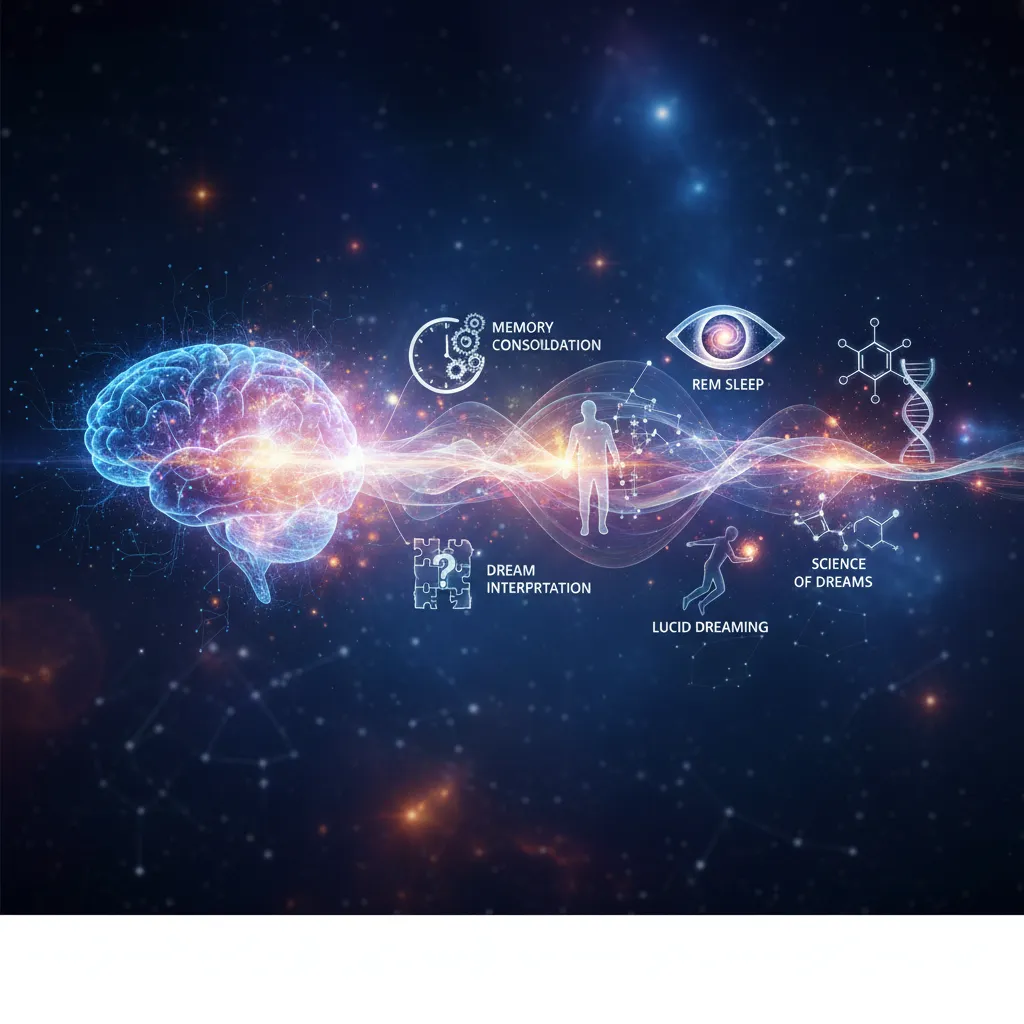
A human brain depicted with glowing neural pathways, symbolizing the complex and active processes occurring during REM sleep and the science of dreams. - • Hippocampus: While less active in REM than NREM, it still plays a role in integrating new information and forming narrative coherence, even if it’s often fragmented.
- • Prefrontal Cortex (PFC): Crucially, the dorsolateral prefrontal cortex, responsible for executive functions like logic, planning, and self-control, is largely deactivated during REM. This explains why dreams often lack logical consistency and why we rarely question the absurdities within them.
Neurotransmitters also play a pivotal role. Acetylcholine levels are high during REM sleep, contributing to cortical activation and dream vividness. Conversely, norepinephrine and serotonin levels are very low, which may contribute to the emotional intensity and disconnect from external reality. Dopamine, a neurotransmitter associated with reward and motivation, is also active, potentially influencing the novelty and sometimes bizarre nature of dream content.
Furthermore, specific brainwave frequencies are associated with different aspects of dreaming. While Theta waves are prominent in early sleep and REM, high-frequency Gamma Waves (30-100+ Hz) are also observed during periods of intense cognitive processing, even during sleep. While primarily associated with waking consciousness, research suggests bursts of gamma activity during REM sleep are linked to moments of insight and high-level information processing within the dream state. This hints at the profound computational power of the brain even when the mind asleep body awake phenomenon.
Decoding Emotional Landscapes with Dream AI.
The emotional landscape of dreams is a fertile ground for understanding our subconscious. Dreams often serve as a canvas for our deepest fears, desires, and unresolved conflicts. The brain uses this unique state to process and integrate emotional experiences, helping us to regulate mood and develop psychological resilience. This is where cutting-edge technology starts to intersect with the ancient mystery of dreams.
Neurotech is beginning to offer tools that can help us decode these complex emotional narratives. Advanced algorithms, sometimes referred to as Dream AI, are being developed to analyze dream reports, identifying recurring themes, emotional patterns, and even potential stress indicators. By applying sophisticated natural language processing and machine learning, these systems can help individuals gain deeper insights into their inner psychological states, offering a form of personalized “brain diagnostics” through dream analysis.
Furthermore, the burgeoning field of Emotion AI, traditionally applied to waking expressions, is now being explored for its potential to interpret the emotional undercurrents within dream narratives. While still in its nascent stages, the ability to objectively quantify and analyze emotional content in dreams promises to revolutionize our understanding of how our brains manage emotional health during sleep. These innovations underscore the profound connection between our dream life and our waking emotional well-being, offering new pathways for self-improvement and mental resilience.
6. Biohacking Your Dream Engine: Leveraging Science for Peak Performance.
Now that we’ve journeyed through the intricate science of dreams, the crucial question for any biohacker is: How can we apply this knowledge to optimize our brain’s performance? The goal isn’t just to understand dreams, but to leverage the insights into brain activity during sleep and sleep cycles to rev up your cognitive engine for enhanced waking clarity, creativity, and resilience.
Here are actionable strategies, rooted in neuroscience, to optimize your dream life and, by extension, your brain function:
- • Prioritize Sleep Hygiene: This is foundational. Consistent sleep schedules, a cool dark bedroom, and avoiding screens before bed are paramount. Align your sleep with your natural Circadian Rhythm to ensure robust cycles of NREM and REM sleep. Quality sleep is the bedrock for quality dreaming and optimal memory consolidation.
- • Mindful Pre-Sleep Routines: Engage in activities that promote relaxation and positive mental states. Journaling about your day’s experiences or intentions can prime your brain for constructive dream processing, aiding in memory consolidation.
- • Targeted Brain Entrainment: For those seeking to deepen relaxation and potentially enhance specific brainwave states associated with dreaming or deep sleep, neurotechnology offers promising avenues. Techniques involving gentle brain stimulation or precise visual and auditory patterns can guide your brain into optimal states for restorative sleep and vivid dreaming. For instance, engaging with visual brain entrainment tools can help induce states of profound relaxation, making it easier to fall asleep and potentially increasing the likelihood of desired sleep cycles. Similarly, advanced light therapy devices can modulate your Circadian Rhythm, while sensory resonance technology aims to guide the brain into specific wave patterns, such as Theta waves or Gamma waves, associated with creativity and deep processing during sleep.
- • Dream Journaling: Keeping a dream journal immediately upon waking can significantly enhance dream recall and awareness. This practice not only provides rich data for personal reflection but can also increase the frequency of Lucid Dreaming, giving you an unprecedented level of control over your subconscious explorations.
- • Nutritional Support: Certain nutrients and supplements can support healthy sleep and neurotransmitter balance. Magnesium, L-theanine, and certain adaptogens can promote relaxation and enhance sleep quality, directly impacting the brain’s ability to engage in optimal brain activity during sleep.
The integration of these biohacking techniques with a deep understanding of the science of dreams moves us beyond passive rest into active cognitive enhancement. By deliberately influencing our sleep and dream environments, we can foster Neuroplasticity, improve memory consolidation, and unlock creative insights that propel our waking lives forward. It’s about taking control of your brain’s most powerful, yet often overlooked, diagnostic and optimization system.
“Your dreams are not just stories; they are the operating system diagnostics running in the background, constantly optimizing your cognitive hardware for peak performance.”
Conclusion: Ignite Your Potential with Dream Science
The science of dreams offers a profound paradigm shift. No longer can we view sleep as mere downtime; it is a dynamic, complex, and essential period of intense brain activity during sleep. From the emotional processing in REM to the memory consolidation in deep NREM, and the subtle yet crucial influences on Neuroplasticity, dreams are the unsung heroes of our cognitive and emotional well-being. By understanding these six fundamental facts, you’re not just gaining knowledge; you’re gaining a powerful toolkit for self-optimization.
We’ve explored how dreams serve as nightly diagnostics, processing emotions and simulating threats. We’ve clarified why do we dream primarily in REM, and debunked the myth that dreams are exclusive to this stage, recognizing the unique contributions of NREM sleep. The intricate mechanisms of memory consolidation during sleep and the profound neurological symphony involved in the dreaming mind, from brain regions to neurotransmitters and Gamma waves, underscore the sophistication of this nocturnal phenomenon.
Ultimately, leveraging the science of dreams means taking an active role in optimizing your sleep and dream environment. It means recognizing that your night profoundly impacts your day, and that a well-tuned “brain engine” is the ultimate competitive advantage in a demanding world.
Expert Tip: Don’t wait to improve your sleep. Start today by establishing a consistent sleep schedule, even on weekends, to stabilize your Circadian Rhythm. Introduce a relaxing pre-sleep ritual – perhaps 20 minutes of reading or gentle stretching – to signal to your brain that it’s time to transition into its nightly diagnostic mode. Pay attention to your dreams, even if you don’t recall them fully at first. This simple commitment to better sleep hygiene is the first, most powerful step towards unlocking the full potential of your dreaming mind and truly revving up your brain engine for optimal performance.