
7 CO2 Monitors: Essential Tools for Cognitive Optimization and Maintaining Pristine Indoor Air Quality
As a neuroscientist and biohacker, I’ve dedicated my career to understanding and optimizing the human brain. Think of your brain as a finely tuned, high-performance engine, capable of incredible feats of concentration, creativity, and complex problem-solving. But just like any sophisticated engine, its performance is critically dependent on its environment – the quality of the fuel it receives, and the air it breathes. What if I told you that an invisible, odorless gas, accumulating silently in your home or office, could be silently sabotaging your cognitive prowess, dulling your focus, disrupting your sleep, and ultimately hindering your journey towards self-mastery?
Many of us invest heavily in ergonomic workspaces, smart lighting, and even nootropics, yet we often overlook the fundamental element of our immediate surroundings: the air we breathe. Elevated levels of carbon dioxide (CO2), a byproduct of our own respiration, are a pervasive issue in modern, energy-efficient buildings. This isn’t just about feeling a little stuffy; it’s about a quantifiable impact on your brain’s ability to function at its peak. Imagine running your premium sports car on low-grade fuel – the engine might still run, but it certainly won’t deliver the horsepower and efficiency it was designed for. Your brain is no different.
This in-depth article will serve as your comprehensive guide to understanding the profound link between indoor air quality, specifically CO2 levels, and your cognitive function. We’ll delve into the science of why your brain demands fresh air, explore how advanced CO2 monitors can empower you with actionable data, and outline how these co2 monitoring devices are not just gadgets, but indispensable productivity devices for any serious biohacker or individual committed to unlocking their full mental potential. By the end, you’ll be equipped with the knowledge to transform your living and working spaces into sanctuaries of optimal brain performance, ensuring that your internal “air filter” – your very cognition – remains pristine.
Key Takeaways
- • CO2’s Cognitive Impact: Elevated indoor CO2 levels, even seemingly moderate ones, significantly impair cognitive functions such as focus, decision-making, and reaction time, impacting overall brain health.
- • Empowerment Through Monitoring: CO2 monitors provide real-time data, transforming an invisible threat into an actionable metric, allowing for proactive ventilation and environmental optimization.
- • Diverse Monitor Solutions: From portable personal sensors to integrated smart home systems, a range of co2 monitoring devices exists to suit various needs, all designed to enhance your indoor air quality device ecosystem.
- • Productivity & Well-being Multiplier: Optimizing CO2 levels contributes directly to enhanced productivity, improved sleep quality, boosted mood, and supports long-term neuroplasticity and overall well-being.
What Are CO2 Monitors and Why Does Your Brain Demand Optimal Air?
Carbon dioxide (CO2) is a natural component of Earth’s atmosphere, essential for plant life and a byproduct of human respiration. While outdoor CO2 levels typically hover around 400-450 parts per million (ppm), indoor environments, particularly poorly ventilated ones, can see these levels skyrocket. Every breath we exhale releases CO2, and in enclosed spaces, this accumulation can quickly become problematic for our biology, especially our brain.
At its core, a CO2 monitor is an indoor air quality device designed to measure the concentration of carbon dioxide in the ambient air. The most accurate and widely used technology for consumer-grade monitors is Non-Dispersive Infrared (NDIR) sensing. NDIR sensors work by shining an infrared light through a sample of air. CO2 molecules absorb specific wavelengths of this infrared light. By measuring how much light is absorbed, the sensor can precisely determine the concentration of CO2 in the air. This real-time data is then displayed, often with color-coded indicators or audible alerts, giving you immediate feedback on your environment’s air quality.
The “why” behind monitoring CO2 is deeply rooted in neurobiology. When CO2 levels rise in the air we breathe, it subtly yet significantly alters the delicate acid-base balance (pH) of our blood. This shift, known as respiratory acidosis, triggers a series of physiological responses aimed at maintaining homeostasis. One crucial response is cerebral vasodilation – the widening of blood vessels in the brain. While this might sound beneficial, implying increased blood flow, it’s a compensatory mechanism. The body is trying to flush out excess CO2 from the brain tissue, but in doing so, it can paradoxically reduce the efficiency of oxygen delivery to certain brain regions. This is because the affinity of hemoglobin for oxygen is influenced by pH (the Bohr effect), and a more acidic environment can make oxygen release less efficient at the cellular level.
Furthermore, elevated CO2 can directly impact neuronal activity. Studies have shown that even moderate CO2 concentrations (e.g., 1000-2500 ppm, common in many offices and classrooms) can lead to measurable declines in cognitive performance. This includes:
- • Reduced Concentration and Focus: Tasks requiring sustained attention become harder, leading to increased errors and reduced efficiency.
- • Impaired Decision-Making: The ability to make complex decisions, strategize, and think critically is compromised.
- • Slower Reaction Times: Both physical and cognitive reaction times can be noticeably dulled.
- • Increased Fatigue and Drowsiness: A common sensation, often mistakenly attributed to lack of sleep or general burnout, when it could simply be poor air quality.
- • Headaches and Discomfort: A direct physical manifestation of your body struggling with suboptimal conditions.
For the biohacker, understanding these subtle physiological shifts is paramount. Optimizing your indoor air quality device ecosystem isn’t about avoiding danger; it’s about eliminating invisible drag on your brain’s performance, ensuring peak cognitive load capacity and neural efficiency. By proactively managing CO2, you are literally providing your brain with the cleanest, most efficient fuel possible to run its operations.
The Invisible Threat: Decoding Your Indoor ‘Cabin Air’ Quality
Just as a pilot meticulously checks the ‘cabin air’ quality of their aircraft to ensure passenger and crew well-being, we, as biohackers, must apply the same rigor to our personal environments. Our homes and offices are our personal cabins, and the air within them can become surprisingly stagnant and polluted. Modern construction trends, prioritizing energy efficiency, often lead to tightly sealed buildings with reduced natural ventilation. While great for insulation, this design inadvertently traps pollutants, with CO2 being one of the primary culprits.
The primary source of indoor CO2 is, quite simply, us. Every person in a room continuously exhales CO2. A single adult can emit around 20 liters of CO2 per hour while resting, significantly more during activity. In a small, unventilated room with just a few occupants, CO2 levels can climb rapidly:
- • Typical Outdoor Air: ~400-450 ppm
- • Well-Ventilated Indoor Spaces: < 800 ppm (ideal for cognitive function)
- • Common Office/Classroom Levels: 1000-2500 ppm (where cognitive impairment becomes noticeable)
- • Poorly Ventilated Spaces (e.g., bedrooms overnight): Can exceed 3000-5000 ppm
Beyond human respiration, other sources contribute to CO2 and overall indoor air degradation. Combustion appliances (gas stoves, fireplaces), certain building materials, and even some cleaning products can release CO2 and volatile organic compounds (VOCs). While CO2 monitors specifically target carbon dioxide, monitoring it often serves as an excellent proxy for overall ventilation efficacy. If CO2 is high, it’s highly probable that other indoor pollutants are also accumulating.
The impact extends beyond immediate cognitive decline. Chronic exposure to suboptimal indoor air quality can subtly influence long-term health and well-being. For those focused on Sleep Optimization, it’s crucial to recognize that elevated CO2 in the bedroom can fragment sleep, reduce restorative sleep stages, and lead to waking up feeling anything but Wake Up Refreshed. Understanding and actively managing your indoor ‘cabin air’ quality is a foundational step in any serious biohacking regimen.
Breathing Life into Focus: How Fresh Air Supercharges Your Cognitive Engine
Improving focus with fresh air is not merely an anecdotal observation; it’s a scientifically validated phenomenon. When CO2 levels are kept within optimal ranges (ideally below 800 ppm), the brain operates with greater efficiency and precision. This translates directly into tangible benefits for anyone seeking to maximize their mental output, whether for demanding professional tasks, intensive study, or creative pursuits.
Consider the brain’s electrical activity, often measured in terms of brainwaves. During states of deep focus and relaxed alertness, the brain exhibits a higher prevalence of Alpha and Theta waves. Alpha waves (8-12 Hz) are associated with a calm, relaxed state, often seen during meditation or when engaged in tasks that require internal focus. Theta waves (4-8 Hz) are linked to deep relaxation, creativity, and memory consolidation. While CO2 levels don’t directly cause brainwave shifts, an environment with optimal air quality reduces physiological stress on the brain, making it easier to enter and sustain these desirable states. Conversely, high CO2 levels induce a subtle stress response, diverting neural resources away from higher-order cognitive functions towards maintaining basic physiological equilibrium.
The impact on specific cognitive domains is profound:
- • Sustained Attention: The ability to maintain focus on a task for extended periods without mental fatigue is significantly enhanced in low-CO2 environments. This is critical for deep work and learning.
- • Information Processing Speed: The rate at which your brain can absorb, analyze, and respond to new information is optimized, leading to quicker learning and problem-solving.
- • Creative Output: By reducing cognitive drag, a fresh air environment allows the brain to make more novel connections and engage in divergent thinking, crucial for innovation.
- • Memory Consolidation: While not a direct cause, improved cognitive function during the day and better sleep at night (often linked to better air quality) both contribute to more robust memory formation.
For those pursuing advanced cognitive enhancement strategies, such as brainwave entrainment or specialized visual training, an optimal internal environment is non-negotiable. To truly maximize the benefits of such practices, ensuring your brain is supplied with the cleanest possible air is foundational. For example, when engaging in states of deep relaxation or targeted brain stimulation, the subtle stressors introduced by elevated CO2 can counteract the desired physiological and neurological responses. Tools that support focused attention and deep states of consciousness are best utilized when the foundational elements of your environment are optimized. If you’re exploring visual brain entrainment tools or advanced light therapy devices to cultivate specific brainwave states or enhance cognitive function, consider the synergistic effect of pairing these with pristine air quality. This holistic approach ensures your brain is primed for true enhancement, allowing you to achieve a sensory resonance that supports peak performance.
Navigating the Market: A Biohacker’s Guide to Buying CO2 Sensors
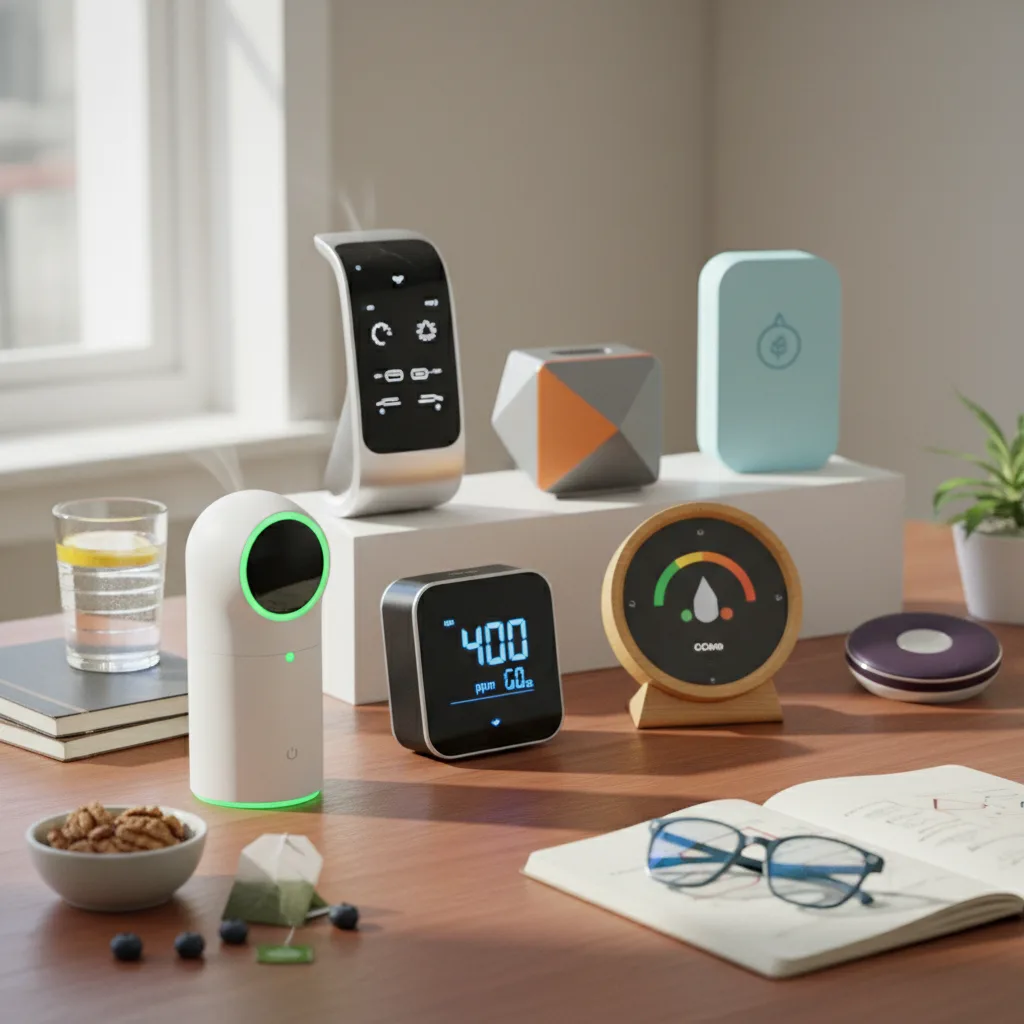
When you decide to buy CO2 sensors, the market offers a diverse range of co2 monitoring devices, each with its own strengths and ideal applications. As a biohacker, your choice should be guided by accuracy, reliability, and how seamlessly the device integrates into your pursuit of optimal performance. Rather than listing specific brands, which can quickly become outdated, let’s explore seven categories of CO2 monitors based on their features, design, and intended use, helping you select the perfect indoor air quality device for your needs.
1. Desktop & Portable CO2 Monitors
- • Description: These are the most common and accessible CO2 monitors, often featuring a digital display for real-time readings, temperature, and humidity. Many are compact and battery-operated, allowing for easy relocation.
- • Ideal For: Home offices, bedrooms, small apartments, classrooms, or anyone needing to quickly assess and manage immediate air quality in different spaces.
- • Key Features: NDIR sensor technology, clear LCD display, audible/visual alerts, usually USB rechargeable or battery-powered.
2. Smart Home Integrated CO2 Monitors
- • Description: These co2 monitoring devices connect to your Wi-Fi network and integrate with smart home platforms (e.g., Apple HomeKit, Google Home, Amazon Alexa). They often include comprehensive IAQ sensors for VOCs, PM2.5, temperature, and humidity.
- • Ideal For: Tech-savvy biohackers who want automated control. They can trigger smart fans, air purifiers, or open smart windows when CO2 levels rise.
- • Key Features: App control, historical data logging, integrations with other smart devices, advanced sensor suites.
3. Data Logging CO2 Monitors
- • Description: These CO2 monitors prioritize the collection and analysis of long-term data. They typically store readings internally or upload them to a cloud service, allowing you to visualize trends over hours, days, or weeks.
- • Ideal For: Biohackers and researchers who want to identify patterns, quantify the impact of different activities (e.g., cooking, sleeping, exercise), and optimize their ventilation strategies based on empirical data.
- • Key Features: Large internal memory, cloud connectivity, detailed graphical analysis tools, exportable data.
4. HVAC-Integrated CO2 Sensors (Demand-Controlled Ventilation)
- • Description: These are not standalone CO2 monitors but rather sensors designed to be wired directly into a building’s Heating, Ventilation, and Air Conditioning (HVAC) system. They enable demand-controlled ventilation (DCV).
- • Ideal For: Larger homes or commercial spaces seeking automated, energy-efficient ventilation. The HVAC system ramps up fresh air intake only when CO2 levels exceed a set threshold.
- • Key Features: Direct HVAC integration, energy savings, continuous background monitoring, often installed by professionals.
5. Wearable/Personal CO2 Alarms (Less Common but Emerging)
- • Description: While less prevalent for CO2 than for other gases, miniature co2 monitoring devices are emerging that can be worn or carried, primarily for occupational safety.
- • Ideal For: Individuals working in potentially confined or high-CO2 environments, or the ultra-mobile biohacker who wants to monitor air quality on the go (e.g., in a car, public transport, or a hotel room).
- • Key Features: Ultra-compact size, clip-on design, loud alarms for critical levels, often simpler displays.
6. Educational/DIY CO2 Sensor Kits
- • Description: For the truly hands-on biohacker or educator, these kits provide the raw NDIR sensor module, microcontrollers (like Arduino or Raspberry Pi), and programming resources to build your own custom CO2 monitor.
- • Ideal For: Those who enjoy understanding the underlying technology, customizing features, or integrating sensors into unique projects.
- • Key Features: Full customizability, deep understanding of sensor operation, programming skills required.
7. Commercial-Grade Multi-Parameter IAQ Stations
- • Description: These robust indoor air quality device solutions are designed for comprehensive monitoring in larger or more demanding environments. They often include highly accurate CO2, VOC, PM2.5, formaldehyde, ozone, temperature, and humidity sensors.
- • Ideal For: Businesses, larger institutions, or individuals seeking a professional-grade, all-encompassing view of their indoor environment for detailed reporting and advanced environmental control.
- • Key Features: Professional calibration, extensive data logging and cloud analytics, often higher price points, robust construction.
Regardless of the category, key features to prioritize when buying CO2 sensors include:
- • NDIR Sensor: Essential for accurate and stable readings.
- • Automatic Baseline Correction (ABC): Helps maintain accuracy over time by periodically recalibrating against assumed outdoor CO2 levels.
- • Clear Display & Alerts: Instant visual feedback and customizable alarms are crucial for actionable insights.
- • Data Logging & Connectivity: For long-term analysis and smart home integration, these are invaluable.
By carefully considering these options, you can select the CO2 monitor that best fits your biohacking goals, transforming invisible data into tangible improvements in your cognitive environment. These devices are more than just sensors; they are essential biohacking devices that empower you to take control of your atmospheric inputs.
The Productivity Equation: Air Quality, Neuroplasticity, and Your Bottom Line
The link between air quality and productivity is not a new concept, but its depth and implications for long-term brain health are increasingly being understood through the lens of neuroscience. For any individual or organization focused on maximizing output, innovation, and well-being, ignoring indoor air quality device metrics, especially CO2 levels, is akin to neglecting the engine oil in a high-performance machine. You might get by for a while, but performance will degrade, and long-term damage is inevitable.
Neuroplasticity, the brain’s remarkable ability to reorganize itself by forming new neural connections throughout life, is fundamental to learning, memory, and adaptation. While often discussed in the context of cognitive training or lifestyle choices, the environmental factors that support or hinder neuroplasticity are equally critical. Chronic exposure to elevated CO2 levels and other indoor air pollutants introduces a low-grade physiological stressor that can impede neurogenesis (the birth of new neurons) and synaptic plasticity (the strengthening or weakening of neural connections). This means that a consistently poor indoor environment can literally make it harder for your brain to learn new skills, retain information, and recover from mental exertion.
The impact on work performance is direct and measurable:
- • Reduced Analytical Skills: Tasks requiring logical reasoning and complex problem-solving suffer notably.
- • Decreased Information Usage: The ability to effectively search for and utilize relevant information for decision-making diminishes.
- • Lower Task Orientation: It becomes harder to stay on track and complete tasks efficiently, leading to procrastination and incomplete work.
- • Impaired Strategic Thinking: Long-term planning, creativity, and proactive problem-solving are among the first high-level cognitive functions to be affected.
Moreover, poor indoor air quality, particularly elevated CO2, can disrupt your Circadian Rhythm. By impacting sleep quality – leading to fragmented sleep or reduced deep sleep stages – it cascades into a host of daytime performance issues. A disrupted Circadian Rhythm affects hormone regulation, mood stability, and overall cognitive resilience, making it harder to maintain consistent productivity. Many individuals seek Tech for Focus, but overlook the foundational role of air quality. Without optimizing the air, even the most advanced productivity devices might be fighting an uphill battle against an invisible antagonist.
By actively monitoring CO2 levels with co2 monitoring devices and implementing strategies for improved ventilation, you are not just ensuring comfort; you are making a direct investment in your cognitive capital. This proactive approach supports robust neuroplasticity, enhances your capacity for sustained focus, and ultimately drives a healthier, more productive lifestyle. It’s an essential component of a truly optimized biohacking environment, ensuring your brain operates at its highest potential.
Mastering Your Domain: Monitoring the Office and Home Environment for Cognitive Edge
The ability to effectively monitor your office environment and home is a game-changer for anyone serious about cognitive enhancement and overall well-being. It transforms an abstract concept of “fresh air” into a quantifiable metric that can be actively managed. Whether you’re a remote worker, an office manager, or simply dedicated to creating the best possible personal sanctuary, integrating CO2 monitors into your space offers an unparalleled cognitive edge.
Effective deployment of co2 monitoring devices involves more than just placing them randomly. Consider these strategic approaches:
- • High-Occupancy Zones: In an office, place monitors in meeting rooms, open-plan areas, and individual offices. At home, focus on bedrooms (especially at night), living rooms during gatherings, and dedicated workspaces. These areas are prone to rapid CO2 accumulation.
- • Proactive Ventilation: Don’t wait for symptoms. Set alerts on your indoor air quality device for when CO2 levels hit a certain threshold (e.g., 800-1000 ppm). This prompts you to open windows, turn on ventilation systems, or step outside for a breath of fresh air before cognitive decline sets in.
- • Automated Solutions: For the ultimate biohacking setup, integrate smart CO2 monitors with your home automation system. This allows for automated fan activation or smart window opening, maintaining optimal air quality without constant manual intervention. This level of environmental control is becoming increasingly common in Smart Cities & AI-driven infrastructure, and you can bring that intelligence into your personal domain.
- • Data Analysis for Optimization: Utilize the data logging features of advanced productivity devices to understand your environment’s unique CO2 patterns. Are levels peaking during specific times of day or night? Does cooking significantly impact your kitchen’s air quality? This data empowers you to make informed decisions about ventilation, plant placement, or even scheduling activities.
The benefits of proactive environmental monitoring extend beyond individual cognitive gains. In an office setting, better air quality leads to:
- • Improved Employee Morale and Health: A comfortable, fresh environment reduces complaints, sick days, and promotes a sense of well-being.
- • Enhanced Collaboration: Clearer thinking leads to more effective brainstorming and problem-solving in group settings.
- • Reduced Operational Costs: Demand-controlled ventilation, guided by CO2 monitors, can optimize HVAC usage, leading to energy savings without compromising air quality.
By actively mastering your indoor environment, you are not just reacting to discomfort; you are creating a meticulously optimized ecosystem that fosters peak cognitive function, sustained productivity, and long-term health. It’s an investment that pays dividends in every aspect of your life, from your ability to learn and innovate to the quality of your rest and overall mood. This is truly biohacking in action – taking precise control over your environment to elevate your human potential.
Beyond CO2: A Holistic View of Indoor Air Quality (IAQ)
While this article focuses on CO2 monitors, it’s crucial for any serious biohacker to understand that CO2 is just one piece of the larger indoor air quality (IAQ) puzzle. However, it’s a profoundly important piece because CO2 levels are an excellent indicator of ventilation effectiveness. If CO2 is high, it’s a strong signal that fresh air exchange is insufficient, and other pollutants are likely accumulating as well.
Other critical IAQ parameters include:
- • Volatile Organic Compounds (VOCs): Emitted from paints, cleaning products, furniture, and certain building materials, VOCs can cause headaches, nausea, and long-term health issues.
- • Particulate Matter (PM2.5/PM10): Microscopic particles from cooking, candles, outdoor pollution, and dust can penetrate deep into the lungs and even the bloodstream, impacting cardiovascular and cognitive health.
- • Humidity: Both too high (leading to mold growth) and too low (causing dry skin, respiratory irritation) humidity levels are detrimental. Optimal humidity is typically between 40-60%.
- • Temperature: Directly impacts comfort and cognitive performance. For instance, optimal Sleep & Temperature is crucial for restorative rest, which in turn impacts daytime focus.
Many advanced indoor air quality devices are now multi-parameter monitors, offering a comprehensive overview. While CO2 monitoring is an excellent starting point and provides immediate, actionable insights into ventilation, aspiring biohackers should eventually consider a more holistic IAQ strategy. This often involves combining CO2 monitors with high-efficiency air purifiers (for particulates and VOCs), proper ventilation practices, and maintaining good Sleep Hygiene that includes environmental control. Even simple acts like incorporating plants or strategically using a fan can make a significant difference. Furthermore, if noise is a concern, exploring options like White Noise for Sleep can help mask external distractions while maintaining optimal air circulation.
Conclusion: Breathe Smarter, Live Sharper – Your Path to Cognitive Zenith
In the relentless pursuit of cognitive excellence and enhanced well-being, the biohacker understands that every variable, no matter how subtle, plays a critical role. Our journey through the science of indoor air quality and the profound impact of carbon dioxide on brain function reveals a truth often overlooked: the air you breathe is as vital to your cognitive performance as the food you eat or the sleep you get. CO2 monitors are not just novel gadgets; they are indispensable productivity devices, providing the crucial data needed to optimize your most important asset – your brain.
We’ve explored how even moderate elevations in CO2 can silently erode your focus, impair decision-making, and disrupt the delicate balance of your neural landscape, undermining your efforts to enhance neuroplasticity and maintain a healthy Circadian Rhythm. Conversely, maintaining pristine indoor air quality, guided by intelligent co2 monitoring devices, offers a direct pathway to sharper concentration, clearer thinking, improved mood, and more restorative sleep. By ensuring a well-ventilated environment, you are not just “keeping your home air filter clean” in a literal sense; you are purifying the very atmosphere that fuels your cognitive engine, allowing it to run at peak efficiency without the invisible drag of accumulated pollutants.
The range of indoor air quality devices available today, from simple portable units to sophisticated smart home integrations, means that taking control of your breathing environment is more accessible than ever. This is about empowering yourself with knowledge and technology to make informed choices that directly translate into a more vibrant, productive, and cognitively superior life. It’s about building an ecosystem around yourself that supports your biology, rather than silently depleting it.
Expert Tip: Start Monitoring Today. Don’t underestimate the power of empirical data. Acquire a reliable CO2 monitor and place it in your most frequently occupied spaces – your bedroom, home office, or living room. Observe the readings over a few days. You might be surprised by how quickly CO2 levels can climb. Once you have this baseline, implement simple ventilation strategies: open a window for 10-15 minutes every few hours, use exhaust fans, or strategically place plants. Even small, consistent efforts to improve your indoor air quality, guided by your co2 monitoring device, will lead to noticeable improvements in your cognitive function, energy levels, and overall well-being. This is foundational biohacking, and it’s a step you can take right now to unlock a sharper, more focused you.