
7 Ways AI Is Building the Superhighways of Smart Cities
In our relentless pursuit of peak performance, we often meticulously tune our bodies and minds, seeking the optimal balance of rest, focus, and energy. Yet, how often do we consider the invisible architecture of our surroundings – the very cities we inhabit – as a critical factor in our cognitive ecosystem? Imagine your brain as a high-performance engine, capable of incredible feats, but constantly navigating the chaotic, often inefficient, urban landscape. Are you experiencing the mental equivalent of gridlock, constantly battling the friction of a poorly designed system? Perhaps chronic fatigue, a scattered focus, or the nagging feeling that you’re not quite operating at your full potential?
As a neuroscientist and biohacker, I spend my life dissecting the intricate dance between our biology and our environment. And what I’m seeing today is a revolutionary shift: Artificial Intelligence (AI) is no longer confined to our personal devices or abstract algorithms. It is actively re-engineering the very fabric of our cities, transforming them into intelligent, responsive organisms designed not just for efficiency, but for enhanced human experience. These aren’t just smarter roads; they are the neural pathways of a future where urban living actively supports, rather than detracts from, our cognitive and physiological well-being.
This deep dive will reveal seven profound ways Smart Cities & AI are converging to create a future where our urban environments are as optimized and high-performing as we strive to make our own brains. From the invisible currents of energy grids to the conscious design of public safety, AI is laying down the infrastructure for a society that can thrive, not just survive. Prepare to shift your perspective on what a city can be, and how it can implicitly elevate your daily performance.
Key Takeaways
- • AI is the urban operating system: It processes vast datasets to optimize everything from traffic flow to energy consumption, creating cities that are not just efficient but adaptive and predictive.
- • Beyond infrastructure: Smart Cities & AI are moving beyond mere automation to design environments that actively support human well-being, reducing cognitive load and enhancing quality of life.
- • A holistic approach: The seven “superhighways” cover critical areas like urban planning, traffic, energy, sustainability, and safety, demonstrating AI’s comprehensive impact of AI on cities.
- • Personal bio-optimization synergy: An optimized city can reduce stressors, allowing individuals to better apply biohacking principles for personal cognitive enhancement, creating a feedback loop of improvement.
What Exactly Are Smart Cities, and Why Does AI Become Their Neural Network?
Before we delve into the intricate ways AI is reshaping our urban landscapes, let’s establish a foundational understanding. A smart city isn’t just a city with a lot of technology; it’s an urban area that uses various types of electronic methods and sensors to collect data. Information gained from that data is used to manage assets, resources, and services efficiently. In essence, it’s about leveraging technology to improve the quality of life for its residents, enhance urban operations, and ensure environmental sustainability. It’s a complex, living system, much like the human brain, requiring constant data input, processing, and adaptive output.
AI, or Artificial Intelligence, is the critical neural network for these smart cities. It provides the cognitive capabilities that allow a city to learn, adapt, and make intelligent decisions autonomously or semi-autonomously. Without AI, a smart city would merely be a collection of disconnected sensors and data points. With AI, these disparate elements coalesce into a coherent, responsive system. This integration of AI in Smart Cities is what transforms static infrastructure into dynamic, intelligent ecosystems. For a deeper dive into the planning and execution of this urban evolution, explore our insights on AI in Smart Cities.
The Symbiotic Relationship: AI as the Urban Operating System
Consider AI as the central nervous system of the urban environment. Just as our brain processes sensory input from our eyes, ears, and skin to navigate the world, AI aggregates data from millions of urban sensors – traffic cameras, air quality monitors, smart grids, waste bins, and public transport systems. This torrent of information is then analyzed by sophisticated algorithms to identify patterns, predict future events, and recommend or execute actions. This isn’t just about automation; it’s about creating a city that can “think” and “respond” in real-time, much like a well-regulated biological system maintaining homeostasis.
Beyond Automation: Predictive Analytics and Real-time Adaptation
The true power of Smart Cities & AI lies in their ability to move beyond simple automation to predictive analytics and real-time adaptation. Instead of merely reacting to a traffic jam, AI can predict its formation based on historical data, weather patterns, and event schedules, then preemptively adjust traffic light timings or suggest alternative routes. This proactive capability is analogous to our brain’s ability to anticipate and plan, allowing for smoother, more efficient operation of complex systems. This continuous learning and adjustment are key to unlocking the full potential of these intelligent urban environments.
Superhighway 1: Designing the Cognitive Roads of Tomorrow
The first and perhaps most fundamental way AI is building the superhighways of smart cities is by revolutionizing the very process of urban planning. For centuries, city design has been a slow, iterative, and often reactive process. Today, AI is injecting a new level of foresight and adaptability, creating urban blueprints that are dynamic and responsive to human needs and environmental pressures.
AI in Urban Planning: From Blueprint to Biometric Flow
Traditionally, urban planning involved static models and demographic projections that often lagged behind actual growth. With AI, city planners can now simulate various development scenarios with unprecedented accuracy. Algorithms analyze vast datasets – population density, public transit usage, pedestrian movement, socio-economic factors, and even real-time feedback from citizens – to predict the impact of AI on cities at every level. This allows for the proactive design of infrastructure that optimizes everything from pedestrian flow to emergency response routes. This is the essence of modern ai in urban planning.
- • Data-Driven Zoning: AI can identify optimal locations for residential, commercial, and green spaces based on predicted usage and environmental impact, fostering more livable and efficient neighborhoods.
- • Infrastructure Optimization: From pipe networks to fiber optics, AI ensures that vital city infrastructure is laid out in the most efficient and future-proof manner, minimizing disruption and maximizing utility.
- • Resilience Planning: AI models can simulate responses to natural disasters, climate change impacts, or public health crises, helping cities design for resilience and rapid recovery.
Predictive Modeling for Future Growth and Density
The human brain constantly predicts future states to optimize action; AI applies this same principle to urban development. By analyzing historical trends, socio-economic indicators, and even global migration patterns, AI can generate sophisticated predictive models for population growth, density shifts, and resource demands. This allows city planners to anticipate needs years, or even decades, in advance, preventing issues like housing shortages, overburdened transit systems, or inadequate public services before they become crises. This foresight is critical for creating truly smart cities that evolve gracefully.
Superhighway 2: AI-Powered Orchestration of Traffic Flow
Perhaps one of the most visible and impactful applications of AI in Smart Cities is in traffic management. For many, the daily commute is a significant source of stress, consuming valuable time and mental energy. AI is transforming congested arteries into intelligent networks, allowing for smoother, faster, and less stressful movement within the urban environment. This directly correlates with reduced cognitive load and improved mental well-being for residents.
Dynamic Traffic Management: A Symphony of Sensors and Algorithms
Gone are the days of fixed-time traffic lights. Modern smart cities employ AI to create dynamic traffic systems that respond in real-time to current conditions. Sensors embedded in roads, cameras at intersections, and data from connected vehicles feed a continuous stream of information to AI algorithms. These algorithms then adjust signal timings, optimize route suggestions, and even control variable speed limits to keep traffic flowing.
- • Adaptive Signal Control: AI can prioritize emergency vehicles, manage peak-hour surges, and re-route traffic around accidents or construction, significantly reducing travel times.
- • Smart Parking Solutions: AI guides drivers to available parking spaces, reducing frustrating searches that contribute to congestion and emissions.
- • Optimized Public Transport: AI can predict demand and dynamically adjust bus or train schedules, making public transport more efficient and attractive.
Mitigating Gridlock and Reducing Cognitive Load
The cognitive toll of traffic is immense. Prolonged exposure to gridlock elevates stress hormones, impairs concentration, and can even contribute to road rage. By minimizing these frustrations, AI-driven traffic systems contribute directly to the psychological well-being of city dwellers. Less time stuck in traffic means more time for productive work, leisure, or restorative sleep – all critical for optimal brain function and fostering healthy smart cities.
The Role of Edge AI in Real-time Decisions
For truly dynamic traffic management, decisions need to be made instantaneously, at the source. This is where Edge AI comes into play. Instead of sending all data to a central cloud for processing, Edge AI processes information directly at traffic lights, cameras, or sensors. This localized processing significantly reduces latency, allowing for immediate adjustments to traffic flow based on real-time conditions. Imagine a scenario where a sudden pedestrian surge at an intersection instantly triggers an adjustment to signal timing, all without a perceptible delay. This localized intelligence is crucial for the responsiveness required in complex urban environments.
Superhighway 3: Engineering Energy Efficiency Grids with AI Intelligence
Energy consumption is a cornerstone of modern urban life, yet it often comes with significant environmental costs and inefficiencies. AI is fundamentally transforming how smart cities generate, distribute, and consume power, creating energy efficiency grids that are both robust and environmentally conscious. This optimizes resource allocation, much like our brain optimizes neural energy expenditure for complex tasks.
Smart Grids: Balancing Supply and Demand with Predictive Power
Traditional power grids are largely unidirectional and reactive. Smart grids, powered by AI, are bidirectional and proactive. They can monitor energy usage in real-time, predict demand fluctuations, and dynamically manage supply from various sources. AI algorithms analyze everything from weather forecasts (for solar and wind power generation) to building occupancy data (for consumption patterns) to ensure a perfectly balanced and efficient energy flow. This minimizes waste and maximizes reliability, showcasing the profound impact of AI on cities.
- • Demand Response Programs: AI can identify periods of high demand and communicate with smart appliances or buildings to temporarily reduce non-essential energy use, preventing blackouts.
- • Fault Detection and Self-Healing: AI can quickly detect anomalies in the grid, isolate faults, and even re-route power to minimize downtime, much like the brain’s ability to adapt to injury.
- • Dynamic Pricing: AI can enable variable electricity pricing based on real-time supply and demand, incentivizing off-peak usage and reducing overall load.
Renewable Energy Integration and Optimization
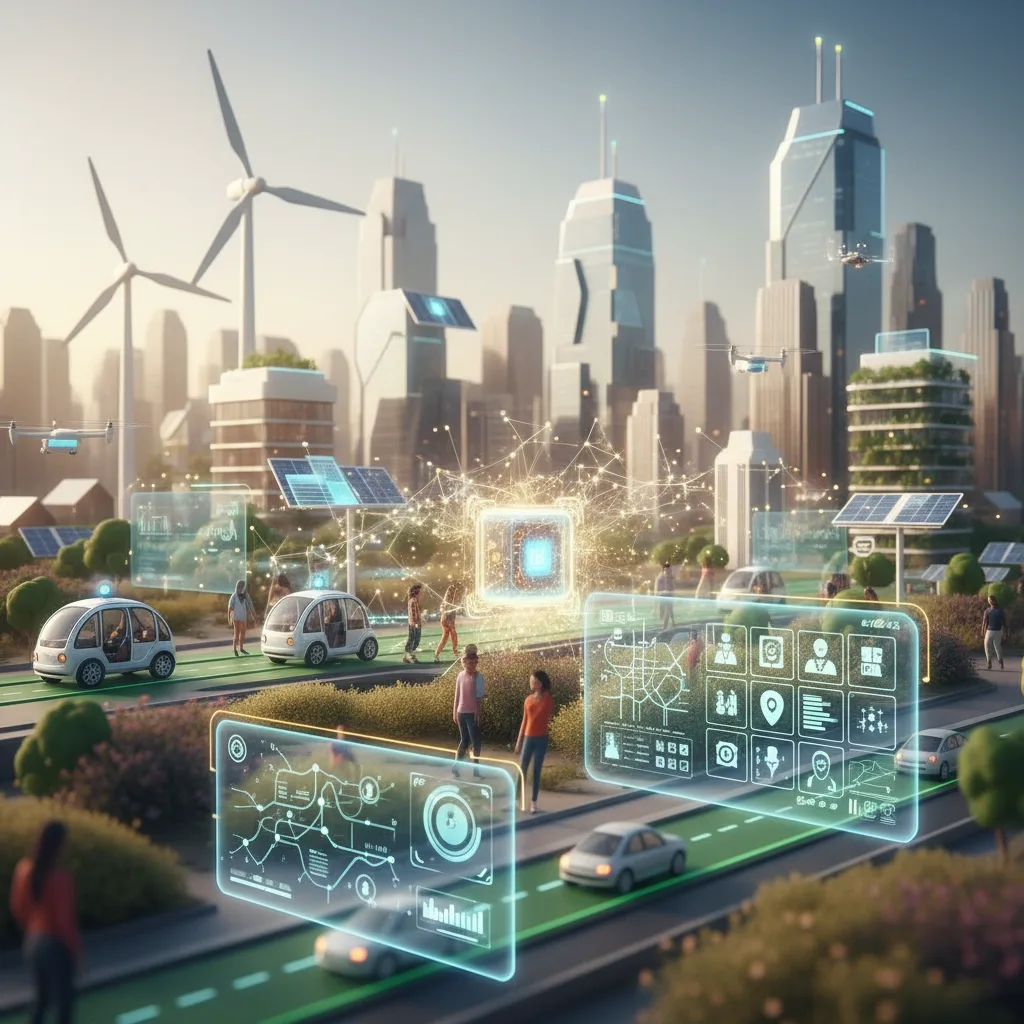
One of the greatest challenges with renewable energy sources like solar and wind is their intermittency. AI is the key to seamlessly integrating these fluctuating sources into the grid. By forecasting renewable energy generation and consumption patterns, AI can intelligently store excess energy (e.g., in battery banks) and release it when needed, or even direct it to specific areas. This enables smart cities to significantly increase their reliance on clean energy, moving closer to carbon neutrality and fostering a healthier environment that positively impacts human cognition and well-being.
The Biofeedback Loop of Urban Energy Consumption
From a biohacker’s perspective, energy is life. Just as our bodies regulate metabolic processes, AI in Smart Cities creates a biofeedback loop for urban energy. Smart buildings, for instance, use AI to optimize heating, ventilation, and air conditioning (HVAC) systems based on occupancy, external weather, and even individual preferences. This not only saves energy but also creates more comfortable and productive indoor environments, reducing physical stress and allowing the brain to function more optimally. Imagine spaces that intuitively adjust light and temperature to support your circadian rhythm, fostering better sleep and focus.
Superhighway 4: Cultivating Sustainable Urban Living
The pursuit of sustainable urban living is paramount for the long-term health of our planet and its inhabitants. Smart Cities & AI are at the forefront of this movement, deploying intelligent solutions to minimize waste, conserve resources, and reduce the environmental footprint of urban areas. This creates a healthier environment that directly supports human health and cognitive function.
Waste Management and Resource Optimization
Waste is a significant challenge for any city. AI-powered smart waste management systems use sensors in bins to monitor fill levels, optimizing collection routes and schedules. This reduces fuel consumption, traffic congestion, and operational costs, while also preventing overflowing bins and improving urban hygiene. Beyond waste, AI is used in water management to detect leaks, optimize irrigation for green spaces, and monitor water quality, ensuring precious resources are conserved.
Green Infrastructure and Environmental Monitoring
AI plays a crucial role in enhancing green infrastructure and monitoring environmental health. From optimizing the placement and irrigation of urban parks to managing vertical farms, AI ensures that green spaces are maximized for ecological benefit and citizen enjoyment. Crucially, AI integrates data from a network of environmental sensors to monitor air quality, noise pollution, and water purity in real-time. These systems can detect pollutants, identify their sources, and alert authorities to take corrective action, significantly reducing exposure to harmful substances. For more on how such monitoring devices contribute to a healthier environment, consider researching CO2 Monitors and their urban applications.
Cleaner air and reduced noise pollution have a direct positive impact on cognitive function, reducing stress and improving sleep quality, which is vital for neuroplasticity and overall brain health. The constant hum of a noisy city, for instance, can elevate cortisol levels and disrupt sleep architecture, impacting both Alpha and Theta brain wave states necessary for relaxation and learning.
AI’s Role in Fostering Eco-Conscious Communities
Beyond infrastructure, AI can foster a culture of sustainability among citizens. Through personalized apps and dashboards, residents can receive real-time feedback on their energy consumption, waste generation, and even carbon footprint. AI can suggest actionable steps for reducing impact, gamify sustainable behaviors, and connect citizens with local green initiatives. This creates an informed and engaged populace, driving collective efforts towards truly sustainable urban living. The impact of AI on cities here is not just about efficiency, but about fostering a conscious community.
Superhighway 5: Enhancing Urban Surveillance and Safety with AI’s Vigilance
A fundamental requirement for any thriving urban environment is safety and security. Smart Cities & AI are revolutionizing public safety through advanced surveillance and safety systems, moving from reactive responses to proactive prevention. This creates environments where citizens feel more secure, reducing chronic stress and allowing for greater mental freedom and peace of mind.
Proactive Security Measures and Anomaly Detection
AI-powered surveillance systems go far beyond simply recording events. They use sophisticated computer vision and machine learning algorithms to analyze vast amounts of video footage in real-time, identifying unusual patterns or suspicious activities. This can include detecting abandoned packages, recognizing aggressive behavior, identifying unauthorized access, or even predicting potential crowd surges. This proactive approach allows law enforcement and emergency services to respond to threats much faster, often before incidents escalate.
- • Predictive Policing: AI can analyze crime data to identify hotspots and times, allowing for optimized resource deployment and preventative patrols.
- • Emergency Response Optimization: AI can integrate data from various sources (traffic, weather, incident reports) to optimize emergency vehicle routes, ensuring rapid response times.
- • Public Health Monitoring: While controversial, AI can assist in public health surveillance, identifying patterns in disease spread or environmental hazards.
Ethical Considerations and the Balance of Privacy
It’s critical to acknowledge the ethical considerations inherent in widespread surveillance and safety. As a biohacker, I understand the value of data, but also the sanctity of individual autonomy and privacy. Smart cities must implement robust regulations and transparent policies to ensure that AI-powered surveillance is used responsibly, with clear boundaries and oversight. Anonymization of data, strong encryption, and strict access controls are paramount to building trust and preventing misuse, safeguarding the mental and civic well-being of residents.
From Reactive to Predictive: A New Paradigm for Public Safety
The shift from reactive policing to predictive public safety represents a new paradigm, fundamentally changing the impact of AI on cities. By analyzing vast datasets of past incidents, social indicators, and real-time events, AI can identify potential risks and vulnerabilities, allowing authorities to intervene proactively. This not only makes cities safer but also fosters a greater sense of security among citizens, reducing the background anxiety that often accompanies urban living. When we feel safe, our brains can shift from a state of vigilance (high Beta waves) to more relaxed and creative states (Alpha and Theta waves), enhancing overall cognitive function and well-being.
Superhighway 6: Optimizing Human Performance Within the Smart City Ecosystem
While much of the discussion around Smart Cities & AI focuses on infrastructure and efficiency, the ultimate goal, from a neuroscientist’s perspective, is to create an environment that optimizes human performance and well-being. A truly smart city doesn’t just manage resources; it creates conditions conducive to cognitive flourishing, emotional balance, and physical health.
The Urban Environment as a Cognitive Stimulator or Suppressor
Our urban surroundings have a profound, often subconscious, impact on our brains. A chaotic, polluted, and stressful city acts as a cognitive suppressor, leading to chronic stress, reduced focus, and impaired sleep. Conversely, a well-designed, quiet, and green urban environment can be a powerful cognitive stimulator, fostering creativity, relaxation, and mental clarity. AI in urban planning can design public spaces that reduce sensory overload, optimize natural light exposure to support our Circadian Rhythm, and even mitigate urban heat islands.
Leveraging Smart City Data for Personal Bio-Optimization
Imagine a city where environmental sensors provide real-time data on air quality, noise levels, and even pollen counts directly to your personal health dashboard. AI can then use this data to offer personalized recommendations: which park to visit for optimal air, the best time for outdoor exercise, or even suggestions for indoor activities if external conditions are suboptimal. This kind of data-driven feedback loop, facilitated by Smart Cities & AI, empowers individuals to make informed choices that directly impact their physical and cognitive health. It’s about personalizing the urban experience for bio-optimization.
The Future of Personalized Neuro-Enhancement in Smart Spaces
As urban environments become more intelligent, the line between external infrastructure and personal well-being blurs. Consider how smart lighting systems in public spaces and homes could adapt their spectrum and intensity throughout the day to support natural Circadian Rhythm and optimize mood and alertness, just as light therapy devices do. Similarly, urban soundscapes could be intelligently modulated by AI in Smart Cities to reduce disruptive noise while enhancing calming ambient sounds, influencing our brainwave states towards relaxation or focus. For those seeking to take control of their cognitive environment, personal tools like visual brain entrainment tools can offer targeted light and sound patterns to guide brain activity into desired states—be it deep relaxation, enhanced focus, or creative flow. These individual neuro-enhancement strategies, combined with an optimized smart city, create a powerful synergy for human flourishing. Furthermore, the integration of ambient sound management within smart city design can even incorporate elements like filtered soundscapes or, for personal use, principles similar to those found in White Noise for Sleep, helping residents reduce cognitive load from urban noise and attain better rest.
Superhighway 7: The Future Evolution of Smart Cities & AI
The journey of Smart Cities & AI is far from complete. What we see today is just the beginning of an evolutionary path towards increasingly intelligent, adaptive, and human-centric urban environments. The future promises an even deeper integration of AI into every facet of city life, creating a seamless, responsive urban fabric.
Adaptive Learning and the Emergence of Self-Evolving Urban Systems
One of the most exciting prospects is the evolution of cities into truly Self-Learning AI systems. Current AI applications are often designed for specific tasks, but future iterations will see AI agents collaborating across different urban domains, learning from each other’s data and continuously optimizing the entire city system. Imagine a traffic management AI communicating directly with the energy grid AI to adjust public transport schedules based on peak energy demand, or a waste management AI informing urban planners about optimal recycling facility locations based on real-time generation patterns. This holistic, adaptive learning will lead to unprecedented levels of efficiency and resilience.
The Interconnectedness: 6G and Beyond
The advent of next-generation connectivity like 6G & Health will be a game-changer for smart cities. With ultra-low latency, massive bandwidth, and pervasive connectivity, 6G will enable an even denser network of sensors and real-time data exchange, powering more sophisticated AI applications. This will facilitate truly immersive digital twins of cities, where every aspect of the urban environment can be simulated and optimized in a virtual space before physical implementation. The implications for public health, environmental monitoring, and personalized services are immense, creating a seamless interface between the physical and digital city.
Navigating the Societal and Ethical Crossroads
As Smart Cities & AI become more integrated into our lives, navigating the societal and ethical implications will be crucial. This includes addressing concerns about data privacy, algorithmic bias, and the potential AI Job Market Impact. A truly smart city must be equitable and inclusive, ensuring that the benefits of AI are accessible to all residents, not just a select few. Open dialogue, robust governance frameworks, and citizen engagement will be essential to shape a future where AI serves humanity’s best interests within these evolving urban landscapes.
Conclusion: Driving Towards a Cognitively Optimized Future
We stand at the precipice of an urban revolution, where AI is building the superhighways of smart cities. These aren’t just concrete and steel structures anymore; they are intelligent, interconnected ecosystems designed to optimize resource allocation, enhance efficiency, and, most importantly, improve the quality of life for their inhabitants. From the precise orchestration of traffic flow that reduces daily stress to the intelligent management of energy grids that ensures sustainable living, the impact of AI on cities is profound and far-reaching.
As a neuroscientist and biohacker, I see this evolution as a critical step towards creating environments that actively support our cognitive and physiological well-being. Imagine a city where reduced noise pollution fosters deeper sleep, cleaner air enhances mental clarity, and efficient commutes free up valuable time for restorative activities. This symbiotic relationship between a smart city and a high-performing brain promises a future where our urban habitats become extensions of our personal bio-optimization efforts, reducing the friction of daily life and allowing us to unlock our full potential.