
The Neuro-Digital Revolution: 7 Synthetic Influencers Overtaking Humans in the Social Media Race
As a neuroscientist and biohacker, my work centers on unlocking the brain’s peak potential, optimizing the intricate neural machinery that drives our every thought and action. You understand the frustration: the mental fog that clouds your judgment, the elusive focus that slips through your grasp, or the persistent sleep disruptions that leave your internal operating system running on fumes. We live in an era where our cognitive engines are constantly pushed to their limits, demanding a relentless pursuit of efficiency and enhancement. Just as a high-performance vehicle requires meticulous tuning to outperform, our brains need strategic optimization to navigate the complexities of modern life and the burgeoning digital frontier.
Yet, while we strive to upgrade our biological hardware, a parallel evolution is unfolding in the digital realm, one that challenges our very notions of influence, authenticity, and human connection. We are witnessing the meteoric rise of synthetic influencers – sophisticated AI-powered digital entities that are not just participating in the social media race, but in many ways, are already setting the pace. These AI influencers, often indistinguishable from their human counterparts, are rapidly becoming the new ‘drivers’ of online engagement, capturing millions of followers and redefining brand strategies. This article will delve deep into the mechanics of this phenomenon, exploring how these virtual celebrities are engineered, their profound implications for our cognitive landscape, and how understanding their ascent can offer insights into optimizing our own human performance.
Key Takeaways
- • Synthetic Influencers Defined: These AI-powered avatars leverage advanced algorithms and neural networks to mimic human behavior, creating hyper-realistic digital personalities that engage audiences globally.
- • Strategic Brand Integration: Brands are increasingly opting for virtual celebrities due to their consistent performance, global reach, and immunity to real-world controversies, offering unprecedented control over narrative and messaging.
- • The Authenticity Paradox: While technologically sophisticated, the debate surrounding the authenticity and genuine connection offered by AI influencers remains central, probing the very nature of human-digital interaction.
- • Future of Marketing & Cognition: The rise of synthetic influencers not only signals a paradigm shift in marketing but also prompts us to critically examine our own cognitive biases and adaptive capacities in a world increasingly shaped by AI.
What are Synthetic Influencers and How Do They Function?
At its core, a synthetic influencer is a digital persona entirely generated and animated by artificial intelligence. Unlike traditional CGI characters in movies, these entities are designed for continuous, interactive engagement across social media platforms. They are the product of advanced computational neuroscience, leveraging deep learning algorithms, generative adversarial networks (GANs), and sophisticated animation techniques to create an illusion of life and personality. Think of it as a digital brain, meticulously programmed to understand trends, respond to interactions, and even evolve its ‘personality’ based on vast datasets of human behavior and social dynamics.
The ‘brain’ behind these AI powered synthetic influencers operates on principles akin to our own neural networks, albeit in a silicon substrate. They process information, learn patterns, and generate outputs – in this case, posts, comments, and even virtual appearances – with astonishing speed and precision. This involves several layers of AI:
- • Visual Generation AI: This component crafts their appearance, from facial features and expressions to clothing and virtual environments. Modern GANs can produce photorealistic images and videos that make it incredibly difficult to discern human from machine.
- • Natural Language Processing (NLP): For communication, advanced NLP models enable AI influencers to generate coherent, contextually relevant, and emotionally resonant text for captions, comments, and direct messages. This mimicry of human language patterns directly taps into our inherent cognitive biases for social interaction.
- • Behavioral AI: This layer dictates their ‘personality’ and ‘lifestyle’. It learns from vast quantities of social data to understand what content resonates, what actions generate engagement, and how to maintain a consistent persona over time. This continuous learning is a form of digital Neuroplasticity, allowing the AI to adapt and optimize its influence strategies.
These technological underpinnings allow synthetic influencers to operate 24/7, across multiple platforms, without the biological constraints of human influencers. They don’t experience fatigue, jet lag, or the need for a Circadian Rhythm. This constant, optimized presence is a significant advantage in the relentless pace of the digital world.
What Drives the Rise of Synthetic Influencers in the Social Media Landscape?
The ascent of synthetic influencers isn’t merely a technological marvel; it’s a profound shift in the ‘drivers’ of social media engagement, rooted in both algorithmic optimization and human cognitive psychology. Social media platforms are, at their core, attention economies. Our brains are hardwired to seek novelty, social validation, and emotionally resonant content. AI influencers are meticulously designed to exploit these inherent biases.
Consider the algorithmic preference for consistent, high-quality content. Human influencers, bound by biology, cannot maintain a perfectly optimized posting schedule. They need sleep, breaks, and manage personal lives. Synthetic influencers, however, are tireless. Their content output can be perfectly timed to maximize reach, engagement, and algorithmic favor. This consistent influx of curated, often hyper-aesthetic content triggers a predictable release of dopamine in our brains, creating a potent feedback loop that keeps users scrolling and engaged.
- • Predictive Content Generation: AI can analyze vast datasets of past performance to predict what content types, aesthetics, and narratives will resonate most strongly with a target audience. This is a form of neuro-marketing on steroids, bypassing much of the guesswork inherent in human content creation.
- • Controlled Narrative: Unlike human influencers who are prone to gaffes, controversies, or shifting opinions, virtual celebrities offer unparalleled control over their public persona and messaging. This stability is highly attractive to brands seeking predictable returns and reduced risk.
- • Scalability and Global Reach: A single AI influencer can be rapidly adapted and localized for different markets and cultures, crossing linguistic and geographical barriers with ease. This global scalability outstrips the capabilities of most human influencers.
Furthermore, the novelty factor plays a significant role in our brain’s reward system. The initial intrigue of interacting with a non-human entity fuels engagement, and as the technology becomes more sophisticated, the line between real and virtual blurs, challenging our cognitive frameworks for social interaction. Our brains are remarkably plastic, and through Neuroplasticity, we are rapidly adapting to form parasocial relationships with these digital entities, similar to how we bond with characters in books or films.
How Are Leading Brands Leveraging Virtual Avatars for Next-Gen Engagement?
Brands, ever vigilant for innovative marketing channels, have quickly recognized the immense potential of virtual celebrities. Their strategic adoption is not just about novelty; it’s about precision, control, and a deep understanding of consumer psychology. These AI influencers offer a unique blend of aspirational appeal and data-driven predictability that human influencers often cannot match.
Consider the fashion industry, where aesthetics and aspirational lifestyle are paramount. A synthetic influencer can flawlessly showcase new collections in perfectly curated digital environments, eliminating the logistical nightmares of photoshoots, travel, and human talent management. Their digital nature allows for instantaneous wardrobe changes, diverse poses, and the ability to appear in multiple locations simultaneously, creating a ubiquitous brand presence.
- • Perfect Brand Alignment: Brands can design a synthetic influencer from scratch to embody their exact values, aesthetics, and target demographic. This eliminates the risk of a human influencer’s personal brand diverging from the company’s message.
- • Hyper-Personalization at Scale: With advancements in Edge AI, these virtual avatars can potentially adapt their interactions and content in real-time based on individual user data, creating a hyper-personalized engagement experience that feels incredibly direct and relevant to the consumer’s cognitive processing.
- • Experimentation and Innovation: Brands can experiment with diverse personas, narratives, and content formats with a speed and flexibility impossible with human talent. This iterative approach allows for rapid optimization based on performance metrics and audience response.
From a neuroscientific perspective, the consistent, visually perfect, and often aspirational content generated by these AI influencers can trigger powerful emotional responses and desires, influencing consumer behavior at a subconscious level. The flawless aesthetics and carefully crafted narratives tap into our brain’s reward pathways, making products and lifestyles endorsed by these entities highly desirable.
Demystifying the Economics: What is the True Cost of Engaging AI Influencers?
The perception that AI influencers are a ‘cheap’ alternative to human talent is an oversimplification. While they may offer long-term cost efficiencies and specific advantages, the initial investment and ongoing maintenance can be substantial. Understanding the economics requires a breakdown of various factors, far beyond a simple per-post fee.
Initial Creation Costs:
- • Design & Modeling: Crafting a unique, high-fidelity 3D model, complete with realistic textures, rigging for animation, and varied outfits, demands significant artistic and technical expertise. This can range from tens of thousands to hundreds of thousands of dollars depending on complexity.
- • AI & Personality Development: Developing the underlying AI that governs their behavior, learning algorithms, and conversational capabilities is a sophisticated process requiring data scientists and AI engineers. This forms the digital ‘brain’ of the synthetic influencer.
-
• Narrative & World-Building: Establishing a compelling backstory, personality traits, and a consistent virtual ‘life’ for the virtual celebrity requires creative writers and strategists, building the psychological foundation for audience connection.

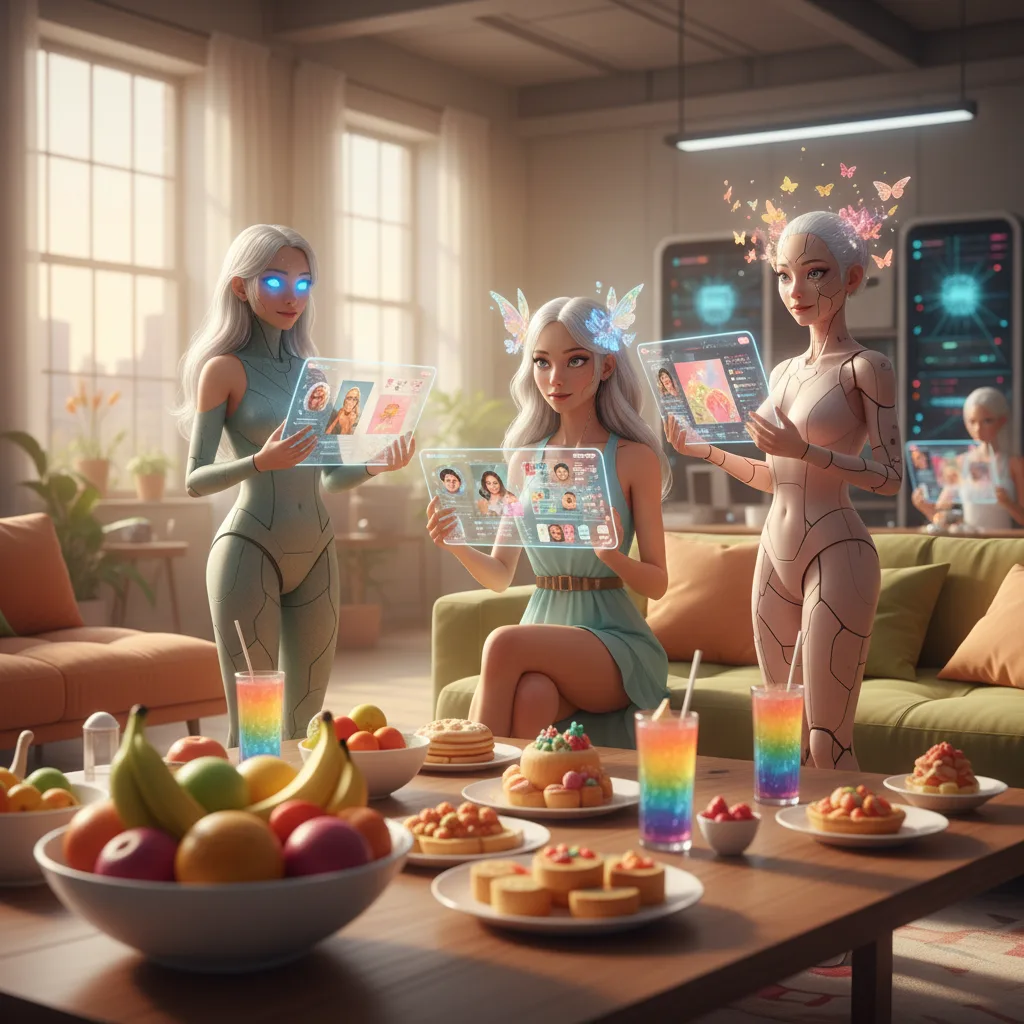
Synthetic influencers concept showing a hyper-realistic digital avatar
Ongoing Operational Costs:
- • Content Production: While AI can generate elements, human oversight is still crucial for quality control, creative direction, and ensuring brand alignment. Animators, graphic designers, and content managers are typically involved in producing posts, stories, and videos.
- • AI Maintenance & Updates: The underlying AI models require continuous monitoring, updates, and training to remain relevant and responsive. This includes feeding them new data, refining their algorithms, and ensuring they adapt to evolving social trends. This is where concepts like Self-Learning AI become crucial for long-term viability.
- • Engagement Management: Even with advanced NLP, human community managers often oversee interactions, especially for complex or sensitive conversations, to ensure authentic and appropriate responses.
Compared to human influencers, the long-term cost benefits arise from the absence of agency fees, performance bonuses, travel expenses, and the inherent unpredictability of human behavior. While a human influencer might charge a premium for a single campaign, a synthetic influencer represents an asset that can be deployed across countless campaigns, 24/7, without burnout or personal scandals that could damage a brand. The ROI often becomes evident over time, as the initial investment is amortized across extensive and highly controlled engagement.
The Authenticity Paradox: Can Synthetic Influencers Forge Genuine Connections?
This is perhaps the most profound question that the rise of synthetic influencers poses, touching upon the very essence of human cognition and social bonding. Can a program, however sophisticated, genuinely connect with a human being? From a neuroscientific perspective, genuine connection involves empathy, shared experiences, vulnerability, and the intricate dance of non-verbal cues – all deeply rooted in our biological and social evolution.
Yet, our brains are remarkably adaptable. We readily form parasocial relationships with fictional characters, celebrities we’ve never met, and even pets. The illusion of agency and personality created by AI influencer responds to a comment with a seemingly empathetic message, our brain may process this as a genuine interaction, regardless of its synthetic origin. This is where Emotion AI plays a critical role, allowing these digital entities to not just detect, but also to convincingly simulate emotional responses, making their interactions feel more human and resonant.
The Uncanny Valley Effect and Its Mitigation:
Early iterations of virtual characters often fell into the “uncanny valley,” a phenomenon where entities that appear almost, but not quite, human evoke feelings of revulsion or unease. This is a hardwired neurological response to things that defy our expectations of what is “alive.” However, continuous advancements in rendering, animation, and behavioral AI are helping synthetic influencers bypass this valley, making them increasingly palatable and even appealing to the human eye and mind.
- • Consistency vs. Spontaneity: While AI influencers excel at consistency, genuine human connection often thrives on spontaneity and imperfection. The challenge for AI is to simulate this nuanced unpredictability without losing control of the narrative.
- • The Role of Disclosure: Transparency about an influencer’s synthetic nature is crucial. When users are aware they are interacting with an AI, their cognitive framework adjusts, and the perception of ‘authenticity’ shifts from genuine human connection to appreciating the technological marvel and the narrative it presents. This dynamic also influences how our brains process information and form opinions.
- • Deep Storytelling: Some virtual celebrities are given rich, complex backstories and evolving narratives. This storytelling taps into our brain’s innate love for narrative, allowing us to invest emotionally in their fictional lives. Advanced techniques, perhaps even inspired by insights from Dream AI, could one day allow for even more intricate and psychologically resonant narratives, blurring the lines of perception further.
The authenticity debate is less about whether AI can truly be “authentic” in a human sense, and more about how our human brains adapt to and interpret new forms of social interaction. The profound Neuroplasticity of our minds allows us to find connection and meaning even in non-traditional contexts. As these Pioneering the Future: What Does the Ascent of Synthetic Influencers Mean for Marketing and Beyond? The trajectory of synthetic influencers indicates not just a trend, but a fundamental paradigm shift in how we conceive of marketing, communication, and even human-computer interaction. As a neuroscientist, I see this as a critical frontier where technology intersects with our most fundamental cognitive processes, offering both immense opportunities and significant ethical considerations. The evolution of Optimizing Your Cognitive Engine in a Synthetic World: In a landscape increasingly populated by perfectly optimized advanced light therapy devices or visual brain entrainment tools can offer a powerful advantage, guiding your brain towards optimal states for learning, focus, and restorative processes. Such sensory resonance technology represents a frontier in biohacking, allowing you to fine-tune your internal systems to thrive amidst external innovation. The rise of AI influencers are not merely digital puppets but sophisticated constructs engineered to tap into our innate psychological responses, offering brands unprecedented control and efficiency in the dynamic social media race. Their capabilities, fueled by continuous advancements in AI and our own brain’s remarkable For us, as individuals keen on optimizing our own potential, the emergence of In an era of ubiquitous synthetic influencers and hyper-curated digital realities, the most crucial biohack is to strengthen your cognitive filtration system. Actively engage your critical thinking skills to differentiate between genuine and manufactured content. Practice digital mindfulness to avoid cognitive overload and preserve your attentional resources. Prioritize activities that stimulate diverse brainwave states – from focused work (Beta waves) to creative problem-solving (Alpha waves) and deep restorative sleep (Theta/Delta waves) – ensuring your biological hardware remains superior and resilient. By understanding the ‘how’ and ‘why’ of AI’s influence, you gain the power to optimize your own brain, staying ahead in a world increasingly driven by synthetic intelligence.Revolutionizing Marketing Strategies:
Broader Societal and Cognitive Impacts:
Conclusion: Navigating the Neural Pathways of a Synthetic Future
Expert Tip: Optimize Your Cognitive Filtration System