
The Vagus Nerve: The Brake Pedal for Your Nervous System
In the high-octane race of modern life, many of us find ourselves perpetually stuck in the fast lane, our internal engines redlining. The constant demands, the relentless pace, the cascade of digital notifications—they all contribute to a state of chronic activation. This leaves us grappling with a host of unpleasant symptoms: restless nights plagued by sleep anxiety, a pervasive lack of focus that undermines productivity, and a nagging sense that our potential remains untapped. We yearn for a mechanism to downshift, to regain control, to optimize our very operating system. What if I told you that your body already possesses a sophisticated, built-in “brake pedal” capable of decelerating your nervous system, allowing for profound states of calm, clarity, and enhanced performance? As a neuroscientist and biohacker dedicated to unlocking peak human potential, I invite you to explore the fascinating world of the Vagus Nerve.
This isn’t merely a philosophical concept; it’s a physiological reality. The vagus nerve, a marvel of biological engineering, is your direct conduit to systemic tranquility and resilience. Understanding its function and learning how to intentionally engage it offers a revolutionary path to mitigating stress, improving cognitive function, and achieving truly restorative vagus nerve and sleep cycles. This deep dive will equip you with the scientific understanding and actionable strategies to master this crucial nerve, transforming your internal landscape from a chaotic highway into a serene, controlled journey towards optimal well-being.
Key Takeaways
- • The Vagus Nerve is the primary component of the parasympathetic nervous system, acting as your body’s “brake pedal” to counteract stress and promote calm.
- • Activating the vagus nerve through specific exercises and biohacking techniques can significantly improve mental clarity, emotional regulation, and deep, restorative vagus nerve and sleep quality.
- • A strong “vagal tone” is a biomarker for resilience, indicating your body’s ability to quickly recover from stress and maintain physiological balance.
- • Modern biohacking devices and wearables are emerging as powerful tools to monitor and stimulate the vagus nerve, offering personalized pathways to enhanced well-being.
What Exactly Is the Vagus Nerve, and Why Is It So Crucial?
To truly appreciate the power of the Vagus Nerve, we must first understand its anatomical and functional significance. Deriving its name from the Latin word for “wandering,” the vagus nerve is precisely that: a cranial nerve (the tenth, or CN X) that wanders throughout the body, acting as the longest and most complex of the twelve cranial nerves. It originates in the brainstem and branches out, forming a superhighway of communication that extends down into the neck, chest, and abdomen, innervating virtually every major organ system.
The Bidirectional Information Superhighway
The vagus nerve is not a one-way street. It’s a bidirectional communication pathway, meaning it sends signals from the brain to the organs (efferent pathways) and, crucially, sends far more signals from the organs back to the brain (afferent pathways). This makes it the primary conduit for the “gut-brain axis,” influencing everything from digestion and heart rate to mood and immune response. Approximately 80% of vagal fibers are afferent, constantly relaying information about the state of your internal organs directly to your brain. This constant feedback loop is fundamental to your interoception—your sense of the physiological condition of your body.
The Autonomic Nervous System: Sympathetic vs. Parasympathetic
The Vagus Nerve is the cornerstone of the parasympathetic nervous system (PNS), often dubbed the “rest and digest” system. It works in opposition to the sympathetic nervous system (SNS), which is responsible for the “fight or flight” response. Think of your nervous system as a sophisticated vehicle with both an accelerator (SNS) and a brake pedal (PNS). In modern society, our accelerators are often jammed, leading to chronic stress and dysregulation.
- • Sympathetic Nervous System (SNS): Prepares the body for action. It increases heart rate, dilates pupils, inhibits digestion, and releases stress hormones like cortisol and adrenaline. Essential for survival in acute threats.
- • Parasympathetic Nervous System (PNS): Promotes calm, recovery, and homeostasis. It slows heart rate, constricts pupils, stimulates digestion, and conserves energy. The vagus nerve is the primary activator of this system.
A healthy nervous system maintains a dynamic balance between these two branches, capable of shifting gears smoothly. The vagus nerve is your primary tool for initiating that shift towards rest and recovery, making it the body’s ultimate “brake pedal.”
The Vagal Tone: A Biomarker for Resilience
The concept of “vagal tone” refers to the activity level of your vagus nerve. A high vagal tone indicates that your vagus nerve is functioning optimally, allowing your body to quickly switch from a stressed state to a relaxed one. It’s a key indicator of your resilience and overall physiological flexibility. Individuals with higher vagal tone tend to exhibit better emotional regulation, less inflammation, improved digestion, and a stronger immune system.
Measuring vagal tone often involves assessing Heart Rate Variability (HRV), which is the variation in the time interval between heartbeats. Higher HRV is generally associated with stronger vagal tone and better health outcomes. This is why many biohacking devices and wearables prioritize HRV tracking.
Why the Vagus Nerve is Your Body’s “Brake Pedal”: Decelerating the Stress Response
The metaphor of the Vagus Nerve as a “brake pedal” is incredibly apt because its primary function is to dampen the physiological responses associated with stress. When your sympathetic nervous system is engaged, your body floods with cortisol and adrenaline, your heart races, and your muscles tense. The vagus nerve is the counter-regulatory force, actively working to restore equilibrium.
Calming the “Fight or Flight” Cascade
Upon activation, the vagus nerve releases neurotransmitters like acetylcholine, which directly slow heart rate, reduce blood pressure, and ease muscle tension. This process shifts your brainwave activity from high-frequency Beta waves (associated with alertness and stress) towards lower-frequency Alpha and Theta waves, characteristic of relaxation, creativity, and meditative states. This physiological deceleration allows your body to exit the survival mode and enter a state conducive to healing and restoration.
Impact on Stress, Anxiety, and Inflammation
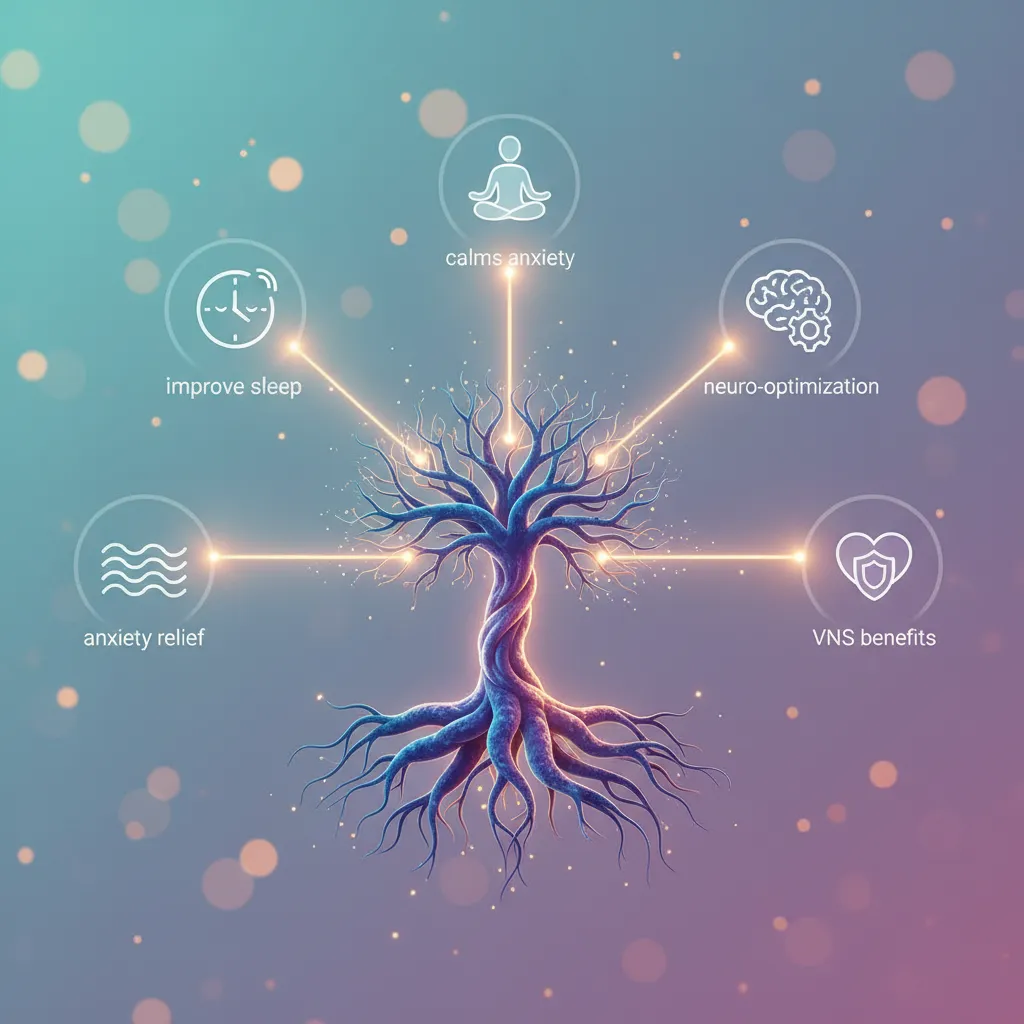
Chronic stress and anxiety are hallmarks of a dysregulated nervous system. By consciously engaging the Vagus Nerve, we can directly influence our emotional and physiological responses:
- • Stress Reduction: Reduces the production of cortisol, the primary stress hormone, leading to a calmer internal state.
- • Anxiety Alleviation: Helps mitigate the physical symptoms of anxiety (racing heart, shallow breathing) and promotes a sense of safety and well-being. This is crucial for managing conditions like sleep anxiety.
- • Anti-inflammatory Effects: The vagus nerve directly regulates the inflammatory reflex, a neural pathway that modulates cytokine production. This “cholinergic anti-inflammatory pathway” means that a well-toned vagus nerve can help reduce systemic inflammation, which is implicated in numerous chronic diseases.
The Polyvagal Theory: A Deeper Understanding of Our States
Developed by Dr. Stephen Porges, the Polyvagal Theory offers a more nuanced understanding of the vagus nerve and its role in regulating our physiological and psychological states. It posits that the vagus nerve has two main branches: the ventral vagal complex (VVC), associated with social engagement and safety (rest and digest), and the dorsal vagal complex (DVC), associated with immobilization and shutdown (freeze response). Understanding these pathways allows us to better grasp how the vagus nerve influences our capacity for connection, resilience, and recovery from trauma. By consciously calming the vagus nerve, we actively encourage the VVC to dominate, fostering feelings of safety and relaxation.
Harnessing Your Vagus Nerve: Practical Exercises for Optimal Function
The good news is that you don’t need complex machinery to begin stimulating your vagus nerve. Many effective methods are accessible, free, and can be integrated into your daily routine. These exercises are designed to enhance your vagal tone, making your body more adept at switching into the “rest and digest” state.
Breathing Techniques: The Foundation of Vagal Activation
Your breath is your most immediate and powerful tool for vagal regulation. Slow, deep, diaphragmatic breathing is a direct signal to your Vagus Nerve to activate the parasympathetic response.
- • Diaphragmatic Breathing (Belly Breathing): Lie down or sit comfortably. Place one hand on your chest and the other on your abdomen. Inhale slowly and deeply through your nose, feeling your abdomen rise. Exhale slowly through pursed lips, feeling your abdomen fall. Focus on making your exhalation longer than your inhalation (e.g., inhale for 4 counts, hold for 2, exhale for 6).
- • Box Breathing: Inhale for a count of four, hold for a count of four, exhale for a count of four, hold for a count of four. Repeat. This rhythmic pattern helps to synchronize your heart rate with your breath, a hallmark of high vagal tone.
Cold Exposure: A Shock to the System (in a Good Way)
Brief exposure to cold water can powerfully stimulate the vagus nerve. The sudden cold shock causes the vagus nerve to instruct your heart to slow down, activating the parasympathetic system.
- • Cold Showers: Start with a warm shower, then switch to cold water for 30-60 seconds at the end. Gradually increase duration and decrease temperature over time.
- • Face Plunge: Fill a bowl with ice water and plunge your face into it for 10-30 seconds, holding your breath. This triggers the mammalian dive reflex, a potent vagal activator.
Gargling and Humming: Vibrational Vagal Stimulation
The vagus nerve passes through the vocal cords and muscles at the back of the throat. Stimulating these areas through gargling or humming can directly activate the nerve.
- • Vigorous Gargling: Gargle with water for 30-60 seconds, several times a day, until tears come to your eyes. This indicates strong vagal activation.
- • Humming and Chanting: Humming, singing, or chanting (like “Om”) creates vibrations in the throat and chest that can stimulate the vagus nerve. This also promotes a shift towards Alpha and Theta brainwaves.
Mindfulness, Meditation, and Deep Relaxation
Practices that cultivate present moment awareness and deep relaxation are inherently vagus-activating. When we engage in mindfulness, we consciously disengage from the sympathetic fight-or-flight response and invite the parasympathetic system to take over. Regular practice of sleep meditation or general mindfulness can profoundly improve vagal tone. For those seeking enhanced focus and deep relaxation, integrating advanced light therapy devices or visual brain entrainment tools can significantly amplify these effects, guiding the brain into optimal states for vagal activation and cognitive enhancement. Explore cutting-edge sensory resonance technology to elevate your practice.
Understanding the nuances between meditation vs sleep can further inform your approach, as both are powerful states for nervous system regulation.
Social Connection, Laughter, and Exercise
Human connection and positive emotional experiences are potent vagal stimulants. Laughter, singing in a group, or engaging in meaningful conversations all contribute to a robust vagal tone. Regular physical exercise, especially moderate forms like yoga, walking, or swimming, also helps to balance the autonomic nervous system and strengthen the Vagus Nerve.
The Vagus Nerve and Sleep: Unlocking Restorative Nights
One of the most profound impacts of a well-regulated Vagus Nerve is on the quality of your sleep. In our constantly stimulated world, achieving truly restorative sleep has become a biohacking challenge for many. The vagus nerve is a critical player in transitioning your body and mind from wakefulness to deep sleep states.

How Vagal Activation Lowers Heart Rate and Promotes Alpha/Theta Waves for Sleep
For optimal sleep, your body needs to shift gears from sympathetic dominance to parasympathetic dominance. The vagus nerve facilitates this by:
- • Reducing Heart Rate: As the vagus nerve becomes active, it releases acetylcholine, which directly slows the sinoatrial node of the heart, leading to a decreased heart rate. A lower resting heart rate before sleep is a strong indicator of parasympathetic readiness for rest.
- • Shifting Brainwave States: Vagal activation encourages a transition from high-frequency Beta brainwaves (associated with active thinking and alertness) to lower-frequency Alpha waves (relaxed wakefulness, often seen during meditation) and then to Theta waves (light sleep, creativity, and deep relaxation). This neurological shift is essential for falling asleep and progressing through the sleep stages.
This direct influence on heart rate and brainwave activity underscores why practices focused on calming the vagus nerve are so effective for improving vagus nerve and sleep quality.
Circadian Rhythm and Vagal Tone
The Circadian Rhythm, your body’s internal 24-hour clock, dictates your sleep-wake cycle. A healthy circadian rhythm works in synergy with a strong vagal tone. As evening approaches, your body naturally prepares for sleep by increasing vagal activity, slowing physiological processes, and promoting melatonin production. Disruptions to this rhythm, often due to artificial light exposure or erratic schedules, can impair vagal function, making it harder to wind down. Optimizing your light environment and maintaining a consistent sleep schedule directly supports both your circadian rhythm and your vagus nerve.
Impact on Sleep Architecture (REM, Deep Sleep)
Beyond just falling asleep, a well-functioning vagus nerve contributes significantly to the architecture of your sleep, particularly the crucial stages of deep (slow-wave) sleep and REM sleep. These are the stages responsible for physical restoration, memory consolidation, and emotional processing. Insufficient vagal tone can lead to fragmented sleep, less time in deep sleep, and reduced REM, resulting in waking up feeling unrefreshed and foggy. By improving vagal tone, you create an environment conducive to robust, regenerative sleep cycles.
Addressing Sleep Anxiety Through Vagal Stimulation
For many, the inability to fall or stay asleep is exacerbated by sleep anxiety—the worry about not sleeping, which paradoxically keeps them awake. Vagal stimulation techniques, particularly those involving slow breathing and body awareness, provide a powerful antidote. By actively engaging the parasympathetic system, you send clear signals to your brain that you are safe and can relax, effectively breaking the cycle of anxiety. Incorporating guided sleep meditation focused on vagal breathing can be particularly beneficial.
The Link Between Sleep & Immunity and Vagal Health
The interconnectedness of bodily systems is nowhere more evident than in the relationship between sleep, immunity, and the vagus nerve. Adequate, high-quality sleep is crucial for a robust immune system. Poor sleep, on the other hand, suppresses immune function and increases inflammation. Given the vagus nerve’s direct role in modulating inflammation (the cholinergic anti-inflammatory pathway) and its influence on sleep quality, it forms a vital bridge. A healthy vagal tone promotes both restorative sleep and a balanced immune response, highlighting the importance of optimizing this nerve for overall health and resilience against illness. Learn more about the critical connection between sleep & immunity.
Advanced Biohacking: Wearables and Technologies for Vagus Stimulation
As neuroscientists and biohackers, we are always seeking quantifiable ways to optimize our physiology. The growing understanding of the Vagus Nerve has led to the development of sophisticated biohacking devices and wearables designed to either stimulate the nerve directly or provide feedback on vagal tone.
Non-invasive Vagus Nerve Stimulation (nVNS) Devices
These devices offer a targeted approach to calming the vagus nerve through gentle electrical impulses. They typically stimulate the vagus nerve transcutaneously (through the skin) at specific points, often the ear (transcutaneous VNS or tVNS) or the neck.
- • Mechanism: Low-level electrical currents are delivered to nerve endings near the surface of the skin, which then propagate signals to the vagus nerve itself.
- • Applications: Emerging research suggests potential benefits for stress reduction, pain management, mood regulation, and improving vagus nerve and sleep quality.
- • Types: Handheld devices, earlobe clips, or neck patches that apply gentle stimulation.
While these devices are promising, it’s crucial to approach them with a scientific mindset, understanding that individual responses can vary, and further research is ongoing.
Wearables Tracking Vagal Tone (Heart Rate Variability – HRV)
Many modern wearables are designed to track Heart Rate Variability (HRV), which, as discussed, is a proxy for vagal tone. By monitoring your HRV trends, you gain actionable insights into your nervous system’s resilience and recovery status. This data empowers you to tailor your lifestyle choices, exercise intensity, and stress management techniques.
- • How it Works: These devices measure the subtle variations in time between consecutive heartbeats, which are primarily regulated by the vagus nerve.
- • Benefits: Provides objective data on stress levels, recovery from exercise, and readiness for performance. It can help identify patterns that either enhance or detract from your vagal tone and sleep quality.
Oura vs. Apple Watch: Which Offers Better Vagal Insights?
When it comes to dedicated HRV tracking, devices like the Oura Ring and the Apple Watch take different approaches. The Oura Ring, worn on the finger, is specifically designed for sleep tracking and provides highly reliable HRV data during rest. The Apple Watch, while a versatile smartwatch, measures HRV at various points throughout the day, which can be influenced by activity. For dedicated, overnight HRV analysis, many biohackers lean towards devices optimized for passive, continuous measurement. However, both offer valuable insights into your autonomic nervous system when understood within their operational contexts. A deeper dive into the specific methodologies and data interpretation can be found in our comparison of Oura vs Apple Watch.

The Future of Biohacking Devices for Nervous System Regulation
The landscape of biohacking devices is rapidly evolving. We’re seeing advancements in personalized feedback systems that not only track HRV but also provide real-time guidance for vagal activation through guided breathing, haptic feedback, or auditory cues. Furthermore, the integration of Emotion AI is poised to revolutionize how we interact with these tools, offering personalized interventions based on your emotional and physiological state, further refining techniques for calming the vagus nerve.
The Neuroscientific Basis: Brain Waves, Neurotransmitters, and Neuroplasticity
For the discerning biohacker, understanding the “why” behind vagal activation extends to the very fabric of brain function. The impact of the Vagus Nerve reverberates through our neural networks, influencing brainwave patterns, the release of key neurotransmitters, and even the fundamental capacity of our brains to change and adapt—Neuroplasticity.
Shifting from Beta to Alpha/Theta States
Our brain operates on different frequencies, each corresponding to distinct states of consciousness. When we are stressed, anxious, or hyper-focused on external tasks, our brains typically generate high-frequency Beta waves. This state, while useful for problem-solving, is not sustainable for long periods and is detrimental to vagus nerve and sleep quality.
- • Alpha Waves (8-13 Hz): Associated with relaxed wakefulness, meditation, and creative flow. Vagal activation helps transition the brain into this state, reducing mental chatter and promoting a sense of calm.
- • Theta Waves (4-7 Hz): Characteristic of deep relaxation, light sleep, REM sleep, and highly creative or intuitive states. Further vagal stimulation encourages the brain to enter this deeper state, crucial for restorative sleep and enhanced learning.
By consciously calming the vagus nerve, we are actively training our brains to spend more time in these beneficial Alpha and Theta states, leading to improved focus, reduced anxiety, and better sleep.
The Role of Neurotransmitters (Acetylcholine, GABA)
The vagus nerve exerts its calming effects largely through the release of specific neurotransmitters:
- • Acetylcholine: This is the primary neurotransmitter released by the vagus nerve. It directly slows heart rate, reduces inflammation, and plays a critical role in learning, memory, and attention. Increased acetylcholine activity promotes a state of calm focus.
- • GABA (Gamma-aminobutyric acid): While not directly released by the vagus nerve itself, vagal stimulation can indirectly influence GABAergic activity in the brain. GABA is the primary inhibitory neurotransmitter, responsible for reducing neuronal excitability and promoting relaxation. Enhanced GABA activity contributes to a reduction in anxiety and improved sleep initiation.
Neuroplasticity: How Consistent Vagal Activation Reshapes the Brain
One of the most exciting aspects of vagal activation from a biohacker’s perspective is its influence on Neuroplasticity—the brain’s ability to reorganize itself by forming new neural connections throughout life. Consistent and intentional stimulation of the Vagus Nerve can literally rewire your brain over time.
- • Strengthening Neural Pathways: Regular vagal activation strengthens the pathways that promote calm and resilience, making it easier for your body to return to a parasympathetic state in the face of stress.
- • Enhancing Cognitive Function: By reducing chronic stress and inflammation, and promoting Alpha/Theta states, vagal stimulation supports brain health, leading to improved memory, learning, and decision-making capabilities.
This means that the techniques you practice today are not just temporary fixes; they are actively reshaping your brain for long-term health and optimized performance, leading to a more resilient and adaptable self.
The Interplay Between Meditation vs. Sleep in Influencing Vagal Tone
Both meditation and sleep are powerful states for regulating the nervous system and enhancing vagal tone, yet they serve distinct purposes. Meditation vs Sleep is not a competition but a complementary relationship. Meditation, especially mindfulness and compassion-based practices, actively trains the brain to enter parasympathetic states during wakefulness, enhancing conscious control over the autonomic nervous system. This regular training improves baseline vagal tone, making it easier to transition into restorative sleep. Sleep, on the other hand, is the body’s primary period for deep physical and mental restoration, where the vagus nerve orchestrates crucial repair processes. Regular meditation can deepen sleep quality, while good sleep enhances the effectiveness of meditative practices. Both are essential pillars for cultivating a robust vagal tone and overall well-being.
Conclusion: Mastering Your Internal Landscape
The Vagus Nerve is far more than just another anatomical structure; it is the master key to unlocking your body’s intrinsic capacity for calm, resilience, and optimal performance. By understanding its profound influence on your autonomic nervous system, brainwave states, and overall physiological well-being, you gain an unprecedented level of control over your internal state. From mitigating stress and anxiety to dramatically improving the quality of your vagus nerve and sleep, the benefits of cultivating a strong vagal tone are transformative.
We’ve explored how simple, accessible practices like intentional breathing, cold exposure, and vocal exercises can activate this vital nerve. Furthermore, the advent of sophisticated biohacking devices and wearables offers new frontiers for monitoring and directly stimulating the vagus nerve, providing objective data and personalized pathways to enhancement. The scientific underpinnings of this work—from brainwave shifts to neuroplasticity—underscore the profound and lasting changes you can achieve.