5 Rules for Catching Up on Sleep Without Crashing: A Neurohacker’s Guide
As a high-performance individual, you’ve likely pushed your limits, operating on fumes, treating sleep as an optional pit stop rather than a critical engine overhaul. The modern world often demands relentless output, leaving many of us feeling like a high-octane racing machine with a perpetually blinking low-fuel light. You’ve powered through deadlines, battled jet lag across time zones, or simply burned the midnight oil one too many times. The result? A brain operating at suboptimal capacity, a pervasive fog that dims your focus, dulls your creativity, and erodes your executive function.
The allure of “catching up on sleep” on the weekend is a powerful one, a promise of refilling the tank after a long, arduous trip. But is it truly possible to erase accumulated sleep debt with a few extra hours in bed? Or are you simply perpetuating a cycle of recovery that never quite brings you back to peak performance? As a neuroscientist and biohacker, I understand the intricate mechanics of the brain’s operating system. This isn’t about simple rest; it’s about recalibrating your internal timing belt, optimizing neural processes, and unlocking sustained cognitive excellence.
In this in-depth guide, we’ll dismantle common myths surrounding catch up sleep and provide a data-driven framework to truly restore your brain’s optimal function. We’ll delve into the ‘why’ behind sleep’s critical role and the ‘how’ of leveraging cutting-edge science and biohacking techniques to not just recover, but to elevate your baseline. Prepare to transform your understanding of sleep from a mere biological necessity into a powerful tool for performance enhancement.
Key Takeaways
- • Sleep Debt is Real, but Complex: While some aspects of sleep deprivation can be mitigated, truly “catching up” requires more than just extra hours; it demands consistent, high-quality sleep to restore homeostatic balance and optimize neural function.
- • Circadian Rhythm is Paramount: Synchronizing your daily rhythms with the natural light-dark cycle is the foundation for effective sleep recovery and preventing future sleep debt accumulation.
- • Quality Over Quantity: Focusing on achieving sufficient deep (NREM) and REM Sleep Cycles is more critical for cognitive restoration and physical recovery than simply extending total time in bed.
- • Strategic Biohacking Accelerates Recovery: Employing targeted neurotech, light therapy, and brainwave entrainment can significantly enhance sleep quality and expedite the process of getting your sleep schedule back on track.
What Exactly is Sleep Debt, and Can We Truly Catch Up Sleep?
Before we can discuss how to catch up sleep, we must first precisely define what we’re recovering from. Sleep debt, or sleep deficit, is the cumulative effect of not getting enough sleep. It’s not merely about feeling tired; it’s a physiological state where your body and brain are deprived of the necessary restorative processes that occur during sleep. Think of it as an unpaid loan from your brain’s operating budget. Each night you shortchange your sleep, that debt accrues, impacting everything from cognitive function and mood to metabolic health and immune response.
The Dual Process Model of Sleep Regulation: Homeostasis & Circadian Rhythm
The ‘why’ behind sleep debt lies in the intricate interplay of two fundamental biological processes:
- • Process S (Homeostatic Sleep Drive): This is the increasing pressure to sleep that builds up the longer you’re awake. Adenosine, a neuromodulator, accumulates in the brain throughout the day, acting as an internal sleep signal. The higher the adenosine levels, the stronger your urge to sleep. Sleep acts to clear this adenosine, resetting the system. When you don’t catch up sleep, adenosine levels remain elevated, leading to persistent fatigue and impaired cognition.
- • Process C (Circadian Rhythm): This is your internal 24-hour biological clock, primarily regulated by light and darkness. It dictates your alertness and sleepiness patterns, influencing hormone release (like melatonin and cortisol), body temperature, and other physiological functions. Disrupting this rhythm, such as with jet lag or inconsistent sleep schedules, further exacerbates the effects of sleep debt, making it harder to wake up refreshed.
The Reality: Can You Truly Erase Sleep Debt?
The short answer is: partially, yes, but not entirely, and certainly not instantaneously. While a few extra hours of sleep on the weekend can alleviate some of the acute symptoms of sleep deprivation, it rarely fully restores your baseline. Chronic sleep debt leads to micro-structural changes in the brain and systemic inflammation that are not easily reversed. Research suggests that while the subjective feeling of being rested may return, cognitive performance, metabolic regulation, and immune function can take significantly longer to normalize.
The brain utilizes different sleep cycles (NREM and REM) for distinct restorative processes. During NREM sleep cycles, particularly slow-wave sleep (characterized by Delta brain waves), the brain undergoes crucial waste clearance via the glymphatic system and memory consolidation. REM sleep is vital for emotional regulation, creativity, and procedural memory. When you accumulate sleep debt, your body prioritizes these essential stages, leading to a “rebound effect” where you spend more time in deep sleep. However, this doesn’t mean all deficits are erased; it’s more like patching up the most critical leaks in a sinking ship.
The goal isn’t just to “catch up” but to achieve consistent, high-quality sleep to maintain optimal brain health and performance. This often involves a multi-faceted approach, as outlined in the following rules.
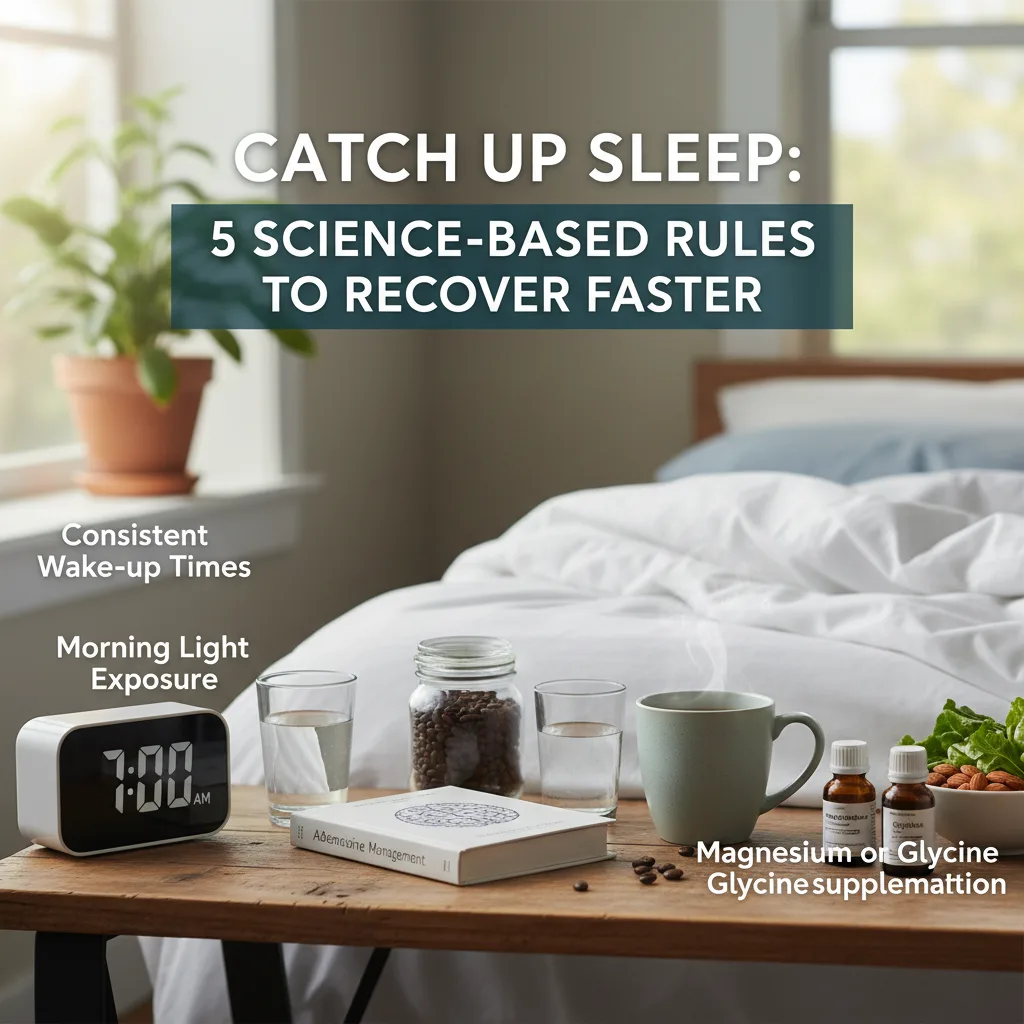
Rule 1: Calibrate Your Circadian Clock – The Brain’s Timing Belt
Your Circadian Rhythm is the master clock governing nearly every physiological process, including when you feel alert and when you feel sleepy. When this “timing belt” is out of sync, whether from erratic schedules, shift work, or jet lag, it severely hampers your ability to not only catch up sleep but also to experience restorative sleep in the first place. Getting your sleep schedule back on track is the first, most crucial step.
Why a Consistent Rhythm is Non-Negotiable
The suprachiasmatic nucleus (SCN) in the hypothalamus acts as your body’s central pacemaker, taking cues primarily from light exposure to synchronize all peripheral clocks. When you disrupt this synchronization, your body struggles to release melatonin at the right time, regulate core body temperature for sleep onset, or produce energizing cortisol in the morning. This leads to:
- • Difficulty Falling Asleep: Your brain isn’t receiving the clear internal signals that it’s time to wind down.
- • Fragmented Sleep: Waking up frequently during the night because your body is confused about its sleep-wake cycle.
- • Reduced Deep Sleep: Crucial restorative stages are compromised, making true recovery elusive.
- • Chronic Fatigue: Even if you spend more time in bed, the quality isn’t there, leaving you perpetually tired.
How to Recalibrate Your Circadian Rhythm
- • Anchor Your Sleep Schedule: Go to bed and wake up at roughly the same time every day, even on weekends. Consistency is key to signal to your SCN when to initiate sleep and wakefulness hormones. Aim for a regular bedtime that allows for your ideal sleep hours by age.
- • Strategic Light Exposure:
- – Morning Light: Get at least 15-30 minutes of natural light exposure within an hour of waking. This signals to your SCN that the day has begun, suppressing melatonin and boosting cortisol, helping you to wake up refreshed.
- – Evening Darkness: Minimize exposure to blue light from screens (phones, tablets, computers, TVs) 2-3 hours before bed. Blue light inhibits melatonin production, delaying sleep onset. Use blue-light-blocking glasses or activate night shift modes on devices.
- • Meal Timing: Eating large meals close to bedtime can interfere with sleep, as your digestive system’s activity conflicts with the body’s natural wind-down process. Aim to finish your last substantial meal at least 3 hours before sleep.
- • Exercise Appropriately: Regular physical activity improves sleep quality, but intense exercise too close to bedtime can be stimulating. Schedule workouts earlier in the day.
Rule 2: Prioritize Deep Restoration – Beyond Surface-Level Zzz’s
Simply spending more hours in bed doesn’t guarantee genuine recovery. To truly catch up sleep and “refill the tank after a long trip,” you must prioritize the quality and depth of your sleep. This means optimizing for the crucial non-REM (NREM) deep sleep and REM sleep stages, where the most vital cognitive and physiological restoration occurs. This is a core component of overall sleep optimization.
The ‘Why’: Deep Sleep as Your Brain’s Maintenance Crew
During the NREM stage, particularly N3 (slow-wave sleep), your brain produces high-amplitude Delta waves. This is when:
- • Glymphatic System Activation: The brain’s waste removal system kicks into high gear, flushing out metabolic byproducts, including amyloid-beta proteins linked to neurodegenerative diseases. This is literally your brain cleaning house.
- • Memory Consolidation: Short-term memories are transferred to long-term storage, a process crucial for learning and retaining new information.
- • Hormone Regulation: Growth hormone is released, critical for tissue repair and regeneration.
REM sleep, characterized by brain waves similar to wakefulness (Alpha, Theta), is equally vital for:
- • Emotional Processing: Helping you to deal with stress and traumatic experiences.
- • Creative Problem Solving: The brain makes novel connections and processes information in unique ways.
- • Neuroplasticity: The brain’s ability to reorganize itself by forming new neural connections, crucial for learning and adaptation.
Depriving yourself of these stages means you’re missing out on critical maintenance, making it impossible to truly catch up sleep effectively.
How to Enhance Deep Sleep and REM Stages
- • Optimize Your Sleep Environment:
- – Temperature: Keep your bedroom cool, ideally between 60-67°F (15-19°C). A slight drop in core body temperature is a natural signal for sleep onset.
- – Darkness: Ensure your room is completely dark. Even tiny light sources can disrupt melatonin production. Use blackout curtains.
- – Silence: Minimize noise. Use earplugs or a white noise machine if necessary to mask disruptive sounds.
- • Wind-Down Routine: Create a consistent pre-sleep ritual that signals to your body it’s time to transition to rest. This could include a warm bath, reading a physical book, meditation, or gentle stretching. Avoid mentally stimulating activities.
- • Dietary Considerations: Avoid caffeine and excessive alcohol, especially in the afternoon and evening. While alcohol can make you feel sleepy, it fragments sleep cycles, particularly REM, leading to poorer quality sleep.
- • Consider Sleep & Immunity: Adequate deep sleep is critical for a robust immune system. Prioritizing this can also help your body recover faster from stress and minor illnesses, further aiding your overall health and ability to catch up sleep. Sleep & Immunity are intrinsically linked.
Rule 3: Strategic Napping – Micro-Recharges, Not Sleep Substitutes
In the quest to catch up sleep, many fall into the trap of extended weekend lie-ins. While tempting, these often further disrupt your circadian rhythm. A more effective strategy for managing acute sleep debt and boosting cognitive function is strategic napping. This isn’t about indulging in “weekend sleeping myths”; it’s about leveraging short, targeted periods of rest to optimize performance without derailing your main sleep schedule. This is where the science of Power Napping comes into play.
The ‘Why’: The Science of the Power Nap
Naps, when executed correctly, can:
- • Reduce Sleep Pressure: They provide a temporary reduction in adenosine levels, alleviating feelings of drowsiness and fatigue.
- • Boost Cognitive Function: Studies show improvements in alertness, reaction time, memory, and problem-solving abilities.
- • Enhance Mood: Naps can reduce irritability and improve emotional regulation.
- • Support Neuroplasticity: Short bursts of sleep can still aid in learning and memory consolidation, especially for tasks requiring repetition.
However, the key is “strategic.” Long naps (over 90 minutes) can plunge you into deep sleep, leading to sleep inertia (that groggy, disoriented feeling upon waking) and making it harder to fall asleep at your regular bedtime, thus worsening your sleep debt.
How to Implement Strategic Napping
- • Optimal Nap Duration:
- – 10-20 Minutes (Power Nap): Ideal for a quick burst of alertness and cognitive performance without entering deep sleep. You’ll wake up feeling refreshed and ready to go.
- – 60 Minutes: Includes slow-wave sleep, beneficial for memory consolidation and learning. You might experience some sleep inertia, but it passes quickly.
- – 90 Minutes: A full sleep cycle, including REM sleep. This is excellent for creativity and emotional processing, and you’re less likely to experience inertia if you wake at the end of a cycle. However, this is closer to a Biphasic Sleep pattern and should be used cautiously to avoid impacting nighttime sleep.
- • Optimal Nap Timing: The ideal time for a nap is typically in the early afternoon, roughly 7-8 hours after you wake up. This aligns with the natural dip in alertness that most people experience due to their circadian rhythm. Napping too late in the day can interfere with nighttime sleep.
- • Create a Nap-Friendly Environment: Find a quiet, dark, and cool place. Use an eye mask and earplugs if needed. A consistent nap routine also reinforces your circadian rhythm.
Rule 4: Quantify Your Deficit – Calculating Your True Sleep Debt
You can’t effectively manage what you don’t measure. To truly understand how long to catch up on sleep, you need to quantify your sleep debt. This isn’t about guesswork or anecdotal evidence; it’s about a data-driven approach to personal sleep optimization. Calculating your sleep debt helps you set realistic recovery goals and understand the true impact of your sleep habits.
The ‘Why’: Understanding Your Baseline
Each individual has a unique sleep requirement. While the general recommendation for adults is 7-9 hours per night, your optimal sleep hours by age can vary. Your personal “sleep baseline” is the amount of sleep you need to function optimally without an alarm clock, feeling naturally refreshed and alert throughout the day. Only by knowing your baseline can you accurately calculate your deficit.
How to Calculate Your Personal Sleep Debt
- • Determine Your Sleep Baseline:
- – Dedicate 7-10 consecutive nights (ideally during a vacation or low-stress period) to going to bed when you’re tired and waking up naturally without an alarm.
- – Record the exact time you fall asleep and wake up each day.
- – Average these sleep durations. This average is your true physiological sleep need.
- • Track Your Daily Sleep:
- – Use a sleep tracking app (e.g., Oura Ring, Whoop, Apple Watch, Garmin) or a simple sleep journal to log your actual sleep duration each night.
- – Pay attention to metrics like time in bed, actual sleep time, and sleep efficiency (percentage of time in bed spent asleep).
- • Calculate the Deficit: For each night, subtract your actual sleep from your baseline sleep need. Sum these daily deficits over a week or month to get your total sleep debt. For example, if your baseline is 8 hours, and you sleep 6 hours for 5 nights, your debt is 2 hours/night x 5 nights = 10 hours. You can even use a Sleep Calculator to simplify this process.
- • Recovery Plan: If you have 10 hours of sleep debt, don’t try to sleep 10 extra hours in one go. Instead, aim to add 30-60 minutes to your sleep duration each night until the debt is repaid. Prioritize consistency over sporadic mega-sleep sessions. This gradual approach is far more effective for long-term recovery and helps you get sleep schedule back on track.
Rule 5: Leverage Neurotech & Biohacking for Accelerated Recovery
As a biohacker, I believe in utilizing cutting-edge technology and scientifically validated methods to optimize human performance. When it comes to catching up on sleep and enhancing its restorative power, neurotech offers powerful tools to accelerate recovery, fine-tune your brain’s natural rhythms, and deepen your sleep cycles. This isn’t about replacing fundamental sleep hygiene, but augmenting it for superior results and to help you get sleep schedule back on track with precision.
The ‘Why’: Precision Intervention for Brain Optimization
Traditional methods are crucial, but they often lack the precision to target specific brain states or overcome deeply entrenched sleep issues. Neurotech provides the ability to:
- • Directly Influence Brainwave States: Guiding your brain into optimal frequencies for relaxation (Alpha waves) and deep sleep (Delta waves).
- • Optimize Circadian Signaling: Using precise light wavelengths to reinforce natural sleep-wake cycles.
- • Enhance Recovery Processes: Supporting the brain’s natural mechanisms for waste clearance and memory consolidation.
How to Integrate Neurotech & Biohacking Tools
- • Brainwave Entrainment Devices: These devices use auditory (binaural beats, isochronic tones) or visual (flickering lights) stimuli to guide your brainwaves towards specific frequencies. For sleep, the goal is to encourage Alpha (relaxed wakefulness) and Theta (light sleep, creativity) before transitioning into Delta (deep sleep) states. This can significantly reduce sleep latency and improve the quality of deep sleep, making it easier to catch up sleep effectively.
- • Advanced Light Therapy Devices: Beyond simply blocking blue light, advanced light therapy can be used strategically. Red light therapy before bed can promote relaxation and aid melatonin production. Conversely, specific blue-spectrum light at precise times in the morning can boost alertness and reinforce your circadian rhythm, especially useful for adjusting to new time zones or combating seasonal affective disorder.
- • Sensory Resonance Technology: Some cutting-edge tools combine light, sound, and even gentle vibrations to create deeply immersive experiences designed to induce specific brain states. These visual brain entrainment tools can be particularly effective for individuals who struggle with overactive minds at bedtime, guiding them into states of profound relaxation and preparing the brain for optimal restorative sleep. By engaging multiple senses, they can bypass mental resistance and facilitate a deeper, more efficient pre-sleep wind-down.
- • Smart Sleep Trackers with Actionable Insights: While simple trackers help quantify sleep debt, advanced devices go further. They don’t just tell you how much you slept, but analyze your sleep cycles, heart rate variability (HRV), body temperature, and offer personalized recommendations. This data allows for continuous sleep optimization and helps you understand how long to catch up on sleep based on your unique physiology.
- • Temperature Regulation Systems: Smart mattresses or mattress toppers can precisely control your bed’s temperature throughout the night, aligning with your body’s natural thermal regulation for deeper, uninterrupted sleep.
Integrating these tools requires a discerning eye and a data-driven mindset. Experiment, track your metrics, and observe how your body responds. The goal is to find what genuinely enhances your sleep quality and facilitates true recovery, allowing you to not just catch up sleep, but to thrive.
Conclusion: Recharging Your Engine for Peak Performance
The concept of catching up on sleep is far more nuanced than simply hitting the snooze button a few extra times. It’s a strategic, multi-faceted endeavor that demands a deep understanding of your brain’s intricate mechanisms and a commitment to consistent, high-quality sleep. By embracing these five rules – calibrating your circadian rhythm, prioritizing deep restoration, utilizing strategic naps, quantifying your sleep debt, and leveraging neurotech – you move beyond merely surviving on minimal sleep to truly optimizing your cognitive engine.
Remember, your brain is the most complex and powerful supercomputer known to man. Just as a high-performance vehicle requires meticulous maintenance, precision tuning, and premium fuel, your brain demands optimal sleep to function at its peak. Neglecting this fundamental requirement leads to diminished capacity, reduced immunity, and a compromised quality of life. Embracing these rules is not just about recovering lost hours; it’s about investing in your future performance, your health, and your longevity.
Expert Tip: The 3-Day Reset Protocol
If you’re facing significant sleep debt, consider a 3-day reset. For three consecutive days, commit to optimal sleep hygiene: go to bed the moment you feel tired, wake up naturally without an alarm, maximize morning light exposure, and strictly avoid blue light in the evenings. Track your sleep to establish your true baseline. This intensive period allows your body to significantly reduce its homeostatic sleep drive and helps recalibrate your circadian rhythm, giving you a powerful starting point to maintain a healthy sleep schedule back on track going forward. Then, integrate the rules discussed to sustain your peak performance.
Start today. Implement these rules, track your progress, and experience the profound difference that truly optimized sleep can make in your life. Don’t just exist; truly live, with a fully charged brain and an unyielding capacity for excellence.