
Polysomnography: The 100-Point Inspection for Your Sleep
As a neuroscientist and biohacker, I’ve spent decades delving into the intricate machinery of the human brain. We optimize our diets, our workouts, our workflows, but often, the most fundamental pillar of peak performance remains overlooked: sleep. Imagine your brain as a high-performance engine, meticulously engineered for complex tasks, rapid processing, and sustained output. What happens when that engine starts misfiring? You feel sluggish, unfocused, irritable. Your memory falters, creativity wanes, and your ability to adapt to new challenges diminishes. These aren’t just minor inconveniences; they are critical indicators that your internal systems are compromised. For many, this leads to a frustrating cycle of restless nights, groggy mornings, and a perpetual feeling of being ‘off-kilter.’ You know something isn’t right, but you can’t quite put your finger on the root cause.
This is where Polysomnography steps in – it’s the ultimate diagnostic scan, the equivalent of a 100-point inspection for your brain and body during its most critical restorative phase. It’s not just about diagnosing a problem; it’s about gaining unparalleled insight into the complex symphony of physiological processes that underpin every aspect of your wakeful performance. For those committed to optimizing their cognitive prowess and maximizing their human potential, understanding the mechanics of your sleep is not merely an option, but a strategic imperative. This comprehensive guide will demystify the science, technology, and practical implications of Polysomnography, empowering you to take control of your sleep and, by extension, your entire well-being.
Key Takeaways
- • Polysomnography is the gold standard for comprehensive sleep study, providing a multi-faceted view of brain activity, respiration, heart rate, and muscle movements during sleep.
- • It’s crucial for diagnosing complex disorders like sleep apnea, chronic insomnia, narcolepsy, and parasomnias, offering insights far beyond what simple trackers can provide.
- • Understanding the data from sleep study electrodes, especially EEG sleep study results, allows for targeted interventions to optimize brain performance and cognitive function.
- • While home sleep tests offer convenience for specific conditions, in-lab Polysomnography remains superior for a full diagnostic landscape due to its extensive sensor array and professional supervision.
What is Polysomnography? Unveiling the Master Diagnostic Tool for Sleep
Polysomnography, often abbreviated as PSG, is far more than just a “sleep test.” It is a comprehensive, multi-parametric recording of biophysiological changes that occur during sleep. Think of it as a deep-dive diagnostic mission into your nocturnal physiology, mapping the intricate interplay between your brain, heart, lungs, and muscles. Developed to provide an objective, real-time assessment of sleep architecture and associated disorders, PSG stands as the undisputed gold standard in sleep diagnostics.
The term itself, Polysomnography, breaks down to “poly” (many), “somno” (sleep), and “graphy” (to write or record). This reflects its capacity to simultaneously measure and record a multitude of physiological signals. Unlike consumer-grade wearables that offer approximations, PSG provides clinical-grade data, capturing the subtle nuances that distinguish healthy sleep from various pathological states. For a biohacker or anyone driven by data-centric optimization, this granular level of insight is invaluable.
The Fundamental Science: Brainwaves, Body Rhythms, and Restorative Cycles
At its core, Polysomnography is a symphony of synchronized measurements. It delves into the fundamental science of how your body and brain function during sleep, a period critical for cellular repair, memory consolidation, and emotional regulation. Key scientific concepts that PSG illuminates include:
- • Sleep Architecture: PSG precisely delineates the stages of sleep: Non-Rapid Eye Movement (NREM), which is further divided into N1 (light sleep), N2 (deeper sleep with Sleep Spindles and K-complexes), and N3 (Deep Sleep Tracking, or slow-wave sleep), and Rapid Eye Movement (REM) sleep. The healthy cyclical progression through these stages is vital for restorative processes.
- • Brainwave Activity (EEG): Electroencephalography (EEG Technology) is paramount. It captures the electrical activity of the brain, revealing distinct patterns associated with different sleep stages. We observe Alpha waves (relaxed wakefulness), Theta waves (early sleep), and Delta waves (deep, restorative sleep). Abnormal patterns can point to underlying neurological issues or sleep disorders.
- • Neuroplasticity: Sleep is a critical period for synaptic pruning and strengthening, processes central to neuroplasticity. By analyzing sleep patterns, PSG can indirectly shed light on the brain’s capacity for learning, memory consolidation, and adaptation.
- • Circadian Rhythm: While PSG primarily records overnight activity, its data contributes to understanding how well your internal biological clock, or Circadian Rhythm, is synchronized with your sleep-wake cycle. Disturbances in this rhythm can significantly impact sleep quality and overall health.
The Full Diagnostic Scan: How Polysomnography Maps Your Nocturnal Landscape
The true power of Polysomnography lies in its ability to provide a panoramic view of your physiological activity throughout the night. It’s an unparalleled diagnostic scan, collecting a vast array of data points that, when interpreted by a skilled sleep specialist, paint a detailed picture of your sleep health. This comprehensive approach is what allows us to move beyond anecdotal evidence and pinpoint the exact mechanisms disrupting your restorative processes.
Beyond the Surface: What Metrics Does a Polysomnogram Capture?
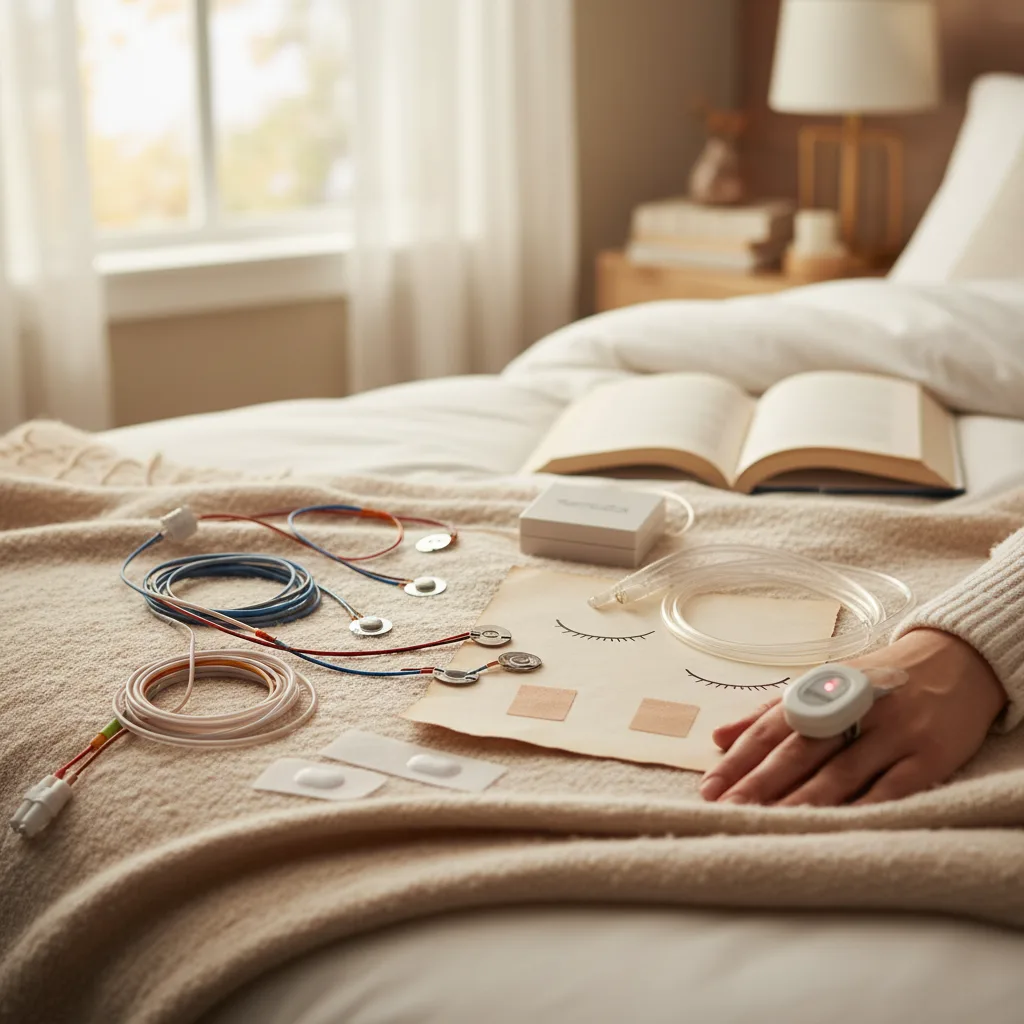
During a Polysomnography sleep study, an array of sleep study electrodes and sensors are strategically placed on your body to capture a wide range of physiological signals. Each sensor serves a specific purpose, contributing to the holistic understanding of your sleep:
- • Electroencephalogram (EEG): Multiple EEG sleep study electrodes on your scalp record brainwave activity. This is fundamental for identifying sleep stages (NREM 1, 2, 3, and REM), and detecting abnormal electrical discharges indicative of conditions like Epilepsy & Sleep.
- • Electrooculogram (EOG): Sensors near your eyes monitor eye movements, crucial for identifying REM (Rapid Eye Movement) sleep, where distinct eye movements occur.
- • Electromyogram (EMG): Electrodes placed on your chin and legs record muscle activity. Chin EMG helps determine sleep stages (muscle tone typically decreases in REM sleep), while leg EMG can detect periodic limb movements in sleep (PLMS).
- • Electrocardiogram (ECG): Monitors heart rate and rhythm, revealing any cardiac irregularities or stress responses during sleep that might be linked to sleep disorders.
- • Respiratory Monitoring:
- – Airflow Sensors: Thermistors or pressure transducers detect airflow at the nose and mouth, identifying apneas (cessation of breathing) and hypopneas (reduction in breathing).
- – Respiratory Effort Belts: Placed around the chest and abdomen, these measure movements associated with breathing, helping differentiate between obstructive and central sleep apnea.
- • Pulse Oximetry: A clip on your finger monitors blood oxygen saturation, revealing drops that often accompany sleep-disordered breathing.
- • Snore Microphone: Records snoring sounds, an important indicator of airway obstruction.
- • Video Monitoring: Often, a video camera records your movements and Sleep Position changes throughout the night, providing crucial context for the physiological data, especially for diagnosing parasomnias like sleepwalking.
Navigating the Sleep Lab: What to Expect During Your Polysomnography Sleep Study
The idea of spending a night hooked up to wires in an unfamiliar environment can be daunting for some. However, understanding what to expect during a lab-based Polysomnography can significantly alleviate anxiety and ensure a more productive study. Remember, the goal is to capture your typical sleep patterns as accurately as possible, even if the setting isn’t your own bedroom.
The Preparation Phase: Before You Arrive
- • Consultation: You’ll typically have an initial consultation with a sleep specialist to discuss your symptoms, medical history, and determine if Polysomnography is appropriate.
- • Pre-Study Instructions: You’ll receive specific instructions, which often include avoiding caffeine and alcohol on the day of the study, showering, and ensuring your hair is clean and free of products to facilitate sleep study electrodes placement. It’s usually advised to continue your regular medications unless otherwise instructed. Discuss any Sleep Pills with your doctor.
- • Pack Essentials: Bring comfortable sleepwear, toiletries, and anything else you need for a night away from home.
The Overnight Experience: Sensors, Comfort, and Data Collection
Upon arrival at the sleep lab, a friendly technician will guide you through the process. The rooms are designed to be as comfortable and private as possible, often resembling hotel rooms.
- • Sensor Placement: This is the most time-consuming part. The technician will meticulously attach various sleep study electrodes to your scalp for EEG sleep study, face, chest, and legs using a conductive paste or tape. These EEG Technology sensors are small, non-invasive, and designed for minimal discomfort. Wires from these electrodes will be bundled together and connected to a central recording device.
- • Calibration: Before you settle in for the night, the technician will perform calibration tests, asking you to move your eyes, clench your jaw, and take deep breaths to ensure all sensors are working correctly.
- • Sleeping: Once connected, you’ll be encouraged to relax and fall asleep as you normally would. While the initial setup might feel unusual, most people adapt quickly. The technician monitors the data from an adjacent room, ensuring your safety and the quality of the recording. They can communicate with you via an intercom if needed, for instance, if a sensor detaches.
- • Duration: A typical Polysomnography lasts for an entire night, usually 6-8 hours, to capture a full cycle of your sleep architecture.
The Post-Study Analysis: Decoding Your Sleep Profile
The morning after, the sensors are removed, and you’re free to go. The real work then begins for the sleep specialists:
- • Data Scoring: Highly trained technologists manually score the vast amount of data collected, marking sleep stages, respiratory events, limb movements, and other occurrences in 30-second epochs.
- • Physician Interpretation: A board-certified sleep physician then interprets the scored data, correlating various findings to arrive at a diagnosis and recommend a treatment plan.
- • Results: You will typically receive your results and a follow-up consultation within a few weeks, where the findings will be explained in detail.
Diagnosing the Silent Saboteurs: Apnea, Insomnia, and Beyond
The primary purpose of Polysomnography is to diagnose sleep disorders that often go undetected through self-reporting or less sophisticated methods. These disorders can have profound impacts on physical health, cognitive function, and quality of life. For a biohacker, identifying and addressing these “silent saboteurs” is crucial for unlocking true potential.
Sleep Apnea: Unmasking the Interrupted Breath
Sleep apnea is one of the most common and dangerous sleep disorders, characterized by repeated interruptions in breathing during sleep. These interruptions lead to drops in blood oxygen levels and fragmented sleep, often without the individual’s conscious awareness. Polysomnography is essential for diagnosing the type and severity of apnea:
- • Obstructive Sleep Apnea (OSA): The most common form, where the airway physically collapses or becomes blocked during sleep, despite effort to breathe. PSG measures airflow, respiratory effort, and oxygen saturation to confirm OSA.
- • Central Sleep Apnea (CSA): Occurs when the brain fails to send proper signals to the muscles that control breathing, meaning there’s no effort to breathe. PSG’s comprehensive respiratory monitoring is vital for differentiating CSA from OSA.
- • Mixed Sleep Apnea: A combination of both OSA and CSA.
Insomnia: Pinpointing the Roots of Restlessness
While insomnia is often diagnosed clinically, Polysomnography can provide objective data to confirm the diagnosis, rule out other underlying disorders, and assess the severity. It can differentiate between:
- • Psychophysiological Insomnia: Where anxiety or learned associations with wakefulness disrupt sleep. PSG might show increased sleep latency (time to fall asleep) and increased awakenings.
- • Paradoxical Insomnia: Where individuals severely underestimate their total sleep time, even though PSG shows adequate sleep duration. This is a powerful demonstration of how objective data can challenge subjective perception.
Other Conditions Revealed by Polysomnography
Beyond apnea and insomnia, PSG is instrumental in diagnosing a spectrum of other complex sleep disorders:
- • Narcolepsy: Characterized by excessive daytime sleepiness and sudden sleep attacks. PSG, often combined with a Multiple Sleep Latency Test (MSLT), can detect abnormal REM sleep onset.
- • Restless Legs Syndrome (RLS) and Periodic Limb Movement Disorder (PLMD): EMG sensors precisely identify the frequency and intensity of leg movements that disrupt sleep.
- • Parasomnias: These include sleepwalking, sleep terrors, and REM sleep behavior disorder (RBD). Video monitoring combined with EEG sleep study and EMG data is crucial for accurate diagnosis.
- • Neurological Disorders: PSG can also aid in understanding the impact of conditions such as Parkinson’s disease, Alzheimer’s, and Epilepsy & Sleep on sleep architecture.
Understanding the Orchestra of Sensors: The Science Behind the Data
To truly appreciate the depth of insight provided by Polysomnography, it’s essential to grasp the scientific principles behind each type of sensor. This is where the biohacker’s analytical mind finds fertile ground, understanding not just “what” is measured, but “why” it matters for brain health and performance.
EEG Sleep Study: Mapping Brainwave Dynamics
The EEG sleep study is arguably the most critical component of Polysomnography. It’s the window into your brain’s electrical activity, revealing the oscillating patterns that define your state of consciousness. Different frequencies of brainwaves correlate with distinct mental states and sleep stages:
- • Beta Waves (13-30 Hz): Associated with active, waking consciousness, alertness, and problem-solving.
- • Alpha Waves (8-12 Hz): Dominant during relaxed wakefulness, meditation, and the transition into sleep (N1). They indicate a calm, introspective state.
- • Theta Waves (4-7 Hz): Prominent in N1 and N2 sleep, also associated with creativity, intuition, and memory consolidation. Sleep Spindles (brief bursts of 12-14 Hz activity) and K-complexes are unique EEG patterns of N2 sleep, playing roles in memory and protecting sleep from external disturbances.
- • Delta Waves (0.5-4 Hz): The slowest and highest amplitude waves, characteristic of N3 (Deep Sleep Tracking or slow-wave sleep). This is the most physically restorative stage, vital for growth hormone release and cellular repair.
- • REM Sleep: During REM, the EEG shows low-amplitude, mixed-frequency activity, resembling wakefulness, but with characteristic rapid eye movements and muscle atonia. This stage is crucial for emotional processing, dream consolidation, and neuroplasticity.
EOG & EMG: Eye Movements and Muscle Tone
The Electrooculogram (EOG) and Electromyogram (EMG) provide vital supporting data for sleep staging:
- • EOG: By detecting the electrical potential generated by eye movements, the EOG confirms the presence of REM sleep, where characteristic rapid, conjugate eye movements occur. It also helps in identifying the transition from wakefulness to N1 sleep.
- • EMG: This measures electrical activity produced by skeletal muscles. During NREM sleep, muscle tone is typically maintained, but during REM sleep, the body experiences near-total muscle paralysis (atonia). EMG helps confirm REM by showing this dramatic reduction in muscle activity, preventing us from acting out our dreams. Abnormal EMG activity can indicate conditions like RBD or PLMD.
Respiratory and Cardiac Monitoring: The Body’s Vital Rhythms
Beyond brain activity, Polysomnography rigorously tracks your autonomic nervous system’s function, particularly breathing and heart rate, which are often the first indicators of significant sleep disturbances.
- • Airflow and Effort: Sensors around the nose, mouth, chest, and abdomen provide a complete picture of your breathing. By comparing airflow with respiratory effort, technicians can differentiate between obstructive events (effort but no airflow) and central events (no effort, no airflow). This is critical for accurate sleep apnea diagnosis.
- • Oxygen Saturation: A pulse oximeter measures the percentage of oxygen in your blood. Repeated drops in oxygen saturation (desaturations) are a hallmark of sleep-disordered breathing and carry significant health risks, including cardiovascular strain and cognitive impairment.
- • Heart Rate (ECG): The ECG channel monitors your heart’s electrical activity. Abnormal heart rhythms (arrhythmias) or significant fluctuations in heart rate during sleep can be indicative of underlying cardiac issues exacerbated by sleep apnea or other stressors.
Lab vs. Home: Choosing Your Polysomnography Environment
With advancements in technology, the option of a Home Sleep Apnea Test (HSAT) has become more prevalent. While convenient, it’s crucial to understand the distinctions between an in-lab Polysomnography and an HSAT to make an informed decision about which study is appropriate for your specific needs.
In-Lab Polysomnography: The Gold Standard
The traditional, in-lab Polysomnography remains the most comprehensive and diagnostically robust option. Its advantages are clear:
- • Comprehensive Data: Captures a full spectrum of physiological data, including EEG sleep study, EOG, EMG, ECG, respiratory effort, airflow, oxygen saturation, and video monitoring. This allows for precise sleep staging and identification of a wide range of disorders.
- • Direct Supervision: A trained technologist is present throughout the night, ensuring proper sensor placement, troubleshooting any issues, and documenting observations that might be missed by automated systems.
- • Advanced Diagnostic Capabilities: Essential for diagnosing complex disorders like narcolepsy, RLS, PLMD, parasomnias, and certain types of insomnia where brainwave analysis is paramount. It’s also the preferred method for patients with existing medical conditions that might complicate sleep.
- • Titration Studies: If sleep apnea is diagnosed, an in-lab study can also be used for CPAP (Continuous Positive Airway Pressure) titration, where the optimal pressure setting for treatment is determined.
Home Sleep Apnea Testing (HSAT): Convenience Meets Specificity
Home Sleep Apnea Tests are simpler, more convenient, and often less expensive. They are primarily designed to diagnose moderate to severe Obstructive Sleep Apnea (OSA) in individuals without significant co-morbidities.
- • Reduced Sensor Array: HSATs typically monitor fewer parameters than in-lab PSG. They usually include airflow, respiratory effort, and oxygen saturation, but often lack EEG sleep study, EOG, and EMG measurements. Newer Portable Monitors for home use are becoming more sophisticated, but still don’t match the in-lab standard.
- • Comfort and Familiarity: Conducted in your own bed, HSATs can lead to a more “typical” night of sleep, reducing the “first night effect” sometimes seen in lab settings.
- • Cost-Effective: Generally more affordable than in-lab studies.
- • Limitations: Cannot accurately diagnose non-apnea sleep disorders, may miss mild apnea, and cannot differentiate between OSA and CSA as effectively due to the lack of comprehensive sleep study electrodes data. If an HSAT is negative but suspicion of a sleep disorder remains high, an in-lab PSG is usually recommended.
Making the Informed Choice: Which Study is Right for You?
The decision between an in-lab Polysomnography and an HSAT should always be made in consultation with a sleep specialist. Factors influencing the choice include:
- • Symptoms: Are they primarily indicative of sleep apnea (loud snoring, witnessed pauses in breathing, daytime sleepiness) or more complex issues (insomnia, unusual behaviors during sleep)?
- • Co-existing Conditions: Do you have heart disease, lung disease, or neurological disorders that warrant more detailed monitoring?
- • Physician Recommendation: Your doctor’s expertise will guide you to the most appropriate diagnostic pathway.
Optimizing Your Brain’s Performance: Beyond Diagnosis to Enhancement
As a biohacker, the journey doesn’t end with diagnosis; it begins with it. Once Polysomnography has provided its detailed report on your nocturnal brain and body function, you are armed with the precise data needed to move from merely identifying problems to strategically enhancing performance. This data-driven approach allows for personalized interventions that can unlock new levels of cognitive resilience, focus, and overall well-being.
The Biohacker’s Approach to Sleep Optimization
With the insights gained from your Polysomnography, you can implement targeted biohacking strategies:
- • Personalized Interventions: If apnea is diagnosed, CPAP therapy or oral appliances can dramatically improve oxygenation and sleep quality. For insomnia, understanding your specific sleep architecture can guide cognitive behavioral therapy for insomnia (CBT-I) or chronotherapy to realign your Circadian Rhythm.
- • Environmental Optimization: Leveraging data on your Sleep Position, ambient noise, and light exposure during your study can help you create an ideal sleep sanctuary at home.
- • Nutritional and Supplement Support: While Polysomnography doesn’t directly measure nutrition, a disrupted sleep profile might prompt you to investigate dietary factors or specific supplements that support neurotransmitter balance and sleep quality.
Leveraging Data for Proactive Neuro-Enhancement
For those seeking to actively sculpt their brain’s electrical landscape and enhance cognitive resilience, exploring advanced neuro-modulation techniques can be profoundly beneficial. Technologies like visual brain entrainment tools offer a non-invasive pathway to prime your mind for optimal states of focus, creativity, or profound relaxation, complementing the insights gained from a detailed sleep analysis. These tools can leverage principles of Neuroplasticity, guiding brainwave patterns towards desired states, much like how Polysomnography helps us understand them. Combining diagnostic precision with proactive enhancement strategies is the hallmark of true biohacking.
Frequently Asked Questions about Polysomnography
Is Polysomnography painful?
No, Polysomnography is not painful. The sleep study electrodes are simply attached to the skin and hair; there are no needles or invasive procedures. Some individuals might find the sensation of the wires or sensors slightly unusual or restrictive, but they are not designed to cause pain. Technicians are trained to ensure your comfort throughout the process.
How long does a polysomnography sleep study take?
A typical in-lab Polysomnography involves arriving at the sleep lab in the evening (e.g., between 7 PM and 9 PM), undergoing sensor setup (which can take 45-60 minutes), and then sleeping for 6-8 hours. You are usually disconnected and discharged by 6 AM or 7 AM the following morning. So, the total time spent at the facility is generally around 10-12 hours.
What happens after a positive diagnosis?
If your Polysomnography reveals a sleep disorder, your sleep specialist will discuss the findings and recommend a personalized treatment plan. For sleep apnea, this might involve CPAP therapy, oral appliances, or lifestyle modifications. For insomnia, it could be CBT-I or other behavioral interventions. The goal is to address the root cause of your sleep disruption and restore optimal sleep health.
Can I take Sleep Pills before a Polysomnography?
It’s crucial to discuss all your medications, including any Sleep Pills or supplements, with your doctor and the sleep lab prior to your study. In some cases, you may be asked to temporarily stop certain medications that could interfere with sleep architecture or mask symptoms. In other cases, continuing your usual regimen might be necessary to capture your typical sleep patterns. Always follow your physician’s specific instructions.
Conclusion: Invest in Your Sleep, Elevate Your Life
In the relentless pursuit of peak human performance and cognitive excellence, sleep remains the most powerful, yet often undervalued, tool. Polysomnography is not just a diagnostic test; it’s an investment in understanding the foundational processes that govern your waking life. By subjecting your “human engine” to this 100-point inspection, you gain unparalleled data, transforming vague symptoms into actionable insights.
The benefits of a comprehensive Polysomnography sleep study extend far beyond simply identifying a disorder. It empowers you to:
- • Restore energy levels and combat chronic fatigue.
- • Sharpen cognitive function, memory, and focus.
- • Enhance mood stability and emotional regulation.
- • Improve physical health, including cardiovascular function and metabolic regulation.
- • Optimize your brain’s capacity for neuroplasticity and long-term health.
For the discerning individual and the dedicated biohacker, this isn’t just about avoiding illness; it’s about proactively engineering a state of optimal health and unparalleled mental clarity. Your brain is your most valuable asset. Don’t let its performance be hampered by undiagnosed nocturnal disruptions.
Expert Tip: Start Your Sleep Optimization Journey Today
If you suspect your sleep isn’t serving your peak performance goals, don’t wait. Consult a sleep specialist to discuss whether Polysomnography or an HSAT is right for you. In the meantime, implement small, data-informed changes: optimize your bedroom environment for darkness and temperature, establish a consistent sleep schedule aligned with your Circadian Rhythm, and consider strategic Power Napping to combat daytime dips. Knowledge is power, and with the insights from Polysomnography, you can truly master your sleep and unleash your full cognitive potential.