
Beta Waves: How to Shift Down from High Gear to Park
In our hyper-connected, always-on world, the human brain often feels like an engine constantly redlining. We’re expected to be perpetually alert, focused, and ready to tackle the next challenge, leading to a pervasive state of ‘high gear’ that many struggle to disengage from. If you’ve ever found yourself lying awake at 3 AM, mind racing, unable to quiet the relentless internal monologue, or struggling to concentrate amidst a deluge of tasks, you’re intimately familiar with the symptoms of an overactive brain. This isn’t just a matter of willpower; it’s a direct consequence of our brainwave activity, specifically the dominance of Beta Waves.
As a neuroscientist and biohacker dedicated to optimizing human potential, I understand this struggle deeply. We live in a society that often rewards constant mental acceleration, yet fails to equip us with the tools to decelerate effectively. The promise of peak performance often comes with the hidden cost of burnout, diminished creativity, and compromised well-being. But what if you could learn to control your brain’s ‘RPMs’? What if you could consciously shift from intense focus to relaxed awareness, from problem-solving to peaceful sleep, much like downshifting a high-performance vehicle?
This comprehensive guide will demystify Beta Waves, exploring their crucial role in our daily lives and the significant impact of their overactivity. We’ll delve into the scientific mechanisms, the latest neurotechnologies, and practical strategies that empower you to regain control, optimize your cognitive states, and ultimately, find your ‘parking gear’ when you need it most. Prepare to understand not just why your brain functions the way it does, but precisely how you can apply cutting-edge knowledge and techniques to achieve a state of balanced, resilient mental performance.
Key Takeaways
- • Beta Waves are vital for alertness and focus, but chronic high beta activity can lead to anxiety, stress, and cognitive fatigue.
- • Learning to consciously shift from Beta to Alpha Waves is crucial for deep relaxation, improved sleep quality, and enhanced creativity.
- • Advanced techniques like Neurofeedback offer a data-driven approach to directly train your brain to modulate Beta Wave patterns, fostering greater mental control.
- • Integrating biohacking strategies, mindfulness, and an understanding of your EEG Technology profile can empower you to achieve optimal brain state regulation.
What Exactly Are Beta Waves and Why Do They Matter for Your Brain’s Performance?
To understand how to manage Beta Waves, we must first grasp their fundamental nature. Brainwaves are rhythmic electrical impulses generated by synchronized neuronal activity in the brain. They are classified into different frequency bands, each associated with distinct states of consciousness and cognitive function. Beta Waves, operating primarily within the 12 to 30 Hz (cycles per second) range, are the quintessential brainwaves of our waking, active lives.
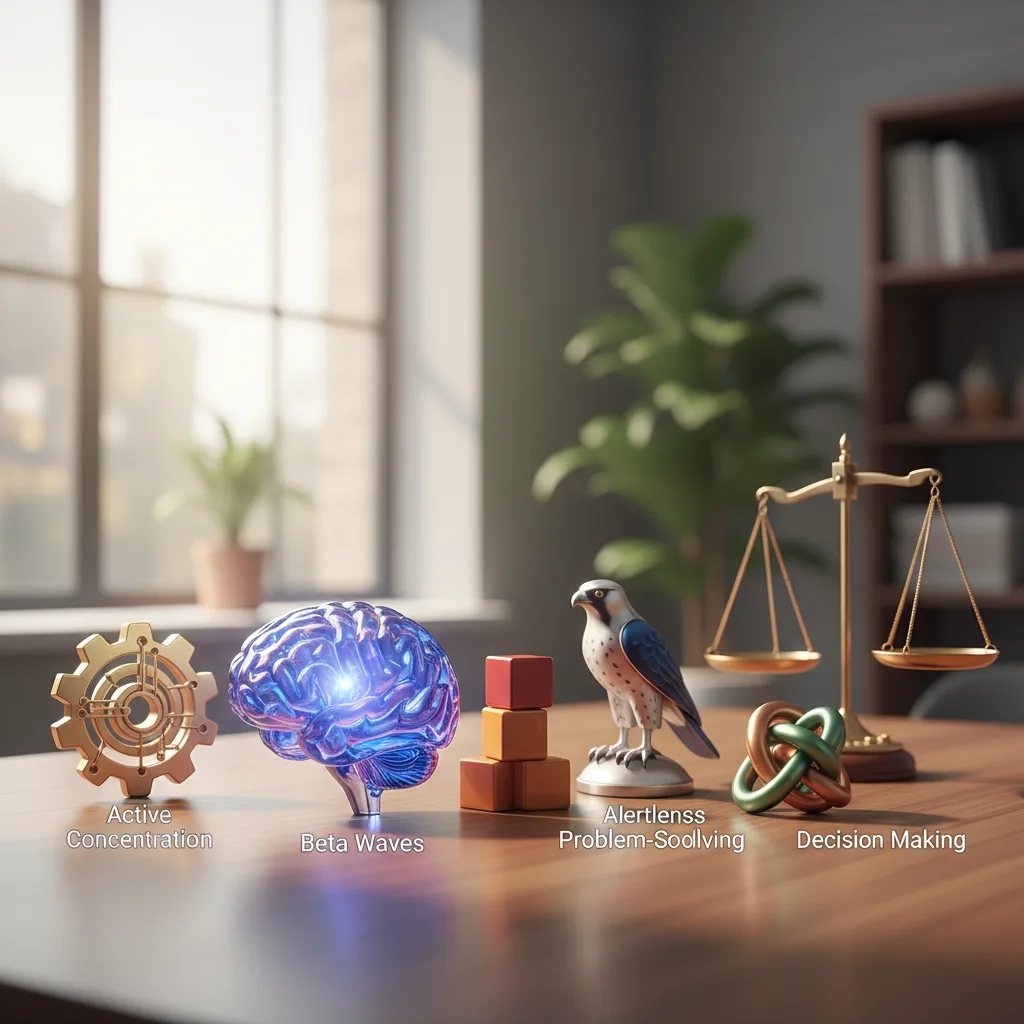
Think of Beta Waves as the ‘active’ gears in your brain’s intricate transmission system. When you’re engaged in problem-solving, making decisions, concentrating on a task, or even just conversing, your brain is typically producing Beta Waves. They are indispensable for:
- • Focused Attention: Sustaining concentration on a specific task or stimulus.
- • Logical Reasoning: Analyzing information and arriving at conclusions.
- • Active Thought: Engaging in internal dialogue, planning, and mental calculations.
- • Problem-Solving: Actively working through challenges and seeking solutions.
- • Alertness and Arousal: Maintaining a state of readiness and awareness of your surroundings.
However, not all Beta Waves are created equal. Neuroscientists often categorize them into sub-bands:
- • Low Beta (12-15 Hz): This is a relaxed, focused state. You’re attentive but not overly aroused. It’s ideal for tasks requiring calm concentration.
- • Mid Beta (15-20 Hz): Associated with increased alertness and engagement, typical during active problem-solving or social interaction.
- • High Beta (20-30 Hz): This is the ‘high gear’ we often refer to. It signifies intense mental effort, excitement, or a state of stress and anxiety. While beneficial for short bursts of critical thinking or emergencies, sustained high beta activity can be detrimental.
Understanding these distinctions is paramount. Our goal isn’t to eliminate Beta Waves, but to learn to modulate them, ensuring we’re in the appropriate ‘gear’ for the task at hand and, crucially, know how to downshift when needed.
Shifting Down from ‘High Beta’ Overdrive: The Perils of Constant Revving
In today’s demanding environment, many individuals find themselves perpetually stuck in high beta. This state, characterized by accelerated neural activity, is perfectly suited for urgent tasks: meeting deadlines, navigating complex data, or responding to immediate threats. However, when the brain remains in this ‘redline’ condition for extended periods, the consequences can be profound and detrimental to both cognitive function and overall well-being.
Chronic high beta activity depletes neural resources, leading to:
- • Cognitive Fatigue: The brain literally gets tired, leading to reduced mental stamina, poor decision-making, and difficulty sustaining attention. This is often why you feel ‘brain fog’ after a long, stressful day.
- • Impaired Sleep: The inability to ‘turn off’ the mind before bed is a classic symptom of persistent high beta. This state prevents the brain from generating slower brainwaves like Alpha Waves and Theta Waves, which are essential for falling asleep and experiencing restorative deep sleep. This can exacerbate sleep anxiety.
- • Reduced Creativity: Creative insights often emerge from more relaxed states (Alpha and Theta). When the brain is locked in high beta, it struggles to access these more diffuse, associative thinking modes.
- • Physical Tension: The mental tension associated with high beta often translates into physical symptoms like muscle tightness, headaches, and digestive issues.
The inability to downshift from this ‘high gear’ can disrupt the body’s natural Circadian Rhythm, further impairing sleep-wake cycles and overall health. It’s a vicious cycle where stress feeds high beta, which in turn fuels more stress and anxiety, ultimately impacting your ability to function optimally and enjoy life.

The Beta-Anxiety Connection: Unraveling the Neural Link
One of the most significant implications of persistent high beta activity is its profound link to anxiety. While a certain level of beta is necessary for vigilance and appropriate responses to perceived threats, an excessive or chronic dominance of high beta can create and perpetuate a state of heightened physiological and psychological arousal characteristic of anxiety disorders.
When your brain is continuously producing high beta waves, it’s essentially signaling a constant state of emergency. This activates the sympathetic nervous system, triggering the ‘fight or flight’ response, even when no real threat is present. This manifests as:
- • Constant Worry and Rumination: The mind gets stuck in a loop of overthinking, replaying scenarios, and anticipating negative outcomes. This is the hallmark of generalized anxiety.
- • Irritability and Restlessness: The brain’s heightened state makes it difficult to relax, leading to agitation and a feeling of being on edge.
- • Physical Symptoms: Rapid heart rate, shallow breathing, muscle tension, and digestive upset are common physiological responses to prolonged anxiety, directly influenced by this neurological state.
- • Difficulty with Sleep Initiation: As mentioned, high beta activity is a significant contributor to sleep anxiety, making it nearly impossible to quiet the mind enough to transition into restful sleep.
Neuroscientific studies using EEG Technology consistently show a correlation between elevated high beta activity, particularly in the frontal lobes, and various anxiety disorders. The good news is that understanding this connection provides a clear pathway for intervention. By learning to reduce unwanted high beta, we can directly impact the neural underpinnings of anxiety and cultivate a calmer, more resilient mental state.
Mastering the Transition: From Beta Hustle to Alpha Calm
The art of downshifting involves consciously moving from a predominantly Beta Wave state to a more relaxed, reflective Alpha Wave state. Alpha Waves (8-12 Hz) are the bridge between our conscious and subconscious minds. They emerge when we are relaxed but still alert, such as during meditation, daydreaming, or just before falling asleep. This is your brain’s ‘neutral gear’ – a state of calm readiness, optimal for creativity, learning, and stress reduction.
Why is this transition so vital?
- • Stress Reduction: Alpha states directly counteract the physiological effects of stress, promoting relaxation and lowering cortisol levels.
- • Enhanced Creativity and Problem Solving: The relaxed, open state of Alpha allows for divergent thinking and ‘aha!’ moments that are often elusive in high beta.
- • Improved Learning and Memory: Alpha activity is associated with optimal states for absorbing new information and consolidating memories.
- • Gateway to Deeper States: Alpha Waves naturally precede Theta (4-8 Hz), which are crucial for deep meditation, REM sleep, and accessing subconscious insights, and ultimately Delta (0.5-4 Hz), the waves of deep, restorative sleep.
Techniques to foster this transition include:

- • Mindfulness and Meditation: Regular practice has been shown to increase Alpha Wave activity and reduce beta brain waves sleep disturbances.
- • Deep Breathing Exercises: Techniques like diaphragmatic breathing activate the parasympathetic nervous system, shifting brain activity towards Alpha.
- • Nature Exposure: Spending time in green spaces has a calming effect that promotes Alpha states.
- • Auditory Brain Entrainment: Listening to specific frequencies, such as Binaural Beats Sleep tracks designed to induce Alpha Waves, can effectively guide your brain into a more relaxed state.
- • Visual Stimulation: Controlled light flicker or specific visual patterns can also facilitate Alpha Wave production, providing a powerful way to shift your brain state.
How Do We Measure and Understand Our Brain’s Alertness Levels?
To effectively manage your brain states, you first need to understand them. This is where the science of neurophysiology meets the practice of biohacking. While self-awareness and introspection are valuable, objective measurement provides unparalleled insights into your unique brainwave patterns and how they correlate with your subjective experiences of alertness, focus, and relaxation.
The Gold Standard: EEG Technology
The primary tool for measuring brainwave activity is Electroencephalography (EEG Technology). EEG involves placing electrodes on the scalp to detect and record the electrical signals produced by the brain’s neurons. These signals are then analyzed to identify the dominant brainwave frequencies, including Beta Waves, Alpha Waves, Theta, Delta, and even higher frequency Gamma Waves.
- • Clinical EEG: Performed in medical settings, offering highly detailed brain activity mapping for diagnostic purposes.
- • Consumer-Grade EEG Devices: Increasingly accessible, these devices allow individuals to monitor their brainwaves at home. While not as precise as clinical systems, they provide valuable real-time feedback that can inform personal brain training efforts and offer insights into your general state of alertness and relaxation.
Interpreting Your Brainwave Profile
An EEG assessment can reveal your unique brainwave profile, identifying areas of dominance or deficiency. For instance, an individual struggling with anxiety might exhibit an overabundance of high beta activity, particularly in certain brain regions. Conversely, someone with attention deficits might show insufficient low beta or excessive Theta waves during tasks requiring focus.
- • Baseline Measurement: Understanding your typical brainwave patterns when relaxed, focused, or stressed provides a crucial starting point.
- • Real-time Feedback: Many consumer EEG devices offer real-time feedback, allowing you to see how your brainwaves change in response to different activities, meditations, or relaxation techniques. This immediate insight is a powerful motivator and guide for optimizing your mental states.
- • Tracking Progress: Regular monitoring allows you to track the effectiveness of your interventions, whether it’s meditation, lifestyle changes, or advanced neurotechnologies.

By embracing objective measurement, you move beyond guesswork and gain a data-driven approach to understanding and optimizing your brain’s alertness and ability to downshift.
Neurofeedback: A Precision Tool for Beta Wave Modulation
While lifestyle adjustments and mindfulness practices are foundational, for those seeking a more direct and targeted approach to modulating Beta Waves, Neurofeedback stands out as a powerful, non-invasive neurotechnology. Neurofeedback is a form of biofeedback that uses real-time displays of brain activity—typically EEG Technology—to teach individuals self-regulation of their brain function.
How Neurofeedback Works for Beta Reduction
In a typical Neurofeedback session, electrodes are placed on the scalp to monitor your brainwave activity. This activity is then displayed to you in real-time, often in the form of a video game, an animation, or an auditory tone. The goal is to train your brain to produce more of a desired brainwave pattern (e.g., Alpha Waves) and less of an undesirable one (e.g., high beta).
- • Targeted Training: If your goal is to reduce anxiety or improve beta brain waves sleep issues, the Neurofeedback protocol would be designed to reward your brain for decreasing high beta activity and increasing Alpha Waves or Theta Waves.
- • Operant Conditioning: Your brain learns through positive reinforcement. When it produces the desired brainwave pattern, you receive positive feedback (e.g., the video game progresses, the sound becomes clearer). Over time, your brain learns to naturally produce these more optimal patterns.
- • Neuroplasticity in Action: This training leverages the brain’s incredible capacity for Neuroplasticity, allowing it to form new neural pathways and strengthen existing ones to achieve better self-regulation.
Applications and Benefits of Beta Reduction Neurofeedback
- • Anxiety and Stress Management: By reducing excessive high beta, Neurofeedback can significantly alleviate symptoms of anxiety, promoting a greater sense of calm and well-being.
- • Improved Sleep Quality: Training the brain to downregulate Beta Waves and upregulate Alpha Waves can dramatically improve sleep onset and the overall restorative quality of sleep, addressing issues like sleep anxiety.
- • Enhanced Focus and Attention: While beta reduction is key for relaxation, Neurofeedback can also be used to optimize low beta or SMR (Sensorimotor Rhythm) for improved sustained attention, often used in protocols for Neurofeedback for ADHD. This highlights the nuance of beta wave regulation – it’s about balance, not elimination.
- • Peak Performance: Athletes, executives, and creatives use Neurofeedback to enter flow states, manage performance anxiety, and unlock their cognitive potential.
Beyond traditional Neurofeedback, other forms of brain entrainment, like binaural beats sleep programs or advanced light therapy devices and visual brain entrainment tools, offer complementary pathways to guide your brain into desired states. These technologies leverage rhythmic sensory input to encourage your brainwaves to synchronize with external frequencies, offering an accessible way to experience deep relaxation or enhanced focus. For those interested in exploring cutting-edge tech for focus and relaxation, tools utilizing sensory resonance technology can provide a significant advantage in cultivating optimal brain states.
Beyond Neurofeedback: Holistic Strategies for Beta Wave Regulation
While Neurofeedback offers a powerful, targeted intervention, a truly comprehensive approach to managing Beta Waves and achieving overall brain health involves integrating a range of holistic strategies. These methods work synergistically to support your brain’s natural ability to self-regulate and adapt.
Lifestyle Optimizations for Balanced Brainwaves
- • Sleep Hygiene: Prioritize consistent sleep schedules, create a dark, cool, quiet sleep environment, and avoid screens before bed. A well-regulated Circadian Rhythm is fundamental for healthy brainwave transitions and avoiding excessive beta brain waves sleep interference.
- • Nutritional Support: A brain-healthy diet rich in omega-3 fatty acids, antioxidants, and adequate protein provides the building blocks for optimal neurotransmitter function. Avoid excessive caffeine and stimulants, which can drive high beta activity.
- • Regular Exercise: Physical activity reduces stress hormones and promotes the release of endorphins, fostering a more balanced brain state. Even moderate exercise can help shift your brain out of persistent high beta.
- • Stress Management Techniques: Incorporate practices like yoga, Tai Chi, or spending time in nature to regularly induce Alpha Wave states and counteract the buildup of stress-related Beta Waves.
Mindfulness and Cognitive Practices
- • Meditation: Consistent meditation practice is a powerful way to train your brain to shift from Beta Waves to Alpha and Theta states, promoting deep relaxation and mental clarity. Even short, daily sessions can make a significant difference.
- • Breathwork: Controlled breathing techniques, particularly slow, deep abdominal breathing, directly influence the autonomic nervous system, promoting a shift away from high beta and towards more relaxed brainwave patterns.
- • Cognitive Restructuring: Learning to identify and challenge anxious thought patterns can reduce the mental chatter that drives high beta activity. This psychological work complements physiological brainwave training.
The Role of Neuroplasticity
Central to all these strategies is the concept of Neuroplasticity – the brain’s remarkable ability to reorganize itself by forming new neural connections throughout life. Every time you engage in a new behavior, learn a new skill, or practice a new way of thinking or being, you are actively shaping your brain. This means that if you consistently practice downshifting from high beta to Alpha, your brain will adapt, making it easier and more natural over time.
By consciously choosing activities and employing tools that promote desired brain states, you are literally rewiring your brain for greater resilience, calm, and optimal performance. This isn’t just about temporary relief; it’s about fostering lasting change in your neural architecture.
Integrating Advanced Tech for Optimal Brain State Management
As a biohacker, I’m always looking for ways to leverage technology to accelerate and amplify our natural capabilities. Modern neurotechnology offers exciting avenues to support our journey of brainwave self-regulation, especially for improving focus and facilitating deep relaxation. These tools provide supplementary benefits, helping to train the brain more efficiently than traditional methods alone.
Brain Entrainment Technologies
Brain Entrainment refers to the brain’s tendency to synchronize its electrical activity with external rhythmic stimuli. This principle is utilized in various devices:
- • Auditory Entrainment (e.g., Binaural Beats Sleep, Isochronic Tones): These involve listening to specific audio frequencies that, when processed by the brain, induce a corresponding brainwave state. For example, listening to binaural beats sleep tracks can help calm an overactive mind and facilitate the transition to sleep by encouraging Alpha Waves and Theta Waves.
- • Visual Entrainment (Light Therapy, Visual Training): Devices that use pulsed light at specific frequencies can guide your brain into desired states. This can be particularly effective for enhancing focus (e.g., promoting low beta or Gamma Waves for cognitive tasks) or inducing relaxation (by increasing Alpha Waves). These visual brain entrainment tools offer a powerful, non-pharmacological pathway to direct your brain’s activity.
- • Vibroacoustic Stimulation: Using low-frequency vibrations delivered through a chair or mat can also promote deep relaxation and facilitate brainwave shifts, particularly towards Theta and Delta states crucial for restorative sleep.
Monitoring and Biofeedback Devices
Beyond full-fledged Neurofeedback systems, several consumer-grade devices can help you monitor your brain states and provide basic biofeedback, reinforcing positive changes:
- • Wearable EEG Technology: Headbands and other wearables offer a convenient way to get insights into your brainwave activity, track meditation sessions, and understand your baseline Beta Waves and Alpha Waves ratios throughout the day.
- • Heart Rate Variability (HRV) Monitors: While not directly measuring brainwaves, HRV is a powerful indicator of autonomic nervous system balance. High HRV is associated with parasympathetic dominance and a more relaxed state, indirectly reflecting a shift away from high beta.
- • Smart Sleep Trackers: These devices can monitor sleep stages, providing data that helps you understand how well your brain is transitioning through different brainwave cycles during the night, offering insights into beta brain waves sleep disturbances.
The convergence of neuroscience and technology empowers us with unprecedented control over our internal states. By strategically integrating these tools, you can not only measure your brain’s alertness but actively train it to shift down from high beta and into more adaptive, restorative patterns, optimizing your overall cognitive landscape and achieving your peak potential. These are truly exciting times for anyone interested in tech for focus and advanced brain optimization.
Conclusion: Mastering Your Brain’s Gears for Optimal Living
Our journey through the intricate world of Beta Waves reveals a critical truth: modern life often demands that our brains operate in an unsustainable state of high beta overdrive. While these fast brainwaves are essential for acute focus, problem-solving, and alertness, their chronic dominance can lead to a cascade of negative effects, including anxiety, cognitive fatigue, and impaired sleep. The ability to consciously shift down from this ‘high gear’ to a more relaxed, restorative state is not merely a luxury; it is a fundamental skill for thriving in the 21st century.
By understanding the why—the neuroscientific mechanisms behind brainwave activity—and embracing the how—through a blend of lifestyle adjustments, mindfulness practices, and cutting-edge neurotechnologies like Neurofeedback and brain entrainment—you gain the power to become the master of your own mental states. You can learn to intentionally transition from intense focus (Beta Waves) to creative flow (Alpha Waves) and ultimately into deep, restorative sleep (Theta and Delta waves), ensuring your brain is always in the optimal ‘gear’ for the moment.
The benefits of this mastery extend far beyond reduced anxiety or improved sleep. They encompass enhanced cognitive performance, greater emotional resilience, boosted creativity, and a profound sense of well-being. This is the essence of biohacking: taking an active, data-driven role in optimizing your own biology for a richer, more fulfilling life.
Expert Tip: Start Small, Be Consistent
Don’t aim for radical change overnight. Begin by incorporating just 5-10 minutes of conscious breathwork or focused mindfulness into your daily routine. Observe how your brain feels before and after. Consider using a simple binaural beats sleep track before bed to gently guide your brain towards Alpha Waves. Consistency is key to leveraging Neuroplasticity. Over time, these small shifts will accumulate, empowering you to confidently shift your brain from high gear to park whenever you desire.