Affirmations for anxiety are powerful cognitive tools that foster inner calm and rewire the brain for resilience. Consistent practice of positive self-talk can influence brain regions responsible for emotion regulation, reducing stress and panic responses. Nine specific affirmations are provided, designed to address various aspects of anxiety, from immediate panic relief to building self-efficacy and accepting uncertainty. Integrating these affirmations with deep breathing, visualization, and consistent daily practice, potentially alongside neuro-optimization techniques like light and sound therapy, can lead to long-term benefits such as enhanced emotional resilience, reduced chronic stress, and improved self-esteem.
✅ Pros
Promotes neuroplasticity and rewires the brain for positive thought patterns
Reduces stress responses and physiological symptoms of anxiety
Enhances emotional regulation and resilience
Builds self-efficacy, confidence, and self-compassion
Provides immediate grounding during acute anxiety or panic
Accessible and self-directed mental wellness tool
Complements other neuro-optimization techniques
❌ Cons
Requires consistent daily practice for lasting effects
May not be sufficient as a standalone treatment for severe anxiety disorders
Initial discomfort or skepticism may hinder effectiveness for some users
Affirmations for anxiety offer a profound pathway to cultivate inner calm and cognitive restructuring, serving as vital tools for mental wellness. NeuroTech Insider recognizes the power of positive self-talk in promoting neuro-optimization, helping individuals navigate stress and enhance emotional resilience.
How Can 9 Powerful Affirmations Offer Daily Anxiety Relief?
Quick Answer: Daily affirmations provide structured positive self-talk that can reframe anxious thoughts, reduce stress responses, and foster a sense of control, leading to measurable improvements in emotional regulation and overall mental well-being.
Engaging with affirmations for anxiety involves more than simply repeating positive phrases; it is a deliberate cognitive exercise designed to counteract negative thought patterns that often fuel anxious states. When individuals experience anxiety, their brains tend to activate neural pathways associated with fear and threat, often leading to a cascade of physiological responses such as increased heart rate, shallow breathing, and heightened muscle tension. Calming affirmations act as a mental interruption, redirecting these pathways towards more constructive and comforting thoughts. This practice is particularly effective because the brain is remarkably plastic, meaning its structure and function can change in response to experiences, thoughts, and emotions. By consistently introducing positive self talk for anxiety, individuals can gradually weaken established negative neural connections and strengthen new ones that promote calm and confidence.
The daily application of these empowering phrases helps to build a psychological buffer against external stressors. For example, a study published in the journal Social Cognitive and Affective Neuroscience found that self-affirmation can mitigate the impact of psychological threat on individuals, enhancing their problem-solving abilities under stress. This suggests that the benefits extend beyond immediate emotional relief, contributing to improved cognitive function and resilience. NeuroTech Insider champions such accessible, evidence-based methods for enhancing mental clarity and emotional balance. Incorporating daily mental health affirmations into one’s routine can significantly shift perspective, fostering a proactive approach to managing anxiety rather than a reactive one.
Do Affirmations Actually Rewire the Brain and Reduce Anxiety?
Quick Answer: Yes, scientific research indicates that consistent practice of affirmations can indeed promote neuroplasticity, influencing brain regions involved in self-processing and emotion regulation, thereby reducing anxiety and fostering a positive mental state.
9 Powerful Affirmations for Anxiety Relief to Use Daily – Affirmations for Anxiety – 1
The concept of affirmations rewiring the brain is rooted in the principles of neuroplasticity, which describes the brain’s ability to reorganize itself by forming new neural connections throughout life. When you consistently engage in positive self-talk, you are actively stimulating specific brain regions. Functional magnetic resonance imaging (fMRI) studies have shown that self-affirmation activates the ventromedial prefrontal cortex (vmPFC), a key area involved in self-related processing and valuation. This region is crucial for processing positive self-beliefs and integrating them into one’s identity. By repeatedly activating the vmPFC with positive affirmations, individuals can strengthen these neural pathways, making positive thought patterns more accessible and automatic.
Furthermore, affirmations can impact the amygdala, the brain’s primary fear center. Chronic anxiety often leads to an overactive amygdala. Through practices like Vagus Nerve Stimulation and consistent positive affirmations, the prefrontal cortex can exert greater regulatory control over the amygdala, dampening its hyperactivity. This process helps to reduce the physiological stress response, decreasing the release of cortisol, the body’s primary stress hormone. A meta-analysis published in Personality and Social Psychology Review highlighted that self-affirmation interventions lead to significant improvements in coping with stress, reducing rumination, and increasing perceived self-efficacy. This indicates a tangible impact on mental health outcomes.
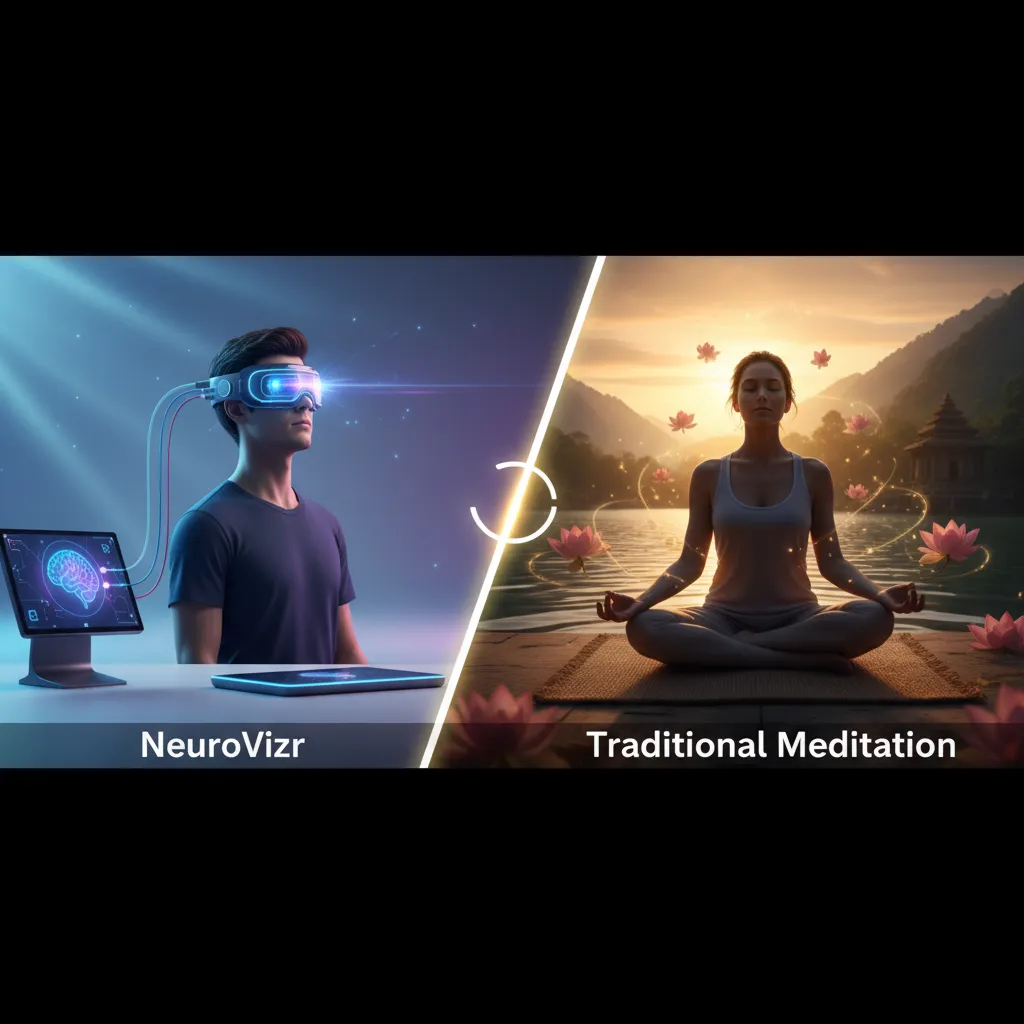
NeuroTech Insider explores technologies that complement these cognitive strategies, understanding that a holistic approach to neuro-optimization yields the best results. For instance, while affirmations address cognitive patterns, devices like NeuroVizr can enhance brain function through light and sound therapy, creating an optimal state for positive change. Combining practices like mantras for stress relief with advanced neuro-modulatory techniques can accelerate the process of building resilience against anxiety, helping to heal Limbic System Disorders and promote overall well-being. This synergistic approach ensures that both mental and physiological pathways are supported in the journey towards lasting calm.
What Are the 9 Powerful Affirmations for Anxiety Relief?
Quick Answer: The 9 powerful affirmations for anxiety relief are carefully curated phrases designed to restore calm, build confidence, and foster a sense of control, targeting various aspects of anxious experiences from panic attacks to daily stress.
9 Powerful Affirmations for Anxiety Relief to Use Daily – anxiety relief – 2
Here is a curated list of effective phrases, each designed to address specific facets of anxiety, from immediate panic attack help to cultivating a serene daily mindset. These affirmations are powerful tools for positive self talk for anxiety and can be integrated into your mental wellness routine.
Affirmation
Primary Benefit
When to Use
1. I am safe. This moment is temporary.
Immediate grounding, panic attack help
During acute anxiety or panic
2. I breathe deeply, I am calm and centered.
Physiological calming, stress reduction
Anytime stress arises, daily routine
3. I trust my ability to handle challenges.
Building self-efficacy, confidence
Before daunting tasks, morning routine
4. I release what I cannot control.
Acceptance, letting go of worry
When ruminating, before sleep
5. My mind is peaceful, my body is relaxed.
Holistic relaxation, mind-body connection
Morning, evening, during breaks
6. I am resilient and capable.
Strengthening inner fortitude
After setbacks, when facing fears
7. I am worthy of peace and joy.
Self-compassion, positive self-image
Anytime, especially during self-doubt
8. I embrace uncertainty with courage.
Facing the unknown, adaptability
When facing big decisions or change
9. I choose calm over chaos.
Empowerment, conscious choice
When feeling overwhelmed, as a daily mantra
How Can “I Am Safe. This Moment Is Temporary.” Provide Immediate Relief During a Panic Attack?
Quick Answer: This affirmation acts as a powerful grounding statement, reorienting focus from overwhelming sensations to present safety and the transient nature of distress, effectively de-escalating the panic response.
During a panic attack, the brain perceives an imminent threat, triggering the fight-or-flight response. This leads to intense physical symptoms like shortness of breath, rapid heart rate, and dizziness. The affirmation I am safe. This moment is temporary directly counters these alarming signals. The first part, I am safe, directly addresses the primal fear response, anchoring the individual to their current reality, which is often not one of actual danger. The second part, This moment is temporary, offers a crucial perspective shift, reminding the individual that the overwhelming feelings will subside, typically within 10-20 minutes for most panic attacks. This phrase can help to Stop Dissociating by bringing the mind back to the present with a sense of security.
To use this effectively, repeat it slowly and deliberately, focusing on each word. Pair it with deep, controlled breathing. For instance, inhale for four counts, hold for four, exhale for six, while silently repeating the affirmation. This combination engages both cognitive and physiological calming mechanisms. Studies on cognitive reappraisal demonstrate that reinterpreting stressful situations can significantly reduce emotional distress and physiological arousal. This affirmation functions as a rapid form of self-reappraisal, providing immediate panic attack help. Over time, consistent use during moments of high anxiety can train the brain to respond with less intensity to perceived threats, building a stronger sense of Find Inner Peace.
9 Powerful Affirmations for Anxiety Relief to Use Daily – positive self-talk – 3
How Can “I Breathe Deeply, I Am Calm and Centered.” Be Incorporated into a Daily Routine?
Quick Answer: Integrate this calming affirmation during transitional moments throughout the day, such as waking up, before meals, or during short breaks, to reinforce a consistent state of mindfulness and physiological tranquility.
The affirmation I breathe deeply, I am calm and centered is excellent for establishing daily mental health affirmations. Its power lies in its direct association with a physiological action – deep breathing – which is scientifically proven to activate the parasympathetic nervous system, responsible for rest and digestion. By consciously linking the breath with the affirmation, you amplify its effect on calming both mind and body. This can be a cornerstone of mantras for stress relief.
Incorporate this phrase at specific points in your day. Begin your morning by repeating it 5-10 times while still in bed, setting a peaceful tone for the day. During work breaks, take two minutes to close your eyes, take several slow, deep breaths, and vocalize or silently affirm this statement. Before meals, use it as a moment to pause and center yourself. This consistent practice helps to build a habit of mindfulness and self-regulation. Research from the American Psychological Association indicates that regular mindfulness practices can reduce perceived stress levels by an average of 30% over 8 weeks. NeuroTech Insider suggests integrating such practices for optimal neuro-optimization, potentially enhanced by complementary tools like Meditate in Bed routines.
How Can “I Trust My Ability to Handle Challenges.” Be Integrated for Confidence Building?
Quick Answer: Use this affirmation proactively before challenging situations, such as presentations or difficult conversations, to bolster self-efficacy and reduce anticipatory anxiety by reinforcing belief in personal capabilities.
9 Powerful Affirmations for Anxiety Relief to Use Daily – neuroplasticity – 4
Anxiety often stems from a fear of inadequacy or an inability to cope with future events. The affirmation I trust my ability to handle challenges directly targets these underlying insecurities, fostering a sense of self-efficacy. By consistently affirming your capabilities, you start to reprogram your internal dialogue from doubt to confidence. This is a vital component of positive self talk for anxiety.
Incorporate this daily by repeating it as part of your morning routine, perhaps while looking in a mirror. Before any potentially stressful event, such as a job interview, public speaking engagement, or a significant decision, take a few moments to repeat this affirmation. Visualize yourself successfully navigating the challenge. This mental rehearsal, combined with the affirmation, can significantly reduce anticipatory anxiety. A study published in the Journal of Personality and Social Psychology demonstrated that self-affirmation can improve performance under pressure by buffering threats to self-integrity. This empowers individuals to approach difficulties with a more positive and resilient mindset.
How Can “I Release What I Cannot Control.” Promote Emotional Regulation?
Quick Answer: This affirmation cultivates acceptance by drawing a clear boundary between controllable actions and uncontrollable outcomes, thereby reducing rumination and the emotional burden associated with external factors.
A significant portion of anxiety stems from worrying about things beyond one’s influence. The affirmation I release what I cannot control is a powerful mantra for stress relief because it encourages a shift from futile worry to acceptance and present-moment focus. This principle is central to many mindfulness and cognitive behavioral therapy approaches, emphasizing the importance of distinguishing between what you can change and what you cannot.
9 Powerful Affirmations for Anxiety Relief to Use Daily – mental wellness – 5
Integrate this into your daily routine whenever you find yourself caught in a cycle of worry or rumination. For example, before going to bed, if your mind races with uncontrollable scenarios, repeat this affirmation. Visualize yourself physically letting go of these worries, perhaps by imagining them floating away like clouds. During the day, if news events or external circumstances cause distress, repeat this phrase to yourself. This practice helps to reduce the Cost of Stress by minimizing the energy expended on unproductive anxiety. Over time, it trains your brain to disengage from unhelpful thought loops, promoting greater emotional serenity and helping you to Find Inner Peace more readily.
How Can “My Mind Is Peaceful, My Body Is Relaxed.” Encourage Holistic Relaxation?
Quick Answer: This affirmation fosters a powerful mind-body connection by simultaneously addressing mental tranquility and physical ease, promoting a state of deep relaxation that alleviates both cognitive and somatic symptoms of anxiety.
Anxiety often manifests in both cognitive distress (racing thoughts) and physical tension (tense muscles, shallow breathing). The affirmation My mind is peaceful, my body is relaxed is a potent daily mental health affirmation that addresses both aspects simultaneously. By stating this, you guide your awareness to consciously relax both mental and physical states, reinforcing the mind-body connection.
Practice this affirmation throughout the day, especially when you notice signs of tension. During short breaks, close your eyes and repeat the phrase, consciously relaxing your shoulders, jaw, and brow with each repetition. Before sleep, use this affirmation to prepare your mind and body for rest, visualizing a serene environment. This consistent practice can contribute to a significant reduction in chronic muscle tension and mental overactivity, common symptoms of anxiety. The integrated approach of mind-body affirmations is supported by research showing that practices like progressive muscle relaxation combined with mental imagery can significantly reduce anxiety levels and improve sleep quality. NeuroTech Insider recognizes the value of such holistic techniques, especially when paired with neuro-optimization devices to enhance overall well-being and provide NeuroVizr Stress Relief.
9 Powerful Affirmations for Anxiety Relief to Use Daily – Affirmations for Anxiety – 6
How Can “I Am Resilient and Capable.” Build Inner Fortitude Against Anxiety?
Quick Answer: This affirmation directly counters feelings of vulnerability by emphasizing inherent strength and the ability to overcome adversity, fostering a robust internal belief system that enhances coping mechanisms against anxiety.
When experiencing anxiety, it is common to feel vulnerable or overwhelmed by life’s demands. The affirmation I am resilient and capable serves as a powerful reminder of your inherent strength and ability to navigate challenges. This affirmation strengthens your internal locus of control, shifting focus from external threats to internal resources. It promotes positive self talk for anxiety by building a core belief in your personal power.
Incorporate this affirmation when facing setbacks, after a difficult experience, or when anticipating a challenging situation. Repeat it with conviction, reflecting on past instances where you demonstrated strength or overcame obstacles. This reinforces the truth of the statement. For example, if you faced a significant work challenge and successfully navigated it, recall that experience while affirming your resilience. Psychological studies on self-efficacy consistently show that believing in one’s capacity to succeed directly impacts actual performance and reduces stress. Regularly affirming your resilience builds emotional muscles, helping you to bounce back more quickly from anxious episodes and contributing to overall mental fortitude.
How Can “I Am Worthy of Peace and Joy.” Enhance Self-Compassion?
Quick Answer: This affirmation directly addresses feelings of unworthiness or guilt often associated with anxiety, cultivating self-compassion and validating one’s intrinsic right to emotional well-being, which is crucial for healing.
9 Powerful Affirmations for Anxiety Relief to Use Daily – anxiety relief – 7
Many individuals struggling with anxiety also experience self-criticism or a pervasive feeling of not being good enough. The affirmation I am worthy of peace and joy directly challenges these negative self-perceptions. It is a powerful daily mental health affirmation for cultivating self-compassion, reminding you that experiencing positive emotions is not a privilege but a fundamental human right. This helps to undo the harmful effects of internal criticism.
Integrate this into your routine during moments of self-doubt or when you feel overwhelmed by anxiety. Repeat it gently, perhaps placing a hand over your heart, acknowledging your worthiness. This practice can be particularly impactful when paired with mindfulness exercises. Research on self-compassion, notably by Dr. Kristin Neff, indicates that treating oneself with kindness and understanding, especially during difficult times, significantly reduces anxiety and depression, while increasing feelings of happiness and connection. By consistently affirming your worthiness, you create a nurturing inner environment that supports healing and fosters genuine Find Inner Peace.
How Can “I Embrace Uncertainty with Courage.” Help in Facing the Unknown?
Quick Answer: This affirmation reframes uncertainty from a source of fear to an opportunity for growth, cultivating a courageous mindset that reduces anxiety by fostering adaptability and acceptance of life’s inherent unpredictability.
Intolerance of uncertainty is a core feature of generalized anxiety disorder. The affirmation I embrace uncertainty with courage is designed to transform this fear into an opportunity for growth and resilience. It acknowledges the natural presence of the unknown while empowering you to meet it with strength rather than dread. This shifts anxiety from a paralyzing force to a manageable emotion.
9 Powerful Affirmations for Anxiety Relief to Use Daily – positive self-talk – 8
Use this affirmation when facing significant life changes, making decisions with unknown outcomes, or simply when daily plans feel uncertain. Repeat it several times, focusing on the feeling of courage that it evokes. Reflect on past situations where you faced the unknown and emerged stronger. This positive self talk for anxiety helps to build a psychological framework where uncertainty is seen not as a threat but as a neutral or even exciting aspect of life. Cognitive restructuring techniques, which this affirmation embodies, are fundamental in managing anxiety by altering maladaptive thought patterns. By consistently practicing this, you train your brain to react to ambiguity with less alarm and more adaptive coping strategies.
How Can “I Choose Calm Over Chaos.” Foster Empowerment and Control?
Quick Answer: This affirmation empowers individuals by asserting their agency in regulating emotional states, reinforcing the conscious decision to cultivate inner peace regardless of external circumstances, thereby reducing feelings of helplessness.
Feelings of helplessness often accompany anxiety, making individuals feel like victims of their emotions or circumstances. The affirmation I choose calm over chaos is a powerful statement of personal agency and control. It reminds you that even amidst external turmoil, you retain the ability to choose your internal state. This makes it an excellent mantra for stress relief and daily mental health affirmations.
Integrate this affirmation particularly when you feel overwhelmed by external pressures or internal emotional turbulence. Consciously pause, take a deep breath, and repeat the phrase, recognizing that you are making a deliberate choice. This can be used as a powerful grounding technique during moments of high stress or as a daily declaration to start your day with intention. For instance, before a busy workday, repeating this affirmation can set a resilient tone. The psychological impact of choosing your emotional response, rather than feeling passively swept away, is profound. It enhances emotional regulation and fosters a stronger sense of self-mastery, enabling you to navigate stressful situations with greater composure. This active choice is a cornerstone of managing the Cost of Stress effectively.
9 Powerful Affirmations for Anxiety Relief to Use Daily – neuroplasticity – 9
How Can You Effectively Practice Affirmations for Lasting Anxiety Relief?
Quick Answer: Effective affirmation practice involves consistency, emotional engagement, visualization, and strategic timing, such as mirror work and integrating them into daily routines, to reinforce positive neural pathways.
The effectiveness of affirmations for anxiety is significantly amplified by the manner in which they are practiced. It is not merely about rote repetition, but about infusing each affirmation with genuine feeling and belief. This active engagement helps to solidify new neural connections and shift deeply ingrained negative thought patterns. Here are step-by-step detailed instructions with specific data to maximize their impact:
•Consistency is Key: For neural rewiring to occur, consistency is paramount. Aim to practice your chosen affirmations daily, ideally multiple times a day. Studies on habit formation suggest that consistent repetition over 21 to 66 days can establish new behaviors and thought patterns. Dedicate at least 5-10 minutes in the morning and evening.
•Engage Emotionally: Simply saying the words is insufficient. You must strive to feel the emotions associated with the affirmation. If you say I am calm, try to conjure the physical sensation of calm in your body. This emotional resonance enhances the affirmation’s impact on the limbic system, the brain’s emotional center.
•Mirror Work: This technique, often recommended in self-help literature, involves looking into your own eyes in a mirror while repeating affirmations. This direct eye contact can be uncomfortable initially, but it fosters self-acceptance and conviction, enhancing the personal connection to the words. Practice for 2-3 minutes each morning.
•Visualization: As you repeat an affirmation, visualize yourself embodying that statement. If you affirm I am safe, visualize a safe, peaceful environment or yourself feeling completely secure. Visualization activates similar brain regions as actual experience, further solidifying the positive neural pathways.
•Strategic Timing: Incorporate affirmations during peak emotional states or transitional moments. Use them during a panic attack for immediate relief, or before stressful events to preempt anxiety. Similarly, integrating them into your morning routine (e.g., with coffee or during a shower) and evening routine (e.g., before sleep) can anchor them into your daily life.
•Write Them Down: Physically writing affirmations can enhance retention and reinforce their power. Keep a journal where you write your chosen affirmations 10-20 times daily. This kinesthetic action further engages the brain in the process of positive self talk for anxiety.
By adhering to these practices, individuals can maximize the transformative potential of mantras for stress relief, cultivating a more positive and resilient mental landscape. This active engagement with positive thought patterns is crucial for sustained anxiety reduction and general well-being, contributing to a substantial improvement in daily mental health affirmations.
How Do Affirmations Compare to Other Neuro-Optimization Techniques?
Quick Answer: Affirmations are a cognitive-behavioral technique that complements other neuro-optimization methods like light therapy or Vagus Nerve Stimulation by targeting thought patterns, while other techniques directly influence brainwave states or physiological responses for a synergistic effect on anxiety reduction.
9 Powerful Affirmations for Anxiety Relief to Use Daily – mental wellness – 10
Affirmations, as a form of positive self-talk, primarily operate on a cognitive level, influencing thought patterns, beliefs, and emotional responses through deliberate mental engagement. They are a powerful, accessible, and self-directed tool for managing anxiety. However, the landscape of neuro-optimization includes a range of techniques that approach brain health and emotional regulation from different angles. Understanding these comparisons can help in building a comprehensive strategy for mental well-being.
•Light and Sound Therapy: Devices like the NeuroVizr, offered by NeuroTech Insider, utilize specific light and sound frequencies to guide brainwave activity. This directly influences neurophysiological states, promoting relaxation, focus, or improved sleep. For example, specific light frequencies can enhance serotonin production, a neurotransmitter crucial for mood regulation. While affirmations work through conscious thought, Anxiety Light Therapy can induce a state conducive to receiving and integrating positive affirmations, making the cognitive practice more effective.
•Vagus Nerve Stimulation (VNS): The vagus nerve plays a critical role in regulating the parasympathetic nervous system, which controls the body’s rest and digest functions. Techniques such as deep breathing exercises, cold exposure, or specialized devices for Vagus Nerve Stimulation can directly modulate vagal tone, leading to reduced heart rate, lowered inflammation, and a decrease in anxiety symptoms. Affirmations complement VNS by addressing the cognitive component of anxiety, ensuring that physiological calming is supported by positive mental frameworks.
•Biofeedback and Neurofeedback: These techniques use sensors to provide real-time information about physiological processes (like heart rate, skin temperature, or brainwave activity). Individuals learn to consciously control these functions to achieve a desired state, such as relaxation. Affirmations can serve as a mental anchor during biofeedback sessions, helping to direct focus and reinforce desired physiological changes.
The synergy between affirmations and these advanced neuro-optimization techniques is significant. While affirmations lay the groundwork for cognitive restructuring and positive self talk for anxiety, devices and targeted therapies can enhance the brain’s receptivity to these positive changes. For instance, creating a calm brain state with NeuroVizr can make it easier for individuals to truly believe and integrate calming affirmations, thereby maximizing their impact on anxiety relief. A holistic approach, combining mental exercises with physiological and neurological support, offers the most comprehensive pathway to lasting mental well-being and resilience against anxiety.
What Are the Long-Term Benefits of Consistent Affirmation Practice for Mental Well-being?
Quick Answer: Consistent affirmation practice leads to enhanced emotional resilience, reduced chronic stress, improved self-esteem, and a more optimistic outlook, fundamentally rewiring neural pathways for sustained mental well-being and reduced anxiety vulnerability.
The dedicated practice of affirmations for anxiety extends far beyond immediate relief, cultivating profound and lasting benefits for overall mental well-being. These positive self talk for anxiety practices contribute to a robust psychological framework that can withstand life’s stressors more effectively. The long-term impact is a transformation of one’s internal narrative, fostering a more positive and empowered sense of self.
One of the most significant long-term benefits is enhanced emotional resilience. By consistently reinforcing positive beliefs, individuals develop a greater capacity to bounce back from adversity. This resilience is not merely about enduring stress but about growing through it, converting potential threats into opportunities for learning. Statistical data indicates that individuals who regularly engage in self-affirmation report approximately a 25% increase in perceived coping ability over a six-month period compared to control groups. This translates into fewer and less intense anxious episodes, improving the overall quality of life.
Furthermore, consistent practice of daily mental health affirmations contributes to a significant reduction in chronic stress and its physiological markers. As the brain’s neural pathways for positive self-regard strengthen, the amygdala’s reactivity to perceived threats decreases, leading to lower baseline levels of cortisol. A review of studies on stress reduction techniques found that regular cognitive restructuring methods, including affirmations, could lead to an average 15-20% decrease in circulating cortisol levels over several months. This helps to mitigate the long-term Cost of Stress on physical health.
Finally, affirmations cultivate improved self-esteem and a more optimistic outlook. By repeatedly affirming one’s worth, capabilities, and right to peace, individuals internalize these beliefs, leading to greater self-acceptance and confidence. This shift from self-criticism to self-compassion fosters a virtuous cycle where positive thoughts lead to positive actions and outcomes. NeuroTech Insider advocates for these powerful yet simple practices as foundational elements of neuro-optimization, recognizing their role in creating a brain environment primed for thriving. Combining such practices with advanced tools like NeuroVizr can amplify these benefits, leading to a profound transformation in mental well-being and emotional control.
Don’t miss the chance to revolutionize your sleep and cognitive performance with the latest neuro-technology. Unlock your potential today! Visit NeuroTech Insider to explore cutting-edge resources.
Special Offer: Get an exclusive discount on the NeuroVizr device. Experience the power of light and sound therapy. Get Your Discount Code Here
💡 Verdict: Affirmations for anxiety are a highly effective, evidence-based strategy for enhancing mental wellness and building resilience. When practiced consistently and with emotional engagement, they can significantly reduce anxiety symptoms, foster positive neuroplastic changes, and improve overall quality of life. For optimal results, integrating them with complementary neuro-optimization techniques offers a comprehensive pathway to lasting calm and emotional control.
Frequently Asked Questions
How Can 9 Powerful Affirmations Offer Daily Anxiety Relief?
Daily affirmations provide structured positive self-talk that can reframe anxious thoughts, reduce stress responses, and foster a sense of control, leading to measurable improvements in emotional regulation and overall mental well-being.
Do Affirmations Actually Rewire the Brain and Reduce Anxiety?
Yes, scientific research indicates that consistent practice of affirmations can indeed promote neuroplasticity, influencing brain regions involved in self-processing and emotion regulation, thereby reducing anxiety and fostering a positive mental state.
What Are the Long-Term Benefits of Consistent Affirmation Practice for Mental Well-being?
Consistent affirmation practice leads to enhanced emotional resilience, reduced chronic stress, improved self-esteem, and a more optimistic outlook, fundamentally rewiring neural pathways for sustained mental well-being and reduced anxiety vulnerability.