tranngocbao88.it@gmail.com

Person using a red light therapy panel at home, illustrating safe and effective use for well-being.

8 Steps to Use Light Therapy at Home Safely & Effectively

Key Takeaways This comprehensive guide outlines 8 essential steps for safely and effectively implementing light therapy at home. It covers understanding the science of photobiomodulation, selecting the right device based on wavelength and irradiance, creating an optimal therapy space, determining appropriate dosage and frequency, adhering to crucial safety guidelines and contraindications, enhancing sessions with mindfulness […]

8 Steps to Use Light Therapy at Home Safely & Effectively Read More »
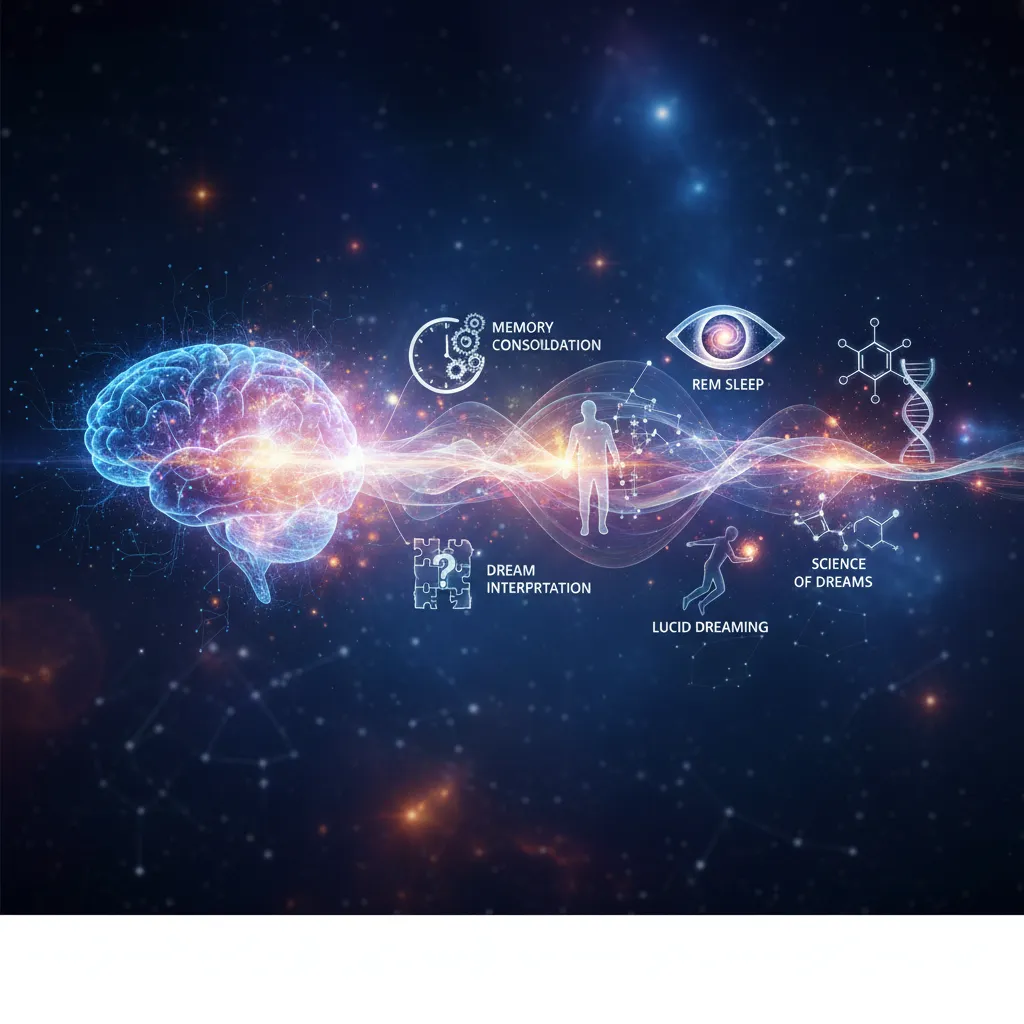
A human brain depicted with glowing neural pathways, symbolizing the complex and active processes occurring during REM sleep and the science of dreams.

5 Amazing Facts About the Science of Dreams & REM Sleep

Key Takeaways The science of dreams and REM sleep is crucial for understanding our cognitive function and emotional well-being. During REM sleep, the brain actively processes memories and emotions, showing intense neural activity. Leading theories suggest dreams serve multiple purposes, including memory consolidation, emotional regulation, problem-solving, and threat simulation. While dream interpretation is often personal,

5 Amazing Facts About the Science of Dreams & REM Sleep Read More »

A peaceful bedroom scene with a white noise machine emitting gentle sound waves, symbolizing improved sleep and focus.

6 Brain Benefits of White Noise for Sleep & Focus

Key Takeaways White noise creates a consistent auditory environment, masking disruptive sounds to significantly enhance sleep quality, cognitive focus, and overall brain health. It functions by distributing all audible frequencies equally, making intermittent noises less jarring. Key benefits include improved sleep onset and maintenance, enhanced concentration and productivity by minimizing distractions, reduced stress and anxiety,

6 Brain Benefits of White Noise for Sleep & Focus Read More »

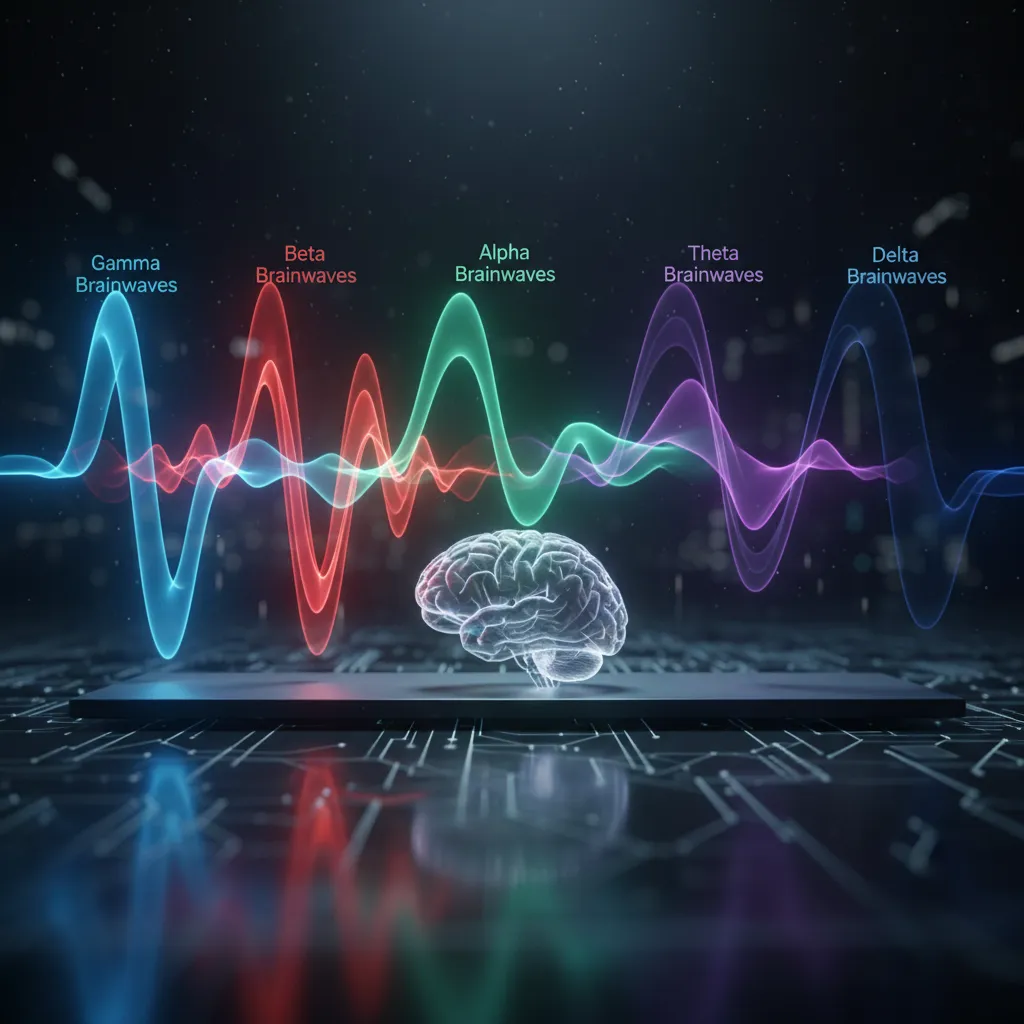
An illustrative diagram of human brainwave frequencies (Gamma, Beta, Alpha, Theta, Delta) displaying their typical Hz ranges and associated mental states like focus, relaxation, creativity, and deep sleep.

5 Main Brainwave Frequencies & How They Control Your Mind

Key Takeaways Brainwave frequencies are electrical impulses in the brain that govern our thoughts, emotions, and actions. There are five main types: Gamma (30-100+ Hz) for intense focus and high-level processing; Beta (12-30 Hz) for alertness and active thinking; Alpha (8-12 Hz) for relaxed awareness and creativity; Theta (4-8 Hz) for deep relaxation, memory, and

5 Main Brainwave Frequencies & How They Control Your Mind Read More »

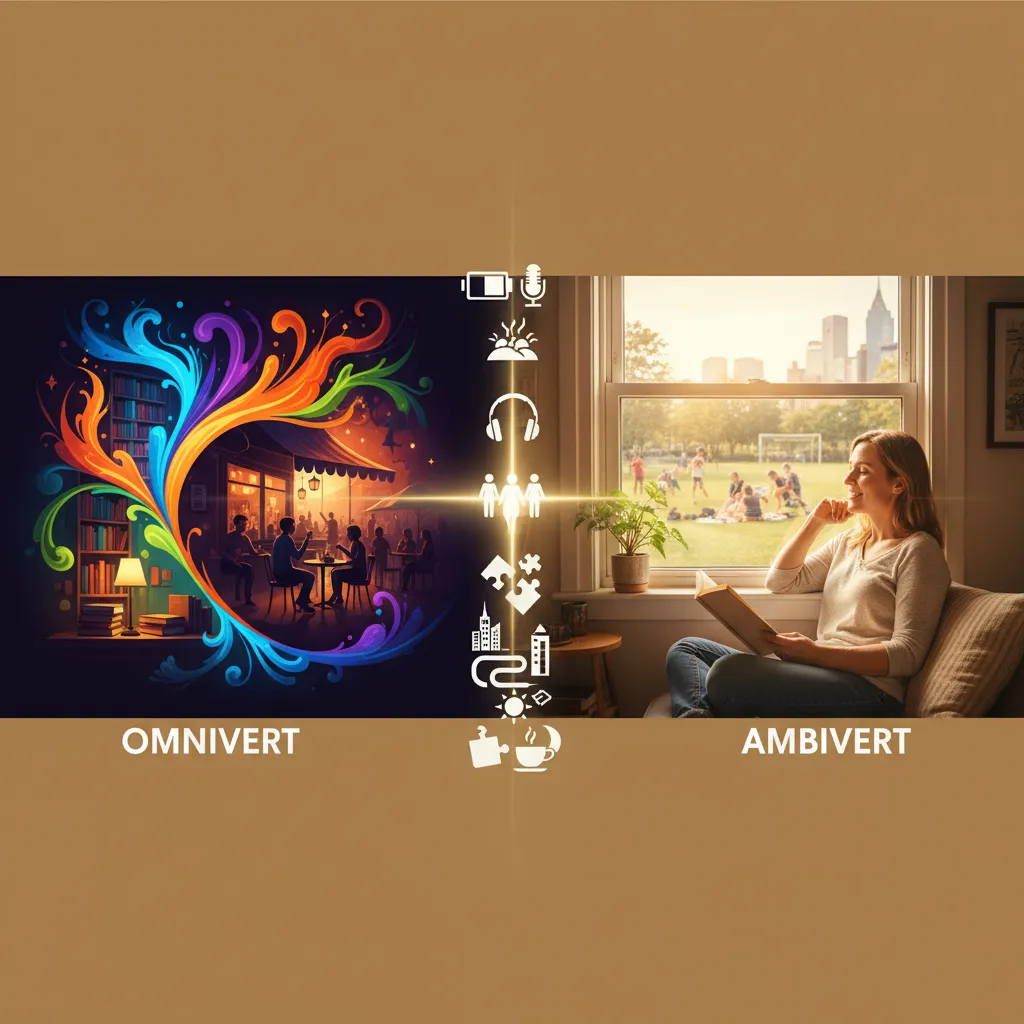
An illustration comparing Omnivert and Ambivert personality types with visual cues representing fluctuating vs. balanced social energy, respectively, set against a backdrop of diverse social and solitary settings.

7 Differences Between an Omnivert vs Ambivert Personality

Key Takeaways Omniverts and ambiverts both exist on the introvert-extrovert spectrum, but differ significantly in social energy management. Ambiverts maintain a stable balance, adapting smoothly to various situations, while omniverts experience dramatic, unpredictable shifts between intense extroversion and deep introversion. Key distinctions lie in social energy fluctuation, coping mechanisms, decision-making, comfort zones, communication, and emotional

7 Differences Between an Omnivert vs Ambivert Personality Read More »

A person practicing grounding techniques to stop dissociating, possibly using the 5-4-3-2-1 method, focusing on senses to reconnect with the present moment.

5 Grounding Techniques on How to Stop Dissociating Fast

Key Takeaways This article provides a comprehensive guide on how to stop dissociating, offering five immediate grounding techniques like the 5-4-3-2-1 Sensory Method, deep breathing, object focus, mindful movement, and temperature stimulation. It delves into the neurological basis of dissociation, highlighting altered brain activity in response to stress or trauma. For long-term prevention, the article

5 Grounding Techniques on How to Stop Dissociating Fast Read More »

Visual representation of NeuroVizr light patterns, showing how dynamic, rhythmic light influences brain activity across macroscopic, mesoscopic, and microscopic levels for cognitive enhancement.

3 Dimensions of NeuroVizr Light Patterns Explained

Key Takeaways NeuroVizr light patterns offer a sophisticated approach to neuro-optimization by engaging the brain across three distinct dimensions: macroscopic (global brainwave entrainment), mesoscopic (targeted neural circuit stimulation), and microscopic (cellular activity influence). This cutting-edge visual stimulation leverages advanced LED technology and algorithms to promote neuroplasticity, enhance cognitive functions like focus, memory, and sleep, and

3 Dimensions of NeuroVizr Light Patterns Explained Read More »

Infographic illustrating the differences between Intuitive and Observant personality types, showing contrasting thought bubbles for abstract concepts and concrete details, with icons representing future possibilities versus present facts and individual figures for each type.

6 Key Differences: Intuitive vs Observant Personality Types

Key Takeaways The article delves into the core differences between Intuitive (N) and Observant (S) personality types, explaining how these fundamental distinctions impact information processing, focus, decision-making, learning styles, communication, and lifestyle preferences. It highlights six key areas of divergence, offers self-assessment questions to help identify one’s type, and provides strategies for effective interaction and

6 Key Differences: Intuitive vs Observant Personality Types Read More »

A couple holding hands, looking forward together, symbolizing the evolution of love beyond the honeymoon phase and into a deeper, more resilient connection with mutual understanding and growth.

7 Things to Expect After the Honeymoon Phase Ends

Key Takeaways The Honeymoon Phase, a period of intense infatuation driven by neurochemicals like dopamine, typically lasts 6 months to 2 years before transitioning into a more stable, attachment-focused connection. This article explores 7 key expectations after the honeymoon phase, including the emergence of reality, handling flaws, maintaining romance intentionally, fostering deeper emotional connections, balancing

7 Things to Expect After the Honeymoon Phase Ends Read More »

A couple sitting on opposite sides of a bench in a park, looking away from each other, symbolizing a relationship break for self-reflection and growth.

5 Golden Rules for Taking a Break in a Relationship

Key Takeaways A relationship break offers partners a crucial chance for perspective and individual growth. The article outlines 5 golden rules for a successful break: clearly define its purpose and terms, set strict communication and dating boundaries, prioritize individual self-reflection and growth, establish a realistic duration (1-3 months often optimal), and plan a structured reconnection

5 Golden Rules for Taking a Break in a Relationship Read More »

Scroll to Top