
5 Brain Computer Interfaces That Connect You Faster Than Bluetooth
As a neuroscientist and biohacker who has dedicated decades to unraveling the brain’s mysteries, I’ve witnessed firsthand the profound human desire for enhanced cognition, sharper focus, and seamless interaction with the world. Do you ever feel like your brain, this marvel of biological engineering, is bottlenecked by the analog world, struggling to keep pace with the digital demands of modern life? Perhaps you grapple with the frustrating drag of lapses in focus, the debilitating fog of persistent mental fatigue, or the yearning to unlock an untapped reservoir of intellectual prowess. Imagine a world where your thoughts aren’t merely internal whispers but direct commands, where your intentions translate instantly into action, unmediated by clumsy interfaces. This isn’t science fiction; it’s the burgeoning reality of the Brain Computer Interface (BCI). Much like upgrading from a sputtering carburetor to a hyper-efficient fuel injection system, BCIs promise to supercharge our neural machinery, offering a direct, high-bandwidth connection that makes even the fastest Bluetooth seem like a dial-up modem. We’re talking about a paradigm shift in human-machine interaction, moving beyond touchscreens and voice commands to a future where thought itself is the ultimate interface. Join me as we delve into the core of this revolutionary technology, exploring how it works, what it can do today, and where it’s propelling us tomorrow.
Key Takeaways
- BCIs Bridge Mind and Machine: Brain Computer Interfaces translate neural activity directly into external commands, bypassing traditional motor pathways for unprecedented control and communication.
- Diverse Applications: From restoring mobility and communication for paralyzed individuals to enhancing cognitive function and enabling new forms of interaction, BCIs are revolutionizing medicine, communication, and human potential.
- Technological Spectrum: BCIs range from non-invasive (EEG-based) to invasive (implants), each offering unique advantages in signal fidelity, application, and risk profile.
- Ethical Frontier: The rapid advancement of Brain Computer Interface technology necessitates careful consideration of privacy, autonomy, equity, and the very definition of human identity.
What Exactly is a Brain Computer Interface (BCI) and How Does it Work?
At its core, a Brain Computer Interface is a direct communication pathway between an enhanced or wired brain and an external device. It’s a technology that enables individuals to control external devices or communicate directly using only their thoughts, intentions, or specific brain states. Think of your brain as a complex, biological supercomputer, constantly generating electrical signals – brain waves – that represent everything from a fleeting thought to a complex motor command. BCIs are designed to intercept, interpret, and translate these neural signals into actionable outputs for a computer or other electronic device.
The fundamental mechanism involves several key steps:
- • Signal Acquisition: This is where the interface “listens” to your brain. This can be done invasively (electrodes implanted directly into the brain) or non-invasively (sensors placed on the scalp). Techniques like EEG Technology (Electroencephalography) are commonly used for non-invasive approaches, detecting electrical activity from the scalp.
- • Signal Processing: Raw brain signals are noisy and complex. Advanced algorithms and machine learning techniques are employed to filter out artifacts, amplify relevant signals, and extract meaningful features. This step is crucial for separating intentional commands from background neural noise.
- • Feature Extraction and Translation: The processed signals are then analyzed for specific patterns associated with particular thoughts or intentions. For example, imagining moving a limb might generate a distinct pattern of Alpha or Theta waves in the motor cortex. The BCI translates these patterns into specific commands, such as “move cursor left” or “select item.”
- • Device Output: Finally, the translated commands are sent to an external device, which then performs the desired action. This could be moving a prosthetic arm, typing text on a screen, or even controlling a drone.
The beauty of BCIs lies in their ability to harness neuroplasticity – the brain’s remarkable capacity to reorganize itself and form new neural connections. With consistent training, users can learn to better modulate their brain signals, and the BCI system itself can adapt and become more adept at interpreting those signals. This bidirectional learning is what makes BCIs so powerful and responsive.
Beyond Biology: How Do BCIs Enable Direct Brain-to-Machine Connection?
The holy grail of BCIs is to bypass the conventional peripheral nervous system entirely, creating a direct neural pathway to external technology. This direct connection transcends the limitations of motor control, allowing for interaction at the speed of thought. Imagine trying to describe a complex image to someone verbally versus simply transmitting the image itself. That’s the leap BCIs aim to achieve.
Decoding Intent: The Power of Neural Signals
Our brains are constantly firing with electrical impulses. Different states of mind, different intentions, and even different emotions manifest as distinct patterns of these electrical signals. For instance, when you decide to lift your arm, a specific sequence of neurons in your motor cortex activates. A sophisticated Brain Computer Interface implant can detect these patterns with incredible precision, often using arrays of microelectrodes. These signals, once captured, are then fed into powerful decoding algorithms, often driven by artificial intelligence brain implants, which have been trained to associate specific neural patterns with specific desired actions.
- • Motor Imagery: One common approach involves users imagining performing a movement. Even without actual muscle activation, the brain generates similar neural patterns, which the BCI can detect and translate.
- • Steady-State Visually Evoked Potentials (SSVEPs): By focusing on flickering visual stimuli at different frequencies, users can generate distinct brain responses that a BCI can detect, allowing for selection of options on a screen.
- • P300 Evoked Potentials: This involves presenting a series of stimuli (e.g., letters in a grid) and detecting a specific brain response (the P300 wave) when the user focuses on the desired item.
The Role of Machine Learning in BCI Fidelity
The incredible speed and accuracy of modern BCIs wouldn’t be possible without advanced bcis machine learning algorithms. These systems learn from the user’s specific neural patterns, constantly refining their decoding models. The more a user interacts with a BCI, the more data the system collects, leading to improved performance and a more intuitive experience. This continuous feedback loop is vital for optimizing the connection between brain and machine. The field of AI Job Market Impact is already seeing a surge in demand for specialists capable of developing and refining these intricate algorithms, highlighting the growing significance of this technology.
AI Implants for Medical ‘Repairs’: Restoring Function and Beyond
One of the most profound and immediate impacts of Brain Computer Interface technology is its potential for medical restoration. For individuals suffering from debilitating neurological conditions, BCIs offer a lifeline, promising to restore lost function and significantly improve quality of life. This isn’t just about assistive devices; it’s about repairing or circumventing damaged neural pathways with intelligent, adaptive systems.
Restoring Mobility and Communication
- • Prosthetic Control: Individuals with paralysis due to spinal cord injury or neurodegenerative diseases can learn to control advanced robotic prosthetics with their thoughts. Artificial intelligence brain implants connected to the motor cortex allow users to grasp objects, move limbs, and interact with their environment in ways previously unimaginable.
- • Communication for Locked-in Syndrome: For patients completely paralyzed but fully conscious, BCIs provide a voice. By detecting subtle brain signals, these interfaces allow individuals to type messages, select words, or even synthesize speech, offering a profound means of reconnecting with the world.
- • Neurorehabilitation: BCIs are also being used in rehabilitation to help patients regain motor control after stroke or injury. By providing real-time feedback on brain activity, BCIs encourage beneficial neuroplasticity, helping the brain rewire itself.
Targeting Neurological Disorders
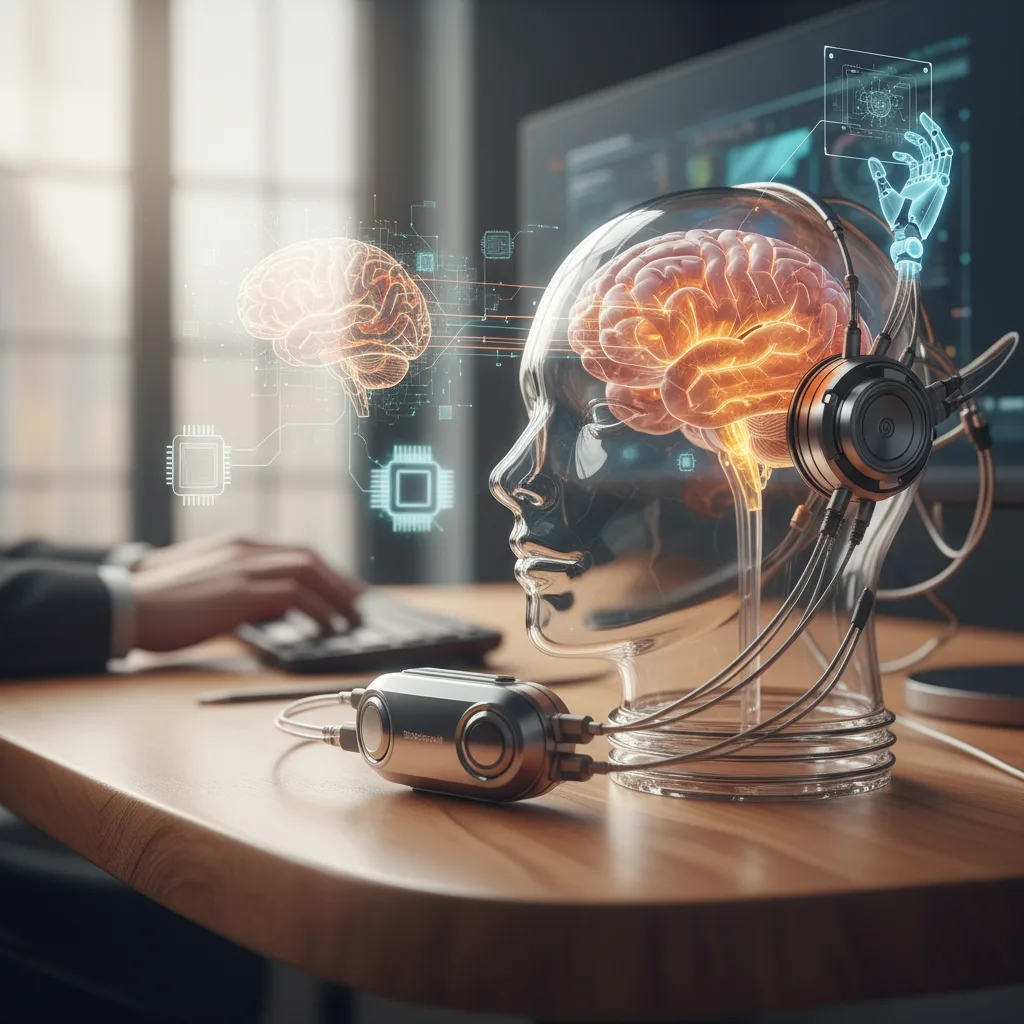
Beyond motor control, BCIs are emerging as powerful tools for treating a range of neurological conditions:
- • Epilepsy and Parkinson’s Disease: Deep Brain Stimulation (DBS) is a form of BCI where electrodes are implanted to deliver electrical impulses that regulate abnormal brain activity, reducing seizures or tremors. Next-generation systems are adaptive, using bcis machine learning to deliver stimulation only when needed, optimizing therapeutic effects.
- • Mental Health: While still in early stages, research explores BCIs for conditions like severe depression or OCD, where targeted neuromodulation could help rebalance dysfunctional neural circuits. This involves monitoring brain activity and providing feedback or stimulation to encourage healthier patterns, akin to advanced forms of Neurofeedback Devices.
- • Sensory Restoration: Retinal implants and cochlear implants are established forms of bio-integrated electronics. Future BCIs aim to go further, directly stimulating sensory cortices to restore sight, hearing, or even touch, bypassing damaged sensory organs entirely.
The Future of Thought Communication: Telepathy, Symbiosis, and Cognitive Augmentation
While medical applications are groundbreaking, the true frontier of Brain Computer Interface technology lies in its potential to redefine human communication, foster a new form of digital symbiosis, and dramatically augment our cognitive capabilities. This is where the biohacker in me truly ignites.
Beyond Spoken Word: Direct Thought Transmission
Imagine conveying complex ideas, emotions, or even sensory experiences directly from one mind to another, without the filters and ambiguities of language. This is the promise of neural communication. While true telepathy remains distant, early experiments have shown promising results in transmitting simple thoughts or intentions between individuals using BCIs. For instance, one person wearing an EEG Technology cap can transmit a motor command to another person’s brain, prompting them to move a hand, even if they’re in different rooms. This is the nascent stage of what could become a profound shift in how we connect and share information, far exceeding the bandwidth of any current communication protocol.
Cognitive Augmentation: Supercharging Our Minds
The human brain, while incredible, has its limitations. BCIs, particularly those involving artificial intelligence brain implants, could offer pathways to overcome these. Consider:
- • Enhanced Memory: Direct neural interfaces could potentially offload and retrieve memories from external storage, or even enhance the biological processes of memory consolidation, leading to vastly improved recall and learning.
- • Instantaneous Knowledge Access: Imagine having the entire internet accessible not through a screen, but directly within your cognitive workspace. Questions answered, facts retrieved, complex calculations performed at the speed of thought.
- • Skill Acquisition: The ability to download or rapidly learn complex skills (e.g., playing a musical instrument, speaking a new language) by directly interfacing with neural networks could redefine education and personal development. The potential for professional advancement in fields demanding rapid skill updates, like the AI Job Market Impact, is immense.
This cognitive symbiosis with AI could unlock unprecedented levels of human intelligence and creativity, fundamentally altering our relationship with information and our own mental capabilities. It’s not just about improving focus or sleep; it’s about transcending current biological limitations.
BCI Technology Trends: What’s Driving the Revolution?
The pace of innovation in Brain Computer Interface technology is accelerating, driven by advancements in materials science, neuroscience, and artificial intelligence. Several key trends are shaping the landscape of BCI development.
Miniaturization and Non-Invasive Progress
While invasive brain computer interface implant technology offers the highest signal fidelity, the trend is towards increasingly sophisticated non-invasive or minimally invasive solutions. This involves:
- • High-Density EEG: More electrodes and improved signal processing are making non-invasive EEG Technology increasingly capable of isolating specific neural signals, reducing the need for surgery.
- • Wearable BCIs: Devices like Narbis Smart Glasses and other advanced headsets are becoming more discreet, comfortable, and powerful, offering accessible ways to interact with BCIs for cognitive enhancement and focus.
- • Optogenetics and Ultrasonic Neuromodulation: These cutting-edge techniques offer the promise of highly precise neural control without direct electrical implants, using light or sound waves to modulate brain activity.
The Convergence of AI and Neurotechnology
The synergy between artificial intelligence brain implants and BCI development is undeniable. BCIs machine learning algorithms are constantly evolving, leading to:
- • Adaptive Decoding: AI can adapt to individual brain variations, making BCIs more personalized and robust. This is crucial as no two brains are exactly alike.
- • Intent Prediction: Advanced AI can begin to predict user intent even before a conscious decision is fully formed, leading to faster and more seamless control.
- • Edge AI Integration: Processing brain signals locally on the device using Edge AI reduces latency and improves responsiveness, making BCIs feel more like an extension of the self.
Furthermore, the advent of 6G & Health implications will bring unprecedented data transfer speeds and ultra-low latency, which are critical for real-time brain-computer interfaces, enabling truly seamless integration and instantaneous responses.
Beyond Control: Brain State Modulation and Optimization
BCIs are not just for sending commands; they’re also for understanding and influencing our internal brain states. This is particularly relevant for those seeking to optimize brain performance. By monitoring brain waves (Alpha, Theta, Beta, Gamma), BCIs can provide feedback or even gentle stimulation to guide the brain into desired states. For example, some devices can help train the brain to produce more Alpha waves for deep relaxation, or Theta waves for enhanced creativity and meditative states.
This extends to optimizing our Circadian Rhythm. By understanding how light and sound affect our brain’s natural sleep-wake cycle, future BCIs could intelligently adapt our environment or provide targeted neural stimulation to improve sleep quality and wakefulness. Moreover, advancements in visual training and brain entrainment techniques, often facilitated by devices that leverage specific light and sound frequencies, are proving incredibly effective for enhancing focus and achieving deep relaxation. For those looking to explore these cutting-edge methods and tools, consider researching advanced light therapy devices and brain entrainment tools. These technologies are at the forefront of helping us actively manage our brain states for peak performance and restorative rest. The broader category of Tech for Focus is rapidly evolving to address the pervasive challenge of attention deficits in our hyper-connected world.
The Ethics of Neural Wiring: Navigating the Brave New World of BCIs
As we push the boundaries of what’s possible with Brain Computer Interface technology, we inevitably confront a complex web of ethical considerations. The power to directly interface with the brain raises profound questions about identity, autonomy, privacy, and societal equity. As a biohacker, I believe in responsible innovation, and understanding these challenges is paramount.
Privacy and Data Security
Your brain activity is arguably the most intimate data imaginable. BCIs record thoughts, intentions, emotional states, and potentially even memories. The security and privacy of this brain computer interface implant data are critical concerns:
- • Mental Privacy: Who owns your thoughts? Could governments or corporations access your neural data without consent? Establishing robust legal and ethical frameworks for mental privacy is essential.
- • Data Vulnerability: Like any digital system, BCIs could be vulnerable to hacking. The consequences of unauthorized access to or manipulation of neural data are chilling.
- • Commercial Exploitation: Could companies use BCI data to create highly personalized, subliminal advertising, or even influence purchasing decisions at a neural level?
Autonomy and Identity
The direct influence of BCIs on brain function raises questions about free will and personal identity:
- • Agency and Control: If a BCI directly influences thoughts or actions, who is ultimately responsible? Is it the user, the device, or the programmer? This becomes particularly complex with artificial intelligence brain implants that can learn and adapt.
- • Altering Identity: If BCIs can enhance or modify cognitive functions and even personality traits, how does this impact an individual’s sense of self? What are the long-term psychological effects of a permanently augmented brain?
- • Therapeutic vs. Enhancement: Where do we draw the line between using BCIs to treat disease and using them for augmentation? Should there be limits on cognitive enhancement, and if so, who decides?
Equity and Access
Like many advanced technologies, BCIs could exacerbate existing societal inequalities:
- • The Digital Divide: If BCIs offer significant cognitive advantages, who will have access to them? Will only the wealthy be able to afford these enhancements, creating a new class divide between “augmented” and “natural” humans?
- • Regulatory Challenges: The rapid development of BCIs outpaces current regulatory frameworks. Establishing international standards for safety, ethics, and responsible deployment is crucial.
- • Military Applications: The potential for BCIs in military contexts, such as controlling weapons systems with thought or enhancing soldier performance, raises significant ethical questions about weaponization and human control.
Addressing these ethical dilemmas requires a multidisciplinary approach, involving neuroscientists, ethicists, policymakers, and the public. Open dialogue and proactive regulation will be essential to ensure Brain Computer Interface technology serves humanity’s best interests, rather than creating unforeseen challenges.
The 5 Brain Interfaces That Are Changing the Game
Let’s explore five distinct categories of Brain Computer Interface technologies that are defining the cutting edge, each offering unique approaches to connecting our minds with machines. These range from established clinical tools to futuristic research frontiers, all aiming to achieve that faster-than-Bluetooth connection.
1. Invasive Cortical Implants (e.g., Utah Array, Neuralink)
These are the gold standard for signal fidelity. Microelectrode arrays are surgically implanted directly into the brain’s cortex, often targeting motor or sensory areas. They can record the activity of individual neurons or small groups of neurons with incredible precision.
- • How they work: Thousands of tiny electrodes penetrate the brain tissue, listening to the electrical spikes of neurons. These raw neural signals are then amplified and transmitted wirelessly to external decoders, often powered by sophisticated bcis machine learning algorithms.
- • Key Applications: Restoring movement in paralyzed individuals via robotic limbs, enabling direct thought-to-text communication for locked-in patients, and potentially restoring sensory perception. These are often the artificial intelligence brain implants that garner the most media attention due to their direct neural connection.
- • Advantages: Highest signal-to-noise ratio, ability to record single-neuron activity, potential for bidirectional communication (both reading and stimulating the brain).
- • Challenges: Surgical risks, potential for tissue damage or immune response, long-term biocompatibility, and ethical concerns regarding permanent brain alteration.
2. Electrocorticography (ECoG)
ECoG involves placing electrode grids directly on the surface of the brain, underneath the skull but outside the brain tissue itself. This makes it less invasive than cortical implants while still providing higher fidelity signals than external EEG.
- • How it works: A thin array of electrodes is placed on the dura mater (the brain’s outer membrane). It captures electrical activity from the cortical surface, offering a wider field of view than deep implants.
- • Key Applications: Used clinically for mapping epileptic seizures and brain function before surgery. In research, it’s used for high-fidelity communication and control, often in a temporary setting.
- • Advantages: Better signal quality than non-invasive methods, lower surgical risk than deep implants, good spatial resolution.
- • Challenges: Still requires craniotomy (opening the skull), limited long-term use due to infection risk, and signal degradation over time.
3. Non-Invasive Electroencephalography (EEG)
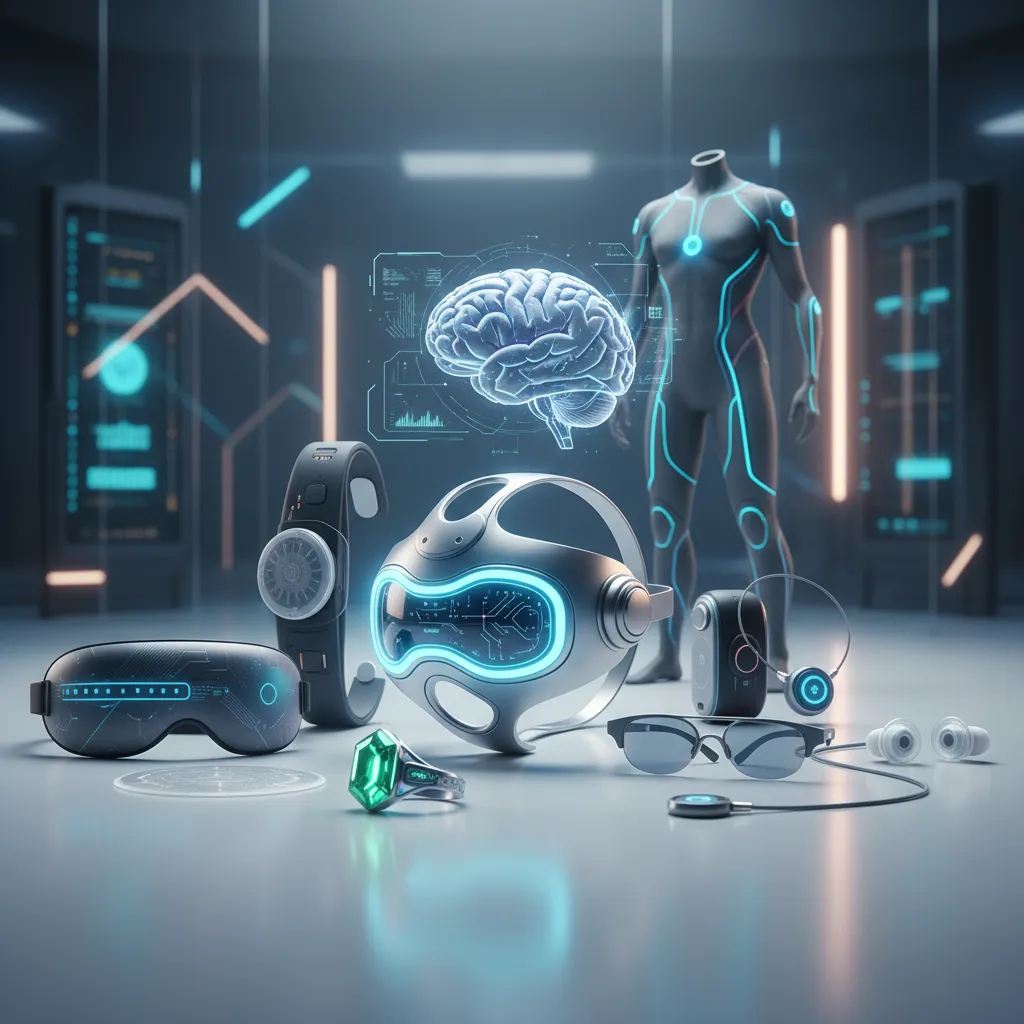
EEG is the most common and accessible form of Brain Computer Interface. It involves placing electrodes on the scalp to measure electrical activity generated by the brain.
- • How it works: Electrodes detect voltage fluctuations resulting from ionic current flows within the neurons. These signals are very small and must pass through the skull and scalp, leading to signal attenuation. Nonetheless, they can reliably detect distinct brain wave patterns like Alpha, Theta, Beta, and Gamma.
- • Key Applications: Neurofeedback Devices for cognitive training, controlling simple robotic arms or cursors, gaming, meditation, and research into brain states and cognitive performance. EEG Technology is also fundamental in sleep studies to analyze Circadian Rhythm and sleep stages.
- • Advantages: Non-invasive, safe, relatively inexpensive, portable, and easy to use. No surgical risks.
- • Challenges: Lower spatial resolution, susceptibility to noise (muscle artifacts, eye movements), and limited bandwidth for complex commands compared to invasive methods. However, advances in bcis machine learning are significantly improving its reliability.
4. Functional Near-Infrared Spectroscopy (fNIRS)
fNIRS is another non-invasive BCI approach that measures brain activity by monitoring changes in blood oxygenation, similar to fMRI but using light.
- • How it works: Near-infrared light is shone through the scalp, and sensors detect how much light is absorbed. Oxygenated and deoxygenated blood absorb light differently. Areas of the brain that are more active require more oxygen, leading to measurable changes in blood flow.
- • Key Applications: Cognitive load monitoring, attention assessment, and controlling basic interfaces. It’s often used in research settings where mobility is required, as it’s less sensitive to movement artifacts than EEG.
- • Advantages: Non-invasive, relatively portable, less susceptible to electrical noise than EEG, and provides good spatial resolution of cortical activity.
- • Challenges: Lower temporal resolution than EEG (blood flow changes are slower than electrical changes), limited depth penetration (only surface cortical activity), and sensitivity to hair.
5. Auditory Brainstem Response (ABR) and Steady-State Auditory Evoked Potentials (ASSEP)
While not a BCI for direct control in the traditional sense, ABR and ASSEP represent a crucial interface for understanding brain function, particularly in response to auditory stimuli. They are foundational for diagnostic and potential therapeutic applications.
- • How they work: These techniques measure the brain’s electrical activity in response to auditory clicks or tones. ABR measures responses from the auditory nerve and brainstem, while ASSEP measures sustained responses to rapidly repeated sounds, often used to assess hearing thresholds objectively. They rely on EEG Technology to capture these tiny evoked potentials.
- • Key Applications: Objective hearing assessment in infants and non-cooperative patients, identifying neurological disorders affecting the auditory pathway, and research into auditory processing and brain function. While not directly controlling an external device, the ability to decode brain responses to specific auditory stimuli opens doors for advanced communication and even environmental control based on auditory cues.
- • Advantages: Objective measure of auditory function, non-invasive, useful for populations unable to provide behavioral responses.
- • Challenges: Primarily diagnostic, not typically used for direct volitional control, requires specialized equipment and expertise.
Conclusion: The Dawn of a New Era in Human-Machine Interaction
The journey into the world of Brain Computer Interface technology reveals a landscape brimming with transformative potential. From restoring lost senses and mobility to unlocking unprecedented cognitive capabilities and redefining communication, BCIs are not just a technological leap; they represent a fundamental re-evaluation of what it means to be human in an increasingly interconnected world. We’ve explored how these interfaces bridge the gap between thought and action, leveraging the incredible power of our own neural signals, amplified and interpreted by artificial intelligence brain implants and sophisticated bcis machine learning. The shift from slow, peripheral interactions to direct, instantaneous neural commands promises to reshape industries, medicine, and our daily lives.
The benefits of embracing this knowledge are clear: gaining a deeper understanding of your own brain’s mechanics, recognizing the immense potential for medical breakthroughs, and preparing for a future where human-machine symbiosis is not just possible, but increasingly commonplace. Whether your interest lies in addressing pain points like lack of focus or poor sleep, or simply in the desire to upgrade your own performance, the principles underlying BCIs offer invaluable insights into the brain’s incredible neuroplasticity and its capacity for adaptation.
Expert Tip: Start with Awareness and Non-Invasive Exploration
While direct brain computer interface implant technology is still largely in clinical and research phases, you can begin to optimize your own brain performance today through non-invasive methods. Start by cultivating awareness of your own brain wave states. Tools like consumer-grade Neurofeedback Devices or advanced meditation practices can help you understand when your brain is producing more Alpha waves (for relaxation) or Beta waves (for focused attention). Experiment with optimizing your Circadian Rhythm through consistent sleep schedules and exposure to natural light. By understanding these fundamental biological mechanisms and exploring emerging non-invasive Brain Computer Interface applications, you’ll be well-prepared for the cognitive revolution that is already underway. The future of human intelligence is not just about external devices; it’s about a deeper, more direct connection with our own incredible internal machinery.