
Key Takeaways
✅ Pros
- Improved Focus and Concentration (Beta frequencies).
- Enhanced Sleep Quality (Delta and Theta frequencies).
- Reduced Anxiety and Stress (Alpha frequencies).
- Deeper Meditative States (Theta frequencies).
- Potential for Pain Management.
- Offers a shortcut to neuro-optimization.
❌ Cons
- Not recommended for individuals with epilepsy or a history of seizures.
- Individuals with certain mental health conditions (psychosis, severe anxiety) should consult a healthcare professional.
- Pregnant women should consult their doctor before use.
- Binaural beats require high-quality headphones for optimal effect.
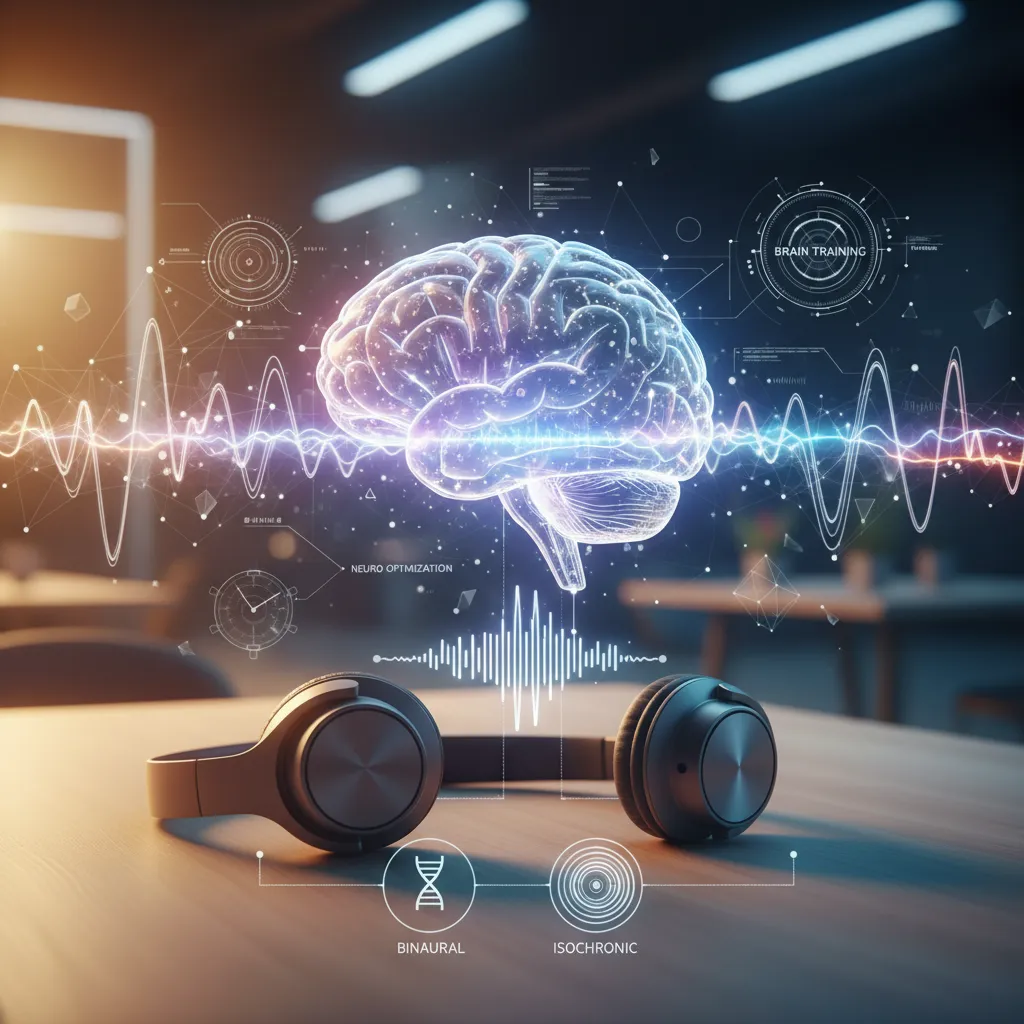
Brainwave entrainment, a method of audio brain training using binaural beats and isochronic tones, can subtly shift your mental state towards focus, relaxation, or improved sleep. NeuroTech Insider explores the science behind this fascinating technique, offering insights into how sound frequencies can synchronize brain activity. Discover practical applications, safety guidelines, and the latest advancements in this exciting field, including benefits of theta waves.
What is Brainwave Entrainment and How Does It Work?
Quick Answer: Brainwave entrainment is a process where external stimuli, like specific sound frequencies, influence your brainwaves, guiding them towards a desired state, such as relaxation or focus. This phenomenon is based on the “frequency following response.”
Brainwave entrainment leverages the brain’s natural tendency to synchronize with external rhythms. This synchronization, known as the frequency following response (FFR), occurs when the brain’s electrical activity adjusts to match the frequency of an external stimulus, such as a pulsating sound or light. Think of it like pushing a child on a swing – if you push at the right frequency, the swing goes higher and higher. Similarly, carefully crafted soundscapes can gently nudge your brainwaves into different states.
The brain communicates through electrical impulses, which manifest as brainwaves. These brainwaves are categorized into different frequency bands, each associated with distinct mental states:

-
•
Delta (0.5-4 Hz): Deep sleep, relaxation. -
•
Theta (4-8 Hz): Theta Wave Benefits, meditation, creativity. -
•
Alpha (8-12 Hz): Relaxation, calmness. -
•
Beta (12-30 Hz): Alertness, focus, cognition. -
•
Gamma (30-100 Hz): Higher mental activity, perception.
By introducing specific frequencies, brainwave entrainment aims to gently guide your brainwaves towards a desired state. For instance, listening to sounds in the alpha range might promote relaxation, while beta frequencies could enhance focus. The effectiveness of brainwave entrainment varies depending on individual factors and the quality of the audio or visual stimulus.
What Are the Different Types of Brainwave Entrainment?
Quick Answer: There are three primary types of brainwave entrainment: Binaural beats, monaural beats, and isochronic tones. Each uses sound in a slightly different way to stimulate the brain.
Understanding the nuances of each type is crucial for selecting the most appropriate method for your needs. Let’s delve into the specifics:
-
•
Binaural Beats: These are created by presenting two slightly different frequencies to each ear separately. The brain perceives the difference between these frequencies as a beat. For example, if one ear hears 400 Hz and the other hears 410 Hz, the brain perceives a 10 Hz beat, which falls within the alpha range, promoting relaxation. Binaural Beats Focus requires headphones for optimal effect. -
•
Monaural Beats: These beats are created by combining two different frequencies into a single tone before it reaches the ears. Unlike binaural beats, monaural beats don’t require headphones, as the beat is already embedded within the sound itself. -
•
Isochronic Tones: These involve regularly spaced, distinct pulses of sound. They are simple, yet powerful, and can be effective even at lower volumes. Isochronic tones are often preferred by those who find binaural beats uncomfortable.
Choosing the right type depends on personal preference and the desired outcome. Some individuals find binaural beats more effective, while others prefer the simplicity of isochronic tones. Experimentation is key to finding what works best for you.
What Are the Benefits of Brainwave Entrainment?
Quick Answer: Brainwave entrainment offers various benefits, including enhanced focus, improved sleep quality, reduced anxiety, and deeper meditative states. It’s a shortcut to neuro-optimization.
The potential benefits of brainwave entrainment are wide-ranging, making it an attractive tool for individuals seeking to enhance their mental and emotional well-being. Here are some of the most commonly reported benefits:
-
•
Improved Focus and Concentration: Beta frequencies can help sharpen focus and concentration, making it easier to tackle demanding tasks. This is particularly useful for students, professionals, and anyone seeking a cognitive boost. -
•
Enhanced Sleep Quality: Delta and theta frequencies promote relaxation and can facilitate deeper, more restful sleep. This is a valuable tool for individuals struggling with insomnia or sleep disturbances. -
•
Reduced Anxiety and Stress: Alpha frequencies can induce a state of calmness and relaxation, helping to alleviate anxiety and stress. This is particularly beneficial for individuals dealing with everyday stressors or anxiety disorders. -
•
Deeper Meditative States: Theta frequencies are associated with deep meditation and can help individuals achieve a more profound and transformative meditative experience. -
•
Pain Management: Some studies suggest that brainwave entrainment, particularly alpha and theta frequencies, may help reduce chronic pain.
For example, imagine a student struggling to focus on their studies. By using brainwave entrainment with beta frequencies, they might experience improved concentration and information retention. Similarly, someone with insomnia might find relief by listening to delta or theta frequencies before bed, promoting relaxation and deeper sleep.
Is Brainwave Entrainment Safe for Everyone?
Quick Answer: While generally safe, brainwave entrainment is not recommended for individuals with epilepsy or a history of seizures. Consult with a healthcare professional if you have any concerns.
While brainwave entrainment is generally considered safe for most people, certain individuals should exercise caution or avoid it altogether. It’s crucial to be aware of potential risks and contraindications before incorporating brainwave entrainment into your routine.
The primary concern revolves around individuals with epilepsy or a history of seizures. The rapidly changing frequencies in some brainwave entrainment programs, especially those involving Stroboscopic Light or rapidly pulsating sounds, could potentially trigger a seizure in susceptible individuals. This is due to the brain’s heightened sensitivity to external stimuli in people with epilepsy.
Additionally, individuals with certain mental health conditions, such as psychosis or severe anxiety, should consult with a healthcare professional before using brainwave entrainment. While it can be beneficial for some, it might exacerbate symptoms in others. It’s always best to err on the side of caution and seek professional guidance.
Pregnant women should also consult with their doctor before using brainwave entrainment, as the potential effects on the developing fetus are not fully understood. While there is no definitive evidence of harm, it’s best to be cautious during pregnancy.
What Are the Best Practices for Using Brainwave Entrainment?
Quick Answer: For optimal results, use high-quality headphones, start with low volume levels, choose appropriate frequencies for your goals, and be consistent with your sessions.
To maximize the benefits and minimize potential risks, it’s essential to follow best practices when using brainwave entrainment. Here are some key recommendations:
-
•
Use High-Quality Headphones: For binaural beats, headphones are essential. Choose headphones that provide clear and accurate sound reproduction to ensure the frequencies are delivered effectively. Avoid using low-quality earbuds, as they may distort the sound and reduce the effectiveness of the entrainment. -
•
Start with Low Volume Levels: Begin with a low volume and gradually increase it until you can comfortably hear the tones. Avoid using excessively loud volumes, as this can damage your hearing and reduce the effectiveness of the entrainment. -
•
Choose Appropriate Frequencies for Your Goals: Select frequencies that align with your desired mental state. For example, use delta or theta frequencies for sleep, alpha frequencies for relaxation, and beta frequencies for focus. -
•
Be Consistent with Your Sessions: Regular use is key to experiencing the full benefits of brainwave entrainment. Aim for consistent sessions, even if they are short, to allow your brain to adapt to the frequencies. -
•
Find a Quiet and Comfortable Environment: Minimize distractions by finding a quiet and comfortable environment where you can relax and focus on the sounds. This will enhance the effectiveness of the entrainment.
Consider exploring devices like NeuroTech Insider’s NeuroVizr, which combines audio brain training with stroboscopic light patterns to enhance the entrainment experience. The NeuroVizr Science utilizes precisely timed light pulses to further stimulate brainwave activity, potentially leading to more profound and rapid results. NeuroVizr Light Patterns can be customized to target specific brainwave frequencies.
Furthermore, White Noise Benefits can be combined with brainwave entrainment techniques to create a more immersive and effective experience, masking distracting external sounds and promoting relaxation.
Frequently Asked Questions
What is brainwave entrainment and how does it work?
Brainwave entrainment is a process where external stimuli, like specific sound frequencies, influence your brainwaves, guiding them towards a desired state, such as relaxation or focus. This phenomenon is based on the ‘frequency following response,’ where the brain’s electrical activity synchronizes with the external stimulus.
What are the different types of brainwave entrainment?
There are three primary types of brainwave entrainment: binaural beats (requiring headphones for the brain to perceive a differential frequency), monaural beats (where frequencies are combined before reaching the ear), and isochronic tones (regularly spaced, distinct pulses of sound).
Is brainwave entrainment safe for everyone?
While generally safe, brainwave entrainment is not recommended for individuals with epilepsy or a history of seizures due to the risk of triggering episodes. Individuals with certain mental health conditions (e.g., psychosis, severe anxiety) and pregnant women should consult a healthcare professional before use.