
Deep Sleep Tracking: 8 Metrics to Recharge Your Brain’s Battery & Optimize Cognitive Performance
As a leading neuroscientist and biohacker, I often observe a critical oversight in the relentless pursuit of peak performance: the profound neglect of deep sleep. Consider your brain a high-performance engine, meticulously engineered for complex operations, rapid processing, and sustained output. Just like any sophisticated machine, it demands meticulous maintenance, and its most crucial phase of repair and optimization occurs during deep sleep. Are you experiencing the frustrating drag of brain fog, the insidious creep of fatigue, or the disheartening plateau in your cognitive abilities? These aren’t minor inconveniences; they are distress signals from an engine starved of its essential recharge cycle.
In our hyper-connected, always-on world, merely “getting enough sleep” is no longer sufficient. True cognitive enhancement and sustained vitality hinge on the quality of your sleep, specifically the elusive and incredibly powerful phase known as deep sleep. This isn’t just about resting your eyes; it’s about initiating a complex, data-driven deep sleep tracking protocol to unlock your brain’s full restorative potential. This article will serve as your comprehensive guide, delving into the scientific mechanisms, the cutting-edge technologies, and the actionable strategies that empower you to not just measure, but actively maximize this vital “engine repair” time. Prepare to transition from passive sleeper to active bio-optimizer, leveraging precision metrics to truly recharge your battery and elevate your cognitive existence.
Key Takeaways
- • Deep sleep is your brain’s primary restoration phase, crucial for memory consolidation, cellular repair, and cognitive resilience.
- • Precision deep sleep tracking involves monitoring specific metrics like duration, consistency, and delta wave activity to gain actionable insights.
- • Understanding sleep stage charts and differentiating deep sleep from other stages is fundamental for targeted optimization.
- • Strategic lifestyle adjustments and neuro-optimization techniques can significantly enhance your deep sleep, leading to profound improvements in daily performance and well-being.
What Exactly is Deep Sleep Tracking and Why Does Your Brain Demand It?
At its core, deep sleep tracking is the systematic measurement and analysis of your sleep architecture, with a particular focus on the non-REM (NREM) Stage 3, often referred to as slow-wave sleep (SWS). This is not merely about logging hours; it’s about gaining a granular understanding of the most restorative phase of your nightly cycle. During deep sleep, your brain undergoes an intensive “engine repair” process, critical for both mental and physical rejuvenation.
Scientifically, deep sleep is characterized by high-amplitude, low-frequency brainwaves known as delta waves sleep. These slow oscillations synchronize neuronal activity across vast regions of the cortex, facilitating a range of vital biological functions:
- • Memory Consolidation: Deep sleep is paramount for transferring newly acquired information from the hippocampus to the neocortex for long-term storage, a process critical for learning and cognitive function.
- • Cellular Repair and Growth: During this stage, your body releases growth hormone, essential for tissue repair and regeneration. This is the physiological equivalent of an overnight service in a high-tech garage.
- • Waste Clearance (Glymphatic System): The brain’s unique waste disposal system, the glymphatic system, becomes highly active during deep sleep. It flushes out metabolic byproducts, including amyloid-beta proteins, which are linked to neurodegenerative diseases. Think of it as a deep cleaning of your engine’s internal components.
- • Hormone Regulation: Deep sleep plays a crucial role in regulating various hormones, including cortisol (stress hormone) and insulin, impacting everything from mood to metabolic health.
- • Emotional Regulation and Mood: Adequate deep sleep contributes significantly to emotional resilience and mood stability, helping you process daily stresses more effectively.
The “why” is clear: without sufficient deep sleep, your brain cannot operate at its peak. Cognitive performance falters, emotional regulation becomes erratic, and physical recovery is compromised. Understanding how to measure deep sleep is the first step towards taking control of these critical processes and optimizing your entire system.
Decoding the Brain’s Blueprint: Understanding Sleep Stage Charts
To effectively track and optimize deep sleep, you must first understand the complete architecture of your nightly rest. Sleep is not a monolithic state but a complex progression through distinct phases, each with its unique neurophysiological signature. These phases are typically visualized in a sleep stage chart, a graphical representation provided by most advanced deep sleep tracking devices.
The sleep cycle consists of two main states: Non-Rapid Eye Movement (NREM) sleep and Rapid Eye Movement (REM) sleep. NREM sleep is further divided into three stages:
- • NREM Stage 1 (N1): The lightest stage, often lasting only a few minutes, characterized by theta waves. It’s the transition from wakefulness to sleep.
- • NREM Stage 2 (N2): A deeper, more stable sleep stage, accounting for about 50% of total sleep. Brain activity shows sleep spindles and K-complexes – bursts of brainwave activity associated with memory processing and protection from external stimuli. Understanding Sleep Spindles provides insight into this stage’s importance.
- • NREM Stage 3 (N3 – Deep Sleep): This is our target – slow-wave sleep. Dominated by delta waves sleep, it’s the period of maximal physiological restoration, growth hormone release, and glymphatic clearance. It’s the most difficult stage to awaken from.
- • REM Sleep: Characterized by rapid eye movements, temporary muscle paralysis, and vivid dreaming. Brain activity here resembles wakefulness, with beta and theta waves. REM is crucial for emotional processing, creativity, and procedural memory.
A typical night involves several Sleep Cycles, each lasting approximately 90-110 minutes. You usually enter deep sleep early in the night, with the longest and most intense N3 phases occurring in the first two to three cycles. As the night progresses, deep sleep diminishes, and REM sleep phases become longer. Your sleep stage chart will visually represent this progression, allowing you to see your time spent in each stage.
When analyzing your sleep analysis data, pay close attention to the distribution of these stages. An optimal night typically includes 15-25% deep sleep for adults. If your charts consistently show fragmented deep sleep or insufficient duration, it’s a clear signal for intervention.
Beyond the Basics: Differentiating Core Sleep vs. Deep Sleep
The terms “core sleep” and “deep sleep” are sometimes used interchangeably, but for a precision biohacker, understanding the distinction is vital. When we discuss core vs deep sleep, we’re dissecting the very essence of restorative rest. While all stages of sleep are important, their physiological roles differ significantly.
“Core sleep” is a broader term, often encompassing the essential sleep required to function relatively well. It typically refers to NREM Stages 1, 2, and 3, and sometimes even includes REM sleep, representing the baseline sleep needed for basic survival and maintaining physiological equilibrium. It’s the fundamental operating system for your brain.
However, deep sleep (NREM Stage 3) is the specific, highly restorative phase characterized by delta waves sleep. It’s the critical “engine overhaul” segment of your sleep cycle, where the most profound physical and mental repair occurs. While NREM 1 and NREM 2 contribute to rest and some memory processing, they lack the intense restorative power of N3.
Here’s why the distinction matters for optimizing your performance:
- • Intensity of Restoration: Deep sleep is where the heaviest lifting happens. Growth hormone secretion peaks, cellular repair is maximal, and the glymphatic system is most efficient in clearing metabolic waste. Core sleep provides general rest, but deep sleep provides intensive repair.
- • Cognitive Impact: While REM sleep is crucial for emotional processing and creativity, deep sleep is the bedrock for declarative memory consolidation and learning. Without sufficient deep sleep, your ability to integrate new information and recall facts suffers significantly.
- • Resilience: A night rich in deep sleep contributes to greater physical resilience, improved immune function (linking to Sleep & Immunity), and enhanced emotional stability. Merely achieving “core sleep” might prevent immediate collapse, but it won’t drive optimal bio-performance.
For the biohacker, the goal is not just to hit a minimum threshold of core sleep, but to actively optimize the quantity and quality of deep sleep. This targeted approach is what truly differentiates a passively rested individual from a cognitively optimized one.
The Symphony of Restoration: Understanding Delta Wave ‘Idling’
Imagine the gentle, rhythmic hum of a powerful engine at idle – quiet, yet brimming with potential energy and undergoing vital internal processes. This is an apt metaphor for your brain during delta waves sleep. These are the slowest of all brainwaves, oscillating at a frequency of 0.5 to 4 Hz, but they possess the highest amplitude, signifying synchronized neuronal activity across vast cortical networks.
Delta waves are the hallmark of deep, restorative NREM Stage 3 sleep. While Alpha waves (8-12 Hz) are associated with relaxed wakefulness and Theta waves (4-8 Hz) with creativity and light sleep, delta waves indicate a profound state of unconsciousness where the brain is actively engaged in crucial “idling” tasks:
- • Memory Consolidation: Delta waves facilitate the replay of memories acquired during wakefulness, moving them from short-term to long-term storage. This process strengthens neural connections, making learning more robust and recall more efficient.
- • Brain Detoxification: As mentioned, the glymphatic system’s activity is significantly enhanced during delta wave sleep, effectively clearing metabolic waste products that accumulate during the day. This ‘cleaning cycle’ is vital for maintaining neuronal health and preventing cognitive decline.
- • Energy Restoration: During deep sleep, the brain’s energy reserves (glycogen) are replenished. This is crucial for sustained cognitive function and preventing mental fatigue during the subsequent waking hours.
- • Neuroplasticity: The brain’s ability to reorganize itself by forming new neural connections is profoundly influenced by deep sleep. This Neuroplasticity is essential for adaptation, learning, and recovery from injury.
Optimizing your deep sleep tracking means not just measuring the duration of N3, but also understanding the quality and consistency of your delta wave activity. It’s the silent, profound work of these waves that ensures your brain is primed for optimal performance each day.
The 8 Critical Metrics for Deep Sleep Tracking & Optimization
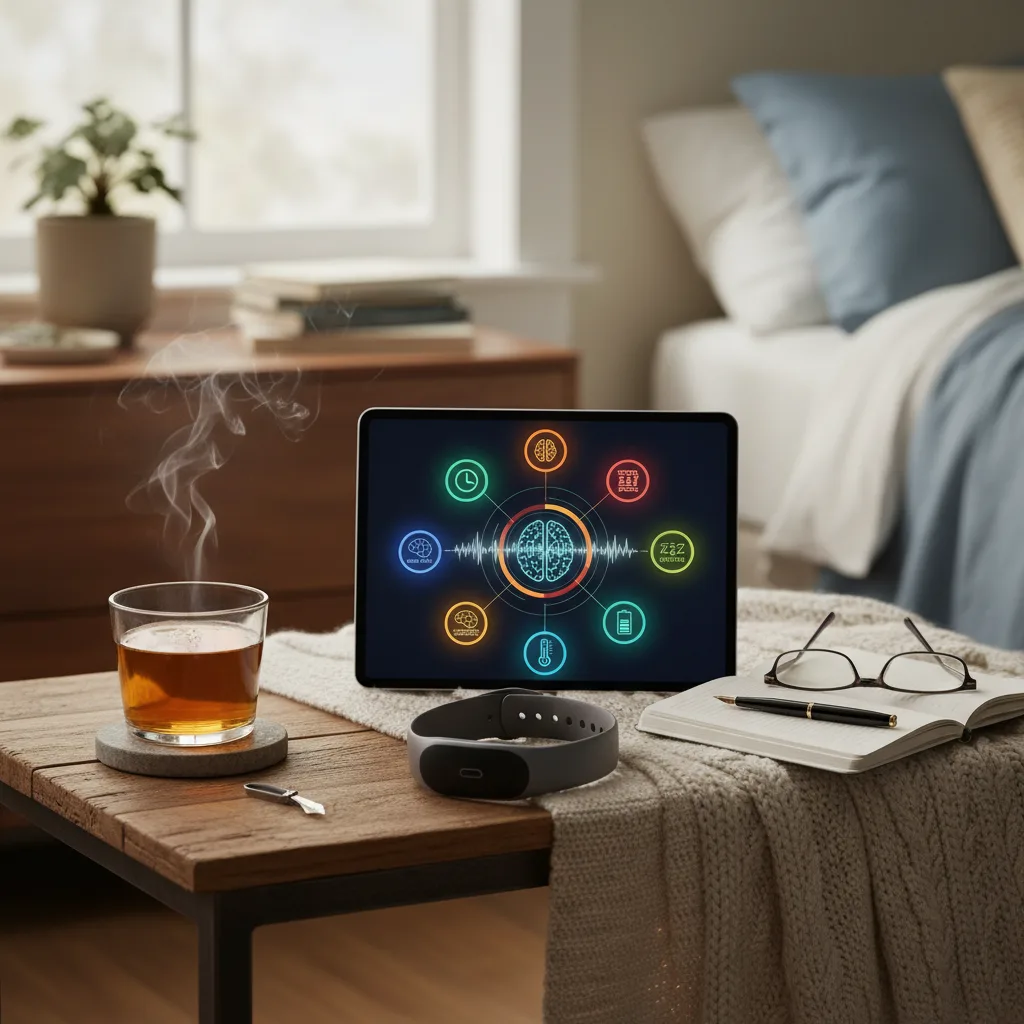
Moving beyond anecdotal experience, the biohacker’s approach to sleep relies on data. To truly understand and improve your sleep, you need precise metrics. Here are 8 critical parameters to include in your deep sleep tracking regimen, each offering a unique window into your brain’s nocturnal repair cycle and contributing to your overall sleep analysis:
1. Total Deep Sleep Duration
- • What it is: The absolute amount of time, typically measured in minutes, spent in NREM Stage 3 sleep.
- • Why it matters: This is the most straightforward indicator of your brain’s opportunity for deep restoration. Most adults need 1-2 hours of deep sleep per night for optimal function.
- • How to track/interpret: Most wearables (e.g., Apple Watch Sleep, Oura Ring, Whoop) or dedicated Sleep Tracker Headband devices provide this. Look for consistency and aim for your optimal range.
2. Deep Sleep Percentage (of Total Sleep)
- • What it is: The proportion of your total sleep time spent in NREM Stage 3.
- • Why it matters: Provides context. 90 minutes of deep sleep in a 6-hour night is different from 90 minutes in an 8-hour night. Aim for 15-25% of your total sleep.
- • How to track/interpret: Most deep sleep tracking apps calculate this automatically. A consistently low percentage suggests underlying issues or suboptimal sleep hygiene.
3. Deep Sleep Consistency
- • What it is: The variability of your deep sleep duration and timing from night to night.
- • Why it matters: Your Circadian Rhythm thrives on regularity. Inconsistent deep sleep patterns disrupt hormonal balance and overall recovery, signaling a disturbed internal clock.
- • How to track/interpret: Analyze trends over weeks. Large fluctuations indicate a need to stabilize your sleep schedule and pre-sleep routine.
4. Delta Wave Activity Density
- • What it is: A more granular measure than just duration, it quantifies the intensity and prevalence of delta waves sleep during your N3 phase.
- • Why it matters: Not all deep sleep is created equal. High-density delta wave activity correlates with more effective memory consolidation and brain detoxification.
- • How to track/interpret: Advanced Sleep Tracker Headband devices with EEG capabilities offer this. An increase in density after interventions (e.g., magnesium supplementation, cooling mattress) indicates success.
5. Sleep Latency to Deep Sleep
- • What it is: The time it takes from falling asleep to entering your first bout of NREM Stage 3.
- • Why it matters: A shorter latency indicates efficient sleep onset and a well-regulated nervous system, allowing your brain to get to work on repair faster.
- • How to track/interpret: Provided by most deep sleep tracking apps. High latency might suggest pre-sleep anxiety, late-night screen exposure, or overstimulation.
6. Deep Sleep Fragmentation
- • What it is: The number and duration of awakenings or shifts to lighter sleep stages within your deep sleep periods.
- • • Why it matters: Even if total duration is adequate, fragmented deep sleep prevents continuous, uninterrupted restorative processes. It’s like an engine constantly stopping and starting its repair cycle.
- • How to track/interpret: Look at your sleep stage chart for frequent transitions out of N3. Factors like noise, pain, or sleep apnea are common culprits.
7. Heart Rate Variability (HRV) During Deep Sleep
- • What it is: The variation in time between heartbeats, typically measured during the deepest parts of your sleep.
- • Why it matters: Higher HRV during deep sleep indicates a dominant parasympathetic (rest and digest) nervous system, signaling optimal recovery and stress resilience. It’s a key indicator of your body’s ability to truly relax and repair.
- • How to track/interpret: Many advanced wearables measure HRV. Look for an increase in your baseline HRV during deep sleep periods as a sign of effective recovery.
8. Body Temperature Drop During Deep Sleep
- • What it is: The natural decrease in core body temperature that facilitates sleep onset and maintenance, particularly deep sleep.
- • Why it matters: A proper temperature drop is essential for initiating and sustaining deep sleep. A failure to cool down can disrupt Circadian Rhythm and inhibit delta wave activity.
- • How to track/interpret: Some devices (e.g., Oura Ring) track skin temperature. A consistent, measurable drop (around 1-2 degrees Fahrenheit) from your daytime baseline signifies healthy thermoregulation for sleep.
Maximizing Your Deep Sleep: Strategies for ‘Engine Repair’
With a clear understanding of the metrics, the next step is active optimization. To truly maximize deep sleep for ‘engine repair’, a multi-faceted approach combining lifestyle adjustments and advanced neuro-optimization techniques is essential. This is where biohacking transcends simple tracking and moves into proactive enhancement.
1. Circadian Rhythm Optimization
- • Consistent Sleep Schedule: Go to bed and wake up at roughly the same time every day, even on weekends. This reinforces your body’s natural Circadian Rhythm.
- • Morning Light Exposure: Get 10-30 minutes of natural light exposure within an hour of waking. This signals to your brain that the day has begun and helps regulate melatonin production later.
- • Avoid Blue Light: Minimize exposure to blue-spectrum light from screens (phones, tablets, computers) at least 2-3 hours before bed. Blue light suppresses melatonin, delaying sleep onset and impacting deep sleep.
2. Optimize Your Sleep Environment
- • Cool, Dark, Quiet: Maintain your bedroom temperature between 60-67°F (15-19°C). Block out all light with blackout curtains and use earplugs or a white noise machine to eliminate auditory disturbances.
- • Comfort: Invest in a comfortable mattress, pillows, and bedding that support your body and facilitate a drop in core body temperature.
3. Diet & Exercise Considerations
- • Timing of Meals: Avoid heavy meals close to bedtime. Allow at least 2-3 hours for digestion.
- • Caffeine & Alcohol: Limit caffeine intake, especially after noon. Alcohol might help you fall asleep but significantly disrupts Sleep Cycles, particularly deep sleep.
- • Regular Exercise: Moderate to vigorous exercise during the day can significantly improve deep sleep quality, but avoid intense workouts too close to bedtime.
4. Stress Management & Mental Preparation
- • Mindfulness & Meditation: Incorporate practices like meditation, deep breathing, or journaling to calm your mind before bed. Reducing cognitive arousal is critical for smooth transition into deep sleep.
- • Warm Bath/Shower: A warm bath or shower 1-2 hours before bed can help facilitate the necessary drop in core body temperature for sleep onset.
5. Neuro-Optimization Techniques for Enhanced Deep Sleep
Beyond behavioral changes, advanced biohackers explore technologies designed to actively guide the brain into more restorative states. These methods often involve influencing brainwave patterns to promote relaxation and deeper sleep. For those committed to next-level brain optimization, exploring advanced light therapy devices or visual brain entrainment tools can be profoundly effective. These technologies, often leveraging principles of sensory resonance, can gently guide your brain towards the Alpha and Theta states, which are precursors to deep sleep, thereby facilitating a more rapid and sustained entry into NREM Stage 3. By providing specific light frequencies and patterns, these tools can help prime your neural circuits for optimal nightly repair, translating directly into improved deep sleep tracking metrics and enhanced waking performance. Incorporating such tools can be a game-changer for individuals seeking to truly master their sleep architecture.
Advanced Tools & Techniques for Precise Sleep Analysis
To truly master deep sleep tracking and elevate your sleep analysis, it’s crucial to understand the landscape of available tools, from gold-standard clinical methods to sophisticated consumer-grade devices. The accuracy and depth of data vary significantly, but even consumer devices, when used consistently, can provide actionable insights.
The Gold Standard: Polysomnography (PSG)
For the most precise how to measure deep sleep, particularly in a diagnostic context, Polysomnography remains unparalleled. This comprehensive sleep study, conducted in a lab, simultaneously records:
- • Electroencephalography (EEG): Measures brainwave activity (alpha, theta, delta waves sleep, etc.) to accurately determine sleep stages.
- • Electrooculography (EOG): Tracks eye movements, crucial for identifying REM sleep.
- • Electromyography (EMG): Monitors muscle activity, helping detect sleep disorders like restless leg syndrome.
- • Other physiological parameters: Heart rate, breathing, oxygen saturation, and body position.
While not practical for daily tracking, PSG provides the benchmark against which consumer devices are measured and is invaluable for diagnosing complex sleep conditions.
Consumer-Grade Deep Sleep Tracking Devices
For the biohacker focused on daily optimization, a range of accessible technologies offers increasingly sophisticated sleep analysis:
- • Wearables (Smartwatches & Rings): Devices like the Apple Watch Sleep, Oura Ring, and Whoop band utilize accelerometers, heart rate sensors (PPG), and sometimes skin temperature sensors to estimate Sleep Cycles and stages. They infer sleep stages based on movement, heart rate, and HRV changes. While not as accurate as EEG, they provide valuable trends and insights into total sleep, deep sleep duration, and consistency.
- • Dedicated Sleep Tracker Headbands: Devices like the Dreem or Muse S incorporate EEG sensors directly on the scalp. These offer significantly more accurate sleep stage detection, especially for NREM 3 (delta waves sleep), as they directly measure brain electrical activity. They are closer to consumer-grade PSG.
- • Under-Mattress Sensors: Devices like Withings Sleep Analyzer use ballistocardiography to detect heart rate, breathing, and body movement without direct contact. They infer sleep stages from these patterns.
The Role of AI Sleep Tracking
Artificial intelligence is revolutionizing deep sleep tracking. AI algorithms can process vast amounts of raw data from sensors (movement, heart rate, respiration, brainwaves) to identify subtle patterns indicative of sleep stages, even predicting the likelihood of certain sleep events. This leads to:
- • Improved Accuracy: AI can learn individual sleep patterns, refining its stage detection over time.
- • Personalized Insights: AI can correlate your sleep data with daily activities, diet, and perceived energy levels to offer tailored recommendations for improvement.
- • Predictive Analysis: Future AI Sleep Tracking might even predict potential sleep disruptions based on upcoming schedules or environmental changes.
Understanding Sleep Efficiency
Beyond individual metrics, it’s crucial to consider your overall Sleep Efficiency – the ratio of time spent actually sleeping to the total time spent in bed. A high sleep efficiency (above 85%) indicates that your time in bed is effectively utilized for restorative rest, which directly impacts the quality and duration of your deep sleep. Improving this metric is a holistic goal that integrates all aspects of effective deep sleep tracking.
Conclusion: Recharge Your Battery, Redefine Your Potential
You now possess the knowledge and the framework to transcend rudimentary sleep habits and embark on a journey of precision deep sleep tracking and optimization. By understanding the intricate mechanisms of delta waves sleep, decoding your sleep stage chart, and diligently monitoring the 8 critical metrics, you are no longer a passive passenger in your own biology. Instead, you become the chief engineer of your brain’s performance, meticulously ensuring its optimal “engine repair” and preparing it for peak cognitive output.
The benefits extend far beyond simply feeling rested. Consistent, high-quality deep sleep fortifies your memory, sharpens your focus, stabilizes your mood, bolsters your immune system (Sleep & Immunity), and enhances your overall resilience. It’s the ultimate biohack for unlocking sustained mental clarity, accelerated learning through Neuroplasticity, and a profound sense of well-being.
Expert Tip: Start Small, Iterate, and Observe
Don’t feel overwhelmed by the depth of this information. Begin by selecting one or two metrics that resonate most with your current sleep challenges. Invest in a reliable deep sleep tracking device and commit to consistent use. Implement one new strategy – perhaps optimizing your sleep environment or standardizing your bedtime. Track the data diligently, observe the impact on your metrics and your waking performance, and then iterate. Your biology is unique; what works for one person may need refinement for another. Embrace the journey of self-experimentation and let the data guide you to a fully recharged brain and an optimized life.