
5 AI Lie Detectors That Spot Untruths Faster Than Speed Traps
As a neuroscientist and biohacker, I’ve dedicated my career to understanding the intricate machinery of the human brain. We live in an age where information is abundant, yet truth can often feel elusive. Just as a high-performance vehicle requires meticulous tuning and the right sensors to navigate complex terrain, our brains demand optimal function and clarity to process the world accurately. But what happens when the very signals our brains produce are intentionally distorted? What if the internal engine of truth-telling could be externally monitored with unprecedented precision?
Many of us grapple with cognitive load, the constant bombardment of data that can lead to a lack of focus, decision fatigue, or even disrupted sleep patterns. We seek ways to upgrade our internal systems, to enhance our mental clarity and performance. Imagine a world where the subtle tremors of deception, the imperceptible shifts in vocal tone, or the fleeting micro-expressions on a face could be instantly analyzed, revealing truth with the efficiency of a high-speed camera catching a speeding car. This isn’t science fiction; it’s the rapidly evolving frontier of AI lie detector technology.
For decades, humanity has sought an infallible method to discern truth from falsehood. From ancient trials by ordeal to modern polygraphs, the quest has been fraught with limitations. Now, artificial intelligence is revolutionizing this pursuit, moving beyond traditional methods to analyze a spectrum of human physiological and behavioral data with remarkable sophistication. These AI powered lie detection systems are not merely advanced algorithms; they represent a profound leap in our ability to decode the complex, often subconscious, indicators of deception. They promise to be the new ‘police radar’ for truth, offering insights faster and with greater potential accuracy than ever before. Join me as we explore five groundbreaking AI lie detectors poised to redefine our understanding of honesty and integrity.
Key Takeaways
- • AI Lie Detectors leverage multidisciplinary data, from voice stress and micro-expressions to physiological responses, to identify subtle indicators of deception far beyond human perception.
- • These advanced systems are finding applications in diverse fields, including security, law enforcement, and potentially virtual courtrooms, promising enhanced efficiency and objectivity in truth assessment.
- • While offering unparalleled analytical capabilities, the accuracy and ethical implications of AI powered lie detection remain subjects of ongoing scientific scrutiny and public debate, emphasizing the need for robust validation and responsible deployment.
- • Understanding the scientific basis of deception and its detection can offer insights into human cognitive processes, fostering greater self-awareness and potentially enhancing our own ability to discern truth.
What is Lie Detector AI? Unpacking the Science of Truth-Sensing Algorithms
At its core, Lie Detector AI refers to sophisticated artificial intelligence systems designed to infer deception by analyzing various physiological and behavioral cues. Unlike traditional polygraphs, which primarily measure autonomic nervous system responses (like heart rate, breathing, and skin conductivity) and rely heavily on human interpretation, AI powered lie detection employs machine learning algorithms to process vast datasets of multimodal information. This includes everything from subtle facial micro-expressions and involuntary body language to vocal stress patterns and even neuro-physiological signals.
The scientific mechanism behind this is rooted in the understanding that deception is a cognitively demanding process. When an individual attempts to lie, their brain must actively suppress the truth, construct a plausible falsehood, and then monitor their own behavior to ensure consistency. This complex mental juggling act often manifests in measurable, albeit subtle, physiological and behavioral changes. These changes are not always conscious or easily controlled, making them potential biomarkers for deceit.
From a neuroscientific perspective, these cognitive demands can trigger shifts in brain activity. For instance, increased cognitive load associated with deception might be detectable through alterations in brainwave patterns. While direct brain scanning for deception is still largely experimental and highly complex, the peripheral physiological responses are often reflections of these internal neurological processes. The prefrontal cortex, heavily involved in executive functions like planning and decision-making, works overtime during deception, influencing the autonomic nervous system.
The beauty of AI lie detector systems lies in their ability to detect and correlate these minute changes across multiple channels simultaneously. They don’t just look for one ‘tell’ but rather a constellation of indicators, often too subtle or fleeting for the human eye or ear to perceive. This multi-modal approach significantly enhances the potential for accurate detection, moving beyond the limitations of single-indicator methods.
Is AI the New Police Radar for Truth? How AI Detects Deception
The analogy of a “police radar for truth” is apt for understanding the disruptive potential of AI lie detector technology. Just as radar efficiently scans for speed violations, AI rapidly processes vast amounts of data to flag anomalies in human behavior that might indicate deception. This capability is transforming various sectors, from security screenings to investigative journalism.
The “why” behind AI’s effectiveness in this domain is its capacity for pattern recognition on a scale unimaginable for humans. Our brains are remarkable, but they are prone to biases, fatigue, and the inherent difficulty of processing dozens of non-verbal cues simultaneously. AI, particularly deep learning models, can be trained on enormous datasets of truthful and deceptive behaviors, learning to identify the nuanced patterns that correlate with untruths.
The “how” involves the integration of multiple data streams. Imagine a system that combines:
- • Facial Micro-expressions: These are involuntary, fleeting facial movements lasting less than half a second. They often reveal genuine emotions that an individual is trying to conceal. AI can detect and categorize these subtle shifts with remarkable precision, leveraging advanced computer vision.
- • Body Language Analysis: From subtle posture shifts to fidgeting or changes in gaze direction, body language can convey stress or discomfort associated with deception. AI models can track these movements in real-time, identifying deviations from baseline behaviors.
- • Physiological Sensing: Building on polygraph principles, AI can integrate data from heart rate variability, skin conductance, respiration patterns, and even eye-tracking to detect autonomic nervous system responses indicative of stress or cognitive load.
- • Vocalics and Speech Patterns: As we’ll delve deeper, the human voice is a rich source of information. Changes in pitch, tempo, amplitude, and the presence of micro-tremor analysis can all be indicative of cognitive effort or emotional distress linked to deception.
One prominent example of this multi-modal approach is the concept of a coyote ai lie detector, a term often used to describe highly adaptive and agile AI systems capable of learning and evolving their detection capabilities. These systems are not static; they continuously refine their models as they encounter new data, making them increasingly sophisticated in their ability to discern truth.
Beyond the Human Ear: Analyzing Voice Stress with AI
The human voice is a symphony of complex physiological and neurological processes. When we speak, our brains coordinate intricate muscle movements in the larynx, pharynx, and mouth, all while regulating breath and emotional expression. Deception introduces a subtle dissonance into this symphony, often manifesting as voice stress that is difficult for the unaided human ear to detect.
AI powered lie detection systems excel in vocal analysis by dissecting speech patterns at a granular level. They don’t just listen for changes in pitch or volume, but rather analyze dozens of acoustic features, including:
- • Fundamental Frequency (Pitch): While not always a direct indicator, significant deviations or instability in pitch can suggest cognitive effort or emotional arousal.
- • Speech Rate and Pauses: A sudden increase or decrease in speaking speed, or an unusual number of filled or unfilled pauses, can indicate a speaker is carefully constructing a response or experiencing internal conflict.
- • Formant Frequencies: These are resonant frequencies of the vocal tract, which can subtly shift due to muscle tension. The Vagus Nerve, which plays a crucial role in regulating vocal cord function and emotional responses, can influence these subtle changes.
- • Micro-Tremors: These are tiny, involuntary fluctuations in vocal cord tension, often below the threshold of conscious perception. AI algorithms are particularly adept at detecting and analyzing these micro-tremor analysis patterns, which can be highly indicative of stress or deception.
By analyzing these features, AI can build a baseline profile of an individual’s normal speech patterns. Any significant deviation from this baseline, especially when correlated with other indicators, can signal potential deception. This technology is incredibly powerful because it operates on a level of detail that bypasses conscious control, providing a window into the speaker’s true cognitive and emotional state. Furthermore, Emotion AI, which identifies and interprets human emotions, is often integrated into these voice stress analysis systems, adding another layer of contextual understanding to the vocal cues.
The Digital Witness: AI’s Role in Virtual Courtrooms and Justice Systems
The implications of AI lie detector technology extend far beyond security checkpoints. Imagine a future where these systems serve as “digital witnesses” in legal proceedings. The concept of virtual courtrooms, already gaining traction for efficiency and accessibility, could see AI playing a pivotal role in evidence assessment, witness credibility evaluation, and even jury selection.
The “why” behind AI’s potential integration into the justice system is the pursuit of greater objectivity and efficiency. Human judges and juries, while essential, are susceptible to biases, fatigue, and the inherent limitations of human perception. AI could provide an additional, data-driven layer of analysis, highlighting potential areas of concern in testimony or evidence that might otherwise be overlooked.
The “how” would involve AI systems analyzing video and audio recordings of testimonies, cross-referencing verbal statements with non-verbal cues and physiological responses. For example, in a virtual courtroom setting, an AI could monitor a witness’s speech patterns, eye movements, and facial expressions in real-time, providing an objective assessment of potential inconsistencies or stress responses. This doesn’t necessarily mean AI would deliver a definitive verdict of “guilty” or “innocent,” but rather provide a probability score or flag specific segments of testimony for further human review.
However, the introduction of AI powered lie detection into such a sensitive domain raises profound ethical and legal questions. Issues of privacy, algorithmic bias, and the potential for misinterpretation are paramount. For instance, an individual’s cultural background or neurodiversity might influence their non-verbal cues, potentially leading to false positives if the AI is not trained on diverse enough datasets. The legal system operates on principles of due process and human judgment, and integrating AI would require careful consideration of its role as an assistive tool rather than a definitive arbiter of truth. The implications of AI, not just in legal settings but also in broader societal structures like AI in Politics, demand robust ethical frameworks and transparent development.
Precision or Perception? Understanding the Accuracy of AI Lie Detectors
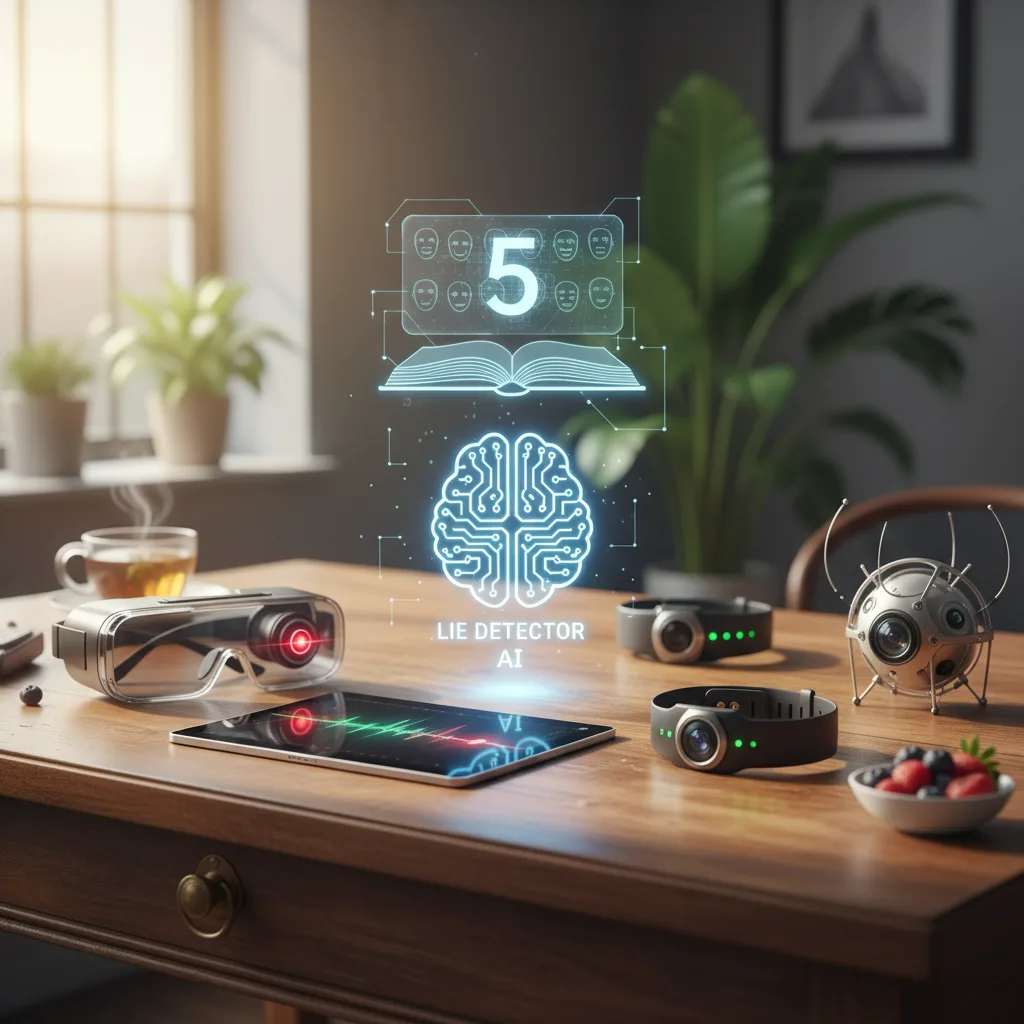
The critical question surrounding any truth-detection technology is its accuracy. While AI lie detector systems promise significant advancements over traditional methods like polygraphs, their precision is a complex and evolving topic. It’s crucial to distinguish between what these systems can do and what they are often perceived to do.
The “why” behind the pursuit of high accuracy is self-evident: the consequences of false positives (identifying a truthful person as deceptive) or false negatives (missing actual deception) can be severe. Polygraphs, for example, have faced significant criticism regarding their scientific validity and often inadmissible results in court, largely due to their reliance on indirect physiological measures and susceptibility to countermeasures.
The “how” AI aims for greater accuracy involves its multi-modal, data-driven approach and continuous learning. By analyzing a wider array of cues – vocal stress, micro-expressions, body language, and potentially even subtle brain activity measured through EEG Technology – AI powered lie detection builds a more comprehensive profile. This allows for a more robust statistical analysis, reducing the impact of any single ambiguous cue.
However, perfect accuracy remains an elusive goal. Several factors influence the performance of AI lie detectors:
- • Training Data Quality and Quantity: The AI is only as good as the data it’s trained on. Large, diverse, and ethically sourced datasets of both truthful and deceptive behaviors are essential to avoid biases and improve generalization.
- • Individual Variability: People react differently under stress. What might be a sign of deception for one person could be a baseline behavior for another. Advanced AI systems attempt to establish individual baselines, but this remains a challenge.
- • Contextual Understanding: A lie told under duress in an interrogation differs from a “white lie” in a social setting. AI systems often struggle with nuanced contextual interpretation.
- • Countermeasures: While harder to fool than polygraphs, sophisticated individuals might still attempt to employ countermeasures to influence AI detection, although the multi-modal nature makes this more difficult.
Current research suggests that the best AI lie detector systems can achieve accuracy rates significantly higher than chance, often in the 70-90% range under controlled conditions. However, these figures are highly dependent on the specific methodology, dataset, and definition of “lie” used. The scientific community is clear: AI should be seen as an enhancement tool, a powerful indicator, rather than an infallible truth machine. It’s about precision in identifying anomalies, not necessarily providing a definitive judgment of internal truth.
Unveiling Micro-Tremors: The Subtleties of Deception Detection
Among the most fascinating and scientifically robust indicators of underlying physiological states are micro-tremor analysis. These are minute, involuntary oscillations or vibrations that occur in muscles, including those involved in speech production. While often imperceptible to the human observer, these micro-tremors can become a tell-tale sign of cognitive and emotional shifts, particularly those associated with stress or the deliberate act of deception.
The “why” micro-tremors are relevant to deception detection lies in the intricate connection between the brain, the nervous system, and muscular control. When an individual experiences stress, anxiety, or a heightened cognitive load – all common accompaniments to lying – the sympathetic nervous system often kicks into gear. This physiological response can lead to increased muscle tension and subtle, involuntary muscle contractions, which manifest as micro-tremors.
The “how” AI lie detector systems capitalize on micro-tremor analysis is through highly sensitive sensors and sophisticated signal processing. For vocal micro-tremors, AI systems can analyze specific frequency bands in the human voice that correspond to these tiny muscle oscillations. These fluctuations are often in the 8-12 Hz range, a spectrum that can be difficult for the human ear to consciously filter out but is readily identifiable by algorithms.
Key aspects of micro-tremor analysis by AI include:
- • Frequency and Amplitude Deviations: AI can detect subtle changes in the frequency and amplitude of these tremors, indicating shifts from a person’s normal physiological state.
- • Baseline Comparison: Establishing an individual’s normal micro-tremor pattern is crucial. AI builds this baseline and then flags significant deviations that occur during questioning.
- • Correlation with Other Cues: Micro-tremors are rarely analyzed in isolation. AI correlates these findings with other indicators like facial micro-expressions or speech patterns to build a more robust deception profile.
The advantage of micro-tremor analysis is its involuntary nature. These movements are incredibly difficult, if not impossible, to consciously control or suppress. This makes them a potentially more reliable indicator than more overt behavioral cues that can be consciously manipulated. As AI powered lie detection continues to advance, the precision in detecting and interpreting these minute physiological signals will only increase, offering a deeper, more objective look into the human state of truthfulness.
The Future of Truth: Brain Performance and AI’s Cognitive Lens
Beyond the immediate applications in security and justice, the advent of AI lie detector technology offers profound insights into the workings of the human brain itself. As a biohacker, I’m particularly fascinated by how these advancements shed light on our cognitive architecture and offer new avenues for optimizing brain performance.
The “why” connecting lie detection to brain performance is clear: the very mechanisms that AI exploits to detect deception are rooted in our fundamental cognitive and emotional processes. Understanding how our brains react under pressure, how we manage cognitive load, and how emotions influence our physiological responses can empower us to better understand and control our own internal states. Concepts like Neuroplasticity, the brain’s incredible ability to reorganize itself by forming new neural connections, suggest that we can actively train our brains for greater resilience and clarity.
The “how” this knowledge can be applied to personal biohacking and cognitive enhancement is multi-faceted:
- • Enhanced Self-Awareness: By understanding the subtle cues of stress and cognitive load that AI can detect, we can become more attuned to our own internal signals. This self-awareness is the first step towards managing stress and improving focus.
- • Stress Management: The physiological responses linked to deception are often amplified forms of everyday stress. Techniques like mindfulness, breathwork, and targeted relaxation can help regulate the autonomic nervous system, promoting a state of calm and clarity. This ties into maintaining a healthy Circadian Rhythm, which is vital for overall cognitive function and stress resilience.
- • Cognitive Training: Just as AI learns to detect patterns, we can train our brains to optimize performance. Tools that offer visual brain entrainment tools, for instance, can guide our brainwaves into states conducive to deep relaxation (Theta waves) or focused attention (Alpha waves). These advanced light therapy devices and sensory resonance technology can be powerful allies in cultivating optimal brain states. For those interested in exploring cutting-edge tools for cognitive enhancement and deep relaxation, I highly recommend exploring the innovations available at neurotechinsider.com/store/neurovizr/.
- • Ethical Considerations for Personal Use: While AI lie detection is typically for external analysis, the underlying principles can inform personal development. Understanding what constitutes an authentic response versus a fabricated one can refine our communication skills and strengthen genuine connections. However, the ethical use of such insights is paramount.
The broader landscape of AI’s impact on human cognition and interaction is still unfolding. From the potential for Brain Computer Interface technologies to merge human and artificial intelligence, to the evolving AI Job Market Impact, and even the subtle health considerations of advanced connectivity like 6G & Health, our future is increasingly intertwined with these technologies. Even the rise of Synthetic Influencers highlights the growing need for critical discernment in a digitally saturated world. The insights gleaned from AI lie detector research are not just about catching untruths; they are about understanding the fundamental architecture of human communication and consciousness.
Conclusion: Navigating the Truth in an AI-Enhanced World
The emergence of AI lie detector technologies marks a pivotal moment in our long-standing quest to understand and verify truth. From analyzing the imperceptible nuances of voice stress and micro-tremor analysis to interpreting complex physiological responses and behavioral cues, these AI powered lie detection systems are pushing the boundaries of what’s possible. They offer the potential for enhanced security, more objective legal processes in settings like virtual courtrooms, and a deeper scientific understanding of human communication and deception.
As we’ve explored, these advanced systems, often embodying the agility of a coyote ai lie detector, are not merely tools for accusation but sophisticated instruments for analysis. They challenge us to consider the ethical implications of such power, the necessity of robust validation, and the importance of responsible deployment. Yet, they also provide an unparalleled lens into the intricate dance between our thoughts, emotions, and outward expressions.
For those of us committed to biohacking and optimizing brain performance, the insights gleaned from this field are invaluable. Understanding the “why” behind our stress responses and cognitive load, and the “how” technology can reveal these, empowers us to cultivate greater mental clarity, emotional resilience, and authentic communication. The future of truth detection is not just about external scrutiny; it’s about internal enlightenment, driving us towards a more aware and integrated human experience.
Expert Tip for Cognitive Enhancement:
To enhance your own internal “truth radar” and boost cognitive performance, dedicate time daily to practices that reduce cognitive load and improve emotional regulation. Techniques like focused meditation, mindful breathing, and ensuring consistent sleep patterns (aligning with your Circadian Rhythm) can significantly sharpen your brain’s ability to process information and maintain focus. Consider incorporating sensory entrainment tools to guide your brain into optimal states for learning and relaxation, fostering a mind that is not only quicker at discerning truth but also more resilient and adaptable.