5 Tips to Boost Your Sleep Efficiency MPG Tonight
As a neuroscientist and biohacker, I constantly encounter individuals striving for peak cognitive performance, enhanced focus, and unwavering energy. Yet, many overlook the most fundamental, powerful, and accessible lever for achieving these goals: sleep. Specifically, we’re talking about Sleep Efficiency – the true ‘miles per gallon’ of your brain’s nightly rejuvenation cycle. Think of your brain not just as a complex computer, but as a high-performance vehicle. You wouldn’t expect peak performance from a supercar running on low-quality fuel or with a faulty engine, would you? Similarly, a brain operating on inefficient sleep is like that car trying to run on fumes, sputtering and underperforming.
Perhaps you wake up feeling drained despite logging 7-8 hours, struggle with mid-afternoon brain fog, or find your focus wavering when it matters most. These aren’t just minor inconveniences; they are critical indicators that your sleep engine isn’t running optimally. You’re likely experiencing a low sleep efficiency percentage, meaning a significant portion of your time spent in bed isn’t actually spent in restorative sleep. This article is your advanced user manual, diving deep into the science and practical biohacking strategies to fine-tune your neural engine, improve your sleep score, and ultimately, unlock a higher state of cognitive function and well-being. We’ll explore not just the “how,” but the crucial “why” behind these powerful techniques, grounded in the latest neuroscience research.
Key Takeaways
- • Sleep Efficiency is the ratio of actual sleep time to time spent in bed, a critical metric for cognitive performance, not just sleep duration.
- • Optimize your Circadian Rhythm through consistent schedules and strategic light exposure to synchronize your biological clock with your sleep cycle.
- • Implement data-driven tracking to monitor your sleep score, identify patterns, and personalize your biohacking interventions for maximum impact.
- • Leverage advanced neuro-enhancement techniques and environmental controls to reduce wakefulness and amplify restorative Deep Sleep Tracking and REM phases.
What Exactly is Sleep Efficiency, and Why Does Your Brain’s Engine Need It?
In the realm of sleep science, simply spending time in bed does not equate to effective rest. This is where the concept of Sleep Efficiency becomes paramount. At its core, sleep efficiency percentage is a metric that quantifies how much of the time you spend in bed is actually spent asleep. It’s calculated by dividing the total time you spend asleep by the total time you spend in bed, then multiplying by 100 to get a percentage. For instance, if you’re in bed for 8 hours but only sleep for 6.5 hours, your sleep efficiency percentage is 81.25%.
But why is this “MPG” so critical for your brain? Our brains undergo an intricate series of restorative processes during sleep, each tied to specific sleep stages. These include Non-Rapid Eye Movement (NREM) sleep, subdivided into N1 (light sleep), N2 (deeper sleep), and N3 (slow-wave or Deep Sleep Tracking), and Rapid Eye Movement (REM) sleep. Each stage plays a unique role:
- • Deep Sleep (N3): This is where significant physical restoration and memory consolidation occur. The brain produces slow delta waves, facilitating the clearing of metabolic waste products, a process crucial for preventing neurodegenerative diseases. It’s also vital for growth hormone release and immune system fortification.
- • REM Sleep: Characterized by brain waves similar to wakefulness, REM sleep is essential for emotional regulation, creative problem-solving, and the consolidation of complex memories. Dreams are most vivid during this stage, playing a role in processing daily experiences.
- • N1 & N2 (Lighter Sleep): These stages facilitate the transition into deeper sleep and serve as crucial preparatory phases. While less restorative than N3 or REM, they still contribute to overall rest and help regulate body temperature and heart rate.
When your sleep efficiency percentage is low, it means you’re spending too much time in lighter stages, or even awake, during your designated sleep window. This disrupts the natural progression through these vital sleep cycles, shortchanging your brain of the deep restorative work it needs. This leads to impaired Neuroplasticity – the brain’s ability to adapt and form new connections – hindering learning and memory. Furthermore, a consistently poor sleep efficiency percentage can desynchronize your Circadian Rhythm, the internal biological clock that regulates your sleep-wake cycle, leading to chronic fatigue, mood disturbances, and reduced cognitive agility.
The time it takes to fall asleep, known as Sleep Latency, is also a significant factor in sleep efficiency. Extended periods of lying awake before sleep directly reduce your efficiency. Similarly, frequent awakenings during the night, even if brief, fragment your sleep architecture and diminish its restorative power. Optimizing sleep efficiency is not just about logging hours; it’s about maximizing the quality and depth of those hours, ensuring your brain gets the profound, uninterrupted rest it requires to operate at its absolute best.
How Do You Calculate Your Brain’s Sleep MPG (Sleep Efficiency Percentage)?
Understanding your sleep efficiency percentage is the first step toward optimizing it. Without data, you’re merely guessing. Fortunately, modern biohacking tools and a bit of self-awareness make this calculation more accessible than ever before. The fundamental formula remains straightforward:
Sleep Efficiency (%) = (Total Time Asleep / Total Time in Bed) x 100
To accurately calculate this, you need reliable data on both “Total Time Asleep” and “Total Time in Bed.” Here’s how to track sleep effectively:
Manual Tracking: The Baseline Approach
For those new to sleep efficiency tracking, a simple sleep diary can provide valuable initial insights. For a week or two, record the following:
- • Time You Get into Bed: The moment you intend to start sleeping.
- • Estimated Time You Fall Asleep: Be honest here. If it takes you 30 minutes, log that.
- • Number and Duration of Wakings: Each time you consciously wake up during the night.
- • Time You Get Out of Bed: The final moment your sleep period ends.
While subjective, this method provides a foundational understanding of your patterns. You can also use a simple Sleep Calculator to estimate ideal sleep and wake times based on sleep cycles, which can then be compared with your actual data.
Automated Tracking: The Biohacker’s Precision Tools
For true biohacking precision, wearable technology and dedicated sleep trackers are indispensable. These devices utilize a combination of accelerometers, heart rate variability (HRV) sensors, and sometimes even temperature sensors to infer your sleep stages and total time asleep. Popular options include:
- • Sleep Rings (e.g., Oura Ring): Known for their accuracy in detecting sleep stages, HRV, and body temperature. They provide a comprehensive sleep score based on multiple metrics.
- • Smartwatches (e.g., Apple Watch, Garmin, Whoop): While typically less precise than dedicated sleep rings for sleep staging, they offer robust tracking of total sleep duration, restless periods, and heart rate patterns. A comparison like Oura vs Apple Watch can help you choose based on your specific needs.
- • Under-Mattress Sensors: These non-wearable devices track movement, breathing, and heart rate without direct contact, offering a less intrusive way to gather sleep data.
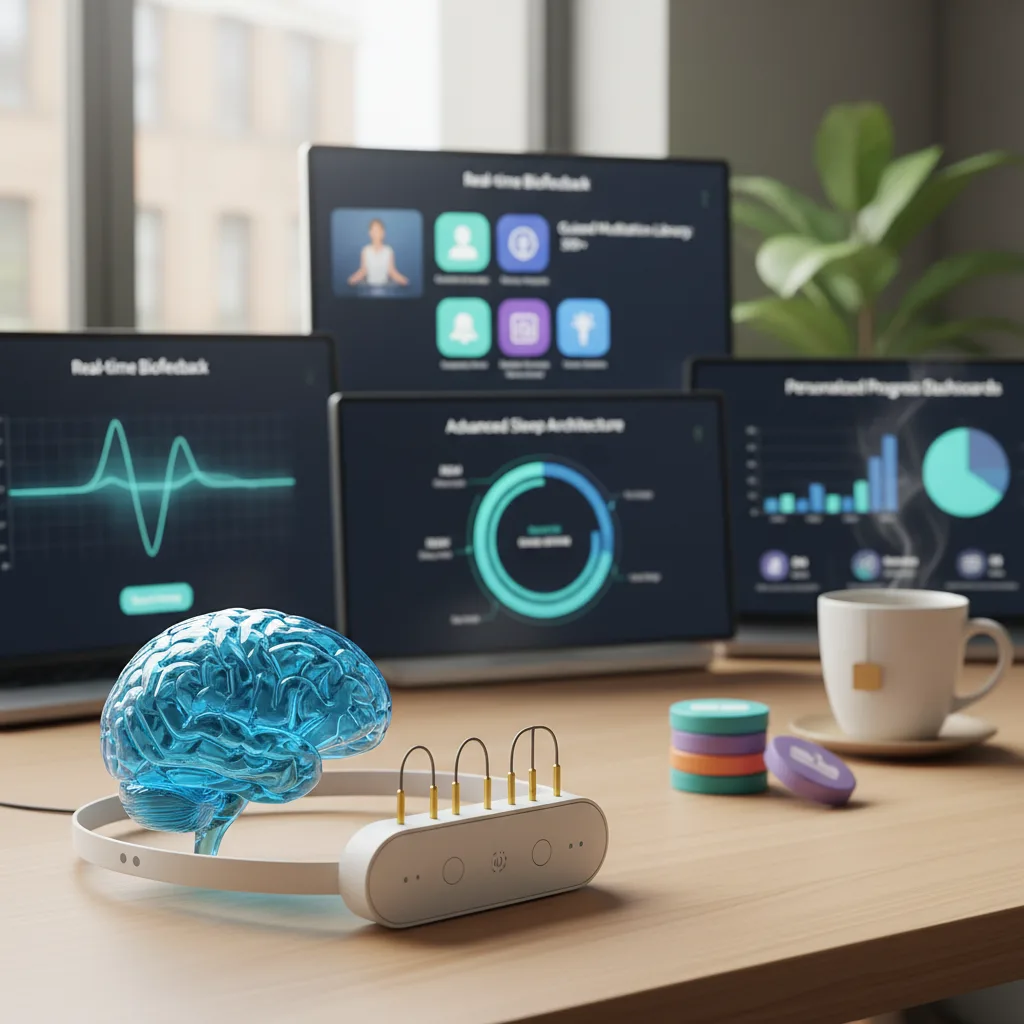
These tools automatically log your time in bed, estimated fall-asleep time, awakenings, and total sleep. They then present your sleep efficiency percentage and other crucial metrics in an easy-to-understand dashboard, allowing you to track consistency and identify trends over time. Remember, the goal isn’t just to collect data, but to use it to inform and refine your sleep optimization strategies.
What Constitutes an Optimal Sleep Score for Peak Cognitive Performance?
Beyond the raw sleep efficiency percentage, many advanced trackers provide a comprehensive sleep score. This single number is a powerful synthesis of various sleep metrics, designed to give you an at-a-glance understanding of your sleep quality. While specific scoring algorithms vary by device, a high sleep score generally indicates that you achieved sufficient quantity and quality of sleep, with adequate time spent in restorative stages and minimal disturbances.
What’s considered “optimal”? Generally, a sleep score above 85 out of 100 (or similar scales) is often considered excellent, indicating highly restorative sleep. Scores between 70-85 are good, suggesting room for improvement. Below 70 often points to significant sleep deficiencies that warrant attention. However, it’s crucial to look beyond the number and understand the contributing factors:
Key Metrics That Define a High Sleep Score:
- • High Sleep Efficiency Percentage (Target 85-95%): As discussed, this is foundational. A low percentage means you’re spending too much time awake or restless in bed.
- • Adequate Total Sleep Time (7-9 hours for most adults): While quality is key, quantity cannot be ignored. The brain needs sufficient time to cycle through all sleep stages multiple times.
- • Sufficient Deep Sleep (15-25% of total sleep): This is the most physically restorative stage. Trackers offering Deep Sleep Tracking are invaluable here. If your deep sleep is consistently low, your body isn’t getting the full repair cycle it needs.
- • Optimal REM Sleep (20-25% of total sleep): Crucial for cognitive function, emotional processing, and learning. A healthy REM phase indicates robust mental restoration.
- • Low Wakefulness After Sleep Onset (WASO): Minimal time spent awake after initially falling asleep. Frequent or prolonged awakenings disrupt sleep architecture and reduce restorative benefits.
- • Consistent Sleep Schedule: Going to bed and waking up around the same time daily, even on weekends, reinforces your Circadian Rhythm and significantly improves overall sleep efficiency.
- • Stable Heart Rate Variability (HRV) and Resting Heart Rate (RHR) during Sleep: These physiological markers, often tracked by devices, indicate a calm nervous system and effective recovery. A higher HRV and lower RHR typically correlate with better sleep quality.
An optimal sleep score isn’t just about feeling good the next day; it’s about setting the stage for peak cognitive function, enhanced emotional resilience, and sustained physical vitality. By meticulously monitoring these components of your sleep score, you gain the actionable insights needed to refine your sleep strategies and achieve true sleep optimization.
The 5 Biohacking Strategies to Supercharge Your Sleep Efficiency MPG
Now that we understand the ‘why’ and ‘how’ of measuring sleep efficiency and interpreting your sleep score, let’s dive into the actionable strategies. These five biohacking tips are designed to directly address the common pitfalls – improving your time asleep, reducing wakefulness, and tracking consistency – to dramatically boost your brain’s sleep MPG.
Tip 1: Optimize Your Circadian Rhythm for Synchronized Performance
Your Circadian Rhythm is your body’s master clock, a 24-hour cycle that dictates not only when you feel sleepy and awake but also myriad other physiological processes. Disruptions to this rhythm are a primary cause of low sleep efficiency percentage. The goal is to send clear, consistent signals to your brain about when it’s time to be alert and when it’s time to wind down.
- • Consistent Sleep Schedule: This is non-negotiable. Go to bed and wake up at the same time every day, even on weekends. This consistency anchors your Circadian Rhythm, making it easier to fall asleep and Wake Up Refreshed naturally.
- • Strategic Light Exposure: Light is the most powerful synchronizer of your Circadian Rhythm.
- – Morning Light: Get 10-30 minutes of natural light exposure within an hour of waking. This signals to your brain that the day has begun, suppressing melatonin and boosting cortisol for alertness.
- – Evening Light: Minimize exposure to bright artificial light, especially blue light from screens, 2-3 hours before bed. Blue light inhibits melatonin production, delaying sleep onset and impacting sleep efficiency. Use amber-tinted glasses or screen filters.
- • Timed Exercise: Regular physical activity improves sleep quality, but timing is key. Avoid intense exercise within 2-3 hours of bedtime, as it can elevate body temperature and stimulate the nervous system, making it harder to fall asleep.
Tip 2: Master Your Sleep Environment: The Sanctuary of Restoration
Your bedroom should be a dedicated sanctuary for sleep, optimized to promote uninterrupted rest and reduce wakefulness. Implementing robust Sleep Hygiene practices is fundamental here.
- • Temperature Control: The ideal ambient temperature for sleep is typically between 60-67°F (15-19°C). A slight drop in core body temperature is a natural signal for sleep onset. Keep your room cool.
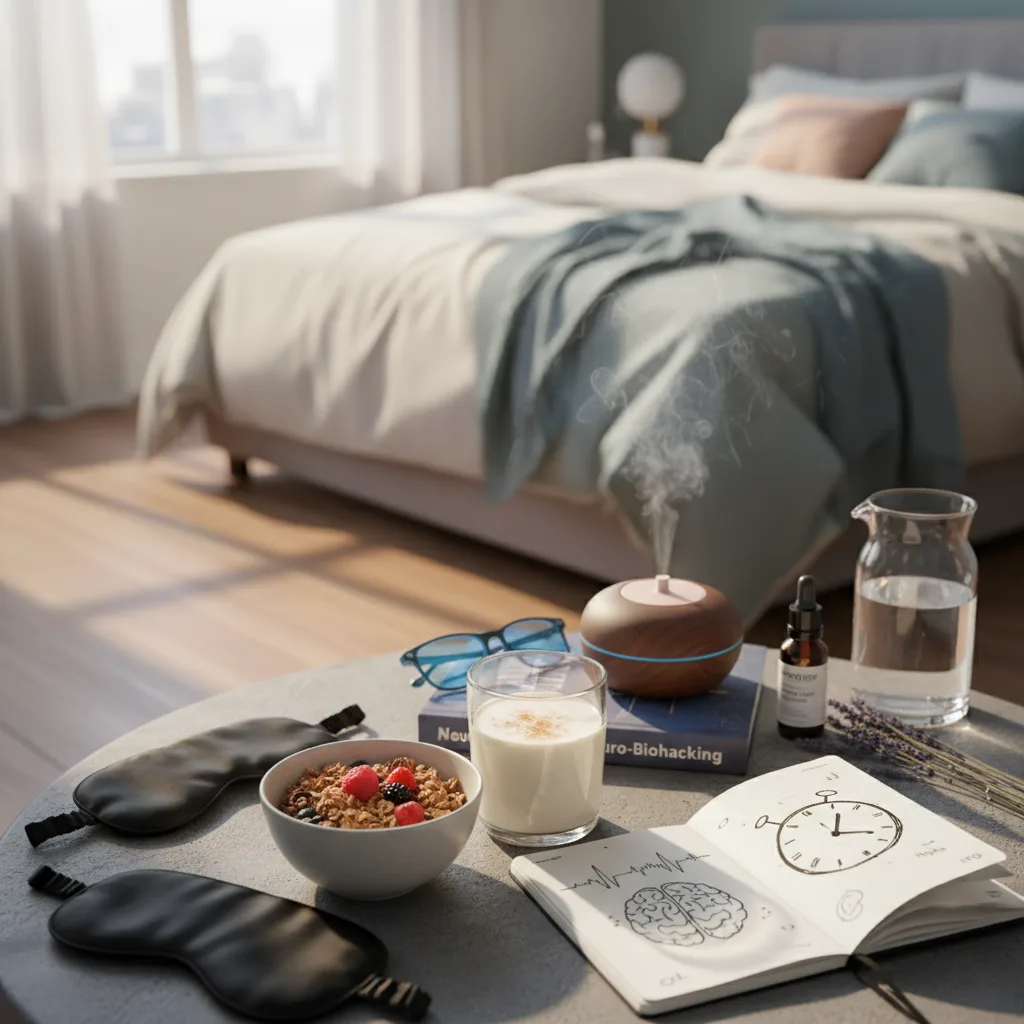
- • Absolute Darkness: Even small amounts of light can disrupt melatonin production. Use blackout curtains, an eye mask, and cover any glowing electronics. The darker your room, the better your sleep efficiency.
- • Silence or White Noise: Eliminate distracting sounds. Earplugs can be effective, or use a white noise machine/app to mask sudden noises that could lead to micro-awakenings and reduce your sleep score.
- • Optimal Air Quality: Consider an air purifier to reduce allergens and pollutants, which can subtly impact breathing and sleep quality. Good ventilation is also crucial.
Tip 3: Bio-Optimize Pre-Sleep Rituals: Winding Down the Neural Engine
The hour or two before bed is crucial for transitioning your brain from active Beta wave states to more relaxed Alpha and eventually Theta waves, which precede deeper sleep. This “decompression chamber” allows your neural engine to cool down.
- • Mindfulness and Meditation: Engage in practices that quiet the mind. Just 10-20 minutes of meditation, focusing on your breath, can significantly reduce pre-sleep anxiety and help your brain shift into a more relaxed state, improving Sleep Latency.
- • Warm Bath or Shower: A warm bath 60-90 minutes before bed can aid sleep. The subsequent cooling of your body temperature mimics the natural drop that occurs before sleep, signaling to your brain that it’s time to rest.
- • Dietary Considerations:
- – Caffeine: Avoid caffeine at least 8-10 hours before bed. Its half-life means it stays in your system far longer than you might think, directly impacting sleep efficiency.
- – Alcohol: While it might make you feel drowsy, alcohol fragments sleep, particularly reducing REM and Deep Sleep Tracking, severely lowering your sleep score.
- – Heavy Meals: Finish large meals at least 3 hours before bed to allow for proper digestion, preventing discomfort and reflux that can disrupt sleep.

Muse Premium mobile app interface showing real-time EEG brainwave data. - • Consider Sensory Resonance Technology: For those seeking to deepen relaxation and prepare the brain for optimal sleep, sensory resonance technology can be a powerful biohacking tool. These devices utilize precisely tuned light and sound frequencies to guide your brain into ideal states for deep rest, facilitating the transition into Alpha and Theta brainwave patterns.
- • Mindful Supplementation: While not a replacement for fundamental Sleep Pills or practices, certain supplements like magnesium, L-theanine, or small doses of melatonin (taken at the right time) can support sleep architecture. Always consult with a healthcare professional before starting any new supplement regimen.
Tip 4: Leverage Data-Driven Tracking: The Biohacker’s Dashboard
The modern biohacker doesn’t guess; they measure. Consistent tracking of your sleep efficiency percentage and sleep score is the only way to truly understand what’s working and what’s not. This allows for personalized, data-driven sleep optimization.
- • Consistent Use of Sleep Trackers: Wear your chosen device (ring, watch, etc.) every night. The more data you collect, the more accurate your trends will be.
- • Analyze Trends, Not Just Single Nights: Don’t get discouraged by one bad night. Look for patterns over weeks and months. Is your sleep efficiency percentage improving after you started blocking blue light? Is your Deep Sleep Tracking showing an increase after consistent meditation?
- • Correlate with Daily Habits: Many trackers allow you to log daytime activities (exercise, caffeine intake, stress levels). This helps you identify direct correlations between your lifestyle choices and your nightly sleep score. For example, you might notice your sleep efficiency dips significantly on nights you consume alcohol.
- • Set Actionable Goals: Based on your data, set specific, measurable goals. For instance, “I will increase my sleep efficiency percentage from 80% to 88% within three weeks by consistently going to bed at 10:30 PM.”
Tip 5: Integrate Targeted Neuro-Enhancement Techniques
For the advanced biohacker, leveraging cutting-edge neurotechnology can provide an additional edge in optimizing sleep efficiency. These techniques aim to directly influence brainwave states and enhance the restorative processes of sleep.
- • Brainwave Entrainment (Auditory & Visual): This involves using rhythmic stimuli (like binaural beats, isochronic tones, or pulsed light) to guide your brainwaves towards desired frequencies. For sleep, the goal is often to encourage Alpha (relaxed wakefulness) and Theta (drowsy, meditative state) waves, leading into Delta (deep sleep).
- – Auditory Entrainment: Listening to specific frequencies through headphones can help calm the mind and facilitate sleep onset.
- – Visual Entrainment: Devices that use flashing lights at specific frequencies can also induce desired brainwave states. These visual brain entrainment tools are designed to gently guide your mind into states conducive to deeper relaxation and sleep.
- • Targeted Light Therapy: Beyond ambient light control, specific types of light therapy can be used strategically. Red light therapy before bed has been shown in some studies to support melatonin production and improve sleep quality without the disruptive effects of blue light. This falls under the umbrella of advanced light therapy devices which are designed for precision neuro-modulation.
- • Biofeedback and Neurofeedback: These techniques teach you to consciously control physiological responses (like heart rate, skin temperature, or even brainwave patterns) that are typically involuntary. By training yourself to achieve a relaxed state more effectively, you can significantly improve your ability to fall asleep faster and maintain sleep, directly boosting your sleep efficiency percentage.
Integrating these advanced techniques with foundational sleep hygiene and consistent tracking creates a powerful, synergistic approach to Sleep Optimization. The goal is to not just sleep, but to sleep smart, leveraging science and technology to maximize every minute of your nightly restoration.
Conclusion: Fueling Your Brain for Unprecedented Performance
Optimizing your Sleep Efficiency isn’t a luxury; it’s a fundamental pillar of peak cognitive function, emotional resilience, and overall vitality. By adopting the biohacking strategies outlined in this article, you move beyond merely surviving on minimal sleep to proactively fueling your brain with the high-octane rest it deserves. We’ve delved into the scientific mechanisms of sleep efficiency percentage, explored how to interpret your sleep score, and provided actionable steps to improve your time asleep, reduce wakefulness, and establish tracking consistency.
The benefits extend far beyond feeling less tired. Imagine:
- • Sharpened focus and sustained concentration throughout your workday.
- • Enhanced memory recall and accelerated learning, thanks to robust Neuroplasticity.
- • Improved emotional regulation and a more positive mood, as your brain effectively processes daily stressors during REM sleep.
- • Greater physical energy and faster recovery from exercise, driven by optimized Deep Sleep Tracking.
- • A stronger immune system and reduced risk of chronic health issues.
Just as a meticulously maintained high-performance engine delivers superior output, a brain optimized for sleep efficiency will consistently perform at its peak. This isn’t about adding more hours to your day, but adding more life to your hours by enhancing the quality of your rest.
Expert Tip: Don’t try to implement all five tips at once. Choose one or two strategies that resonate most with your current lifestyle and commitment level – perhaps mastering your consistent sleep schedule or optimizing your light exposure. Integrate them for a few weeks, track your sleep efficiency percentage and sleep score, and observe the changes. Once those are habitual, layer on another strategy. This iterative, data-driven approach is the essence of effective biohacking, leading to sustainable and profound improvements in your sleep and, consequently, your entire life.