
Mendi vs. Narbis: Tuning Your Focus Steering System with Advanced Tech for Focus
In the relentless pace of the 21st century, our most valuable commodity isn’t time or money; it’s unwavering focus. We live in an era of unprecedented distraction, where the constant barrage of notifications, endless information streams, and the sheer complexity of modern demands can leave our cognitive “engine” sputtering, our mental “steering system” adrift. Have you ever felt that frustrating slip, where your intentions for deep work or creative thought are derailed by an invisible force, leaving you feeling less in control of your own mind? The desire to master our attention, to elevate our cognitive performance, and to unlock our full mental potential isn’t just a trend; it’s a fundamental human aspiration for self-improvement and enhanced living.
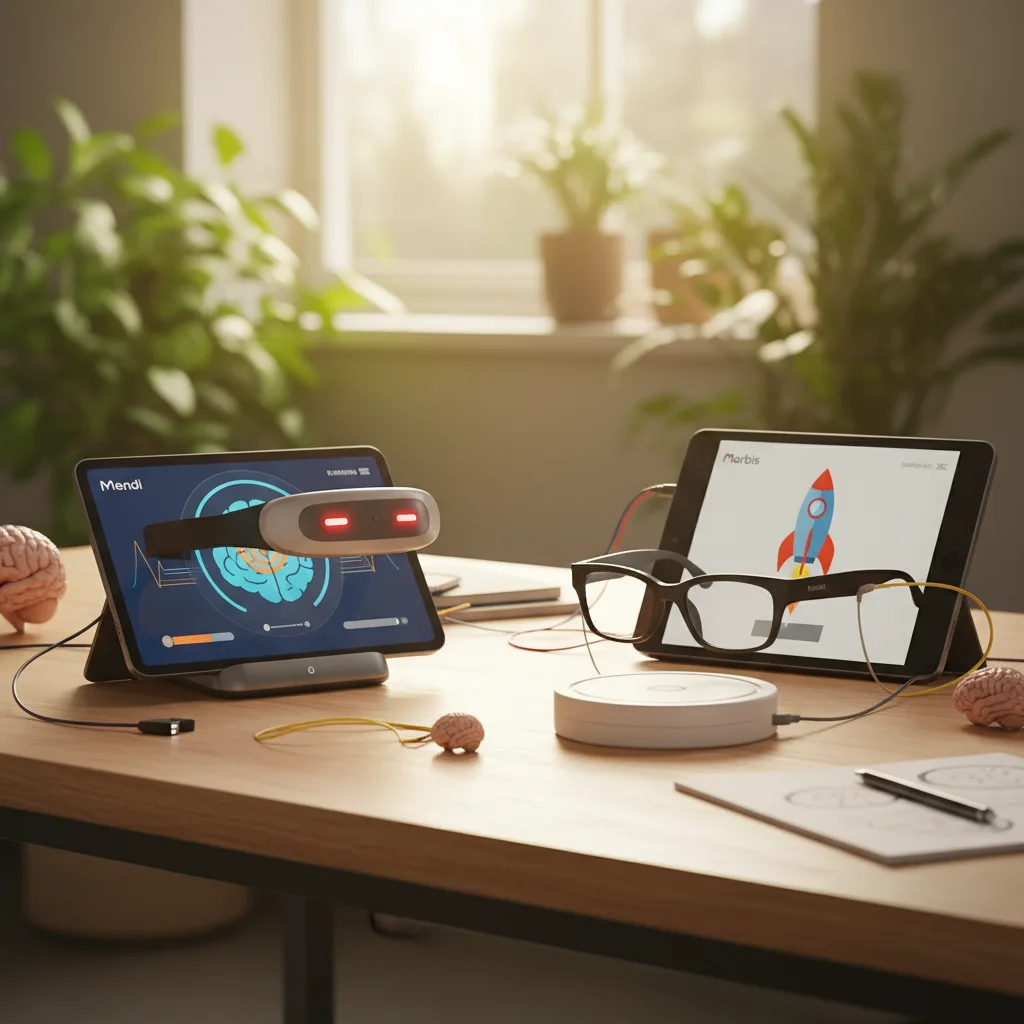
As a neuroscientist and biohacker dedicated to optimizing human performance, I understand this challenge intimately. We’re not just looking for quick fixes; we’re seeking profound, data-driven methods to upgrade our internal machinery. Imagine having the ability to fine-tune your brain’s performance, to consciously strengthen your mental muscles, and to navigate the complexities of your day with precision and clarity. This isn’t science fiction; it’s the promise of cutting-edge Tech for Focus. We’re standing at the precipice of a new era where technology empowers us to not just understand our brains, but to actively train and enhance them. Today, we delve into two prominent players in this neuro-optimization landscape: Mendi and Narbis. We’ll dissect their underlying science, explore their unique approaches, and help you determine which of these focus training devices might be the ultimate upgrade for your cognitive steering system.
Key Takeaways
- • Tech for Focus is revolutionizing cognitive enhancement by leveraging neurofeedback and brain imaging to directly train brain function.
- • Mendi utilizes fNIRS to provide real-time feedback on prefrontal cortex activity, helping users enhance executive functions and sustained attention.
- • Narbis smart glasses employ EEG neurofeedback to train optimal brainwave states (like reducing Theta and increasing Beta) through dynamic lens opacity, fostering passive, continuous focus improvement.
- • Both neurofeedback glasses and fNIRS devices offer distinct pathways to improving attention span and achieving gamified concentration, fundamentally based on the brain’s incredible neuroplasticity.
What is Tech for Focus and How Does it Tune Our Brain’s Engine?
At its core, Tech for Focus encompasses a range of innovative tools designed to monitor, measure, and ultimately modify our brain’s activity to enhance cognitive functions, particularly attention and concentration. This field is rooted in neuroscience, leveraging our ever-growing understanding of brain mechanics, neural pathways, and the intricate dance of brainwave frequencies. Our ability to focus, to sustain attention, and to filter out distractions is not a fixed trait; it’s a skill, and like any skill, it can be trained and improved.
The brain, our magnificent biological supercomputer, operates on electrical impulses, generating rhythmic patterns known as brainwaves. These brainwaves are categorized by their frequency, each associated with different states of consciousness and cognitive activity:
- • Delta Waves (0.5-4 Hz): The slowest waves, associated with deep, restorative sleep.
- • Theta Waves (4-8 Hz): Predominant during light sleep, deep relaxation, and meditative states. Excessive Theta during wakefulness can sometimes be linked to inattention or daydreaming.
- • Alpha Waves (8-13 Hz): Associated with a relaxed, alert state, often present during quiet contemplation or when eyes are closed. They represent a bridge between conscious and subconscious.
- • Beta Waves (13-30 Hz): These are the “working” waves, prominent during active thought, problem-solving, decision-making, and focused concentration. An optimal level of Beta Waves is crucial for sustained attention and mental alertness.
- • Gamma Waves (30-100+ Hz): The fastest brainwaves, associated with high-level cognitive processing, learning, memory recall, and states of peak performance or “flow.” While often linked to heightened awareness, research is also exploring the complex role of Gamma Waves in various brain states, including their intricate relationship with sleep architecture and cognitive function.
The magic of Tech for Focus lies in its ability to detect these brainwave patterns or metabolic activity, provide real-time feedback, and then guide the user to self-regulate their brain state. This process is known as neurofeedback. Essentially, you’re given a mirror to your own brain activity, allowing you to consciously (or subconsciously through operant conditioning) learn to shift into more desirable cognitive states. This training harnesses the incredible power of neuroplasticity – the brain’s lifelong ability to reorganize itself by forming new neural connections. By repeatedly engaging in targeted brain training, we can literally rewire our brains to be more efficient, more focused, and more resilient.
Modern neurofeedback devices, ranging from sophisticated clinical systems to accessible consumer wearables, are transforming our approach to cognitive health. They offer a non-pharmacological, evidence-based pathway to cognitive enhancement, making them particularly appealing for individuals seeking to naturally improve their mental performance. This approach has shown promise across various applications, including assisting individuals struggling with attention deficits. For those interested in understanding how this technology can be applied to specific challenges, exploring resources on neurofeedback for ADHD can provide deeper insights into its therapeutic potential.
The Science of ‘Steering’: Prefrontal Cortex Training & Attention Span Enhancement
If your brain were a high-performance vehicle, the prefrontal cortex (PFC) would undoubtedly be the advanced steering and navigation system. Located at the very front of your brain, directly behind your forehead, the PFC is the seat of executive functions – a suite of cognitive processes vital for goal-directed behavior. These include:
- • Attention and Concentration: The ability to selectively focus on relevant stimuli while ignoring distractions.
- • Working Memory: Holding and manipulating information in your mind for short periods, essential for complex tasks.
- • Planning and Problem-Solving: Formulating strategies and executing them effectively.
- • Impulse Control: Inhibiting inappropriate responses and delaying gratification.
- • Emotional Regulation: Managing emotional responses to remain task-oriented.
When your PFC is firing optimally, your “steering system” is precise, allowing you to navigate complex tasks, learn new skills, and maintain sustained focus even in challenging environments. Conversely, a sluggish or underactive PFC can lead to scattered attention, difficulty completing tasks, and increased susceptibility to distractions – the very “pain points” we discussed earlier.
Many Tech for Focus solutions, particularly those involving neurofeedback, are specifically designed to target and train the PFC. By providing real-time feedback on the electrical activity (EEG) or metabolic activity (fNIRS) in this region, these devices enable you to learn to voluntarily increase its activation when focus is required. This process directly contributes to improving attention span. The more consistently you train, the stronger these neural pathways become, making it easier for your brain to naturally enter and sustain a focused state. It’s akin to taking your mental steering system to a high-performance driving school, where you learn to handle your vehicle with greater finesse and control.
Beyond direct neural training, creating an environment conducive to focus is paramount. While advanced devices work on your internal state, managing external distractions is equally vital. Tools like website blockers can act as digital guardians, preventing tempting detours. Furthermore, foundational elements like adequate sleep play an irreplaceable role in cognitive function. Incorporating practices such as a dedicated Sleep Focus Mode into your routine ensures your brain gets the restorative rest it needs to perform at its peak the next day. A holistic approach, combining cutting-edge technology with mindful lifestyle choices, is the most effective path to sustained cognitive mastery.
Gamified Concentration: Making Brain Training Engaging
One of the biggest challenges with any form of self-improvement, especially something as abstract as brain training, is maintaining consistency and engagement. This is where the concept of gamified concentration comes into play. By transforming neurofeedback sessions into interactive, game-like experiences, Tech for Focus devices make the training process enjoyable, motivating, and highly effective.
Gamification leverages fundamental psychological principles to drive behavior change. These include:
- • Immediate Feedback: In a game, actions have immediate consequences. In neurofeedback games, your brain activity directly controls elements on screen, providing instant feedback on whether you’re achieving the desired brain state. This accelerates the learning process.
- • Clear Goals and Progress Tracking: Games have objectives, levels, and scores. Similarly, these brain training apps set clear goals for brain state modulation and track your progress over time, offering a tangible sense of achievement.
- • Reward Systems: Points, badges, virtual currency, or unlocking new levels provide positive reinforcement, stimulating dopamine release and making the brain associate the desired focused state with pleasure.
- • Intrinsic Motivation: As users experience success and tangible improvements in their cognitive abilities, the motivation shifts from external rewards to the intrinsic satisfaction of self-mastery.
This playful approach makes complex neuroscience accessible and enjoyable, fostering the consistent practice necessary for neuroplastic changes. Instead of tedious exercises, you’re embarking on a mental adventure, where every session brings you closer to a more finely tuned and powerful mind. While Mendi and Narbis offer their own unique gamified experiences, the core principle remains: make brain training so engaging that you look forward to it, rather than dread it. Additionally, some users find that integrating auditory experiences, such as those offered by platforms focusing on brainwave entrainment through sound, can further enhance their ability to achieve and sustain focused states, making resources like a Brain.fm review highly relevant to their cognitive optimization journey.
Wearable Reviews: Mendi vs. Narbis – A Deep Dive into Focus Training Devices
Now, let’s put our expert hats on and delve into the specifics of two leading focus training devices that embody the principles of Tech for Focus: Mendi and Narbis. While both aim to enhance your cognitive steering system, they utilize distinct technologies and methodologies, each with its own set of advantages and considerations.
Mendi: Portable fNIRS for Frontal Lobe Activation
Mendi is a sleek, non-invasive headband that brings a powerful brain imaging technique, functional Near-Infrared Spectroscopy (fNIRS), to the consumer market. Unlike EEG, which measures electrical activity, fNIRS measures changes in blood oxygenation and blood flow in the brain – a proxy for neural activity. When a brain region is active, it demands more oxygenated blood. Mendi specifically targets the prefrontal cortex, the key area for executive functions and focus.
How Mendi Brain Training Works:
- • Detection: The Mendi device emits near-infrared light into your forehead and measures the light reflected back. Oxygenated and deoxygenated blood absorb light differently, allowing the device to infer blood flow changes in the underlying brain tissue.
- • Feedback: This data is sent via Bluetooth to a smartphone app, where it controls a simple game. For instance, you might control a ball moving up or down a trajectory.
- • Training: Your goal is to keep the ball elevated, which requires you to consciously (or implicitly) activate your prefrontal cortex. The more focused and engaged you are, the more active your PFC, and the higher the ball goes. This form of mendi brain training is a direct exercise for this crucial brain region.

Mendi’s Advantages:
- • Direct PFC Training: Mendi offers a direct way to train the metabolic activity of the prefrontal cortex, which is fundamental for executive functions.
- • Simplicity and User-Friendliness: The device is easy to set up and use, with intuitive app-based games.
- • Non-Invasive: No electrodes or conductive gel required, making it comfortable for daily use.
- • Scientific Backing: fNIRS is a recognized neuroimaging technique used in research, lending credibility to its underlying mechanism.
Considerations for Mendi:
- • Localized Training: While powerful for the PFC, it doesn’t offer whole-brain or specific brainwave frequency training like EEG systems.
- • Active Engagement Required: Users need to dedicate specific time for training sessions.
Narbis: Neurofeedback Glasses for Real-Time State Management
Narbis takes a different, yet equally compelling, approach to Tech for Focus. These are not just any smart glasses; they are sophisticated Narbis smart glasses, employing EEG (electroencephalography) neurofeedback directly integrated into eyewear. EEG measures the electrical activity of your brain, allowing Narbis to detect specific brainwave patterns associated with states of focus and distraction.
How Narbis Neurofeedback Glasses Work:
- • Detection: Embedded sensors in the glasses measure your brainwave activity, particularly focusing on the ratio of Theta (associated with relaxation/mind-wandering) to Beta (associated with active focus) waves.
- • Feedback: The unique aspect of Narbis lies in its dynamic lenses. When your brain enters a state of distraction (e.g., too much Theta or not enough Beta), the lenses automatically darken. When your brain shifts back into a focused state, the lenses clear.
- • Training: This immediate, real-time visual feedback trains your brain through operant conditioning. Your brain quickly learns to associate clear lenses with focus and dark lenses with distraction, naturally gravitating towards the brainwave patterns that keep the lenses clear. This makes them pioneering neurofeedback glasses for practical, in-situ training.

Narbis’ Advantages:
- • Passive, In-Situ Training: Unlike Mendi, Narbis can be worn while you perform other tasks like reading, working, or studying. The training happens subtly in the background.
- • Real-Time Environmental Feedback: The visual darkening/clearing provides direct, intuitive feedback that encourages your brain to stay in a productive state.
- • Brainwave Specificity: Targets specific brainwave ratios (Theta/Beta) directly linked to focus and distraction.
- • Subtle Integration: Once accustomed, the training becomes almost imperceptible, allowing for continuous cognitive conditioning.
Considerations for Narbis:
- • Initial Adaptation: Some users might find the darkening lenses distracting initially, requiring a short adaptation period.
- • Comfort and Style: As eyewear, aesthetic and comfort are factors for some users.
- • EEG Specificity: While powerful, it relies on surface EEG measurements, which have limitations in depth compared to fNIRS for localized blood flow.
Comparative Analysis: Choosing Your Focus Steering System
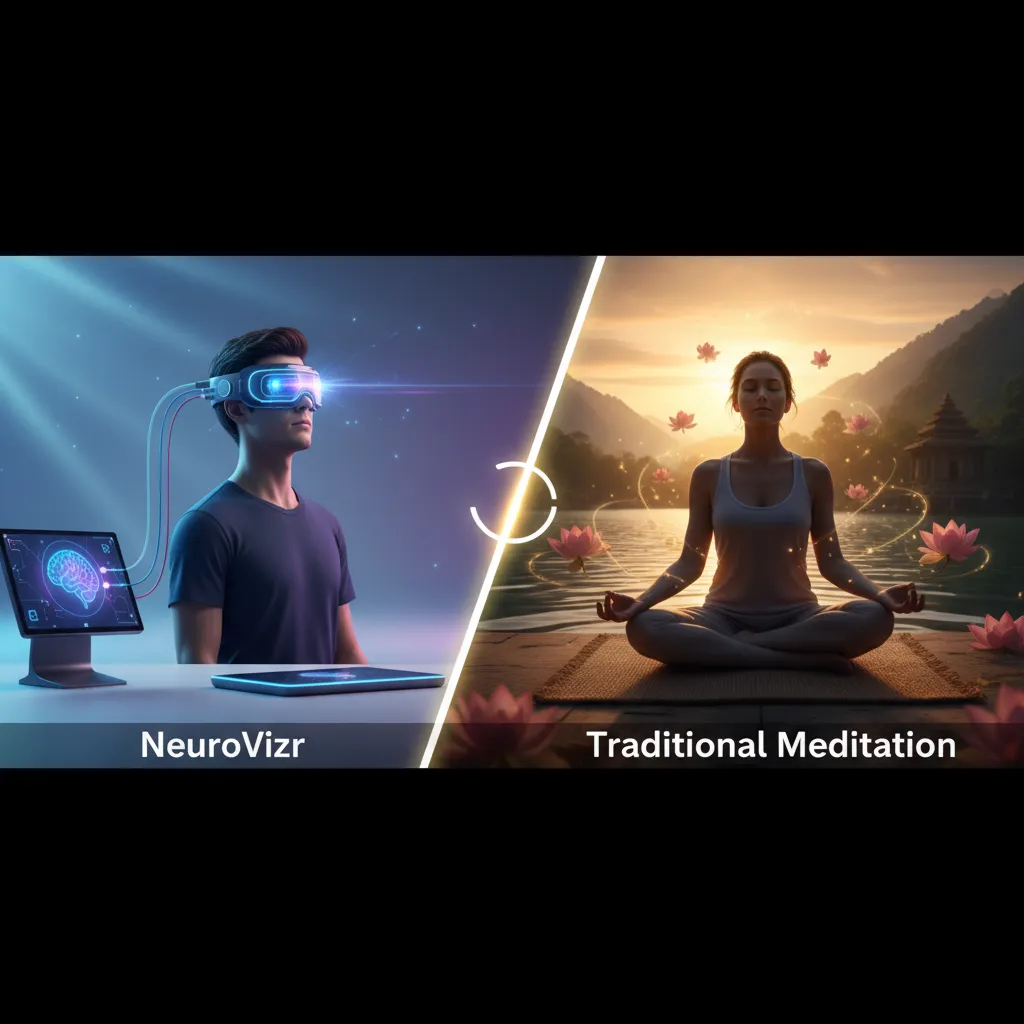
Deciding between Mendi and Narbis ultimately depends on your specific goals, lifestyle, and preferences for how you want to engage with Tech for Focus. Both are excellent focus training devices, but they excel in different aspects of cognitive enhancement.
When to Choose Mendi:
- • If your primary goal is to directly activate and strengthen your prefrontal cortex for executive functions like planning, decision-making, and working memory.
- • If you prefer dedicated, structured training sessions that feel like a brain workout.
- • If you appreciate the simplicity and non-invasiveness of fNIRS technology.
- • If you’re looking for an explicit way to engage in gamified concentration focused on a specific brain region.
When to Choose Narbis:
- • If you want to train your brain’s focus passively while engaged in everyday tasks like reading, writing, or studying.
- • If your primary concern is reducing mind-wandering and improving sustained attention in real-world scenarios.
- • If you’re intrigued by the immediate, intuitive visual feedback provided by the dynamic lenses of neurofeedback glasses.
- • If you value the ability to improve your attention span without requiring dedicated “game time.”
Both devices leverage the incredible adaptability of the human brain to foster improved focus. Neither is inherently “better” than the other; they are different tools in the biohacker’s arsenal, designed to achieve similar ends through distinct means. Your choice should align with your personal training philosophy and how you envision integrating Tech for Focus into your daily routine.
Beyond the Devices: Holistic Strategies for Sustained Focus
While Mendi and Narbis represent powerful advancements in Tech for Focus, it’s crucial to remember that technology is a catalyst, not a standalone solution. To truly optimize your cognitive steering system and achieve lasting improvements in focus and attention span, a holistic approach is essential. Our brains don’t operate in a vacuum; they are profoundly influenced by our lifestyle, environment, and overall well-being. Think of these devices as high-performance tuning kits, but your vehicle (your brain) still needs premium fuel, regular maintenance, and a skilled driver.
Here are key pillars for building a robust foundation for sustained focus:
- • Sleep Optimization: This is arguably the most critical component. Quality sleep, governed by your Circadian Rhythm, is when your brain cleanses itself, consolidates memories, and repairs neural pathways. Chronic sleep deprivation severely impairs attention, executive function, and mood. Prioritize a consistent sleep schedule and create an optimal sleep environment.
- • Nutrition and Hydration: Your brain consumes a significant portion of your body’s energy. Fuel it with nutrient-dense foods, healthy fats (like Omega-3s), antioxidants, and adequate hydration. Avoid excessive sugar and processed foods that can lead to energy crashes and cognitive fog.
- • Physical Activity: Regular exercise boosts blood flow to the brain, promotes neurogenesis (the growth of new brain cells), and releases neurotransmitters that improve mood and cognitive function. Even short bursts of activity can significantly enhance focus.
- • Mindfulness and Meditation: These practices train your attention muscle directly. By observing your thoughts without judgment, you build resilience against distraction and cultivate a calmer, more present mind. Even 10-15 minutes a day can yield profound benefits.
- • Environment Management: Minimize external distractions. Create a dedicated workspace, use noise-canceling headphones, and implement strategies to limit digital interruptions. The less your brain has to fight for focus, the more energy it can dedicate to the task at hand.
Integrating these fundamental practices with advanced Tech for Focus devices like Mendi or Narbis creates a synergistic effect, amplifying your results. Moreover, for those who wish to delve deeper into optimizing brain states and mental acuity through complementary methods, exploring techniques involving targeted brain stimulation or profound states of relaxation can be immensely beneficial. For instance, considering visual brain entrainment tools can offer another dimension to your cognitive enhancement regimen, guiding your brain into optimal frequencies for learning, creativity, or deep rest. These tools, when combined with your neurofeedback training, can help orchestrate a truly finely tuned neural network.
Conclusion: Steering Towards a More Focused Future
The journey to a more focused and cognitively optimized self is a continuous one, but with the advent of sophisticated Tech for Focus, we now have unprecedented power to accelerate this process. Devices like Mendi and Narbis are not merely gadgets; they are sophisticated instruments that empower us to understand and directly influence our brain’s performance. By providing real-time feedback and leveraging the incredible plasticity of our neural networks, these focus training devices offer a tangible path to improving attention span, boosting executive functions through prefrontal cortex training, and making the entire process engaging through gamified concentration.
Whether you choose Mendi’s targeted fNIRS approach to frontal lobe activation or Narbis’s subtle, real-time EEG neurofeedback glasses for passive training, you are investing in the most powerful asset you possess: your brain. The “why” behind these technologies is clear: to reclaim control over our attention in an increasingly distracting world, to unlock dormant cognitive potential, and to experience life with greater clarity and purpose. The “how” involves consistent engagement with these tools, guided by scientific principles, and supported by a holistic lifestyle.
Expert Tip for Immediate Action:
Don’t wait for perfect conditions to start tuning your focus. Begin by identifying one major distraction in your environment – a constant notification, an open social media tab, or an untidy workspace – and eliminate it for a focused 30-minute session. Observe the immediate impact. Then, research Mendi or Narbis further to see which aligns best with your existing routine and cognitive goals. Consistency, even in small steps, is the engine of neuroplastic change. Start small, stay consistent, and watch your cognitive steering system become sharper than ever before.