Uncategorized

Filter posts by category

Peaceful forest landscape representing nature sounds

8 Nature Sounds for Better Sleep and Cognitive Focus

Nature sounds are complex auditory stimuli that facilitate neuro-harmonization by leveraging biophilic patterns to synchronize brain activity into restorative states like Alpha and Theta. These organic soundscapes actively lower cortisol levels and stimulate the parasympathetic nervous system, offering a scientifically-validated method to improve sleep latency and cognitive focus compared to monochromatic white noise. 8 Nature […]

8 Nature Sounds for Better Sleep and Cognitive Focus Read More »
Sleep Calculator showing optimal 90-minute sleep cycles

Sleep Calculator 2025: Optimize Your Cycles for Peak Energy

Sleep Calculator tools help you synchronize wake-up times with your brain’s natural 90-minute sleep cycles to prevent sleep inertia. By calculating bedtimes that end during light sleep stages, you can maximize morning alertness and ensure peak cognitive performance throughout the day. Sleep Calculator: Timing Your Pit Stops for Max Energy As a leading neuroscientist and

Sleep Calculator 2025: Optimize Your Cycles for Peak Energy Read More »

Comparison of Oura Ring and Apple Watch for sleep tracking

Oura vs Apple Watch: Which Is Best for Sleep Tracking?

Oura vs Apple Watch comparison shows that the Oura Ring is the superior choice for dedicated sleep recovery and long-term data consistency due to its minimalist ring design and week-long battery life. While the Apple Watch offers versatile smartwatch features and broad health integration, the Oura Ring provides more granular, recovery-focused metrics like readiness scores

Oura vs Apple Watch: Which Is Best for Sleep Tracking? Read More »

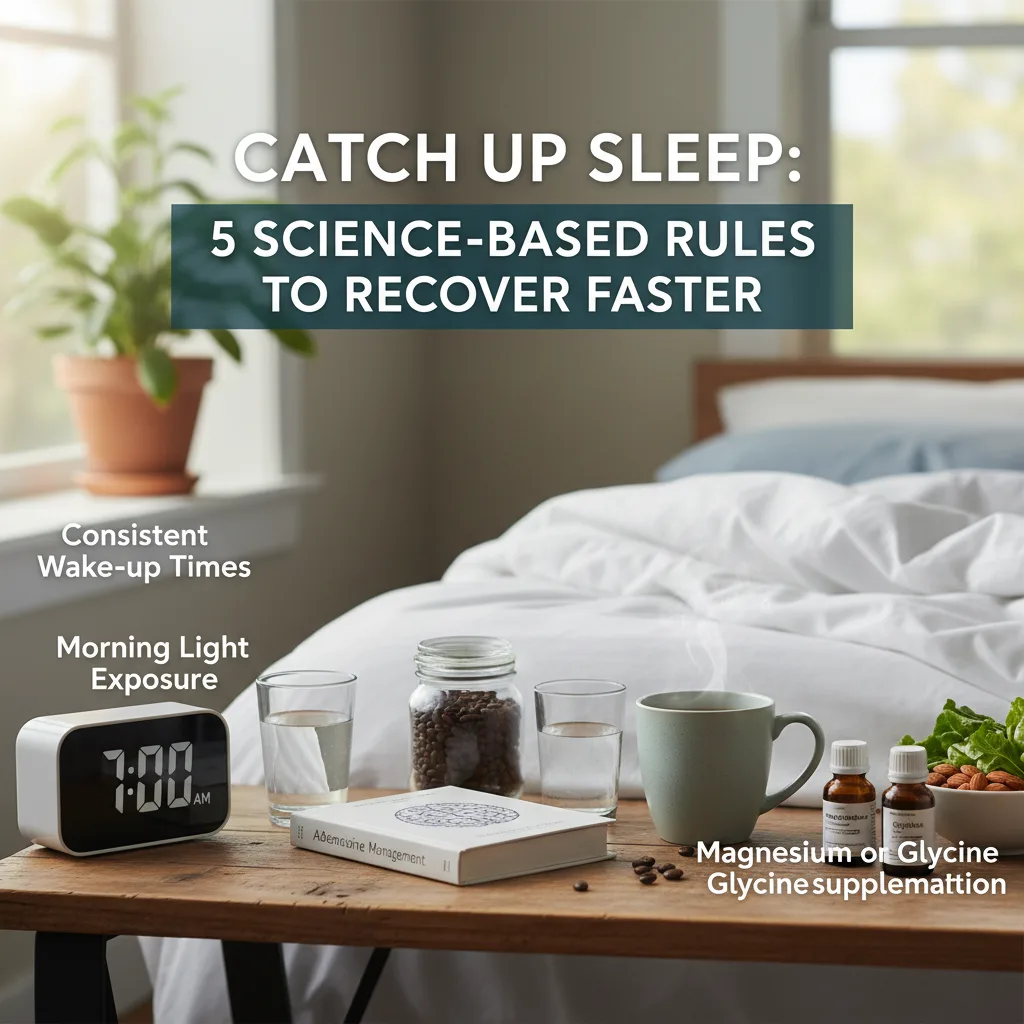
An illustration showing the process of catch up sleep and brain recovery.

Catch Up Sleep: 5 Science-Based Rules to Recover Faster

Catch up sleep is the biological process of attempting to neutralize a sleep debt by extending sleep duration or improving sleep quality after a period of deprivation. To recover effectively without disrupting your circadian rhythm, you must prioritize consistent wake-up times and utilize strategic power naps to lower adenosine levels without triggering sleep inertia. 5

Catch Up Sleep: 5 Science-Based Rules to Recover Faster Read More »

Sleep & temperature optimization for a cool bedroom environment.

Sleep & Temperature: 6 Expert Ways to Cool for Deep Rest

Sleep & temperature are intrinsically linked because your body must drop its core temperature by 1 to 2 degrees Fahrenheit to trigger the onset of deep sleep. Maintaining an ideal room environment between 60 and 67 degrees Fahrenheit supports your circadian rhythm and prevents the disruption of REM sleep cycles. Implementing cooling technologies or pre-sleep

Sleep & Temperature: 6 Expert Ways to Cool for Deep Rest Read More »

Sleep efficiency metrics shown on a high-tech smartwatch interface.

Sleep Efficiency: 5 Neuro-Biohacking Tips for Peak Brain Power

Sleep Efficiency is the ratio of actual time spent asleep to the total time spent in bed, acting as a vital metric for cognitive health and neural restoration. To improve your efficiency, you must synchronize your circadian rhythm through consistent schedules and optimize your environment by maintaining a cool, dark, and silent sanctuary. Aiming for

Sleep Efficiency: 5 Neuro-Biohacking Tips for Peak Brain Power Read More »

Buying sleep tech for bedroom optimization and brain health

Buying Sleep Tech: Top 10 Gadgets for Better Rest in 2025

Buying sleep tech requires prioritizing devices that scientifically optimize your neurobiological recovery, such as EEG-based trackers, temperature-controlled mattresses, and circadian lighting systems. These advanced tools work together to regulate core body temperature and mask environmental noise, allowing for deeper sleep stages and enhanced cognitive function the following day. 10 Advanced Sleep Gadgets to Upgrade Your

Buying Sleep Tech: Top 10 Gadgets for Better Rest in 2025 Read More »

A visual representation of Sleep & Memory showing neural pathways glowing during rest.

Sleep & Memory: 5 Ways Rest Saves Your Brain’s Data

Sleep & Memory are fundamentally connected as the brain uses sleep to actively transform fragile, short-term experiences into stable, long-term neurological archives. During deep sleep and REM stages, the brain replays neural patterns to strengthen connections while the glymphatic system flushes out metabolic waste to prevent cognitive decline. Prioritizing rest is therefore the most effective

Sleep & Memory: 5 Ways Rest Saves Your Brain’s Data Read More »

Diagram illustrating the 4 stages of sleep cycles

Sleep Cycles: Master the 4 Stages for Peak Brain Performance

Sleep cycles are recurring 90-minute biological patterns consisting of three NREM stages and one REM stage. By understanding these phases, you can align your wake-up time with lighter sleep stages to eliminate grogginess and maximize nightly cognitive recovery. The 4 Stages of the Sleep Cycle: Your Brain’s Ultimate Performance Road Map As a neuroscientist and

Sleep Cycles: Master the 4 Stages for Peak Brain Performance Read More »

Scroll to Top