
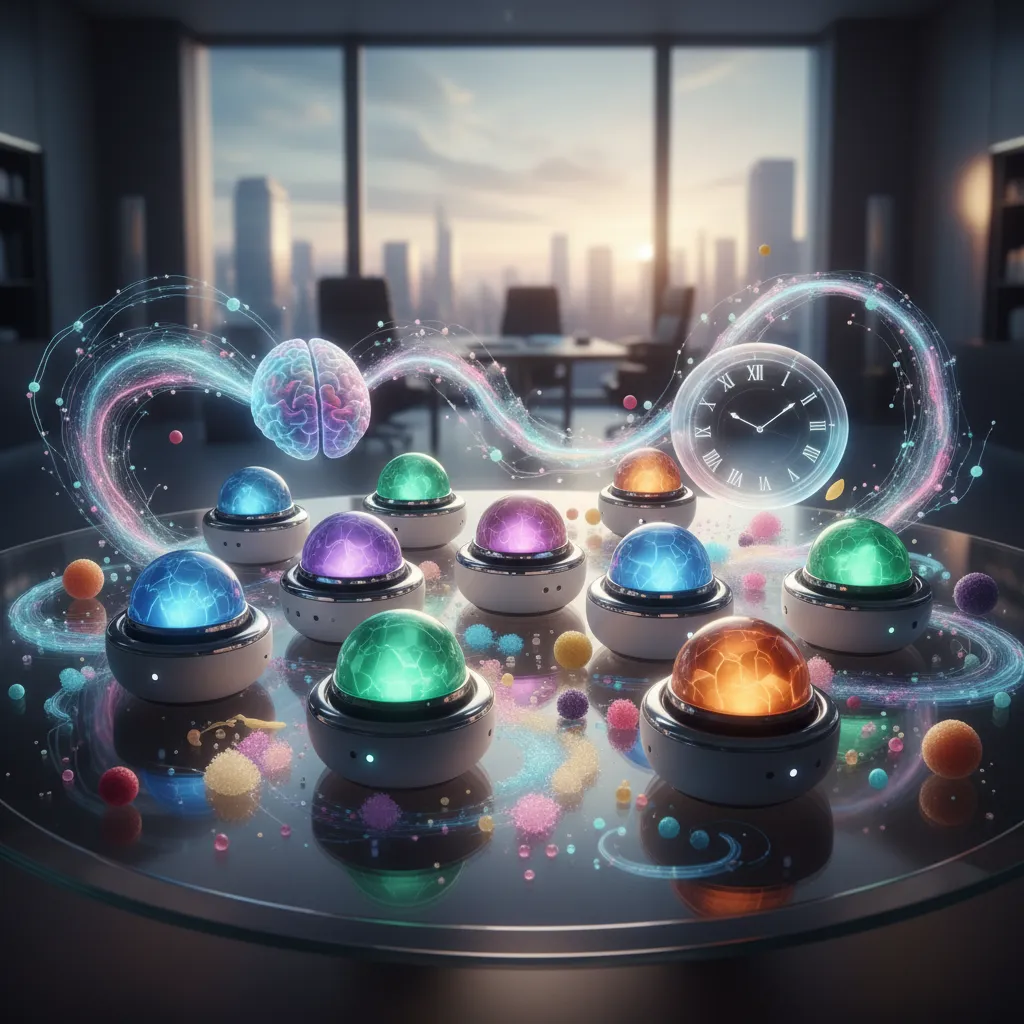
8 Dream AI Tools to Navigate Your Subconscious Like a GPS
As a neuroscientist and biohacker dedicated to optimizing human potential, I often encounter individuals who feel adrift in their own minds. They grapple with persistent insomnia, a nagging lack of focus, or a pervasive sense that they are operating far below their cognitive peak. Our brains, magnificent as they are, can sometimes feel like an intricate, high-performance vehicle without a proper navigation system. We possess immense horsepower, yet without a map or clear understanding of our internal landscape, we risk veering off course, getting stuck in traffic, or simply running out of fuel prematurely.
What if you could install a sophisticated GPS into your deepest cognitive processes, one that not only charted your waking thoughts but also illuminated the complex, often chaotic, highways of your subconscious? This isn’t science fiction; it’s the burgeoning reality of Dream AI. For centuries, humanity has sought meaning in dreams, recognizing them as profound echoes from our inner world. From ancient shamans to Freudian analysts, the quest to interpret these nocturnal narratives has been a constant. Now, with the advent of artificial intelligence, we stand at the precipice of a revolution in self-understanding.
This article will delve into how Dream AI is transforming our ability to interpret, interact with, and ultimately leverage our dreams for enhanced cognitive performance, emotional resilience, and profound personal growth. We’ll explore the scientific underpinnings, the practical applications, and the future horizons of this remarkable technology, offering you a biohacker’s guide to navigating your subconscious with unprecedented precision.
Key Takeaways
- • Dream AI offers a data-driven approach to understanding dreams, moving beyond subjective interpretation to reveal actionable insights into subconscious patterns and cognitive health.
- • These tools can interpret complex dream narratives, generate evocative ai dream art from descriptions, and map your subconscious ‘traffic’ to identify stressors and opportunities for growth.
- • By understanding the artificial intelligence dreams connection, you can leverage AI as a personalized navigation system, guiding you towards better sleep, enhanced creativity, and improved emotional regulation.
- • The future of dream tech involves advanced neurofeedback, predictive analytics, and personalized interventions, promising a new era of human-AI collaboration for brain optimization.
The Neuroscientific Basis: What Exactly is Dream AI?
To truly appreciate Dream AI, we must first ground ourselves in the intricate landscape of sleep and brain function. Dreams are not random neural firings; they are a sophisticated byproduct of our brain’s nocturnal work, deeply interwoven with our cognitive architecture. During sleep, our brain engages in crucial processes, oscillating through distinct stages characterized by unique brainwave patterns. These include the slower, restorative Delta waves of deep sleep, the relaxed Alpha waves of wakeful rest, the problem-solving Theta waves prevalent in REM sleep, and the highly synchronous Gamma Waves associated with high-level cognitive processing, even during specific dream states.
REM (Rapid Eye Movement) sleep, in particular, is where most vivid dreaming occurs. During this phase, the brain exhibits activity remarkably similar to wakefulness, processing emotions, consolidating memories, and pruning unnecessary neural connections. This vital activity underscores the importance of the Science of Dreams. Dreams act as a nocturnal simulation, a safe space for our subconscious to work through daily experiences, fears, desires, and creative impulses. This period is also critical for Neuroplasticity, the brain’s remarkable ability to reorganize itself by forming new neural connections throughout life. Our dreams play a significant role in this continuous rewiring, shaping our perceptions and responses.
So, what is Dream AI? It’s the application of advanced artificial intelligence, including natural language processing (NLP), machine learning, and generative adversarial networks (GANs), to decode, analyze, and even interact with our dream states. Far from merely predicting lottery numbers based on dream symbols, Dream AI aims to provide a scientific, data-driven framework for understanding the complex “traffic patterns” of our subconscious mind. It’s about moving beyond anecdotal interpretation to leveraging algorithms that can identify patterns, themes, and emotional landscapes within our dreams that might be imperceptible to the conscious mind. This technology fundamentally changes how we approach self-discovery and cognitive optimization, turning subjective experiences into analyzable data.
Decoding Your Nightly Narratives: AI-Powered Dream Interpretation
One of the most immediate and impactful applications of this technology lies in dream interpretation AI. For centuries, interpreting dreams has been an art, often subjective and reliant on cultural symbols or personal associations. While these methods hold value, they lack the objective, data-driven consistency that modern cognitive science demands. AI dream analysis shifts this paradigm.
How Does AI Interpret Dreams?
- • Natural Language Processing (NLP): Users input detailed dream descriptions. AI algorithms parse these narratives, identifying key nouns, verbs, adjectives, and emotional tones. It’s not just about what you saw, but how you felt, the context, and the actions within the dream.
- • Pattern Recognition: Over time, as you input more dreams, the AI begins to identify recurring symbols, themes, and emotional undercurrents. It can connect patterns across multiple dreams, revealing deeper, long-standing subconscious concerns or aspirations. For example, consistently dreaming of being chased might be linked to waking life stress patterns.
- • Contextual Analysis: Modern Dream AI doesn’t just look at isolated symbols. It considers the entire narrative, the user’s personal history (if provided and anonymized), and even physiological data from sleep trackers (heart rate, movement, sleep stages). This holistic approach provides a richer, more accurate interpretation than traditional methods.
Benefits for Cognitive Optimization:
- • Objective Insights: Reduces the bias inherent in self-interpretation or reliance on generalized dream dictionaries.
- • Personalized Understanding: Provides interpretations tailored to your unique psychological landscape, identifying your specific fears, desires, and unresolved issues.
- • Early Warning System: Persistent negative dream themes can signal underlying stress, anxiety, or unresolved trauma, prompting proactive intervention. This is how artificial intelligence dreams become a diagnostic tool.
Visualizing the Unseen: Generating Art from Dream Descriptions
Our dreams are inherently visual, auditory, and kinesthetic experiences, yet translating them into coherent language can be challenging. This is where AI dream art enters the scene, offering a revolutionary way to externalize and process our nocturnal visions. Generative AI models, such as advanced GANs (Generative Adversarial Networks) and diffusion models, have become incredibly adept at translating textual prompts into stunning visual imagery.
How Dream-to-Art Generators Work:
You describe your dream in as much detail as possible: the setting, characters, actions, colors, textures, and emotions. The AI dream art tool then uses its vast training data (millions of images paired with textual descriptions) to construct a visual representation that captures the essence of your narrative. It’s not a literal translation but an artistic interpretation that often reveals nuances you might have missed in your verbal recall.
Therapeutic and Creative Applications:
- • Enhanced Recall: Seeing a visual representation of your dream can trigger more detailed memories, enriching your understanding and making the interpretation process more robust.
- • Emotional Processing: Externalizing distressing or confusing dream imagery into a piece of art can create a psychological distance, allowing for safer and more effective emotional processing. It’s a form of art therapy for the digital age.
- • Creative Inspiration: For artists, writers, and innovators, AI dream art can be an unparalleled source of inspiration, turning fleeting nocturnal visions into tangible creative prompts.
- • Self-Exploration: Generating art from dreams provides a unique lens through which to explore your inner world, fostering deeper self-awareness and understanding of your subconscious landscape.
This technology transforms dreams from elusive, fleeting experiences into concrete, shareable visual artifacts, opening new avenues for personal insight and creative expression.
Navigating the Neural Pathways: Understanding Subconscious ‘Traffic’ Patterns with AI
Imagine your brain as a bustling metropolis, with thoughts, emotions, and memories constantly moving along intricate neural highways. During the day, conscious awareness acts as the traffic controller, directing the flow. But at night, in the absence of conscious direction, the subconscious takes the wheel, often reflecting the underlying “traffic patterns” of your waking life. This is where Dream AI truly shines as a diagnostic and navigational tool.
By consistently analyzing your dream data – not just individual dreams, but the evolving narrative over weeks and months – AI dream analysis can identify persistent stressors, anxieties, unresolved conflicts, or even nascent creative breakthroughs. Think of it as a sophisticated diagnostic system for your mental vehicle.
Mapping Your Inner Landscape:
- • Stress Indicators: Recurring themes of being overwhelmed, chased, or lost in dreams can be strong indicators of chronic stress or anxiety in your waking life. Dream AI can quantify the frequency and intensity of these themes.
- • Emotional Processing: Dreams are a primary arena for emotional regulation. Emotion AI applied to dream descriptions can track shifts in emotional valence (positive vs. negative) and intensity, revealing how effectively your brain is processing daily emotional input. This offers profound insights into your mental well-being.
- • Memory Consolidation: During NREM sleep, the brain actively consolidates declarative memories, while REM sleep is crucial for procedural and emotional memory. AI can analyze dream content to infer which memories are being actively processed, potentially correlating with your learning and retention efforts.
- • Circadian Rhythm Alignment: Irregular sleep patterns, often driven by a misaligned Circadian Rhythm, can manifest in fragmented or disturbing dreams. Sleep AI tools, when integrated with dream analysis, can provide a comprehensive view of how sleep hygiene impacts your subconscious activity. For a deeper dive into how technology is transforming our understanding of nocturnal cycles, explore the latest in Sleep AI.
By understanding these “traffic patterns,” we gain an unprecedented ability to identify bottlenecks, reroute our cognitive processes, and optimize our mental performance. This is the essence of leveraging realdreams ai – using real, raw dream data to generate real, actionable insights.
AI as Your Personal Dream Navigation System: Guiding Your Cognitive Journey
Beyond mere interpretation, the most transformative aspect of Dream AI is its potential to act as a dynamic, personalized navigation system for your subconscious. Just as a GPS provides directions and suggests alternative routes, Dream AI can offer actionable guidance to steer your cognitive journey towards desired outcomes. This moves us from passive understanding to active biohacking of our dreamscapes.
Actionable Insights and Interventions:
- • Targeted Problem-Solving: If AI identifies recurring themes of indecision or conflict, it might suggest specific daytime mindfulness exercises, journaling prompts, or even cognitive behavioral therapy (CBT) techniques to address the underlying waking issues.
- • Nightmare Reduction: For individuals plagued by recurrent nightmares, Dream AI can pinpoint triggers and help craft “re-scripting” exercises, where the dreamer consciously alters the narrative of the nightmare. This can be combined with soundscapes or pre-sleep affirmations to encourage more positive dream states.
- • Enhancing Creativity: Many breakthroughs occur in dream states. By analyzing patterns associated with creative dreams, Dream AI can suggest methods for “dream incubation,” where specific questions or problems are presented before sleep to encourage the subconscious to work on them.
- • Fostering Lucid Dreaming: For those seeking to actively control their dream experience, Dream AI can analyze dream characteristics (e.g., frequent reality checks within dreams, distinct dream signs) and provide personalized techniques or prompts to increase the likelihood of becoming lucid. This state of being Mind Asleep Body Awake offers unparalleled opportunities for self-exploration and skill rehearsal.
The power here is in the feedback loop. Dream AI doesn’t just tell you where you’ve been; it helps you decide where you want to go and provides the tools to get there. It transforms the abstract realm of dreams into a navigable interface for personal development.
The Future Horizon: Exploring Advanced Dream AI Technologies
As a biohacker, I’m always looking to the next frontier, and the future of Dream AI is electrifying. We are moving beyond mere analysis into direct interaction and augmentation of the dreaming mind. The convergence of neuroscience, AI, and advanced neurotechnology promises a future where our nocturnal lives are as consciously optimized as our waking ones.
Emerging Technologies and Concepts:
- • Predictive Dream Analytics: Imagine an artificial intelligence dreams system that, based on your sleep patterns, biometric data, and waking life inputs, could predict the themes or emotional tone of your upcoming dreams. This could be invaluable for proactive stress management or creative priming.
- • Brain-Computer Interfaces (BCIs) for Dream Interaction: While still in early stages, BCIs could eventually allow for direct, non-invasive interaction with dream content. This might involve generating sensory cues within a dream or even recording dream experiences with unprecedented fidelity.
- • Personalized Dream Environments: AI could curate personalized auditory or visual stimuli (e.g., specific Sleep Stories, ambient sounds, light patterns) to guide dream content towards desired themes, enhancing relaxation, creativity, or problem-solving during sleep.
- • AI-Driven Cognitive Enhancement: By identifying specific brainwave patterns associated with optimal dream states, AI could trigger targeted sound or light frequencies to induce these states, enhancing memory consolidation or creative thinking. The potential impact on fields from education to the AI Job Market Impact is immense, as optimized cognition becomes a key differentiator.
Of course, this future also brings ethical considerations. Data privacy, the potential for misuse, and the implications of altering our fundamental dream experiences require careful consideration. As biohackers, we must approach these advancements with both excitement for human potential and a strong ethical compass.
8 Leading Dream AI Tools: A Biohacker’s Guide
While specific brand names are constantly evolving in this rapidly advancing field, the underlying functionalities of Dream AI can be categorized into several powerful tool types. These are the “GPS components” you should look for when seeking to enhance your subconscious navigation.
1. AI Dream Journal & Pattern Analyzer
These applications allow you to meticulously record your dreams, often via voice input or text. The AI then uses NLP to identify recurring symbols, emotional tones, and thematic patterns across your entries. It acts as your personal dream archivist and analyst, providing weekly or monthly reports on your subconscious landscape. This is the foundational tool for any dream interpretation AI journey.
2. Dream-to-Art Generators
As discussed, these tools translate your verbal dream descriptions into stunning visual artwork. They leverage advanced generative AI to create images that capture the essence of your dream’s mood, setting, and characters. This is a powerful form of ai dream art that aids in recall, emotional processing, and creative inspiration.
3. Biometric Sleep Trackers with AI Integration
Modern sleep trackers go beyond simply monitoring sleep duration. Integrated with AI, they can correlate your physiological data (heart rate variability, respiration, movement, sleep stages) with your dream content. This allows the AI to draw connections between your physical state, mental stress, and the nature of your dreams, providing a holistic view of your subconscious ‘traffic’ patterns. These are critical for understanding how your body influences your artificial intelligence dreams.
4. Personalized Dream Incubation Apps
These apps use AI to create customized pre-sleep audio or visual prompts designed to influence dream content. Based on your goals (e.g., problem-solving, creativity, emotional healing), the AI curates specific affirmations, guided meditations, or ambient soundscapes. The aim is to “seed” your subconscious with specific themes, guiding your dream navigation.
5. Cognitive Rehearsal & Nightmare Reduction AI
Utilizing techniques from cognitive behavioral therapy for insomnia (CBT-I), these AI tools help users identify and “re-script” recurring negative dream narratives. The AI guides you through visualizing an alternative, positive outcome for a distressing dream, reinforcing new neural pathways that can reduce the frequency and intensity of nightmares. This is a direct application of Dream AI for mental health optimization.
6. Lucid Dream Induction Assistants
These advanced tools combine biometric monitoring with targeted sensory cues. When the AI detects you are entering REM sleep, it can deliver subtle light flashes, auditory tones, or vibrations designed to trigger lucidity without waking you completely. The goal is to make you aware you’re dreaming, allowing for conscious control and exploration. For those serious about mastering their inner landscapes, combining these techniques with cutting-edge advanced light therapy devices or visual brain entrainment tools can significantly enhance the efficacy of induction, guiding your brainwave states towards optimal conditions for conscious dream experiences.
7. Memory Consolidation Enhancers
Leveraging our understanding of sleep’s role in memory, these Dream AI systems use targeted audio stimulation (e.g., pink noise, specific binaural beats) during precise NREM sleep phases. The AI analyzes your sleep cycles and delivers these subtle cues to boost slow-wave activity, which is crucial for declarative memory consolidation. This is a subtle yet powerful way to optimize learning and retention through your sleep.
8. Dream Sharing & Collaborative Interpretation Platforms
While respecting privacy, some platforms allow for anonymized sharing of dream data and interpretations within communities. AI facilitates this by identifying common themes or archetypes across users, fostering a collective understanding of the subconscious. This collective intelligence, supported by realdreams ai algorithms, can reveal universal human experiences reflected in our dreams, offering broader insights into the collective unconscious and how it interacts with individual experiences.
Conclusion: Charting Your Course with Dream AI
The journey into our subconscious has historically been a solitary and often perplexing one. However, the advent of Dream AI marks a monumental shift, providing us with unprecedented tools to illuminate our inner world. We are no longer merely passengers in our mental vehicles; we are becoming expert navigators, equipped with a sophisticated GPS that reveals the hidden pathways and traffic patterns of our deepest thoughts and emotions.
By leveraging AI dream analysis, we gain clarity on personal challenges, unlock creative potential through ai dream art, and proactively manage our mental and emotional well-being. These artificial intelligence dreams systems are not just about understanding; they’re about empowering you to optimize your brain’s performance, enhance your sleep quality, and cultivate a deeper connection with your authentic self.
The future of human potential lies not just in what we achieve in our waking hours, but in how intelligently we manage the unseen architects of our minds – our dreams. Embrace this powerful technology, and begin a transformative journey towards self-mastery.
Expert Tip: Start Your Subconscious Mapping Today
Begin with a simple but powerful biohack: consistently record your dreams. Whether using a traditional journal or an AI-powered dream journal app, the act of recall and documentation is the first step towards data collection. Pair this with consistent sleep hygiene (a stable Circadian Rhythm, a cool, dark sleep environment) and approach your nocturnal narratives with curiosity, not judgment. Even without advanced tools, this practice builds the foundation for understanding your inner GPS and preparing for the next generation of Dream AI navigation.