
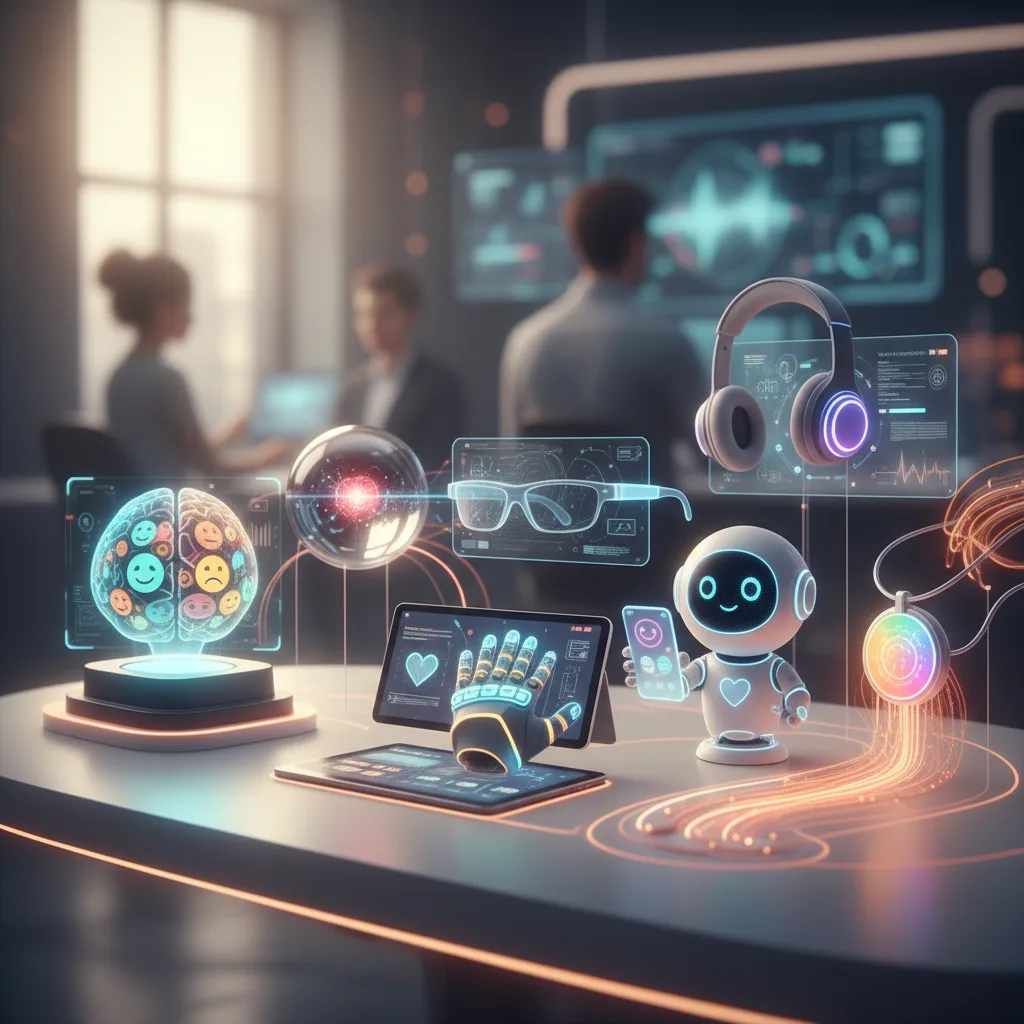
Emotion AI: 6 Tools That Read Your Inner World Like a Dashboard Warning Light for Peak Human-Machine Interaction
Imagine your brain as a finely tuned, high-performance engine. It processes vast amounts of data, orchestrates complex bodily functions, and fuels your creativity and focus. But what happens when a critical warning light flickers on your dashboard – a subtle indicator of diminished performance, perhaps due to chronic lack of sleep, an inability to maintain focus, or an overwhelming sense of stress? Just as a mechanic uses diagnostic tools to interpret engine alerts, the burgeoning field of Emotion AI is offering us unprecedented insights into our internal states. As a neuroscientist and biohacker dedicated to optimizing human potential, I see this technology not as a replacement for human intuition, but as an indispensable diagnostic system for our most complex machinery: the mind.
For too long, our understanding of emotions, those powerful drivers of human behavior and experience, has been subjective and often opaque. We’ve relied on self-reporting, observation, and intuition. But what if we could objectively measure, analyze, and even predict emotional states with the precision of a digital sensor? This isn’t science fiction; it’s the reality of AI powered emotion detection. From identifying the early signs of ‘road rage’ in drivers to refining customer service interactions, Emotion AI is transforming how we understand and interact with the emotional landscape. This article will delve into six groundbreaking Emotion AI tools and their profound implications for self-optimization, human machine interaction, and our collective future.
Key Takeaways
- • Emotion AI Deciphers the Unseen: This technology provides objective, data-driven insights into emotional states by analyzing diverse biometric and behavioral signals, offering a new dimension to human understanding.
- • Applications Span Diverse Fields: From enhancing driver safety and refining customer experiences to deep psychological research and personal well-being, emotion detection ai is poised to revolutionize multiple industries and aspects of daily life.
- • Neuroscience Underpins AI Perception: The efficacy of Emotion AI is rooted in our understanding of brain mechanisms, such as the limbic system, Neurotransmitters, and micro-expressions, allowing AI to learn and interpret complex emotional cues.
- • Ethical Considerations are Paramount: The power of Emotion AI necessitates robust discussions around privacy, consent, data security, and the potential for misuse, ensuring responsible development and deployment.
What is Emotion AI, and How Does it Decipher Our Inner World?
At its core, Emotion AI, also known as affective computing, is a branch of artificial intelligence that enables machines to recognize, interpret, process, and simulate human affects. Affects, in this context, refer to the conscious subjective aspect of an emotion or mood. Unlike traditional AI that focuses on logic and data, Emotion AI delves into the nuanced, often subconscious signals that betray our true feelings.
The “Why” behind our emotions is deeply rooted in neurobiology. Our brain’s limbic system, particularly the amygdala, plays a central role in processing emotions, especially fear and pleasure. Neurotransmitters like dopamine, serotonin, oxytocin, and cortisol act as chemical messengers, influencing our moods and emotional responses. When we experience an emotion, these internal biological shifts often manifest as external cues: changes in facial expressions, vocal tone, body language, heart rate, skin conductance, and even subtle shifts in brainwave patterns (e.g., increased Alpha waves associated with relaxation or Theta waves during deep meditation or sleep).
The “How” of Emotion AI involves training sophisticated machine learning algorithms on massive datasets of human emotional expressions. These datasets include videos of people displaying various emotions, audio recordings of speech with emotional nuances, and text corpora annotated for sentiment. The AI then learns to identify patterns and correlate them with specific emotional states.
- • Facial Expression Recognition: AI analyzes hundreds of facial muscle movements, known as Action Units (AUs), detecting subtle changes in eyebrows, mouth corners, and eye widening to infer emotions like joy, sadness, anger, fear, surprise, and disgust. This is key to detecting facial micro-expressions.

Emotion AI facial recognition software scanning a human face for sentiment analysis. • Vocal Tone Analysis: Pitch, rhythm, volume, and timbre of speech carry significant emotional information. Emotion AI can discern frustration, excitement, boredom, or anxiety based on these acoustic cues.
- • Text-Based Sentiment Analysis: Natural Language Processing (NLP) algorithms parse written text for emotional vocabulary, sentence structure, and context to determine sentiment (positive, negative, neutral) and specific emotions.
- • Physiological Signal Interpretation: Some advanced systems integrate data from wearables, analyzing heart rate variability (HRV), skin conductance, and eye-tracking to provide a more holistic view of emotional arousal and valence.
The goal is to move beyond simple “happy” or “sad” labels to a more granular understanding of human emotional states, enabling machines to respond with greater empathy and effectiveness, ultimately enhancing human machine interaction.
6 Emotion AI Tools Revolutionizing Our World
1. Driver Monitoring Systems: Machines That Read ‘Road Rage’
The concept of machines that read ‘road rage’ is not merely about identifying anger; it’s about preempting dangerous driving behaviors stemming from emotional distress. Driver Monitoring Systems (DMS) equipped with emotion detection AI are rapidly becoming standard in commercial fleets and are making their way into consumer vehicles.
Why it matters: Driver fatigue, distraction, and emotional states like anger, frustration, or drowsiness contribute significantly to road accidents. By understanding the driver’s emotional state, we can intervene before a critical incident occurs. The stress response, mediated by cortisol and adrenaline, can impair cognitive function, reaction time, and decision-making, increasing accident risk.
How it works: These systems utilize in-cabin cameras that monitor the driver’s face, eyes, and head movements. Advanced emotion detection ai algorithms analyze:
- • Facial Expressions: Identifying frowns, tense jawlines, or aggressive expressions indicative of rising anger.
- • Eye-Tracking: Detecting prolonged blinking, eye closure (drowsiness), or rapid eye movements (distraction/anxiety).
- • Head Pose: Analyzing head orientation to identify distracted driving.
- • Physiological Indicators: Some systems integrate with steering wheel sensors to detect grip pressure or heart rate changes, adding another layer of data.
Upon detecting concerning emotional states or behaviors, the system can issue warnings, suggest breaks, or even activate autonomous safety features. This proactive approach to safety highlights a critical application of Emotion AI in preventing accidents and saving lives.

2. Advanced Sentiment Analysis Technology: Beyond Keywords
While related to Emotion AI, sentiment analysis tech traditionally focuses on the overall positivity, negativity, or neutrality of text. Modern AI powered emotion detection takes this a significant step further, moving beyond mere polarity to identify specific emotions embedded within language.
Why it matters: In the age of digital communication, understanding the emotional context of social media posts, customer reviews, and survey responses is invaluable. It allows businesses to gauge public opinion, identify emerging trends, and respond to crises with greater sensitivity. For individuals, it can offer insights into the emotional tone of their own communications. This deeper understanding of textual emotion is crucial for effective human machine interaction in digital spaces. This technology even has implications in understanding public discourse, much like how AI in Politics can analyze sentiment to tailor campaigns.
How it works: Modern sentiment analysis tech leverages sophisticated Natural Language Processing (NLP) models, often based on deep learning architectures like Transformers. These models are trained on vast datasets of text annotated with specific emotions (e.g., anger, joy, sadness, fear, surprise, disgust). They learn to identify:
- • Lexical Cues: Specific words and phrases associated with emotions.
- • Contextual Understanding: Interpreting sarcasm, irony, and the overall context of a statement to derive accurate emotional meaning.
- • Emoji and Punctuation Analysis: Recognizing the emotional weight carried by digital symbols.
Beyond simple sentiment, these tools can now identify the intensity of an emotion, allowing for a much richer analysis of textual data. This can inform everything from marketing strategies to public health initiatives.
3. Emotionally Intelligent AI in Customer Service: Elevating Human-Machine Interaction
The integration of AI in customer service represents one of the most impactful applications of Emotion AI. Moving beyond scripted responses, emotionally intelligent chatbots and voice assistants are designed to understand and adapt to the customer’s emotional state, leading to more satisfying and efficient interactions.
Why it matters: Customer frustration is a major pain point in service interactions. When a customer feels misunderstood or unheard, it escalates tension and diminishes brand loyalty. AI that can detect and respond appropriately to emotions can de-escalate situations, offer more empathetic solutions, and streamline problem-solving. It’s about optimizing the human machine interaction to mirror the best human-to-human service.
How it works:
- • Voice Emotion Detection: AI analyzes vocal cues – pitch, tone, pace, and volume – to detect frustration, anger, confusion, or satisfaction in real-time.
- • Textual Emotion/Sentiment Analysis: For chat-based support, AI powered emotion detection interprets the emotional content of written messages.
- • Adaptive Responses: Based on the detected emotion, the AI can adjust its conversational flow, offer empathetic statements, prioritize specific issues, or seamlessly hand off to a human agent when necessary. For example, if anger is detected, the AI might immediately apologize and offer a direct solution rather than asking for more details.

This not only improves customer satisfaction but also boosts agent productivity by handling routine queries and flagging emotionally charged interactions for human intervention. The underlying principle is to ensure that machines can understand and respond to the human emotional experience, creating a more intuitive and supportive interaction.
4. Micro-Expression Detection Systems: Unmasking the Truth
The human face is a canvas of emotion, and while we often consciously control our expressions, involuntary flashes of true emotion – known as facial micro-expressions – can betray our true feelings. These fleeting expressions, lasting less than half a second, are incredibly difficult for the untrained human eye to catch, but AI powered emotion detection excels at it.
Why it matters: Micro-expressions are considered universal indicators of underlying emotions, regardless of culture. Their detection holds immense potential in fields where genuine emotional assessment is critical, such as security, interrogation, healthcare, and even market research. The ability to identify these subtle cues can offer deeper insights into a person’s true state, even when they are attempting to conceal it. This capability goes beyond simple Lie Detector AI by capturing genuine emotional leakage.
How it works:
- • High-Speed Video Capture: Systems use cameras capable of capturing video at very high frame rates to ensure no micro-expression is missed.
- • Computer Vision Algorithms: Advanced algorithms, often employing deep neural networks, are trained on vast datasets of micro-expressions. These algorithms map facial landmarks and track minute changes in muscle movements (Action Units) as defined by pioneers like Paul Ekman.
- • Real-time Analysis: The AI processes these changes in real-time, identifying the onset, apex, and offset of micro-expressions and classifying them into basic emotional categories (e.g., surprise, fear, disgust, anger, happiness, sadness).
The precision of emotion detection AI in this domain is unparalleled, opening doors to understanding subconscious emotional responses that were previously inaccessible, even enabling more nuanced understanding of complex internal states, similar to how Dream AI attempts to decode our nocturnal narratives or the Science of Dreams unravels subconscious processes.
On a personal level, understanding our own emotional responses and developing greater emotional intelligence is key to self-mastery. Beyond detection, we can also actively work to optimize our brain states. Techniques like visual brain entrainment tools, which use specific light and sound frequencies to guide brainwave patterns (e.g., into Alpha for relaxation or Theta for deep focus), can be incredibly powerful. Similarly, advanced light therapy devices are proving effective in regulating our Circadian Rhythm and mood. For those seeking to explore cutting-edge sensory resonance technology designed to enhance cognitive function and emotional well-being, resources like NeuroVizr offer promising avenues.
5. Personalized Content and Adaptive Learning: Tailoring Experiences
Beyond direct interaction, Emotion AI is being used to create highly personalized experiences in content consumption, education, and even product design. By understanding the user’s emotional engagement, systems can adapt dynamically.
Why it matters: In an attention economy, captivating and retaining user interest is paramount. Emotionally adaptive systems can optimize learning outcomes by detecting frustration or boredom, or enhance entertainment by delivering content that resonates emotionally. This optimizes the human machine interaction by making it more intuitive and responsive to individual needs. Consider how this differs from the purely algorithmic generation of content, such as that by Synthetic Influencers, which focuses on engineered engagement rather than detected emotional states.
How it works:
- • Engagement Tracking: AI monitors facial expressions, eye gaze, and even physiological responses (if sensors are used) to assess engagement levels and emotional reactions to content.
- • Adaptive Pathways: In e-learning, if a student shows signs of confusion or boredom, the AI can present the material in a different format, offer additional resources, or adjust the pace. In entertainment, content recommendations can be refined based on not just what you watched, but how you emotionally reacted to it.
- • Emotional Feedback Loops: Some systems provide users with feedback on their own emotional responses, enhancing self-awareness and potentially improving focus or stress management.
This application of Emotion AI moves towards creating truly responsive environments that cater to our individual, dynamic emotional needs, making interactions more relevant and impactful. It even extends to sensory experiences, with advancements like AI Scent Creation hinting at personalized sensory environments.
6. Ethical AI and Privacy Concerns: The Double-Edged Sword of Emotion Detection
While the potential benefits of Emotion AI are immense, its power to peer into our inner lives raises significant ethical questions and privacy concerns. As with any powerful technology, responsible development and deployment are paramount.
Why it matters: Our emotions are deeply personal. The collection, analysis, and potential monetization or manipulation of emotional data could have profound societal implications. Without proper safeguards, emotion detection ai could lead to:
- • Surveillance and Discrimination: Emotional profiling in hiring, lending, or even public spaces could lead to unfair treatment.
- • Manipulation: Companies or political entities could use emotional data to craft highly persuasive (or even coercive) messages, impacting free will.
- • Data Security Risks: Emotional data, if compromised, could be far more sensitive than traditional personal information.
- • Misinterpretation: Emotions are complex and context-dependent. AI’s interpretation, though advanced, is not infallible and could lead to harmful misjudgments.
How to address concerns:
- • Transparency and Consent: Users must be fully informed when emotion AI is being used and provide explicit consent for data collection and analysis.
- • Robust Data Governance: Strict regulations and ethical guidelines are needed for how emotional data is stored, processed, and shared.
- • Bias Mitigation: Developers must actively work to remove biases in training data to ensure emotion detection ai systems are fair and equitable across all demographics.
- • Human Oversight: Critical decisions should always involve human judgment, with AI serving as an assistive tool rather than a final arbiter of emotional truth.
Navigating these ethical waters is crucial for Emotion AI to fulfill its promise as a tool for human betterment rather than a mechanism for control.
Beyond the Dashboard: The Future of Emotion AI and Human Potential
The six tools we’ve explored barely scratch the surface of Emotion AI‘s potential. As a biohacker, I envision a future where this technology serves as a powerful ally in our quest for self-optimization. Imagine a personalized health assistant that not only tracks your vital signs but also understands your emotional stressors, offering real-time interventions to calm your Vagus Nerve and reduce cortisol levels. Or a learning environment that adapts precisely to your cognitive load and emotional state, ensuring optimal knowledge retention and preventing burnout.
The integration of Emotion AI with fields like neurofeedback and biofeedback promises to unlock unprecedented levels of control over our own emotional and cognitive states. By providing objective feedback on our internal world, these tools foster Neuroplasticity, the brain’s ability to reorganize itself by forming new neural connections, allowing us to consciously reshape our emotional responses and enhance our resilience. This goes beyond just detecting emotion; it’s about empowering us to proactively manage and cultivate our inner landscape for peak performance and well-being.
Conclusion: Empowering Your Internal Dashboard with Emotion AI
Just as a dashboard warning light alerts us to critical issues in our vehicle, Emotion AI offers a sophisticated diagnostic system for the human mind. It provides objective, data-driven insights into our emotional states, moving us beyond subjective perceptions to a more precise understanding of ourselves and others. From enhancing safety on our roads with emotion detection ai in vehicles, to revolutionizing customer support with AI in customer service, and uncovering subtle truths through detecting facial micro-expressions, this technology is reshaping industries and improving daily life.
For those committed to biohacking and optimizing brain performance, Emotion AI provides the critical feedback needed to fine-tune our internal systems. By understanding the “why” behind our emotional responses – rooted in our neurobiology and Neurotransmitters – and the “how” of applying technology to interpret these signals, we gain an unparalleled opportunity for self-improvement. The journey towards enhanced focus, better sleep, and emotional resilience is no longer solely an introspective one; it’s now augmented by intelligent systems that act as our personal, always-on neuro-diagnostics.