
Key Takeaways
✅ Pros
- Enables personal neuro-optimization and self-discovery
- Provides objective insights into cognitive states, focus, and relaxation
- Allows tracking of meditation progress and effectiveness
- Supports biohacking for optimizing daily routines, sleep, and productivity
- Empowers data-driven decisions for improved brain health and mental well-being
❌ Cons
- Requires an initial investment in home EEG devices
- Understanding brainwave data and its interpretation requires some learning
- Home brainwave measurement is not a substitute for professional medical advice or diagnosis
- DIY EEG setups are complex and not recommended for beginners
How to measure brain waves is a question that many are now asking, and understanding your brain activity at home is easier than ever with accessible technology. NeuroTech Insider provides insights and tools to help you explore your brainwaves, offering a pathway to enhanced focus, relaxation, and overall well-being. Explore the possibilities of home EEG, brainwave monitoring app technology, and the quantified self brain movement.
Why Measure Brain Waves at Home?
Quick Answer: Measuring brain waves at home offers a window into your cognitive state, enabling you to track progress in meditation, optimize focus, and understand how your brain responds to various stimuli.
The ability to measure brain waves at home has opened up exciting new possibilities for personal neuro-optimization. Whether you’re driven by simple curiosity or seeking to fine-tune your cognitive performance, understanding your brain’s electrical activity can be incredibly valuable. By monitoring your brainwaves, you gain insights into your focus levels, relaxation responses, and overall mental state. This knowledge empowers you to make informed decisions about your lifestyle, habits, and activities to promote better brain health and cognitive function.
Measuring brain waves at home is no longer a futuristic fantasy. Thanks to advances in technology, affordable and user-friendly devices are readily available. These devices, often referred to as home EEG devices, allow you to record and analyze your brainwave patterns in the comfort of your own home. With the help of brainwave monitoring app technology, you can visualize your brain activity in real-time and track changes over time. This provides a tangible way to observe the impact of your efforts and make adjustments as needed.
Furthermore, measuring brain waves at home aligns with the growing trend of the quantified self brain movement, where individuals use data to gain a deeper understanding of themselves and optimize their lives. By tracking your brainwave patterns, you can identify correlations between your mental state and various factors such as sleep, diet, and exercise. This data-driven approach allows you to personalize your strategies for enhancing focus, reducing stress, and improving overall well-being.
What Tools Are Available for Measuring Brain Waves at Home?
Quick Answer: Several affordable devices, such as BrainBit and Muse, are available for measuring brain waves at home. These devices typically use EEG technology to capture brain activity and provide feedback through a companion app.
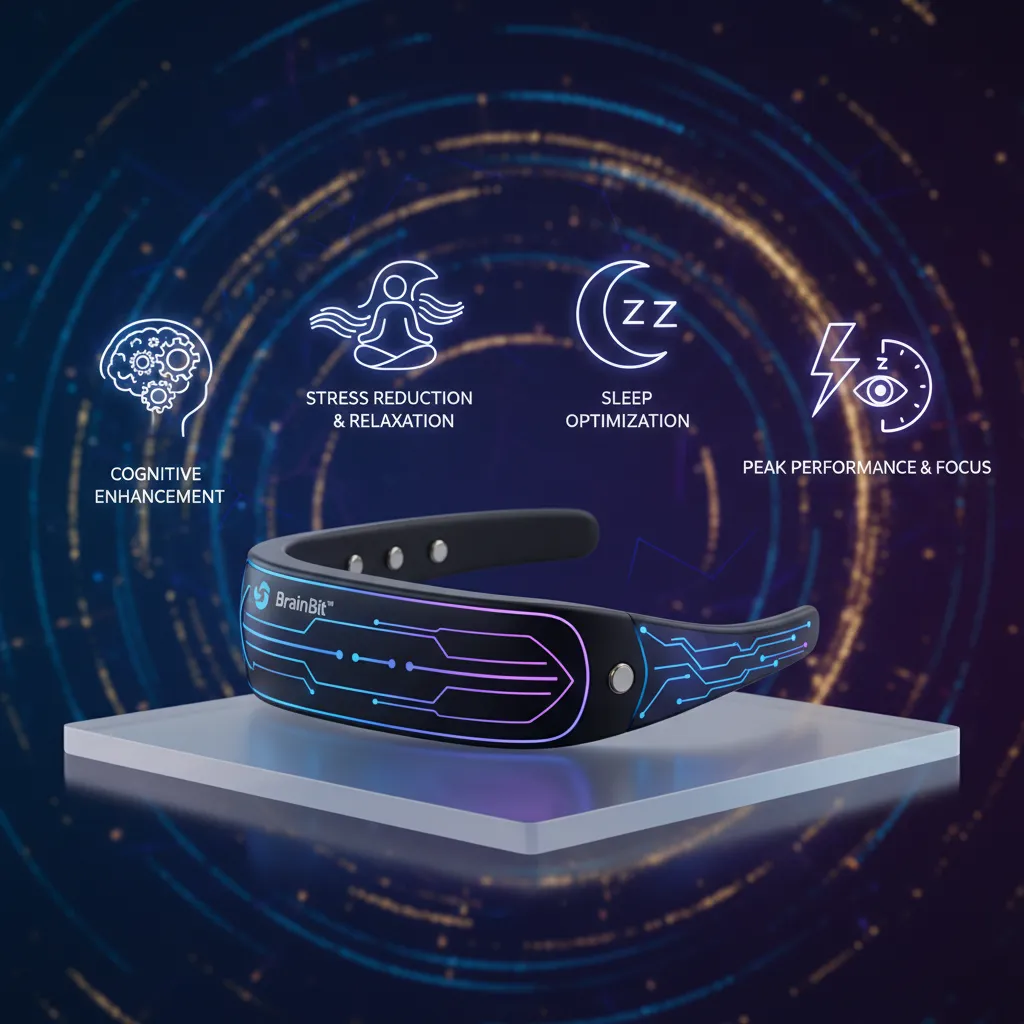
The market for home EEG devices has expanded rapidly in recent years, offering a variety of options to suit different needs and budgets. Two popular choices are BrainBit and Muse, both of which offer user-friendly interfaces and valuable insights into brainwave activity.
-
•
BrainBit: This device is known for its comfortable design and accurate readings. It uses dry EEG sensors to capture brainwave data without the need for conductive gels. The BrainBit app provides detailed visualizations of your brainwave patterns and offers personalized recommendations for improving focus and relaxation. -
•
Muse: This device is designed specifically for meditation and mindfulness practices. It provides real-time feedback on your brainwave activity during meditation sessions, helping you to deepen your practice and achieve a state of calm more effectively. The Muse app also offers guided meditations and personalized insights based on your brainwave data.
When choosing a home EEG device, consider factors such as comfort, accuracy, ease of use, and the features offered by the companion app. It’s also important to read reviews and compare different models to find the one that best meets your specific needs and goals. Some users even explore the possibility of a diy eeg setup, but this requires advanced technical knowledge and is not recommended for beginners.
What Brainwave Metrics Should I Focus On?
Quick Answer: Understanding Alpha/Beta ratios can provide valuable insights into your mental state. Alpha waves are associated with relaxation and calmness, while Beta waves are linked to alertness and focus. Monitoring the balance between these two types of brain waves can help you optimize your cognitive performance.
Brainwaves are categorized into different frequency bands, each associated with specific mental states and cognitive functions. The most commonly measured brainwave frequencies are Delta, Theta, Alpha, Beta, and Gamma. While each of these frequencies provides unique information about your brain activity, the Alpha/Beta ratio is particularly useful for understanding your overall mental state.
Alpha Waves (8-12 Hz): These brainwaves are dominant during relaxed wakefulness, meditation, and creative visualization. They are associated with a state of calm, inner peace, and reduced anxiety. A higher proportion of Alpha waves indicates a more relaxed and receptive mental state.
Beta Waves (12-30 Hz): These brainwaves are dominant during active thinking, problem-solving, and focused attention. They are associated with alertness, concentration, and cognitive processing. A higher proportion of Beta waves indicates a more alert and focused mental state.
Alpha/Beta Ratio: This ratio represents the balance between relaxation and alertness in your brain. A higher Alpha/Beta ratio suggests a more relaxed state, while a lower ratio suggests a more alert state. Monitoring this ratio can help you identify when you are feeling overly stressed or fatigued and take steps to restore balance.

For example, if you are trying to focus on a task but your Alpha/Beta ratio is high, it may indicate that you are feeling too relaxed or distracted. In this case, you may need to engage in activities that increase your alertness, such as taking a short break, doing some light exercise, or listening to stimulating music. Conversely, if you are feeling overly stressed or anxious and your Alpha/Beta ratio is low, you may benefit from relaxation techniques such as meditation, deep breathing, or yoga.
How Can I Track My Meditation Progress Using Brainwave Data?
Quick Answer: By monitoring your brainwave activity during meditation sessions, you can track changes in your Alpha and Theta wave production. An increase in these brainwaves indicates a deeper state of relaxation and mindfulness.
Meditation has been shown to have numerous benefits for both mental and physical health. However, it can be difficult to gauge your progress in meditation without objective feedback. Measuring your brain waves during meditation provides a tangible way to track your progress and gain a deeper understanding of your mental state.
During meditation, the goal is to quiet the mind and achieve a state of inner peace and stillness. This state is often associated with an increase in Alpha and Theta brainwaves. Alpha waves, as mentioned earlier, are dominant during relaxed wakefulness and meditation. Theta waves (4-8 Hz) are associated with deep relaxation, creativity, and intuition. By monitoring your brainwave activity during meditation, you can observe how your brainwave patterns change as you enter a deeper state of meditation.
For example, you may notice that your Alpha wave production increases gradually as you focus on your breath or a mantra. You may also see an increase in Theta waves as you enter a more profound state of relaxation. By tracking these changes over time, you can gain insights into the effectiveness of your meditation practice and identify techniques that work best for you.
Many home EEG devices, such as Muse, are specifically designed for tracking meditation progress. These devices provide real-time feedback on your brainwave activity during meditation sessions, helping you to stay focused and deepen your practice. The companion apps often offer guided meditations and personalized insights based on your brainwave data, making it easier to track your progress and achieve your meditation goals.

How Can I Use Brainwave Data for Biohacking and Optimizing My Day?
Quick Answer: Brainwave data can be used to identify patterns and correlations between your mental state and various factors such as sleep, diet, and exercise. This information can then be used to optimize your daily routine for enhanced focus, productivity, and overall well-being.
Biohacking is the practice of using science and technology to optimize your biology and improve your overall health and performance. Measuring your brain waves at home can be a valuable tool for biohacking, providing insights into your cognitive function and mental state throughout the day.
By tracking your brainwave activity over time, you can identify patterns and correlations between your mental state and various factors such as sleep, diet, exercise, and stress levels. For example, you may discover that your focus and productivity are highest after a good night’s sleep and a healthy breakfast. You may also find that your stress levels increase during certain times of the day or after engaging in specific activities.
Once you have identified these patterns, you can use this information to optimize your daily routine for enhanced focus, productivity, and overall well-being. For example, you may choose to schedule your most demanding tasks for times when your brainwave activity indicates optimal focus. You may also incorporate relaxation techniques into your day to manage stress and maintain a balanced mental state.
Here are some specific examples of how you can use brainwave data for biohacking:
-
•
Sleep Optimization: Track your brainwave activity during sleep to identify sleep stages and detect potential sleep disturbances. Use this information to optimize your sleep environment, bedtime routine, and sleep duration for improved sleep quality. -
•
Focus Enhancement: Monitor your brainwave activity during focused tasks to identify factors that enhance or hinder your concentration. Use this information to optimize your workspace, time management strategies, and cognitive training exercises for improved focus and productivity. -
•
Stress Management: Track your brainwave activity during stressful situations to identify your stress response patterns and develop effective coping mechanisms. Use this information to incorporate relaxation techniques, mindfulness practices, and stress-reducing activities into your daily routine.
Remember to consult with a healthcare professional or qualified expert before making any significant changes to your lifestyle or treatment plan. Brainwave measurement is a tool for self-discovery and optimization, but it should not be used as a substitute for professional medical advice.
Can Stroboscopic Light and NeuroVizr Light Patterns Affect Brain Waves?
Quick Answer: Yes, both Stroboscopic Light and NeuroVizr Light Patterns can influence brainwave activity through a process called Brainwave Entrainment. This phenomenon involves using external stimuli to guide the brain towards specific frequency patterns.
Light and sound, when delivered in specific patterns and frequencies, can have a powerful effect on brainwave activity. This is the principle behind Brainwave Entrainment, where external stimuli are used to guide the brain towards desired frequency patterns. Stroboscopic Light, with its rhythmic flashing, is a prime example of this.
The NeuroVizr Science leverages this principle by using carefully designed NeuroVizr Light Patterns to promote specific brainwave states. These patterns can be tailored to induce relaxation, enhance focus, or even promote creativity. The device’s ability to influence brainwave activity makes it a valuable tool for those seeking to optimize their cognitive function and mental well-being.

Are There Other Technologies, Like a Brain Helmet, That Can Affect Brainwaves?
Quick Answer: Yes, technologies like a Brain Helmet, often utilizing techniques such as transcranial photobiomodulation (tPBM), can influence brainwaves. tPBM, including Red Light for Alzheimer’s, uses specific wavelengths of light to stimulate neuronal activity.
Beyond EEG devices and light-based therapies, other innovative technologies are being explored to influence brainwave activity. One such technology is transcranial photobiomodulation (tPBM), which involves using specific wavelengths of light to stimulate neuronal activity in the brain. Devices like a Brain Helmet often employ tPBM to target specific brain regions and promote desired brainwave patterns.
tPBM has shown promise in various applications, including cognitive enhancement, mood regulation, and neurodegenerative disease treatment. For example, Red Light for Alzheimer’s, a specific application of tPBM, is being investigated for its potential to improve cognitive function and reduce symptoms in patients with Alzheimer’s disease.
While tPBM is a relatively new technology, early research suggests that it may be a safe and effective way to influence brainwave activity and improve cognitive function. However, more research is needed to fully understand the long-term effects and optimal parameters for tPBM treatment.
Frequently Asked Questions
Why Measure Brain Waves at Home?
Measuring brain waves at home provides a personal window into your cognitive state, enabling you to track meditation progress, optimize focus, and understand your brain’s responses to various stimuli for enhanced well-being.
What Tools Are Available for Measuring Brain Waves at Home?
Several affordable devices like BrainBit and Muse utilize EEG technology to capture brain activity, offering real-time feedback and insights through companion apps for home use.
Can Stroboscopic Light and NeuroVizr Light Patterns Affect Brain Waves?
Yes, Stroboscopic Light and NeuroVizr Light Patterns can influence brainwave activity through Brainwave Entrainment, guiding the brain towards specific frequency patterns to induce relaxation, enhance focus, or promote creativity.