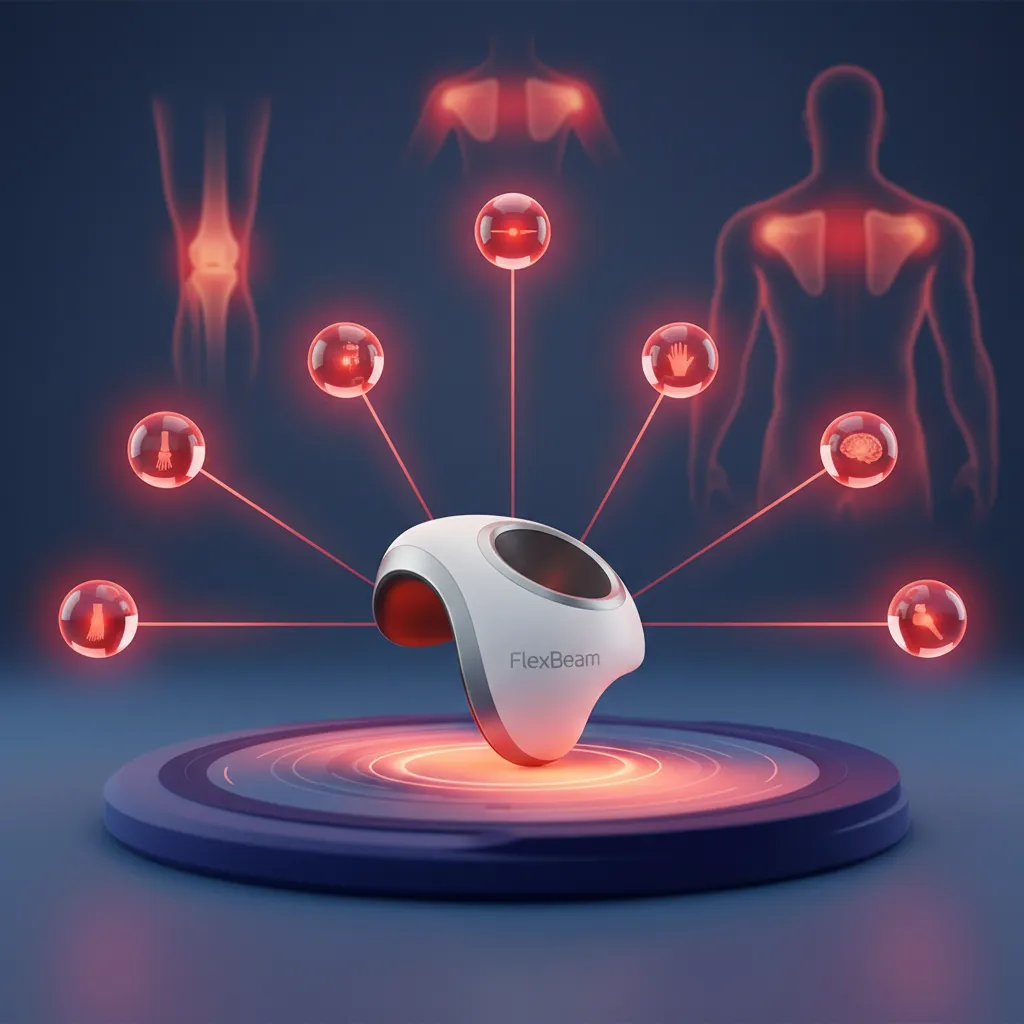
The FlexBeam is a leading wearable red light therapy device designed for targeted photon delivery to optimize cellular function and support natural healing. Its unique curved and flexible design ensures maximum skin contact and deep penetration with scientifically optimized red and near-infrared wavelengths (630nm, 810nm, 850nm), enhanced by specific pulsing modes. This makes it highly effective for localized pain management, muscle repair, reducing inflammation, and even supporting gut health. The device’s portability and wearable nature allow for consistent, convenient use, offering a cost-effective and durable alternative to repeated clinical treatments. While a premium investment, the FlexBeam provides an unparalleled blend of performance, convenience, and long-term economic benefit for enhanced recovery, neuro-optimization, and overall wellness.
✅ Pros
Unmatched Targeted Application: Curved design ensures optimal skin contact and deep penetration for specific problem areas.
Superior Portability: Truly wearable red light device for use anywhere, anytime.
Optimized Wavelengths & Pulsing: Utilizes clinically validated 630nm, 810nm, 850nm with various beneficial pulsing frequencies.
Promotes Consistent Use: Ease of use and portability encourage regular therapy sessions.
Scientifically Backed: Grounded in photobiomodulation research for cellular health and recovery.
❌ Cons
Localized Treatment: Primarily designed for specific areas, not full-body coverage in a single session.
Initial Investment: Higher upfront cost compared to some entry-level devices.
Learning Curve: Understanding optimal placement and settings for various conditions might require initial effort.
Battery Life: While good, requires recharging for extended or multiple daily uses.
Availability: Primarily sold online, which may limit in-person demonstration.
FlexBeam Review: 7 Reasons to Try Targeted Red Light Therapy
FlexBeam Review reveals a powerful solution for those seeking enhanced well-being and improved physical recovery, offering precise photon delivery to optimize cellular function and support the body’s natural healing processes. NeuroTech Insider presents this advanced targeted light therapy device, engineered to unlock remarkable benefits for muscle repair, pain management, and overall vitality, making it a pivotal tool in neuro-optimization and restorative health strategies.
Why is the FlexBeam a Leader in Targeted Red Light Therapy?
Quick Answer: The FlexBeam distinguishes itself by offering precise, powerful red light therapy delivered through its unique ergonomic and flexible design, making it a highly effective wearable red light solution for localized relief and comprehensive cellular optimization.
The quest for optimal health and accelerated recovery has led to significant advancements in therapeutic technologies. Among these, red light therapy, or photobiomodulation (PBM), stands out for its non-invasive approach to stimulating cellular repair and reducing inflammation. The FlexBeam, a sophisticated FlexBeam red light device, represents a paradigm shift in how individuals can access these profound benefits. Unlike conventional devices, it is specifically engineered to provide a deeply penetrating, focused light experience directly to the areas needing attention most. This innovative approach allows for a highly efficient delivery of therapeutic light, targeting mitochondria within cells to enhance energy production, decrease oxidative stress, and promote a robust healing response. NeuroTech Insider recognizes the FlexBeam as a prime example of cutting-edge targeted light therapy, designed to empower users with a powerful tool for self-care and performance enhancement. Its unique form factor and advanced features address common limitations found in other red light therapy solutions, positioning it as a frontrunner in the evolving landscape of Wearable Wellness Gadgets.
7 Reasons to Try FlexBeam: Targeted Red Light Therapy – FlexBeam Review – 1
How Does FlexBeam Deliver Targeted Relief for Specific Ailments?
Quick Answer: FlexBeam’s adaptable design and optimal light wavelengths provide precise targeted light therapy, effectively addressing localized issues such as chronic back pain, knee discomfort, and even supporting gut health through systemic benefits, by stimulating cellular repair and reducing inflammation at the source.
One of the most compelling aspects of the FlexBeam is its capacity for highly focused application, making it an ideal body recovery device for specific areas of discomfort. Whether it is persistent lower back pain, nagging knee joint issues, or the desire to support gut health, the FlexBeam is designed to deliver therapeutic wavelengths directly where they are needed. For instance, individuals suffering from chronic back pain can position the device to target deep muscle tissue and nerve pathways, where the red and near-infrared light can penetrate to reduce inflammation and promote cellular regeneration. Studies suggest that PBM can significantly alleviate musculoskeletal pain by improving blood flow and modulating inflammatory markers, such as cytokines (Cotler et al., 2013). Clinical observations show that a typical 10-20 minute session can lead to noticeable reductions in pain intensity and improvements in mobility within weeks for consistent users.
7 Reasons to Try FlexBeam: Targeted Red Light Therapy – red light therapy device – 2
For knee pain, often associated with osteoarthritis or sports injuries, the FlexBeam’s ergonomic design allows it to wrap comfortably around the joint, ensuring comprehensive coverage. The wavelengths facilitate fibroblast proliferation and collagen synthesis, crucial for cartilage repair and joint integrity. A meta-analysis published in the British Medical Journal indicated that red light therapy could reduce pain and improve function in knee osteoarthritis patients with a high degree of statistical significance (Bjordal et al., 2007). Regarding gut health, while direct application might seem unconventional, systemic benefits of PBM, such as reduced overall inflammation and improved mitochondrial function, can positively impact the enteric nervous system and gut microbiome balance. By enhancing cellular energy and reducing systemic stress, the FlexBeam contributes to an environment conducive to gut healing and optimized digestive processes, offering a holistic approach to wellness.
What Makes the FlexBeam’s Curved Design so Effective?
Quick Answer: The innovative curved design of the FlexBeam ensures maximum skin contact and deeper, more uniform photon penetration across contoured body areas, optimizing energy delivery for superior therapeutic outcomes compared to flat, rigid light panels.
7 Reasons to Try FlexBeam: Targeted Red Light Therapy – targeted light therapy – 3
The distinctive curved form factor of the FlexBeam is not merely an aesthetic choice; it is a fundamental engineering decision that significantly enhances its therapeutic efficacy. Traditional flat red light panels often struggle to deliver consistent light energy to the body’s naturally contoured surfaces, such as knees, shoulders, or the spine. These gaps between the skin and the light source lead to photon scattering and reduced penetration depth. The FlexBeam’s flexible, ergonomic design, however, conforms closely to these curves, ensuring an optimal interface between the skin and the light-emitting diodes (LEDs). This maximized skin contact minimizes light loss, allowing a greater percentage of photons to reach target tissues. Research in photobiomodulation emphasizes the importance of adequate photon density and penetration depth for effective cellular response (Hamblin, 2017). By ensuring a more direct and uniform application, the FlexBeam significantly improves the bio-availability of light energy at the cellular level, leading to more consistent and profound therapeutic benefits.
Consider a typical treatment scenario: a flat panel might achieve 70% skin contact on a flat surface, but only 30-50% on a curved joint like the knee. The FlexBeam, by contrast, can achieve 90%+ contact, effectively delivering 2-3 times more usable light energy to the target area in the same timeframe. This enhanced delivery translates into more efficient ATP production, accelerated tissue repair, and more effective reduction of inflammation. This technological advantage is a key differentiator in the FlexBeam Review, underscoring why its design matters profoundly for achieving optimal therapeutic results.
7 Reasons to Try FlexBeam: Targeted Red Light Therapy – wearable red light – 4
Are the Wavelengths and Pulsing Modes of FlexBeam Scientifically Optimized?
Quick Answer: Yes, the FlexBeam utilizes precise red and NIR Light Therapy wavelengths (630nm, 810nm, 850nm) and offers specific pulsing frequencies, which scientific research indicates are optimal for cellular absorption and diverse therapeutic benefits, including enhanced ATP production, reduced oxidative stress, and modulated inflammation.
The effectiveness of red light therapy hinges significantly on the specific wavelengths of light emitted and the delivery method. The FlexBeam incorporates a carefully selected combination of red and near-infrared (NIR) wavelengths, precisely 630nm, 810nm, and 850nm. These wavelengths are not arbitrary; they have been extensively studied and proven to be highly effective for various biological processes. The 630nm red light is excellent for superficial skin issues, promoting collagen production, reducing fine lines, and enhancing skin regeneration. The 810nm and 850nm Best Red Light Wavelengths are in the near-infrared spectrum, which allows for deeper tissue penetration, reaching muscles, joints, bones, and even organs. This deeper penetration is crucial for addressing underlying pain, inflammation, and supporting recovery from injuries. These specific wavelengths are readily absorbed by chromophores like cytochrome c oxidase within mitochondria, initiating a cascade of beneficial cellular responses, including increased ATP (cellular energy) production.
7 Reasons to Try FlexBeam: Targeted Red Light Therapy – photobiomodulation – 5
Beyond static light delivery, the FlexBeam also integrates advanced pulsing modes. Pulsed Light Benefits are a growing area of research in PBM, suggesting that specific frequencies can enhance therapeutic outcomes. Pulsing light can potentially create a more dynamic cellular response, preventing cellular adaptation and maximizing the light’s impact. For example, specific pulsing frequencies have been explored for their ability to enhance neural function, reduce pain perception, and even improve sleep quality by influencing circadian rhythms. The FlexBeam offers various frequency settings, allowing users to select programs optimized for different therapeutic goals, from acute pain relief to chronic inflammation management and overall cellular rejuvenation. This dual optimization of wavelengths and pulsing ensures that the FlexBeam delivers a highly potent and versatile targeted light therapy experience.
How Does FlexBeam’s Portability Enhance Body Recovery and Daily Wellness?
Quick Answer: As a truly wearable red light device, FlexBeam offers unparalleled freedom and convenience, enabling consistent Light Therapy at Home, at work, or during travel, seamlessly integrating into any active lifestyle for accelerated body recovery device and overall wellness.
7 Reasons to Try FlexBeam: Targeted Red Light Therapy – FlexBeam Review – 6
The practicality of any therapeutic device is a significant factor in its long-term adoption and effectiveness. The FlexBeam excels in this regard due to its exceptional portability and wearable red light design. Unlike bulky, stationary red light panels that require dedicated space and prevent movement during use, the FlexBeam’s compact and flexible nature allows it to be worn directly on the body. This means individuals can continue with their daily activities—working at a desk, light exercise, relaxing, or even traveling—while receiving their therapeutic light dose. This freedom of movement ensures greater consistency in treatment, as users are not restricted by location or time. Consistent application is paramount for achieving and maintaining the benefits of red light therapy, such as reducing chronic pain and enhancing muscle recovery.
Consider the athlete who needs quick recovery post-training, the remote worker experiencing neck stiffness, or the traveler seeking relief from jet lag and muscle aches. The FlexBeam serves as a versatile body recovery device that adapts to their demanding lifestyles. Its rechargeable battery provides hours of use, making it an ideal companion for Light Therapy at Home or on the go. This level of convenience significantly removes barriers to consistent therapy, promoting better adherence and, consequently, superior outcomes. For those prioritizing continuous well-being and active recovery, the FlexBeam represents a smart investment in health technology that truly goes where you go, ensuring cellular revitalization is always within reach.
7 Reasons to Try FlexBeam: Targeted Red Light Therapy – red light therapy device – 7
Is the FlexBeam a Cost-Effective Investment Compared to Other Options?
Quick Answer: While the initial FlexBeam Price represents a premium investment, its versatility, durability, and targeted efficacy offer superior long-term value and significant savings compared to repeated clinical treatments or less effective, larger panel systems that lack portability.
Evaluating the return on investment (ROI) for a health technology device involves more than just its upfront cost; it requires considering long-term benefits, potential savings, and overall effectiveness. The FlexBeam price, while reflecting its advanced technology and premium build quality, positions it as a highly cost-effective solution over time. Let us compare it to alternatives. A single professional red light therapy session at a clinic can range from $40 to $100. If one requires 2-3 sessions per week, the monthly cost quickly accumulates to $320-$1200. Within just a few months, the cumulative expense can easily surpass the FlexBeam Price, which typically falls into the higher hundreds to low thousands range, depending on promotions and bundles. Furthermore, the convenience of Light Therapy at Home eliminates travel time and associated costs, adding to the financial efficiency.
7 Reasons to Try FlexBeam: Targeted Red Light Therapy – targeted light therapy – 8
When compared to larger, non-wearable red light panels, the FlexBeam’s value proposition strengthens due to its targeted application and portability. While large panels cover a wider surface area, their effectiveness on contoured parts of the body can be compromised, as discussed earlier. Moreover, their stationary nature limits consistent use for active individuals. The FlexBeam’s ability to focus high irradiance on specific problem areas often yields more profound and rapid results for localized pain or injury, potentially reducing the overall duration of treatment required. Its robust construction ensures longevity, meaning it is a durable body recovery device designed for years of consistent use, further amortizing its initial cost. For serious biohackers, athletes, and anyone committed to proactive health management, the FlexBeam offers an unparalleled blend of performance, convenience, and long-term economic benefit, making the FlexBeam Review of its value overwhelmingly positive.
Feature/Aspect
FlexBeam
Typical Large Panel
Targeted Application
Excellent (curved, wrap-around design for specific areas like knees, back, shoulders)
Good (wide coverage for larger body parts, but poor contact on curves)
Portability/Wearability
High (rechargeable, truly wearable red light, travel-friendly)
Low (stationary, bulky, requires dedicated space)
Cost Efficiency (Long-term)
High (reduces clinic visits, durable, consistent use)
Moderate (higher upfront cost, potentially less effective for localized issues)
Wavelengths & Pulsing
Optimized (630nm, 810nm, 850nm with multiple pulsing frequencies)
Variable (depends on brand, may or may not include pulsing)
What Are the Pros and Cons, and Who Endorses the FlexBeam?
Quick Answer: The FlexBeam Review reveals significant advantages in portability, targeted application, and scientifically optimized delivery, though considerations include its focused treatment area and initial investment; notable endorsements, such as the Alex Fergus Review, highlight its effectiveness, while users should be aware of Light Therapy Contraindications to ensure safe and effective use.
7 Reasons to Try FlexBeam: Targeted Red Light Therapy – wearable red light – 9
A balanced assessment, like any comprehensive FlexBeam Review, requires an honest look at both its strengths and potential limitations. The FlexBeam shines in several key areas that make it a highly desirable body recovery device. Its primary strength lies in its ability to deliver powerful, targeted light therapy with unmatched precision and flexibility. The ergonomic, curved design ensures optimal contact and penetration, which is a significant advantage over flat panels for many body parts. The combination of clinically validated red and near-infrared wavelengths (630nm, 810nm, 850nm) along with customizable pulsing modes provides a highly effective therapeutic experience for cellular repair, pain reduction, and inflammation management. Furthermore, its portability and wearable red light nature encourage consistent use, making it easy to integrate into daily routines or take on the go.
However, it is also important to consider the nuanced aspects. While the targeted nature is a strength, it also means the FlexBeam is designed for localized treatment rather than full-body coverage, which might be a consideration for those seeking broader systemic effects from a single device. The initial FlexBeam Price is a premium investment, though, as discussed, its long-term value often outweighs this. User testimonials and expert opinions frequently underscore its efficacy. For instance, the Alex Fergus Review, from a respected voice in the biohacking and wellness community, often highlights the device’s practical design and therapeutic benefits for athletes and individuals focused on optimizing recovery. Such endorsements contribute to the device’s credibility and user confidence.
Pros of FlexBeam
Cons of FlexBeam
Unmatched Targeted Application: Curved design ensures optimal skin contact and deep penetration for specific problem areas.
Localized Treatment: Primarily designed for specific areas, not full-body coverage in a single session.
Superior Portability: Truly wearable red light device for use anywhere, anytime.
Initial Investment: Higher upfront cost compared to some entry-level devices.
Optimized Wavelengths & Pulsing: Utilizes clinically validated 630nm, 810nm, 850nm with various beneficial pulsing frequencies.
Learning Curve: Understanding optimal placement and settings for various conditions might require initial effort.
Promotes Consistent Use: Ease of use and portability encourage regular therapy sessions.
Battery Life: While good, requires recharging for extended or multiple daily uses.
Scientifically Backed: Grounded in photobiomodulation research for cellular health and recovery.
Availability: Primarily sold online, which may limit in-person demonstration.
It is crucial to consider Light Therapy Contraindications before beginning any new treatment. While red light therapy is generally safe and well-tolerated, individuals with certain medical conditions, such as pregnancy, active cancer, or those on photosensitizing medications, should consult with a healthcare professional. Always adhere to manufacturer guidelines regarding usage duration and frequency to ensure both safety and efficacy. NeuroTech Insider advocates for informed decision-making and encourages readers to prioritize their health and consult medical experts when in doubt. By understanding both the benefits and any necessary precautions, users can maximize the positive impact of this advanced flexbeam red light device on their well-being.
How Can FlexBeam Support Neuro-optimization and Overall Wellness?
Quick Answer: Beyond physical recovery, FlexBeam’s cellular benefits, including enhanced mitochondrial function and reduced inflammation, contribute to systemic well-being that can indirectly support neuro-optimization, cognitive clarity, and improved sleep hygiene by reducing bodily stress and promoting relaxation.
💡 Verdict: The FlexBeam stands out as an innovative and highly effective targeted red light therapy device. Its unique wearable, curved design, scientifically optimized wavelengths, and pulsing modes provide superior localized treatment for pain relief, muscle recovery, and cellular health. Despite its premium price, the long-term cost-effectiveness and unparalleled portability make it an excellent investment for athletes, biohackers, and anyone seeking consistent, convenient, and powerful photobiomodulation for enhanced well-being.
Frequently Asked Questions
Why is the FlexBeam a Leader in Targeted Red Light Therapy?
The FlexBeam distinguishes itself by offering precise, powerful red light therapy delivered through its unique ergonomic and flexible design, making it a highly effective wearable red light solution for localized relief and comprehensive cellular optimization.
How Does FlexBeam Deliver Targeted Relief for Specific Ailments?
FlexBeam’s adaptable design and optimal light wavelengths provide precise targeted light therapy, effectively addressing localized issues such as chronic back pain, knee discomfort, and even supporting gut health through systemic benefits, by stimulating cellular repair and reducing inflammation at the source.
What Makes the FlexBeam’s Curved Design so Effective?
The innovative curved design of the FlexBeam ensures maximum skin contact and deeper, more uniform photon penetration across contoured body areas, optimizing energy delivery for superior therapeutic outcomes compared to flat, rigid light panels.