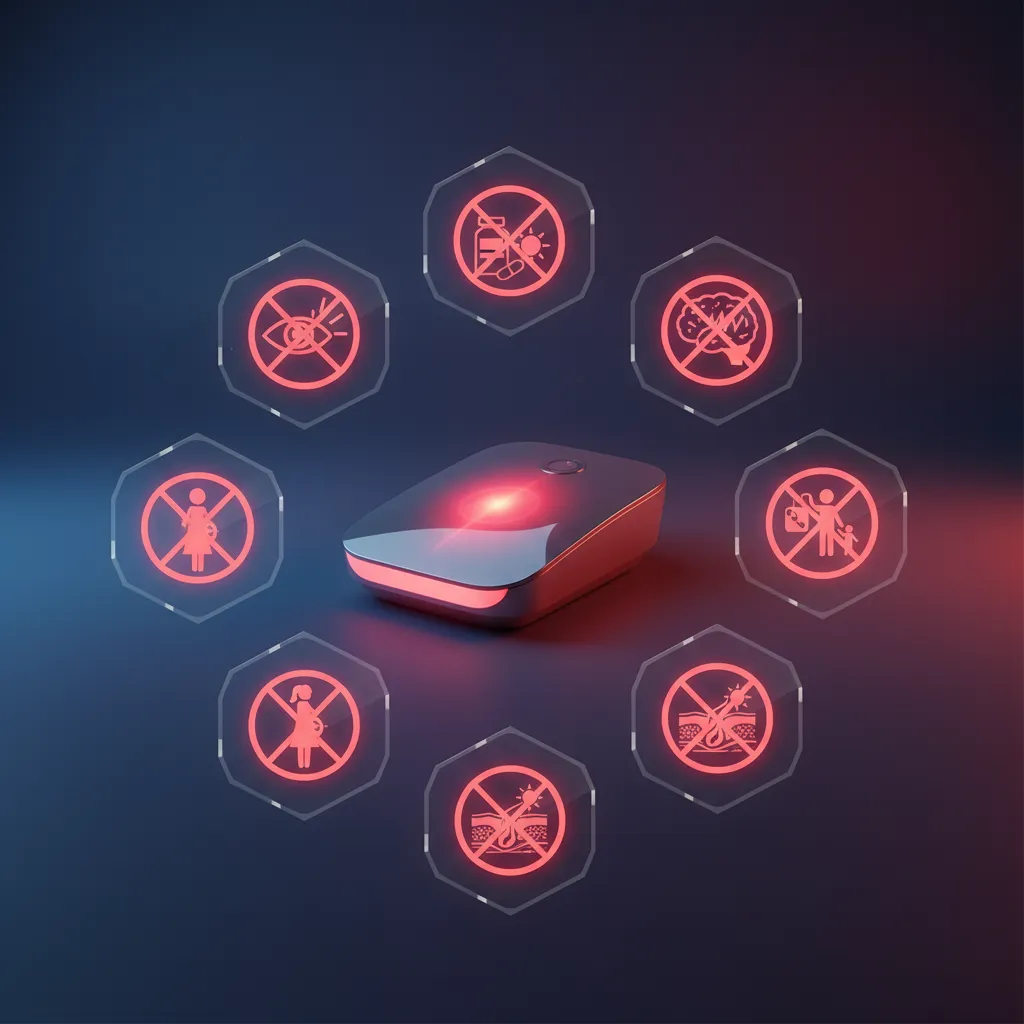
Light therapy offers benefits, but understanding its contraindications is vital for safe use. Key groups who should avoid or use caution include individuals with photosensitivity disorders, those on photosensitizing medications (e.g., certain antibiotics, NSAIDs), people with photosensitive epilepsy, pregnant individuals (due to limited research), those with active cancer (requires oncologist consultation), specific eye conditions, and bleeding disorders. Eye protection, typically goggles, is crucial during sessions. Always consult a healthcare professional before starting light therapy, especially if you have pre-existing conditions or are on medication, to ensure safe and effective neuro-optimization.
✅ Pros
Potential for skin rejuvenation (implied benefit for suitable users).
May offer pain relief (implied benefit for suitable users).
Contributes to neuro-optimization (implied benefit for suitable users).
❌ Cons
Exacerbation of photosensitivity disorders (rashes, burns).
Severe sunburn or skin damage with photosensitizing medications.
Potential seizure triggers for individuals with photosensitive epilepsy.
Uncertainty and potential risks during pregnancy due to limited research.
Potential to stimulate cell growth or interfere with treatments in active cancer.
Exacerbation of pre-existing eye conditions and potential retinal damage without protection.
Potential impact on blood circulation for individuals with bleeding disorders.
Light Therapy Contraindications are crucial to understand before starting any light therapy regimen. At NeuroTech Insider, we emphasize safety and informed usage. Knowing these contraindications ensures you maximize benefits while minimizing risks, paving the way for effective neuro-optimization. Let’s explore who should not use red light therapy, understand light therapy eye safety, and identify medications and light sensitivity.
Who Should Not Use Red Light Therapy: What Are The 7 Critical Contraindications?
Quick Answer: Certain medical conditions and medications can make light therapy unsafe. Key contraindications include photosensitivity disorders, certain medications, epilepsy triggered by light, pregnancy (consultation needed), active cancer, eye conditions, and bleeding disorders.
Light therapy, including red light therapy and NIR Light Therapy, offers numerous potential benefits, from skin rejuvenation to pain relief. However, it’s not suitable for everyone. Understanding the contraindications is paramount to ensure safety and avoid adverse effects. Here’s a detailed look at seven critical situations where light therapy should be approached with caution or avoided altogether.
Photosensitivity Disorders: Conditions like lupus, porphyria, and xeroderma pigmentosum increase sensitivity to light. Light therapy can exacerbate symptoms, leading to skin rashes, burns, or other complications.
Photosensitizing Medications: Certain drugs, including some antibiotics (tetracyclines, fluoroquinolones), anti-inflammatory drugs (NSAIDs), and psychiatric medications, can increase your skin’s sensitivity to light. Using light therapy while taking these medications can result in severe sunburn or skin damage.
Epilepsy Triggered by Light: For individuals with photosensitive epilepsy, flashing or bright lights can trigger seizures. While red light therapy usually involves continuous light, any potential for flickering or intense light exposure should be carefully evaluated.
Pregnancy: While there’s limited research on the effects of light therapy during pregnancy, it’s generally recommended to consult with a healthcare provider before use. Hormonal changes during pregnancy can affect skin sensitivity, and the potential impact on fetal development is not fully understood.
Active Cancer: Light therapy’s effect on active cancer cells is still under investigation. Some studies suggest it might stimulate cell growth, while others propose it could have inhibitory effects. Until more conclusive evidence is available, it’s best to avoid light therapy if you have active cancer without consulting your oncologist. The relationship between light therapy and tumors needs careful consideration.
Certain Eye Conditions: Conditions like macular degeneration or retinitis pigmentosa may be exacerbated by light exposure. Always protect your eyes during light therapy sessions and consult an ophthalmologist if you have pre-existing eye conditions. It’s vital to prioritize light therapy eye safety.
Bleeding Disorders: Light therapy can potentially affect blood circulation. Individuals with bleeding disorders or those taking anticoagulant medications should exercise caution and consult their healthcare provider before using light therapy.
Do I Need Goggles For Red Light Therapy? What Are The Precautions For Light Therapy Eye Safety?
Quick Answer: Yes, protecting your eyes during red light therapy is essential. While red light is generally considered safe, prolonged or intense exposure can potentially cause damage. Using appropriate goggles is highly recommended.
Protecting your eyes during light therapy sessions is crucial. Red light therapy devices emit light within a specific wavelength range (typically 630-670 nm for red light and 800-880 nm for near-infrared light). While these wavelengths are generally considered safe for the skin, direct exposure to the eyes can pose risks. Here’s a detailed breakdown of eye safety precautions:
7 Critical Contraindications for Light Therapy usage – red light therapy safety – 2
• Why Eye Protection is Necessary: The retina, particularly the macula, is sensitive to light exposure. Prolonged or intense exposure to red or near-infrared light can potentially cause oxidative stress and damage to the retinal cells.
• Types of Eye Protection:
Goggles: These provide complete coverage and are specifically designed to block the wavelengths emitted by light therapy devices.
Closed Eyes: Even with closed eyelids, some light can penetrate. However, it’s better than direct exposure without any protection.
• Using Goggles Correctly: Ensure the goggles fit properly to prevent light leakage. The lenses should be opaque and specifically designed for red and near-infrared light protection.
• Specific Considerations:
Pre-existing Eye Conditions: If you have conditions like glaucoma, cataracts, or macular degeneration, consult your ophthalmologist before using light therapy.
Sensitivity: Some individuals may experience eye strain or discomfort even with goggles. Reduce the intensity or duration of the therapy if this occurs.
• Research and Studies: While extensive research on long-term eye damage from red light therapy is limited, precautionary measures are always recommended. Studies on similar light wavelengths, like those used in lasers, highlight the potential for retinal damage with direct exposure.
By following these guidelines, you can minimize the risk of eye damage and enjoy the benefits of light therapy safely. Always prioritize light therapy eye safety to protect your vision.
Which Medications Cause Photosensitivity? What Should I Know About Medications and Light Sensitivity?
Quick Answer: Many medications can increase your sensitivity to light, making you more prone to sunburn and skin damage. Common culprits include certain antibiotics, anti-inflammatory drugs, and psychiatric medications. Always check with your doctor or pharmacist.
Photosensitivity, or drug-induced photosensitivity, occurs when certain medications make your skin more sensitive to ultraviolet (UV) and visible light. This heightened sensitivity can lead to exaggerated sunburn, rashes, or other skin reactions upon exposure to light, including that from light therapy devices. Understanding which medications and light sensitivity is crucial for safe light therapy use.
Here’s a detailed overview of medications known to cause photosensitivity:
• Consult Your Doctor: Always discuss any medications you are taking with your healthcare provider before starting light therapy.
• Check Medication Labels: Look for warnings about photosensitivity on your prescription labels.
• Minimize Light Exposure: If you are taking a photosensitizing medication, reduce your exposure to sunlight and artificial light, including light therapy.
• Use Sunscreen: Apply broad-spectrum sunscreen with an SPF of 30 or higher to protect your skin.
• Monitor Your Skin: Watch for any signs of photosensitivity, such as redness, itching, or blistering. If you experience these symptoms, discontinue light therapy and consult your doctor.
By taking these precautions, you can minimize the risk of adverse reactions and safely use light therapy while managing medications and light sensitivity.
7 Critical Contraindications for Light Therapy usage – epilepsy and light therapy – 5
Is Light Therapy Safe During Pregnancy? What Do Expecting Mothers Need To Know?
Quick Answer: The safety of light therapy during pregnancy is not definitively established. Limited research exists, so it’s best to err on the side of caution. Consulting with your healthcare provider is essential before using light therapy while pregnant.
Pregnancy brings about numerous physiological changes, including hormonal fluctuations and increased skin sensitivity. These changes can potentially affect how the body responds to light therapy. While light therapy is generally considered safe for many, its use during pregnancy requires careful consideration due to the limited research and potential risks. Here’s what expecting mothers need to know:
• Limited Research: There is a lack of comprehensive studies specifically examining the effects of light therapy on pregnant women and fetal development.
• Hormonal Changes: Pregnancy hormones can increase skin sensitivity, making pregnant women more susceptible to skin reactions from light exposure.
• Potential Risks: Although rare, potential risks could include skin irritation, hyperpigmentation, or unforeseen effects on fetal development.
• Consultation with Healthcare Provider: It is crucial to consult with your obstetrician or healthcare provider before using light therapy during pregnancy. They can assess your individual health status and provide personalized recommendations.
• Alternatives: Explore alternative therapies for managing conditions like seasonal affective disorder (SAD) or skin issues during pregnancy, such as improved sleep hygiene, exercise, and natural skincare products.
Given the uncertainties, the safest approach is to consult with a healthcare professional before using light therapy during pregnancy. This ensures informed decision-making and protects both the mother and the developing fetus.
Does Light Therapy Affect Cancer? What Is The Relationship With Tumors?
Quick Answer: The relationship between light therapy and cancer is complex and not fully understood. While some studies suggest potential benefits in specific contexts, others raise concerns about stimulating cell growth. Consultation with an oncologist is essential.
7 Critical Contraindications for Light Therapy usage – red light therapy safety – 7
The impact of light therapy on cancer cells is a subject of ongoing research and debate. While some studies suggest potential therapeutic benefits, others raise concerns about the possibility of stimulating cell growth or interfering with cancer treatments. Understanding the nuances of this relationship is crucial for individuals with cancer considering light therapy.
• Conflicting Research: Some studies indicate that certain types of light therapy, such as photodynamic therapy (PDT), can be effective in treating specific cancers by using photosensitizing agents to destroy cancer cells when exposed to light. However, this is different from using red light therapy or NIR Light Hair Growth directly on cancerous tissues.
• Potential Risks: There are concerns that light therapy might stimulate the growth of cancer cells or interfere with conventional cancer treatments like chemotherapy or radiation.
• Individual Factors: The effect of light therapy can vary depending on the type and stage of cancer, the individual’s overall health, and other treatments they are receiving.
• Consultation with Oncologist: It is imperative to consult with your oncologist before considering light therapy if you have cancer. They can provide guidance based on your specific situation and the latest research.
• Precautionary Approach: Until more conclusive evidence is available, it is generally recommended to avoid light therapy if you have active cancer unless specifically advised and supervised by your oncologist.
The decision to use light therapy in the context of cancer should be made in close consultation with a healthcare professional who can weigh the potential risks and benefits based on the individual’s unique circumstances. Further research is needed to fully understand the relationship between light therapy and tumors.
Can Light Therapy Trigger Seizures In People With Epilepsy? What Is The Link Between Epilepsy and Light Therapy?
Quick Answer: For individuals with photosensitive epilepsy, flashing or flickering lights can trigger seizures. While standard red light therapy uses continuous light, any potential for flickering should be carefully evaluated. Consult with a neurologist before use.
Photosensitive epilepsy is a condition in which seizures are triggered by visual stimuli, such as flashing lights, patterns, or certain colors. While red light therapy typically involves continuous light rather than flashing lights, it is essential to understand the potential risks for individuals with epilepsy before using light therapy devices.
• Photosensitive Epilepsy: Individuals with photosensitive epilepsy have a heightened sensitivity to visual stimuli, which can trigger seizures.
• Type of Light: Red light therapy generally uses continuous, non-flashing light. However, some devices may have settings or modes that involve pulsing or flickering lights, which could be problematic.
• Device Quality: The quality and design of the light therapy device can also play a role. Poorly designed devices might produce unintended flickering or inconsistent light output.
• Consultation with Neurologist: It is crucial for individuals with epilepsy to consult with their neurologist before using light therapy. They can assess the individual’s risk level and provide guidance on safe usage.
• Precautions: If light therapy is deemed safe to use, take the following precautions:
Use only devices that emit continuous, non-flashing light.
Start with short exposure times and gradually increase as tolerated.
Use the device in a well-lit room to reduce the contrast between the light and the surroundings.
Avoid looking directly at the light source.
Understanding the potential risks and taking appropriate precautions is essential for individuals with epilepsy light therapy to safely explore the benefits of light therapy.
💡 Verdict: Light therapy can be a beneficial tool for health and neuro-optimization, but its safe application is paramount. Thoroughly understanding and adhering to contraindications, especially concerning photosensitivity, medications, pregnancy, cancer, epilepsy, and eye conditions, is crucial. Always consult a healthcare professional to personalize your regimen and mitigate risks, ensuring the therapy is appropriate for your individual health profile.
Frequently Asked Questions
What are the main contraindications for light therapy?
Key contraindications include photosensitivity disorders, certain medications, photosensitive epilepsy, pregnancy (consultation needed), active cancer, specific eye conditions, and bleeding disorders.
Is eye protection necessary during red light therapy?
Yes, protecting your eyes with appropriate goggles is essential during red light therapy to prevent potential retinal damage from prolonged or intense light exposure.
Which medications can increase light sensitivity?
Many medications, such as certain antibiotics (e.g., tetracyclines), NSAIDs (e.g., naproxen), psychiatric medications, diuretics, antifungals, and acne medications (e.g., isotretinoin), can increase your skin’s sensitivity to light.