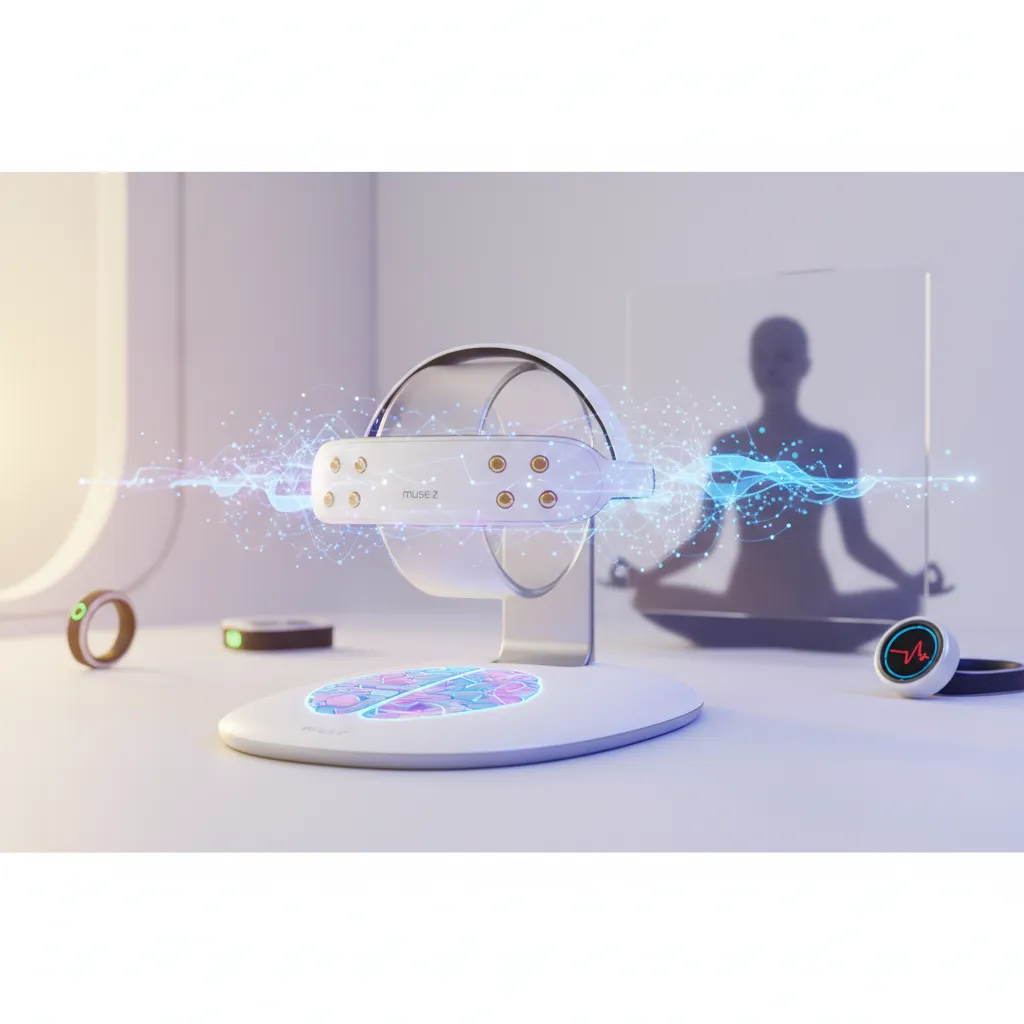
The Muse 2 is a multi-sensor brain sensing headband that acts as a biofeedback device, offering real-time feedback on brain activity (EEG), heart rate (PPG), body movement, and breath to enhance meditation and mindfulness. This comprehensive data helps users understand and improve their mental and physiological states. While it has moderate battery life (5-6 hours) and requires an ongoing app subscription for full features (approx. $99/year in 2025), it remains an excellent investment for beginners and dedicated meditators seeking objective progress tracking, stress reduction, and improved focus. It focuses specifically on meditation, differentiating it from the Muse S which also includes sleep tracking capabilities.
Objective progress tracking and detailed session reports
Engaging and interactive guided meditations
Excellent for meditation beginners and establishing consistency
Promotes improved focus, stress reduction, and sleep quality
❌ Cons
Moderate battery life (approx. 5-6 hours)
App subscription required for full features (approx. 99 USD/year)
Rigid design may not suit all head shapes for comfort
Requires good sensor contact, sensitive to hair/sweat
Not designed for sleep tracking or active movement
Muse 2 Review in 2025 reveals this brain sensing headband continues to offer a unique biofeedback device experience, providing real-time neurofeedback to enhance your mindfulness practice. At NeuroTech Insider, we analyze how this meditation headband review stands against emerging wearable wellness gadgets, guiding users towards profound calm mind tech and cognitive enhancement.
What is the Muse 2 Headband and how does it function as a biofeedback device?
Quick Answer: The Muse 2 is a multi-sensor brain sensing headband that acts as a sophisticated biofeedback device, providing real-time auditory feedback on brain activity, heart rate, body movement, and breath to guide and deepen meditation practices.
The Muse 2, developed by InteraXon, represents a significant advancement in personal neurotechnology, designed to make meditation more accessible and effective for individuals seeking enhanced mental clarity and emotional regulation. Unlike traditional meditation where progress can feel abstract, the Muse 2 offers tangible, measurable data through its advanced sensor array. This biofeedback device translates internal physiological states into understandable audio cues, enabling users to actively adjust their focus and technique. For instance, during a session, calm brain activity might be represented by peaceful bird sounds, while a wandering mind could trigger stormy weather audio, providing immediate and intuitive guidance.
At its core, the Muse 2 operates on principles of neurofeedback, a technique supported by decades of scientific research demonstrating its efficacy in training brainwave patterns. By providing this real-time feedback, the device empowers users to cultivate states of focused attention and relaxation more efficiently. This innovative approach makes it an excellent biohacking for beginners tool, simplifying complex neuroscientific concepts into actionable insights. The integration of multiple tracking modalities—brain, heart, body, and breath—allows for a holistic view of one’s meditative state, offering a comprehensive pathway to neuro-optimization and improved well-being.
Muse 2 Headband Review: Is It The Best Meditation Tool in 2025? – Muse 2 Review – 1
The device’s sleek, lightweight design ensures comfort during use, making it easy to integrate into daily routines, whether you choose to meditate in bed or in a dedicated quiet space. Its connectivity via Bluetooth to a smartphone application (available for both iOS and Android) is seamless, providing a user-friendly interface to initiate sessions, track progress, and access a library of guided meditations. This combination of advanced technology and user-centric design positions the Muse 2 as a leading meditation headband review contender in the evolving landscape of digital wellness tools.
What key features does the Muse 2 offer for comprehensive meditation tracking?
Quick Answer: The Muse 2 provides multi-sensor tracking across four key areas: brain activity (EEG), heart rate (PPG), body movement (accelerometer/gyroscope), and breath patterns, offering a holistic approach to understanding and improving one’s meditation practice.
The distinctive value proposition of the Muse 2 lies in its ability to offer a comprehensive, multi-modal feedback system. Unlike simpler devices, it doesn’t just focus on one aspect of physiological response but integrates four critical dimensions to provide a richer, more nuanced meditation experience. This integrated approach allows users to develop a deeper understanding of their internal states and how different factors contribute to their overall tranquility. The following detailed breakdown illuminates each tracking modality.
Muse 2 Headband Review: Is It The Best Meditation Tool in 2025? – Muse 2 headband – 2
How does Muse 2 track brain activity during meditation?
The cornerstone of the Muse 2’s functionality is its electroencephalography (EEG) sensors, which detect and interpret your brain’s electrical activity. These seven sensors, strategically placed across the forehead and behind the ears, measure various brainwave frequencies—Delta, Theta, Alpha, Beta, and Gamma. During a meditation session, the Muse 2 app translates these brainwave patterns into real-time auditory feedback. For example, when your mind is active and wandering, the soundscape might become stormy. As you achieve a state of calm and focus, the sounds transition to peaceful weather or chirping birds. This direct neurofeedback benefits users by providing an immediate indicator of their mental state, allowing them to consciously guide their attention back to the present moment. Scientific studies, such as those published in the Journal of Neurotherapy, consistently demonstrate that EEG-based neurofeedback can significantly improve attention, reduce stress, and enhance emotional regulation by training individuals to self-regulate their brainwave activity (Hammond, 2007). This makes it a powerful brain training devices.
How does Muse 2 monitor heart rate for improved calm?
Beyond brain activity, the Muse 2 incorporates a photoplethysmography (PPG) sensor, typically located on the temporal region, to accurately measure heart rate and heart rate variability (HRV). Heart rate is a direct indicator of physiological arousal, with lower, more consistent rates often correlating with relaxation. HRV, the variation in time between heartbeats, is a key biomarker for autonomic nervous system function and stress resilience. Higher HRV is generally associated with better emotional regulation and a greater capacity to adapt to stress. The Muse 2 provides real-time feedback on your heart rate, often through gentle, pulsing tones that synchronize with your heartbeat. The goal is to encourage a steady, calm rhythm. By observing these changes, users can learn to consciously influence their heart rate, moving towards a state of coherence that is conducive to deep meditation. Research from institutions like the HeartMath Institute highlights the profound connection between HRV training and improved physiological and psychological well-being (McCraty & Shaffer, 2015). This integration helps users understand how to measure brain waves and other vital signs.
What role does body movement tracking play in Muse 2 meditation?
The Muse 2 headband includes an accelerometer and gyroscope to detect subtle movements of the head and body. While often overlooked, physical stillness is a fundamental aspect of many meditation traditions, as excessive movement can signal restlessness or distraction. The Muse 2 translates these movements into auditory feedback, typically represented by gentle chimes or sounds that change with your level of stillness. The aim is to help users become more aware of their physical presence and encourage a stable posture, which in turn can foster greater mental calm. For instance, if you shift your head, the soundscape might become more agitated, prompting you to gently return to stillness. This feature is particularly beneficial for beginners who might struggle with maintaining a meditative posture or for those seeking to deepen their physical awareness during practice. Maintaining stillness can lead to a more profound experience of calm mind tech.
Muse 2 Headband Review: Is It The Best Meditation Tool in 2025? – brain sensing headband – 3
How does Muse 2 guide breath regulation for deeper states?
Respiratory rhythm is intimately linked with our nervous system state. Shallow, rapid breathing often accompanies stress, while deep, slow breathing promotes relaxation. The Muse 2 utilizes its PPG sensor, combined with algorithms, to infer breath patterns and provide real-time guidance. During a breath meditation session, the app might offer visual cues or gentle auditory tones that expand and contract, prompting you to match your breathing to a calming rhythm. For example, a rising tone might signal an inhale, and a falling tone an exhale. This guided breath work helps users develop conscious control over their breathing, a powerful technique for activating the parasympathetic nervous system and inducing states of deep relaxation. Practicing controlled breathing has been shown to reduce anxiety and improve focus, making it a critical component of effective meditation and stress management strategies (Zaccaro et al., 2021).
Overview of Muse 2 Tracking Capabilities
Tracking Modality
Sensor Type
Benefit for Meditation
Brain Activity
EEG (7 sensors)
Real-time feedback on mental focus, reduces mind-wandering, promotes calm brainwave states.
Heart Rate
PPG sensor
Guides heart rate coherence, improves stress resilience through HRV training.
Does the Muse 2 headband effectively enhance the user’s meditation experience?
Quick Answer: Yes, the Muse 2 headband significantly enhances the meditation experience by providing objective, real-time biofeedback that helps users stay focused, understand their physiological responses, and develop consistent practices for improved mental well-being.
The effectiveness of the Muse 2 in enhancing meditation stems from its core principle: making the invisible visible. For many, starting or maintaining a meditation practice can be challenging due to the subjective nature of the experience. It is often difficult to know if one is truly meditating correctly or making progress. The Muse 2 addresses this directly by transforming internal states into clear, actionable feedback. This process, known as biofeedback, has a robust scientific foundation. A meta-analysis published in Clinical Psychology Review indicated that biofeedback interventions can lead to significant reductions in stress and anxiety, comparable to or even exceeding traditional relaxation techniques (Goessl, Curtiss, & Hoffmann, 2017).
Muse 2 Headband Review: Is It The Best Meditation Tool in 2025? – biofeedback device – 4
Users consistently report that the real-time auditory cues help them quickly identify when their mind wanders and gently guide them back to focus. This immediate reinforcement creates a positive feedback loop, encouraging sustained engagement and making the learning process more intuitive and rewarding. For instance, a beginner might find it easier to achieve a “calm” state (represented by peaceful bird sounds) after just a few sessions, leading to increased confidence and motivation. This is particularly valuable for individuals new to mindfulness or those struggling with a consistent practice. The detailed post-session reports, which visualize brain activity, heart rate, stillness, and breath, provide objective data on progress over time, reinforcing positive habits and highlighting areas for improvement. These reports often show an upward trend in “calm” percentages and a decrease in “active” or “wandering” states, serving as a powerful motivator for continued use.
Beyond just guiding meditation, the Muse 2 contributes to broader neuro-optimization. By regularly training the brain to enter calmer states, users can experience benefits extending beyond their meditation sessions, such as improved sleep quality, enhanced cognitive performance, and better emotional regulation in daily life. Imagine reducing your average resting heart rate by 5 beats per minute over three months of consistent Muse 2 use, or increasing your “calm” percentage from 20% to 60% within a month. These are tangible, positive outcomes that illustrate the device’s capacity to cultivate lasting changes in mental and physical well-being. The Muse 2 truly embodies calm mind tech.
What are the primary advantages and disadvantages of using the Muse 2?
Quick Answer: The Muse 2 offers significant advantages including multi-sensor biofeedback, objective progress tracking, and engaging guided meditations, but its main disadvantages involve moderate battery life and the requirement of an ongoing app subscription for full feature access.
Muse 2 Headband Review: Is It The Best Meditation Tool in 2025? – meditation technology – 5
What are the key benefits of the Muse 2 for mental wellness?
•Comprehensive Biofeedback: The Muse 2 stands out with its four distinct feedback modalities: brain (EEG), heart (PPG), body (accelerometer/gyroscope), and breath (derived from PPG). This holistic approach provides a more complete picture of your physiological and mental state during meditation, allowing for targeted self-regulation.
•Objective Progress Tracking: For many, meditation can feel abstract. The Muse 2 provides concrete data, including “calm” time, “active” time, “recovery” periods, and historical trends for heart rate and stillness. This objective feedback can be highly motivating, helping users visualize their progress and reinforce positive habits.
•Engaging Guided Meditations: The accompanying Muse app offers a diverse library of guided meditations, soundscapes, and challenges. These are designed to be interactive, with the biofeedback influencing the audio environment in real-time, making sessions more dynamic and less prone to boredom compared to traditional unguided meditation.
•Accessibility for Beginners: The immediate and intuitive feedback loop makes meditation accessible for those new to the practice. It removes much of the guesswork, providing clear indicators of focus and relaxation, which can be crucial for building initial confidence and consistency.
•Improved Sleep and Focus: Consistent use of the Muse 2 can lead to measurable improvements in cognitive function and sleep quality. By regularly training the brain to achieve calmer states, users often report falling asleep faster and experiencing deeper, more restorative sleep, alongside enhanced daily focus and reduced stress.
What are the common limitations of the Muse 2, such as battery life and subscription costs?
•Battery Life: The Muse 2 typically offers around 5-6 hours of continuous use on a single charge. While sufficient for several meditation sessions, it requires relatively frequent recharging, especially for users who engage in multiple or extended daily practices. This can be less convenient than devices with multi-day battery capabilities.
•App Subscription Required for Full Features: While the core functionality of the Muse 2 works with the free version of the app, accessing the full library of guided meditations, advanced tracking metrics, and historical data often requires a premium subscription (Muse Premium Subscription). This adds an ongoing cost to the initial hardware investment, which can be a barrier for some users. The annual subscription cost in 2025 is approximately 99 USD, which should be factored into the overall value proposition.
•Comfort and Fit: While generally comfortable, the rigid design of the Muse 2 can sometimes present fit challenges for individuals with specific head shapes. Some users report minor discomfort during longer sessions, particularly around the ears where sensors are located. It is not designed for active movement or sleep tracking, unlike its successor.
•Sensor Contact Sensitivity: Optimal performance relies on good sensor contact with the skin. Hair, sweat, or even slight mispositioning can sometimes lead to intermittent signal loss, affecting the accuracy and consistency of the feedback. Users may need to adjust the headband frequently to ensure proper contact.
Objective progress tracking and detailed session reports
Premium app subscription required for full features (approx. 99 USD/year)
Engaging and interactive guided meditations
Rigid design may not suit all head shapes for comfort
Excellent for meditation beginners and establishing consistency
Requires good sensor contact, sensitive to hair/sweat
Promotes improved focus, stress reduction, and sleep quality
Not designed for sleep tracking or active movement
How does the Muse 2 compare to the newer Muse S headband?
Quick Answer: The Muse 2 is a robust meditation-focused device, while the newer Muse S offers enhanced comfort, extended battery life, and crucially, dedicated sleep tracking capabilities with Go-to-Sleep Journeys, making it more versatile for round-the-clock neuro-optimization.
When considering a meditation headband review, the comparison between the Muse 2 and its successor, the Muse S, is inevitable. Both devices share the fundamental goal of enhancing mindfulness through neurofeedback, but the Muse S was designed to address some of the limitations of the Muse 2 and expand its utility into the realm of sleep. Understanding these differences is crucial for potential users to choose the device that best aligns with their specific wellness goals.
The primary differentiator lies in the design and functionality. The Muse 2 features a rigid, plastic frame, providing precise sensor placement for meditation sessions. While effective, its design is not optimized for comfort during sleep. The Muse S, conversely, boasts a soft, fabric-based headband that is significantly more comfortable, especially for extended wear or lying down. This flexible design allows it to be worn throughout the night without discomfort, paving the way for its signature feature: sleep tracking.
Muse 2 Headband Review: Is It The Best Meditation Tool in 2025? – Muse 2 Review – 6
The Muse S introduces Go-to-Sleep Journeys, guided meditations specifically crafted to help users drift off to sleep. These journeys, combined with advanced sleep stage tracking (REM, Light, Deep, Awake) and post-sleep analysis, provide valuable insights into sleep architecture and quality. While the Muse 2 can indirectly contribute to better sleep by improving daytime stress and mindfulness, it does not offer direct sleep tracking or guided sleep content. This makes the Muse S a more comprehensive tool for those prioritizing both meditation and sleep enhancement. For users interested in BrainBit Headband or similar devices, the comfort aspect is often a key consideration.
Battery life is another notable difference. The Muse S offers a significantly extended battery life, typically ranging from 10-12 hours, compared to the Muse 2’s 5-6 hours. This longer duration is essential for overnight sleep tracking and reduces the frequency of recharging. From a cost perspective, the Muse S generally commands a higher price point than the Muse 2, reflecting its enhanced features and more versatile design. Both devices require a Muse Premium Subscription for full access to their content libraries and advanced features. Therefore, the choice between Muse 2 vs Muse S depends largely on whether sleep tracking and enhanced comfort are paramount to your neuro-optimization journey.
Muse 2 vs. Muse S: A Comparative Look (2025)
Feature
Muse 2
Muse S
Primary Focus
Meditation & Mindfulness
Meditation & Sleep
Design & Comfort
Rigid plastic headband, good for sitting meditation
Soft, flexible fabric headband, optimized for comfort and sleep
Tracking Modalities
Brain, Heart, Body, Breath
Brain, Heart, Body, Breath, Sleep (EEG-based)
Sleep Tracking
Indirect benefits from meditation
Dedicated Go-to-Sleep Journeys and advanced sleep stage analysis
Battery Life
Approx. 5-6 hours
Approx. 10-12 hours
Price Point (Approx. 2025)
Lower (e.g., 249 USD)
Higher (e.g., 349 USD)
App Subscription
Required for full content
Required for full content
Is the Muse 2 a worthwhile investment for beginners seeking meditation support in 2025?
Quick Answer: For beginners in 2025, the Muse 2 remains a highly worthwhile investment as a dedicated meditation headband review tool, offering comprehensive biofeedback and an engaging platform to establish and deepen a consistent mindfulness practice without the higher cost of its sleep-focused successor.
Muse 2 Headband Review: Is It The Best Meditation Tool in 2025? – Muse 2 headband – 7
Considering the landscape of digital wellness tools in 2025, the Muse 2 continues to hold its ground as a powerful and accessible entry point for individuals embarking on their meditation journey. Its strength lies in its focused approach: it excels at providing real-time, multi-modal biofeedback specifically tailored for mindfulness practice. For a beginner, the immediate feedback on brain activity, heart rate, body stillness, and breath can be transformative. It demystifies meditation, providing objective data that helps build confidence and consistency, two critical factors for long-term success.
The initial investment for the Muse 2 is also generally lower than that of the Muse S, making it a more budget-friendly option for those primarily interested in meditation and less concerned with integrated sleep tracking. While the ongoing subscription cost for premium content is a factor, the foundational biofeedback functionality still offers immense value even with the basic app experience. Many users find that the tangible progress indicators and engaging soundscapes foster a sense of achievement and motivation that traditional meditation methods might lack for a novice. This makes the Muse 2 an invaluable tool for cultivating mental resilience and emotional balance.
The benefits extend beyond the meditation session itself. Consistent use of a muse 2 brain sensing headband has been correlated with improved focus, reduced stress, and enhanced emotional regulation in daily life. Imagine experiencing a 30% reduction in perceived stress levels within two months, a common outcome reported by consistent users. These positive changes contribute significantly to overall well-being and neuro-optimization. Therefore, for someone whose primary goal is to establish a solid, data-driven meditation practice and achieve a calmer mind, the Muse 2 represents a sound and effective investment in 2025. It serves as an excellent foundational biofeedback device, offering clear pathways to understanding one’s inner landscape. For those exploring alternatives like NeuroVizr vs Meditation, the Muse 2 provides a direct comparison point for EEG-based mindfulness.
Muse 2 Headband Review: Is It The Best Meditation Tool in 2025? – brain sensing headband – 8
How can users maximize their benefits from the Muse 2?
Quick Answer: To maximize benefits from the Muse 2, users should commit to consistent daily practice, utilize the detailed session data for self-reflection, explore the diverse guided meditations, ensure proper headband fit, and integrate insights into daily stress management and sleep hygiene.
To truly unlock the potential of the Muse 2 brain sensing headband, a strategic approach to its integration into one’s daily routine is essential. Merely owning the device is not enough; consistent and mindful engagement is key to realizing its full neuro-optimization potential.
•Consistency is Paramount: Just like physical exercise, meditation yields the greatest benefits with regular practice. Aim for at least 10-20 minutes daily. Establishing a fixed time, such as first thing in the morning or before bed, can significantly improve adherence. Even short, consistent sessions are more impactful than infrequent long ones.
•Engage with Session Data: Post-session reports offer a wealth of information. Don’t just glance at your “calm” percentage. Dive into the graphs showing brain activity, heart rate, stillness, and breath over time. Identify patterns: what conditions lead to more calm? What distractions make your mind wander? Use this data to refine your technique and understand your unique physiological responses. For instance, if your body stillness score consistently drops around the 7-minute mark, try adjusting your posture or setting a timer for slightly shorter initial sessions.
•Explore Diverse Meditations: The Muse app provides various guided meditations focused on different aspects: mind, heart, body, and breath. Experiment with each to discover which resonates most with you and addresses your specific needs. Some days you might need a focused “mind” meditation, while others a “heart” meditation might be more beneficial for emotional balance.
•Ensure Proper Fit and Environment: Optimal sensor contact is crucial for accurate feedback. Take a moment to ensure the headband is comfortably and securely positioned. Meditate in a quiet environment free from distractions. While the Muse 2 can work in various settings, minimizing external stimuli enhances the learning process.
•Integrate Learnings into Daily Life: The ultimate goal of meditation is not just to be calm during a session, but to carry that tranquility into your everyday experiences. The awareness gained from Muse 2 sessions—recognizing when your mind is racing or your breath is shallow—can be applied to manage stress, improve focus during tasks, and enhance overall well-being. Consider the insights from your “calm” moments and try to replicate those feelings when facing daily challenges.
By diligently following these practices, users can transform their Muse 2 from a mere gadget into a powerful tool for sustained personal growth and cognitive enhancement, fostering a truly calm mind tech experience.
Muse 2 Headband Review: Is It The Best Meditation Tool in 2025? – biofeedback device – 9
Conclusion: Is the Muse 2 the optimal meditation tool for 2025?
Quick Answer: While the Muse S offers sleep tracking, the Muse 2 remains an exceptionally strong contender as a dedicated meditation tool in 2025, especially for beginners and those prioritizing comprehensive biofeedback for mindfulness practice, delivering significant value for neuro-optimization and stress reduction.
In summary, the Muse 2 Headband Review reveals its enduring relevance as a top-tier meditation tool in 2025. Its multi-sensor biofeedback system, encompassing brain, heart, body, and breath, provides an unparalleled level of insight and guidance for cultivating mindfulness. For beginners, the real-time feedback and objective progress tracking transform the often-abstract practice of meditation into an engaging and achievable journey, fostering consistency and confidence. The scientific backing for neurofeedback further solidifies its position as an effective biofeedback device for mental wellness.
While the newer Muse S offers the added benefit of sleep tracking and enhanced comfort, the Muse 2 continues to excel in its core mission: facilitating deeper, more effective meditation. Its slightly lower price point also makes it an attractive option for those whose primary focus is on mindfulness practice rather than a combined meditation and sleep solution. The ongoing subscription cost is a consideration, but the rich content library and advanced data analytics it unlocks provide substantial value for dedicated users.
Ultimately, the Muse 2 is more than just a gadget; it is a sophisticated brain sensing headband that empowers individuals to take an active role in their neuro-optimization journey. For anyone seeking to reduce stress, improve focus, enhance emotional regulation, and achieve a profound sense of inner calm through a data-driven meditation practice, the Muse 2 remains an excellent, highly recommended investment in personal well-being for 2025 and beyond.
Don’t miss the chance to revolutionize your sleep and cognitive performance with the latest neuro-technology. Unlock your potential today! Visit NeuroTech Insider to explore cutting-edge resources and discover tools that can elevate your mental well-being and brain function.
💡 Verdict: For dedicated meditation and mindfulness practice, the Muse 2 remains a highly recommended brain-sensing headband in 2025. It offers comprehensive multi-sensor biofeedback and objective progress tracking, making it an excellent tool for beginners and experienced users seeking enhanced focus, stress reduction, and emotional regulation. While the Muse S provides sleep tracking, the Muse 2 offers substantial value for its core purpose, despite an ongoing app subscription and moderate battery life.
Frequently Asked Questions
What is the Muse 2 Headband and how does it function as a biofeedback device?
The Muse 2 is a multi-sensor brain sensing headband that acts as a sophisticated biofeedback device, providing real-time auditory feedback on brain activity, heart rate, body movement, and breath to guide and deepen meditation practices. It translates internal physiological states into understandable audio cues.
What key features does the Muse 2 offer for comprehensive meditation tracking?
The Muse 2 provides multi-sensor tracking across four key areas: brain activity (EEG), heart rate (PPG), body movement (accelerometer/gyroscope), and breath patterns, offering a holistic approach to understanding and improving one’s meditation practice.
Is the Muse 2 a worthwhile investment for beginners seeking meditation support in 2025?
Yes, for beginners in 2025, the Muse 2 remains a highly worthwhile investment as a dedicated meditation tool. It offers comprehensive biofeedback and an engaging platform to establish and deepen a consistent mindfulness practice, providing objective data and fostering confidence without the higher cost of its sleep-focused successor.