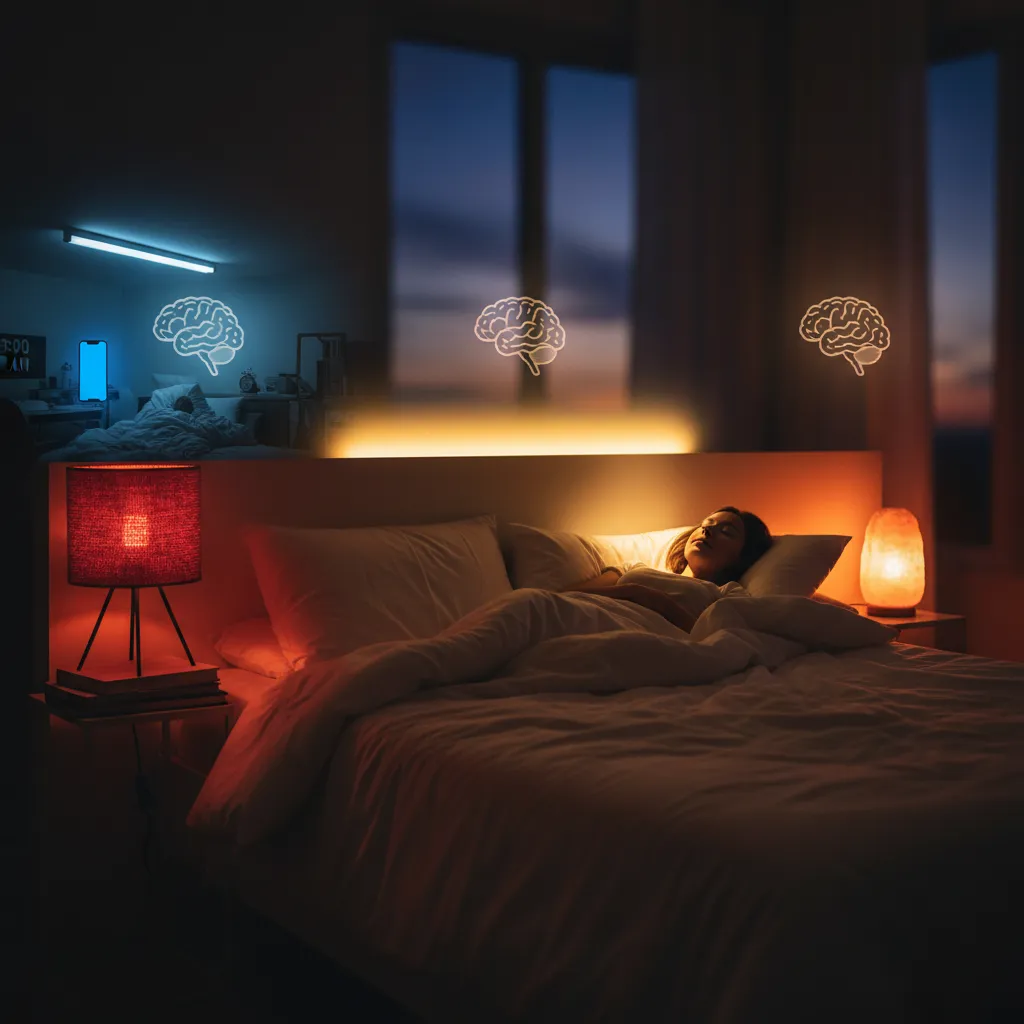
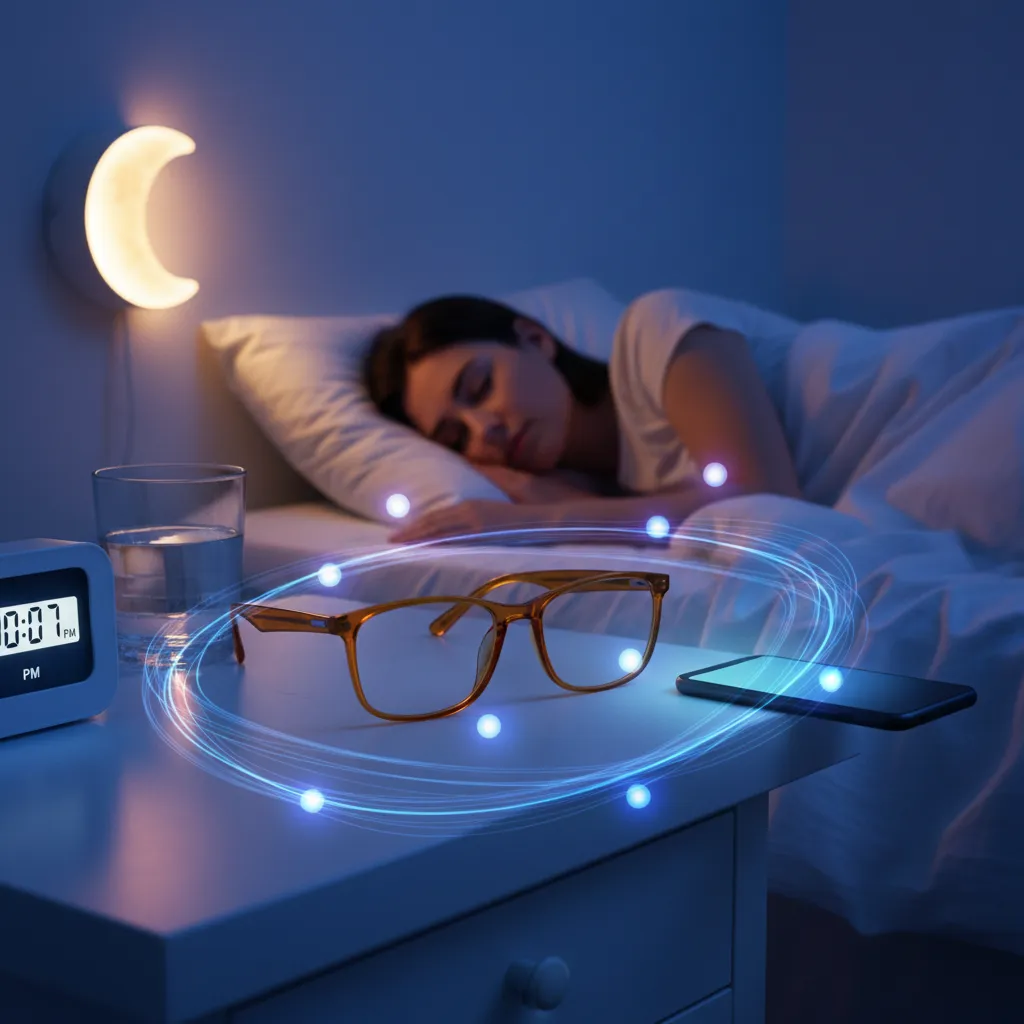
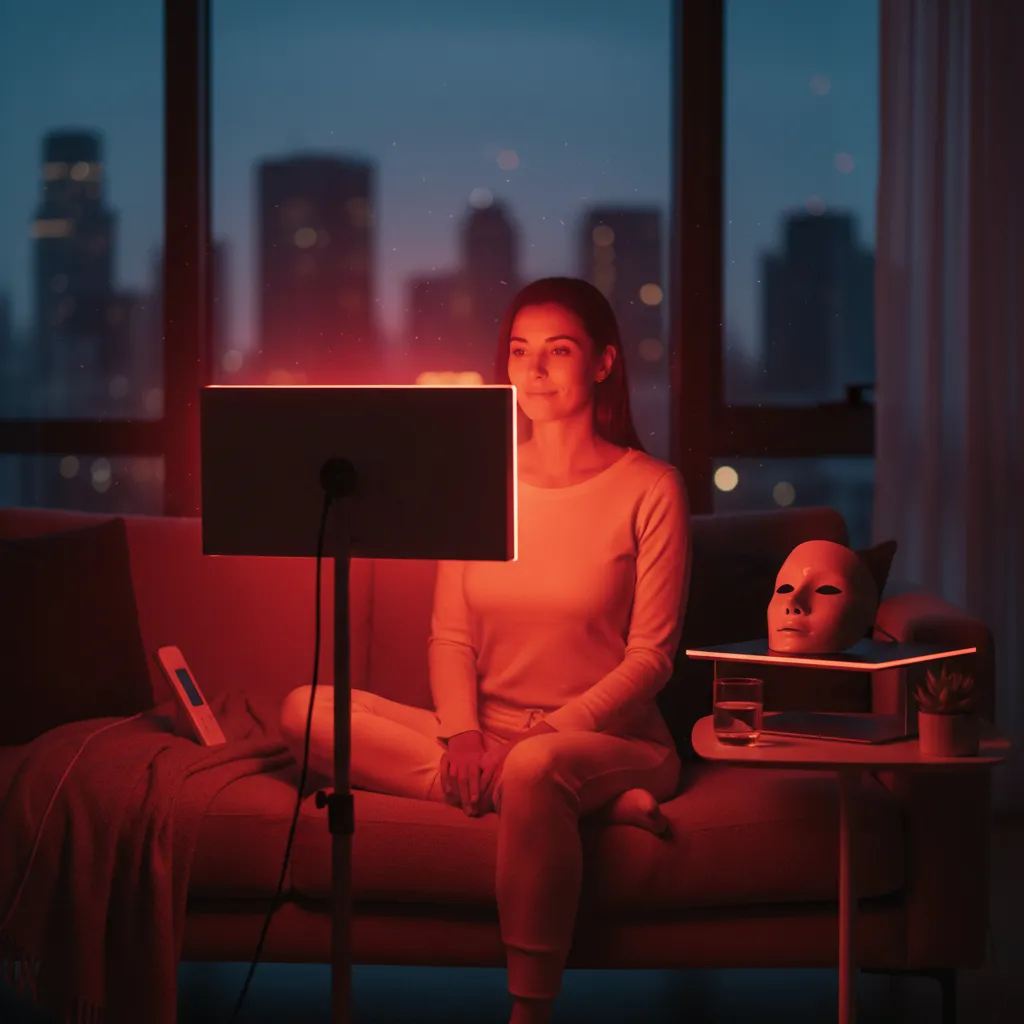
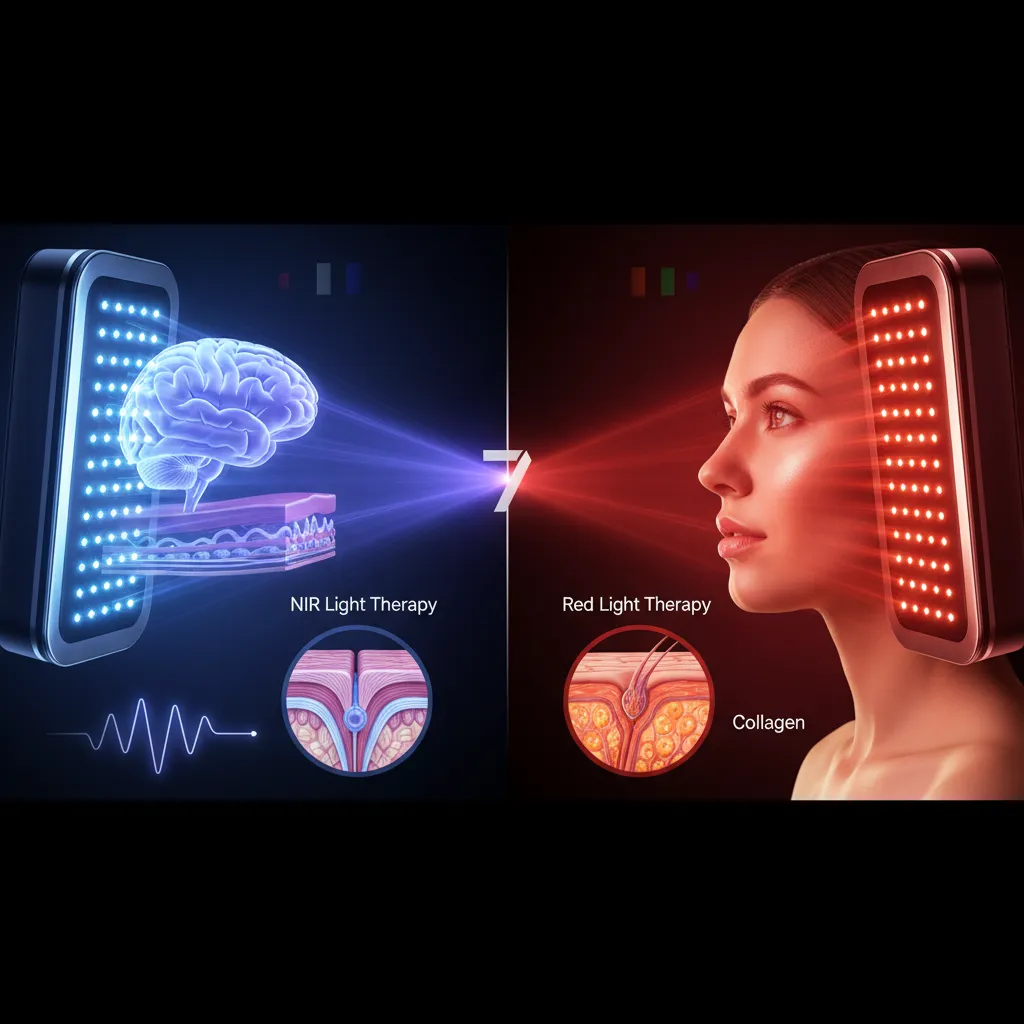
Optimizing light exposure is crucial for sleep and neuro-optimization. Light color directly impacts the circadian rhythm and melatonin production, with blue and bright white lights suppressing the sleep hormone, while red, amber, and dim warm white lights are beneficial. The article details how different wavelengths affect physiological responses and recommends specific light colors for an optimal sleep environment. Practical tips include dimming lights 2-3 hours before bed, creating a completely dark bedroom, minimizing screen time, and utilizing sleep-friendly lighting products like smart bulbs or dedicated red/amber lights. Advanced neuro-optimization devices, such as NeuroVizr, can also leverage specific light patterns to support healthy sleep. Consistent daytime bright light exposure is also key for anchoring the circadian rhythm.
✅ Pros
Red and amber lights significantly enhance natural melatonin production, promoting sleep.
Dim warm white light with low color temperature supports pre-sleep relaxation without disrupting circadian rhythm.
Optimizing light environment leads to improved sleep quality, duration, and overall well-being.
Advanced neuro-optimization devices like NeuroVizr can actively modulate brain states for enhanced rest and recovery.
Establishing structured light routines, including bright daytime exposure and warm evening light, effectively anchors your circadian rhythm.
❌ Cons
Blue light and bright white light severely suppress melatonin production.
Exposure to disruptive light can delay sleep onset and reduce REM sleep duration.
Modern devices (smartphones, TVs, computers) are ubiquitous sources of problematic blue wavelengths.
Green light, especially at high intensities, can also suppress melatonin, though less than blue light.
Inconsistent light exposure, both day and night, disrupts the body’s natural circadian rhythm.
Optimizing your light color for sleep is a fundamental step towards enhanced well-being, directly influencing your circadian rhythm and the critical production of melatonin. At NeuroTech Insider, we empower you to harness the power of specific light wavelengths to cultivate deep, restorative sleep, paving the way for superior cognitive function and overall neuro-optimization.
What is the Impact of Light Color on Your Sleep Cycle and Melatonin Production?
Quick Answer: Light color profoundly influences our sleep by signaling our brain through specialized photoreceptors, primarily affecting the release of melatonin, the sleep-inducing hormone, and regulating our natural circadian rhythm.
The human body possesses an intricate internal clock, known as the circadian rhythm, which orchestrates various physiological processes over a roughly 24-hour cycle. A crucial component of this system is its sensitivity to light, particularly specific wavelengths, which signal to our brain whether it is day or night. This signaling is primarily mediated by intrinsically photosensitive retinal ganglion cells (ipRGCs) in the eye, which contain a photopigment called melanopsin. Unlike rods and cones, which are responsible for vision, ipRGCs are more sensitive to blue-green light wavelengths and play a direct role in regulating non-visual responses to light, including melatonin suppression and circadian phase shifting.
Melatonin, often referred to as the sleep hormone, is produced by the pineal gland in response to darkness. Its levels naturally begin to rise in the evening, peaking in the middle of the night, and gradually decline towards morning, preparing the body for sleep. However, exposure to certain light colors, especially those in the blue spectrum, can significantly inhibit melatonin production. This disruption can shift the circadian clock, making it harder to fall asleep and reducing the overall Benefits of Sleep. Conversely, exposure to warmer, longer-wavelength light in the evening can help maintain healthy melatonin levels, signaling to the brain that it is time to wind down. Understanding this intricate mechanism is pivotal for optimizing your sleep environment and promoting restorative rest.
3 Best Light Colors for Sleep & Which Ones to Avoid – Light Color for Sleep – 1
Scientific studies consistently demonstrate that the timing and spectral composition of light exposure profoundly impact sleep architecture. For instance, research published in the journal Sleep Medicine Reviews in 2017 highlighted that even moderate light exposure (e.g., 100 lux) containing blue wavelengths in the hours before bedtime can delay sleep onset by an average of 15-30 minutes and reduce REM sleep duration by up to 10-15%. This underscores the importance of mindful lighting choices as a critical aspect of effective sleep hygiene.
How Do Different Light Wavelengths Influence Physiological Responses?
The electromagnetic spectrum includes various wavelengths, each with distinct effects on human biology. Visible light, ranging from approximately 380 nm (violet) to 780 nm (red), is what our eyes perceive as different colors. The impact on sleep and circadian rhythm is not just about brightness but specifically about the color, or wavelength, of light.
Table: Light Wavelengths and Their Physiological Impact on Sleep
No melatonin suppression, potentially calming, promotes sleep.
Which are the 3 Best Light Colors for Optimizing Sleep Quality?
Quick Answer: The three best light colors for sleep optimization are red, amber, and dim warm white light, as they minimize melatonin suppression and promote a tranquil pre-sleep environment.
3 Best Light Colors for Sleep & Which Ones to Avoid – melatonin production – 2
Creating an optimal sleep environment extends beyond just a comfortable mattress or a dark room; the light you expose yourself to in the hours before bed holds significant power over your ability to fall asleep and stay asleep. By intentionally selecting specific light colors, you can gently guide your body towards a state of relaxation and readiness for restorative rest. NeuroTech Insider recommends focusing on red, amber, and dim warm white light as your primary allies in the quest for superior sleep quality.
Why is Red Light Considered Ideal for Evening Exposure?
Red light, specifically in the 600-700 nanometer (nm) range, is widely regarded as the most sleep-friendly color. Its long wavelengths have virtually no impact on melanopsin, the photopigment responsible for melatonin suppression. This means that exposure to red light for melatonin production remains unhindered, allowing your body’s natural sleep signals to emerge unimpeded.
Numerous scientific investigations support the benefits of red light for sleep. A study published in the Journal of Athletic Training in 2012, for example, found that athletes exposed to red light therapy (660 nm) for 30 minutes daily over two weeks experienced improved sleep quality, increased melatonin levels, and enhanced endurance performance. Participants reported an average increase in sleep duration of 15% and a subjective improvement in sleep satisfaction of approximately 20%. The calming visual effect of red light also contributes to its efficacy, promoting a sense of tranquility that is conducive to winding down. This makes it an excellent choice for bedside lamps or dim ambient lighting in the evening.
3 Best Light Colors for Sleep & Which Ones to Avoid – circadian rhythm – 3
How Does Amber Light Support Natural Sleep Induction?
Amber light, typically in the 570-590 nm range, serves as another powerful ally in promoting healthy sleep. Its primary benefit lies in its ability to effectively filter out problematic blue and green wavelengths, which are known disruptors of melatonin production. While not as entirely free of blue light as pure red light, amber light benefits extend to creating a visually warm and comforting atmosphere that signals to the brain that it is transitioning from day to night.
A 2019 study in Ophthalmic and Physiological Optics demonstrated that individuals using amber-tinted lenses in the evening experienced significantly less melatonin suppression compared to those exposed to unfiltered room light. This highlights amber light’s role as an effective blue light blocker. Practical applications include using amber-tinted screens or dedicated amber bulbs in living spaces during the evening. It provides sufficient illumination for tasks without compromising your body’s natural sleep preparation. For many, a combination of amber and red lighting offers the most comprehensive approach to evening light management.
Can Dim Warm White Light Be Beneficial for Pre-Sleep Relaxation?
While pure red and amber are ideal, dim warm white light can also play a supportive role in your evening routine, provided it meets specific criteria. The key here is “dim” and “warm.” Warm white light typically has a low correlated color temperature (CCT), ideally below 2700 Kelvin (K). This spectrum contains significantly fewer blue wavelengths compared to cooler white lights (e.g., 5000K daylight white).
3 Best Light Colors for Sleep & Which Ones to Avoid – red light for sleep – 4
The intensity of the light is equally important. Even a warm white light can be disruptive if it is too bright. Aim for light levels below 50 lux in the hour or two before bed, which is roughly equivalent to candlelight or a very dim incandescent bulb. Using smart bulbs that allow for both color temperature and brightness adjustment can be particularly advantageous, enabling a seamless transition from functional daytime lighting to a soft, sleep-friendly glow. This approach allows you to retain some familiarity of standard lighting while still prioritizing your body’s natural inclination towards rest.
What Light Colors Should You Absolutely Avoid for Better Sleep?
Quick Answer: To safeguard your sleep quality, you should rigorously avoid blue light and bright white light, especially in the hours leading up to bedtime, as they actively suppress melatonin and disrupt your natural sleep cycle.
Just as certain light colors can enhance sleep, others can profoundly undermine it. In our modern, digitally-driven world, we are constantly exposed to wavelengths that are antithetical to healthy sleep patterns. Understanding which colors to eliminate from your evening sleep environment is as crucial as knowing which ones to embrace. NeuroTech Insider emphasizes minimizing exposure to blue and bright white light as foundational for neuro-optimization and restorative sleep.
3 Best Light Colors for Sleep & Which Ones to Avoid – amber light sleep – 5
Why Does Blue Light Severely Disrupt Your Sleep Architecture?
Blue light, with wavelengths primarily between 450-495 nm, is the most detrimental light color for sleep, particularly in the evening. This is due to its potent ability to stimulate melanopsin-containing ipRGCs in the retina. When these cells detect blue light, they send strong signals to the suprachiasmatic nucleus (SCN) in the brain, which acts as the master clock. This signal effectively tells the SCN that it is daytime, leading to a significant suppression of melatonin production and a delay in your body’s natural sleep onset.
The sources of blue light are ubiquitous in contemporary life: smartphones, tablets, computers, LED televisions, and many modern energy-efficient light bulbs. A landmark study from Harvard Health Publishing in 2012 demonstrated that participants exposed to blue light experienced a significant shift in their circadian rhythms, with melatonin production delayed by approximately 3 hours compared to those exposed to green light. This delay in melatonin release means your body stays in an alert state longer, making it challenging to fall asleep, even if you feel tired. Furthermore, chronic blue light effects can lead to reduced REM sleep and fragmented sleep architecture, diminishing the restorative quality of your rest. Utilizing Blue Light Glasses Sleep can be an effective strategy to mitigate these negative impacts when screen use is unavoidable.
How Do Bright White and Green Lights Affect Evening Physiology?
Beyond blue light, bright white light and even green light can also be problematic for sleep. Bright white light, particularly from standard overhead lighting or fluorescent bulbs, often contains a significant proportion of blue wavelengths, rendering it almost as disruptive as direct blue light. The sheer intensity of bright light, regardless of its exact color temperature, can also be stimulating, signaling wakefulness to your brain.
3 Best Light Colors for Sleep & Which Ones to Avoid – Light Color for Sleep – 6
Green light (495-570 nm), while generally less impactful than blue, is not entirely benign. Some research indicates that green light can also suppress melatonin, albeit to a lesser extent than blue light. A study in the Journal of Clinical Endocrinology & Metabolism found that green light at high intensities could still induce circadian phase shifts, though requiring longer exposure or higher lux levels than blue light. Therefore, for optimal sleep preparation, it is wise to minimize exposure to any bright light, and specifically avoid bright white and green light sources, during your pre-sleep routine. The goal is to create an environment that gently encourages your physiology to transition into a restful state, rather than stimulating it.
What Products and Tools Can Enhance Your Sleep Environment Through Light?
Quick Answer: To optimize your sleep environment, consider sleep-friendly light bulbs with adjustable color temperatures, dedicated red or amber light sources, and advanced neuro-optimization devices like NeuroVizr that leverage specific light patterns.
Beyond simply understanding the science of light and sleep, practical application through innovative products and tools can significantly elevate your sleep environment. The market now offers a range of solutions designed to help you harness beneficial light colors and mitigate the effects of disruptive ones. At NeuroTech Insider, we believe in integrating cutting-edge technology with scientific principles to empower individuals on their journey to neuro-optimization and superior sleep.
3 Best Light Colors for Sleep & Which Ones to Avoid – melatonin production – 7
What are the Best Sleep-Friendly Light Bulbs and Fixtures?
Investing in the right lighting can transform your home into a sanctuary for sleep. Here are key categories of sleep-friendly light bulbs and fixtures:
•Smart Bulbs with Tunable White and Color Control: Many modern smart bulbs offer the ability to adjust both brightness and color temperature, allowing you to seamlessly transition from bright, cool white light during the day (e.g., 5000K) to dim, warm red or amber light in the evening (e.g., 2200K or lower). Brands like Philips Hue, LIFX, and Sengled provide excellent options. Look for bulbs that explicitly state their ability to reduce blue light output at lower color temperatures.
•Dedicated Red/Amber Light Bulbs: For those seeking a simpler, more direct solution, specialized red or amber LED bulbs are available. These bulbs emit light predominantly in the sleep-friendly spectrum, making them perfect for bedside lamps or ambient lighting in the hours before sleep. They effectively block all blue light, creating an ideal environment for melatonin production.
•Blue Light Blocking Night Lights: For navigating your home at night without disrupting sleep, use dim red or amber night lights. These provide just enough illumination to prevent trips and falls without sending wakefulness signals to your brain.
How Can Advanced Neuro-Optimization Devices Support Healthy Sleep?
Beyond ambient lighting, cutting-edge neuro-technology offers innovative ways to support and enhance sleep. NeuroTech Insider is at the forefront of this field, developing solutions that leverage specific light patterns and frequencies to guide your brain into optimal states for rest and recovery.
Devices like the NeuroVizr utilize precisely engineered NeuroVizr Light Patterns to influence brainwave activity. By emitting specific light pulses, these devices can help facilitate a transition from alert beta brainwaves to calmer alpha and theta states, which are conducive to relaxation and sleep. This is a form of Light Therapy at Home, offering a non-invasive way to optimize your brain’s natural rhythms.
3 Best Light Colors for Sleep & Which Ones to Avoid – circadian rhythm – 8
While the NeuroVizr primarily focuses on neuro-optimization through light and sound, the underlying principle of influencing brain states with specific light frequencies is rooted in neuroscience. This can involve techniques similar to Stroboscopic Light or specific wavelengths used in NIR Light Therapy, tailored for sleep induction and brain health. Such advanced tools offer a proactive approach to enhancing sleep quality, moving beyond passive environmental adjustments to active brain state modulation. For those interested in deeper Biohacking for Beginners, exploring these technologies can unlock new levels of restorative sleep and cognitive performance.
What are Essential Lighting Rules for an Optimal Evening Routine?
Quick Answer: To optimize your evening routine for sleep, begin dimming lights and switching to warm, blue-light-free sources 2-3 hours before bed, ensure your bedroom is completely dark, and minimize all screen exposure.
Establishing a consistent and effective evening routine is paramount for robust sleep hygiene and overall neuro-optimization. The way you manage light exposure in the hours leading up to bedtime can significantly influence your body’s ability to naturally transition into sleep. By adhering to a few key lighting rules, you can create a powerful sequence of cues that signal to your brain that it’s time to wind down and prepare for deep, restorative rest. These strategies are simple yet scientifically proven to enhance your sleep environment.
3 Best Light Colors for Sleep & Which Ones to Avoid – red light for sleep – 9
When Should You Begin Dimming Lights for Sleep Preparation?
The ideal time to initiate your light-dimming sequence is approximately 2 to 3 hours before your desired bedtime. This timeframe allows your body sufficient opportunity to naturally increase melatonin production without interference from stimulating light.
•Reduce Overall Brightness: Begin by turning off overhead lights and relying on softer, indirect lighting sources. Aim to reduce the ambient light intensity in your home by at least 50% during this period.
•Transition to Warm Hues: Switch from any cool or bright white lights to red, amber, or very dim warm white bulbs. This change in spectral composition sends a powerful signal to your brain that the day is ending. For instance, if your living room uses smart bulbs, program them to shift from 4000K to 2200K and reduce brightness from 300 lux to under 50 lux as your wind-down period begins.
•Minimize Screen Time: Ideally, cease all screen use (phones, tablets, computers, TVs) at least 90 minutes before bed. If unavoidable, ensure all devices are set to their warmest color temperature modes (e.g., Night Shift on iOS, Night Light on Android/Windows) and consider wearing Blue Light Glasses Sleep to filter out disruptive wavelengths.
How Can You Create a Sleep-Inducing Bedroom Environment?
Your bedroom should be a sanctuary dedicated to sleep. Every element, especially light, should contribute to this goal.
•Achieve Complete Darkness: Utilize blackout curtains or blinds to block out all external light sources. Even small amounts of light from streetlights or electronic devices can disrupt melatonin production. Consider an eye mask for absolute darkness, especially if you have light-emitting alarms or devices.
•Eliminate All Electronic Glows: Cover or remove any devices with glowing LEDs, such as phone chargers, alarm clocks, or power strips. Even a faint light can be detected by your ipRGCs and signal wakefulness.
•Utilize Sleep-Friendly Night Lighting: If you need to get up during the night, avoid turning on bright lights. Instead, use a dim red or amber night light that won’t disrupt your sleep architecture. These provide safe navigation without impacting melatonin.
•Mindful Device Placement: If you must keep a phone in your bedroom, place it face down or in a drawer to prevent accidental screen illumination. Remember, an optimized sleep environment is key for unlocking the profound Benefits of Sleep.
What are Practical Strategies for Managing Light Exposure During the Day?
While evening light management is critical, daytime light exposure also plays a significant role in anchoring your circadian rhythm.
•Embrace Bright Morning Light: Upon waking, expose yourself to bright natural light as soon as possible. Open curtains, step outside, or use a full-spectrum light therapy lamp. This signals to your brain that the day has begun, helping to set your circadian clock and boost alertness. Aim for 20-30 minutes of bright light exposure within the first hour of waking.
•Maintain Daytime Light Exposure: Throughout the day, work in well-lit environments. If you work indoors, ensure your workspace has ample natural light or use bright, cool white lights (e.g., 5000K-6500K) to maintain alertness and cognitive function.
•Consistency is Key: Strive for a consistent sleep-wake schedule, even on weekends. This reinforces your circadian rhythm and makes it easier for your body to anticipate and prepare for sleep each night. Integrating these strategies provides a holistic approach to managing light exposure for superior sleep quality and overall neuro-optimization.
Don’t miss the chance to revolutionize your sleep and cognitive performance with the latest neuro-technology. Unlock your potential today! Visit NeuroTech Insider to explore cutting-edge resources.
Special Offer: Get an exclusive discount on the NeuroVizr device. Experience the power of light and sound therapy. Get Your Discount Code Here
💡 Verdict: Optimizing your light environment is a powerful, non-invasive strategy for superior sleep and neuro-optimization. Prioritize red and amber hues in the evening, rigorously avoid blue and bright white light, and embrace tools like smart bulbs and NeuroVizr to cultivate a truly restorative sleep cycle. Consistent daytime bright light exposure is equally vital for a well-tuned circadian rhythm.
Frequently Asked Questions
What light colors are best for sleep?
Red, amber, and dim warm white light are best for sleep as they minimize melatonin suppression and promote a tranquil pre-sleep environment.
Which light colors should be avoided before sleep?
To safeguard your sleep quality, you should rigorously avoid blue light and bright white light, especially in the hours leading up to bedtime, as they actively suppress melatonin and disrupt your natural sleep cycle.
How does light color impact melatonin production?
Light color profoundly influences sleep by signaling our brain through specialized photoreceptors. Blue-green light wavelengths, in particular, affect the release of melatonin, the sleep-inducing hormone, and regulate our natural circadian rhythm.